

Slido at the SC Forum: A Tool Is Only as Good as How We Use It
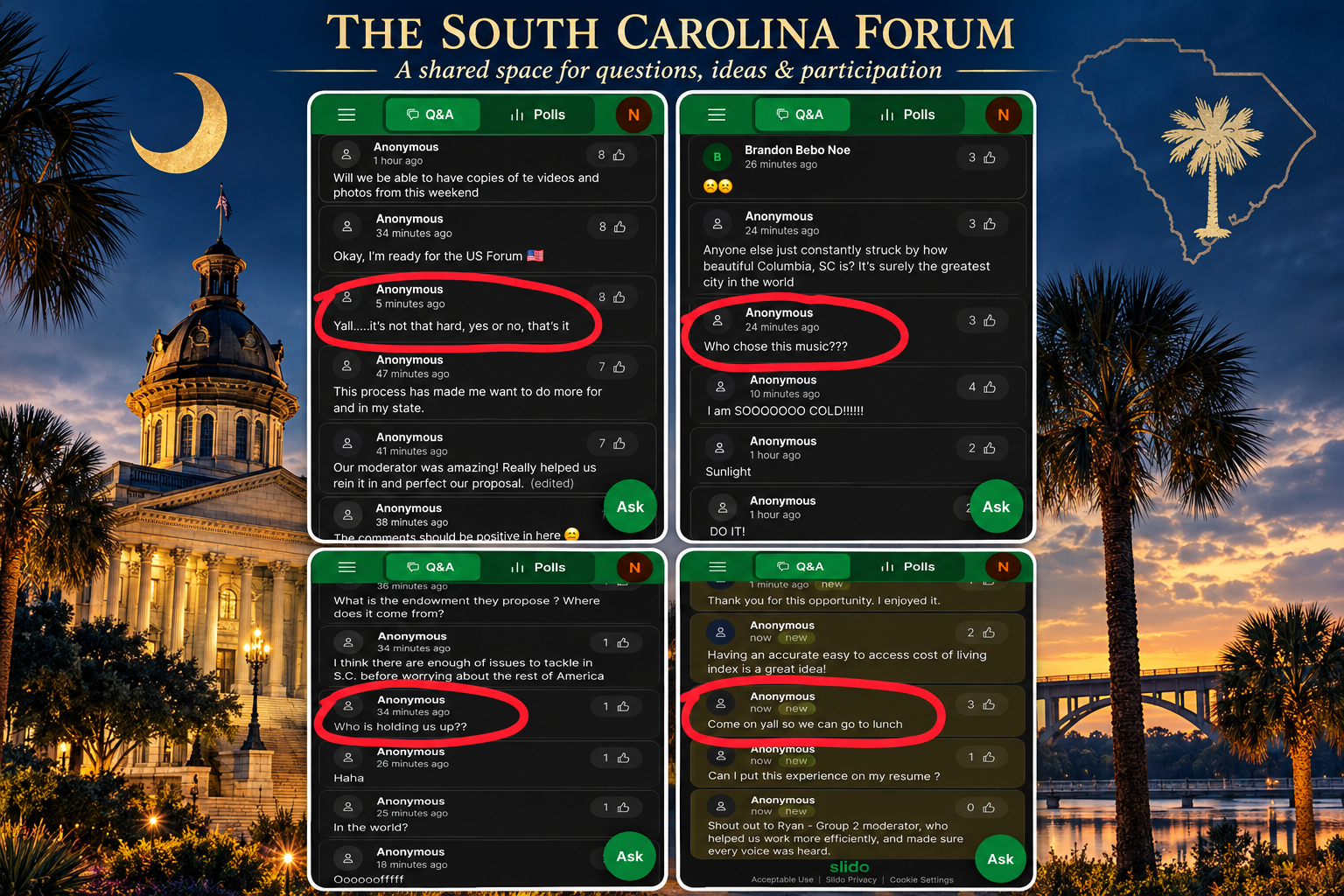
The SC Forum weekend was an awesome opportunity to learn, share ideas, and work with people from different backgrounds and perspectives. One tool that helped bring participants into the conversation was Slido.
Slido is an audience participation platform used at meetings and events. Participants can submit questions, respond to live polls, and vote on questions or comments. Depending on how an event is set up, people can also post anonymously. That can make it easier for more voices to be heard, especially from people who might not want to speak in front of a room. Slido’s live Q&A features include anonymous questions and audience upvoting.
For much of the weekend, Slido was used as intended: to ask thoughtful questions, share relevant comments, and take part in votes. The screenshots also show a few moments when the tool was used for jokes or off-topic remarks. Those comments may have seemed harmless to the people posting them, but they pulled attention away from the work and the forum's purpose.
Anonymity can help people participate more freely, but it also asks us to take personal responsibility for what we contribute. A useful question to ask before posting is: Does this help the conversation move forward?
I also used Slido to thank the team for the opportunity and for a meaningful weekend. I chose to attach my name to that comment. I wanted the appreciation to be personal and direct.
The best tools make participation easier. How we use those tools best depends on the people in the room. Slido gave us a way to ask, respond, and vote; each of us had to use that opportunity with care.

Day 118: Nextdoor Can't Fix What's Broken Until It Admits Something Is Broken

I recently heard an entrepreneur make a statement that stuck with me:
Before a company can fix something, it has to admit something is broken.
That sounds pretty simple, doesn't it?
Yet after 118 days documenting my experience with Nextdoor, I have a growing list of issues I'd like to see addressed.
But adding new features, launching advertising products, and promoting neighborhood intelligence won't fix underlying problems.
Let's take a look at what's broken.
1. Communication: A Master Class in How Not to Communicate
For 118 days, I've been requesting detailed Insights research that Nextdoor's own blog posts described as available.
I've emailed. I've followed up. I've expanded my outreach. I've offered to talk by phone, video, or virtual coffee.
I received a response, but not the complete reports I requested.
The problem isn't that Nextdoor must give me everything I ask for. It can tell me the reports aren't available, explain restrictions, or direct me to the appropriate person.
The problem is leaving a straightforward request unresolved.
With more than 20 years of experience in Learning & Development, I've seen the difference between hearing a question and actually addressing it.
Nextdoor has had 118 days to demonstrate that difference.
2. Accountability: Who Owns the Problem?
A simple request shouldn't require a 118-day case study.
Who owns the request? Who is responsible for following up? Who has the authority to resolve it?
If the person receiving a request can't answer it, accountability means making sure it reaches someone who can.
Instead, I'm still documenting the days.
Accountability isn't about finding someone to blame. It's about finding someone responsible for getting the job done.
3. Moderation: Who Holds the Moderators Accountable?
I've repeatedly raised concerns about Nextdoor's moderation model.
Users have publicly described experiences involving inconsistent enforcement, unclear explanations, difficult appeals, and decisions that appear to vary between communities.
I can't independently verify every user's account, and I won't pretend every moderation decision is wrong.
But the broader questions deserve answers:
What training do moderators receive?
How does Nextdoor measure moderation quality and consistency?
What happens when moderators make mistakes?
How can users appeal decisions effectively?
How does Nextdoor identify and address inconsistent enforcement across neighborhoods?
A community platform needs moderation. But moderation without meaningful accountability can undermine the trust it's supposed to protect.

4. User-Generated Content: Who Gets the Economic Benefit?
Nextdoor's neighborhood knowledge is valuable.
Reviews, recommendations, conversations and local experiences help make the platform useful. Nextdoor is now developing products that package neighborhood-level intelligence for advertisers.
I'm a shareholder. I want the company to monetize its competitive advantages.
But I also believe the people supplying valuable content deserve a seat at the table when we discuss how that value is shared.
I'm not claiming every user automatically has a legal right to royalties. Platform terms, privacy laws, and how information is used matter.
I'm asking a broader economic question:
If user contributions help generate commercial value, why shouldn't platforms explore ways for contributors to participate in that value?
That's why I launched my petition calling for a neighbor value-sharing agreement.
👉 Sign it: https://c.org/GkNWmffgg9
5. Transparency: Show Us the Methodology
Nextdoor recently published a neighborhood trust study with The Harris Poll that provided meaningful information about the research methodology.
I applauded that.
It showed that Nextdoor can publish research with useful context about how it obtained the findings.
That's the standard I'd like to see applied consistently.
When a company publishes statistics, promotes research, or uses data to sell advertising, people should understand the methodology behind the claims.
Transparency shouldn't depend on whether the information makes the company look good.
6. Leadership: Blocking Questions Doesn't Resolve Them
Nextdoor CEO Nirav Tolia has blocked me on X twice, according to my experience.
He's entitled to decide whom he interacts with on social media. Being CEO doesn't obligate him to respond personally to every shareholder.
But blocking me doesn't resolve my questions.
Leadership means establishing a process to address difficult questions, even when the CEO isn't the one answering them.
Disagree with me. Explain why I'm wrong. Delegate the question. Tell me the information isn't available.
Just make sure somebody owns the response.

7. Product Strategy: Stop Adding Before Fixing
Nextdoor keeps announcing new initiatives, including Neighborhood Intelligence and seasonal features like its Treat Map.
Innovation is important. Advertising products may help the company grow revenue.
But there's a difference between adding capabilities and fixing the underlying business.
Can Nextdoor turn its neighborhood knowledge into sustainable profits? Can it improve the user experience? Can it build trust with neighbors, advertisers, and shareholders? Can it establish consistent, accountable moderation?
A growing list of features doesn't automatically mean a healthier business.
Sometimes the best next product improvement isn't another feature. It's fixing the process that already exists.
8. Trust: The Company Has to Practice What It Promotes
Nextdoor recently published research emphasizing the importance of trust and communication in neighborhoods.
I welcomed that report.
But trust is built through repeated actions, not just statements.
When a company promotes trust, people evaluate its communication, moderation, and accountability practices as part of the experience.
That doesn't mean Nextdoor has to agree with every user.
It means its actions should support the principles it promotes.
The First Step Is Admitting There's a Problem
These are the issues I believe Nextdoor should examine:
Communication
Accountability
Moderator training and consistency
The economic value of user-generated content
Research transparency
Leadership's response to difficult questions
Product priorities versus operational improvements
Trust between the platform and its stakeholders
I'm not suggesting you can solve every problem overnight.
I'm suggesting that you can't fix a problem you refuse to acknowledge.
Nextdoor has built something with real potential. It has millions of users, a distinctive neighborhood focus, and information that advertisers may find valuable.
I want that potential to translate into a stronger business.
But before the next big announcement, perhaps leadership should ask a different question:
What needs fixing before we build something else?
Day 118.
I'm still here. I'm still asking questions. And I still want Nextdoor to succeed.
Now, let's start fixing things.
👉 NielFlamm.com/blog

From Common Ground to Measurable Progress in South Carolina

This afternoon, the SC Forum wraps up—and I’m leaving impressed by what can happen when people with different opinions, backgrounds, and ideologies come together around a shared purpose: making a meaningful difference for families in South Carolina.
Nine groups have been working on ideas to improve families’ livelihoods through better career opportunities. The conversations have included topics like the SC Works website and apprenticeship programs. The goal is to develop bill recommendations for the state legislature.
That’s ambitious work. And wearing my Learning & Development hat, I keep coming back to one question: Are we making these recommendations S.M.A.R.T.?
For anyone unfamiliar with the framework, S.M.A.R.T. goals are:
Specific
Measurable
Actionable
Realistic
Time-bound
It’s easy—and understandable—to say we want to “make things better.” But what would “better” look like for someone using SC Works? What would a stronger apprenticeship program accomplish, and for whom? How will we know whether a change is working? When will we start measuring, and when will we review the results? Is the goal ambitious but achievable?
These questions aren’t about shrinking the vision or chasing the easiest win. They’re about giving a good idea a clear path to results. A bill recommendation should make it clear what action is proposed, who is responsible, what progress looks like, and when that progress will be assessed.
My two cents: government and public policy could benefit from more of the practical tools used in the corporate and private sectors. Clear objectives, measures of success, timelines, and regular reviews can help turn a shared aspiration into accountable work.
The Forum’s strength is bringing different people to the same table. The next step is making sure the ideas we carry forward are clear enough to act on—and concrete enough to measure. That’s how common ground can lead to lasting impact for South Carolina families.

Day 117: Nextdoor Can Map 350,000 Neighborhoods. Can It Figure Out Its Own Problems?
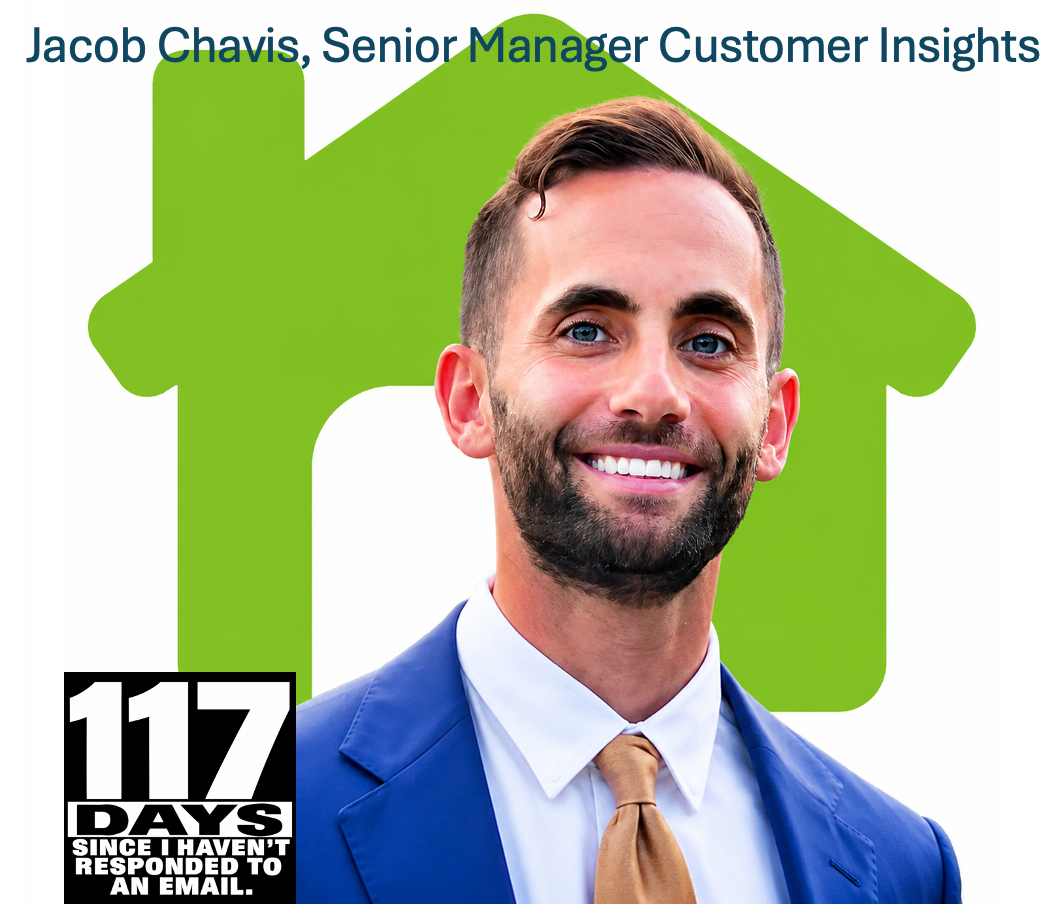
I missed a few days of my Nextdoor case study. It's Day 117, and I haven't forgotten. 😂
On October 8, Nextdoor published two posts that caught my attention. One promoted its new Neighborhood Intelligence advertising capabilities. The other announced the return of its annual Treat Map, sponsored in the U.S. by Reese's.
Both demonstrate what Nextdoor can do when it puts its mind to something.
And both highlight the question I've been asking for 117 days:
Why is Nextdoor so good at promoting its capabilities, but still struggling with the questions I've raised about transparency and communication?
350,000 Neighborhoods. That's Impressive.
Nextdoor says it has mapped more than 350,000 neighborhoods, connecting local conversations to verified addresses and letting advertisers understand differences between communities—even within the same ZIP code.
That's a compelling advertising proposition.
A ZIP code can contain neighborhoods with very different interests, needs, and purchasing habits. Helping businesses understand those differences could be a genuine competitive advantage.
Nextdoor is finally trying to turn its neighborhood knowledge into a more differentiated commercial product.
As a shareholder, I want that to succeed.
But here's the catch: having valuable data is one thing. Building a sustainable, profitable business around it is another.
Clear communication about how that data is collected, analyzed, and used matters, too.
Nextdoor wants advertisers to appreciate the value of its neighborhood intelligence. It should welcome reasonable questions about its research and methodology rather than leave people wondering where the detailed information went.

The Treat Map: A Neighborhood Success Story
Nextdoor's Treat Map is another example of the platform doing something useful.
Neighbors can mark their homes or local attractions, such as corn mazes and bakeries. Parents can plan routes, and filters help families find non-food treats and pet treats.
Reese's gets brand exposure. Nextdoor gets engagement. Neighbors get a tool for Halloween.
That's a win-win-win.
It's also a smart example of connecting a commercial sponsor with a community activity.
But notice something important: Nextdoor is asking neighbors to participate. Their homes, local knowledge, and contributions make the experience more useful.
The platform supplies the technology. The sponsor supplies commercial support. The neighbors make it a community experience.
That brings me back to my ongoing question: Do neighbors contribute value to Nextdoor, and should they share in the economic value their content helps create?
Nextdoor's Priorities Are on Display
Let's give credit where it's due. Nextdoor is developing advertising products, finding sponsors and creating seasonal experiences.
Those are legitimate business activities.
But my case study isn't about whether Nextdoor can produce clever marketing posts. It's about whether the company can demonstrate the same commitment to communication, transparency, and accountability when the questions aren't so convenient.
For 117 days, I've been asking for the detailed Insights research Nextdoor's own blog posts described as available.
I've received a response, but not the complete reports I requested.
I've emailed. I've followed up. I've offered to talk.
Meanwhile, Nextdoor keeps announcing new products and partnerships.
There's nothing wrong with that. The company should keep innovating.
But product announcements don't resolve unanswered questions.

Day 117: I'm Still Here
Nextdoor can map 350,000 neighborhoods.
It can help advertisers distinguish one community from another.
It can map Halloween attractions and bring Reese's into the neighborhood.
Those are capabilities worth building on.
Now I'd like to see the company apply that same energy to communicating with people who ask reasonable questions.
I'm a shareholder. I want Nextdoor to succeed, become consistently profitable and create long-term value.
That requires more than clever advertising and seasonal maps. It requires trust, transparency, and the willingness to address difficult questions.
Nextdoor knows how to find the neighborhoods. I'm still waiting to see how it finds the answers.
👉 Follow the continuing case study at NielFlamm.com/blog

Celebrating the Founding of Tau Epsilon Phi

Today, October 10, marks the founding of Tau Epsilon Phi—a fraternity built on fellowship, growth, and a commitment to making a positive difference.
Since pledging in the fall of 1990, I’ve had some amazing experiences and made memories I’ll always value. Tau Epsilon Phi has given me countless opportunities, taught me so much about navigating the world as a man, and encouraged me to make a positive impact on the people and communities around me.
I’m proud to be a member and grateful for the brotherhood and lessons that have shaped my journey. Happy Founders’ Day to my TEP brothers!