
Two Fake Invoices, Two Attachments, and Zero Reasons to Open Them
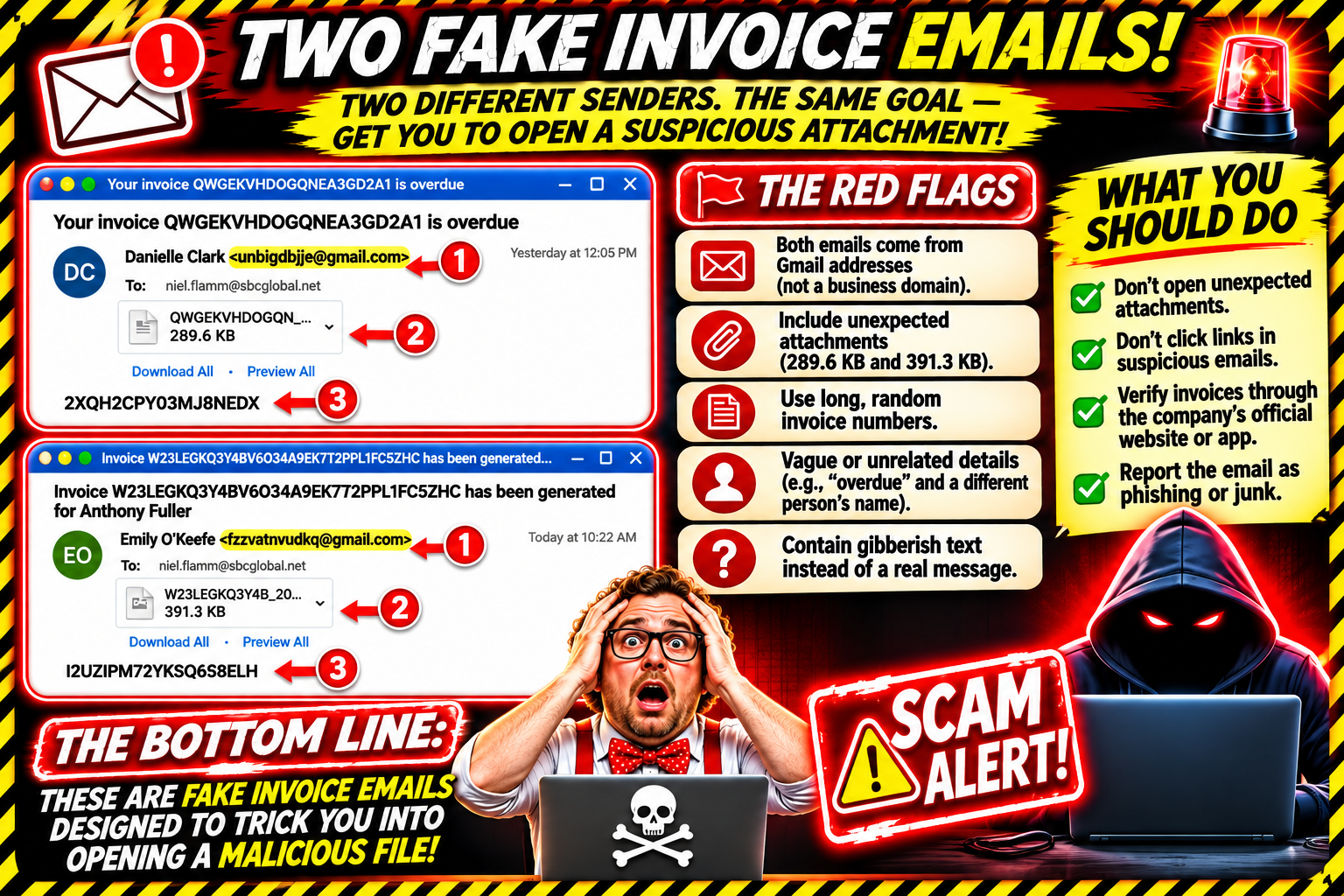
Apparently, somebody out there thinks sending me random invoice emails with mysterious codes and attachments is a great way to get my attention.
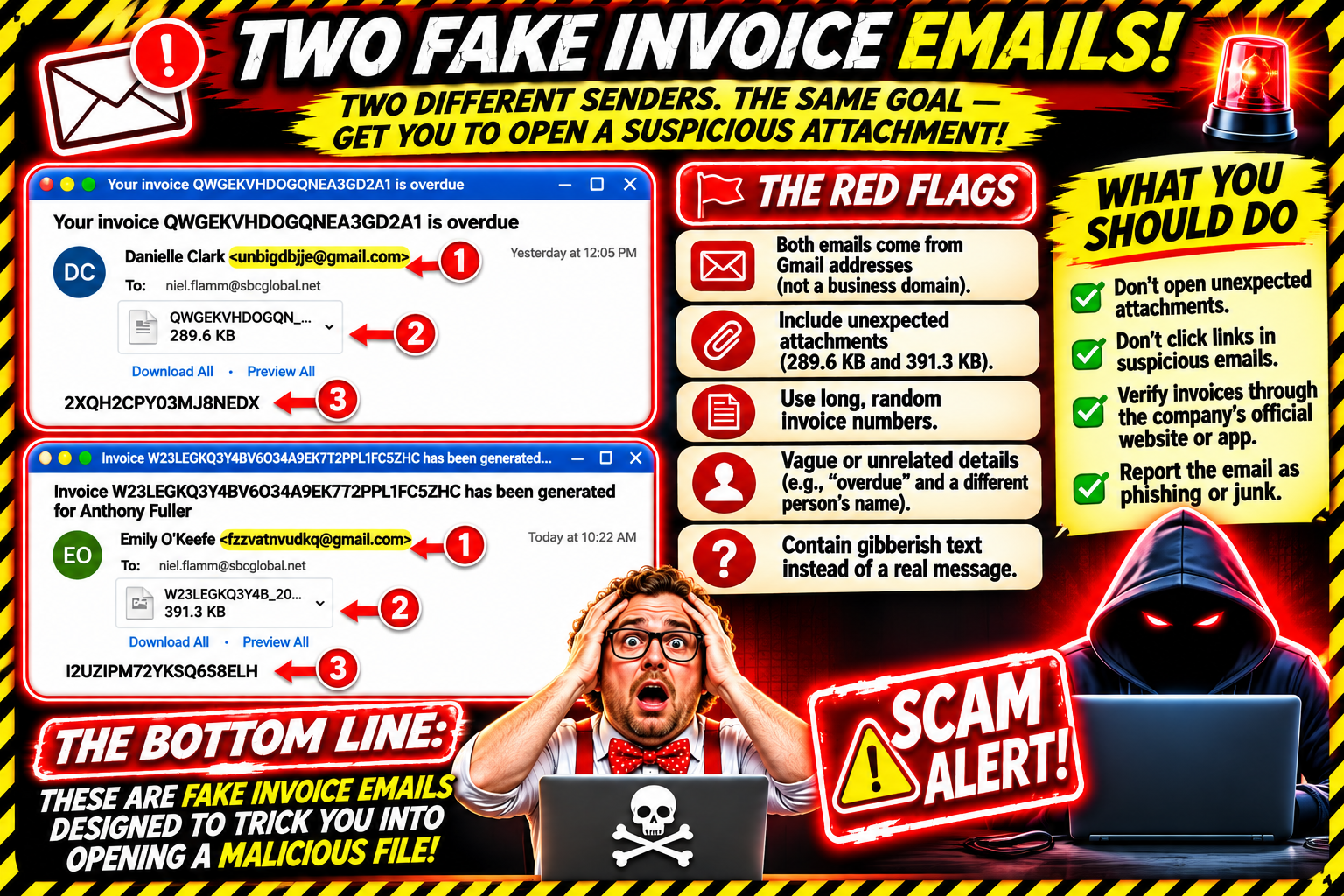
Today's inbox brought me two suspicious invoice emails, each with its own randomly generated-looking invoice number, an attachment, and absolutely no useful explanation.
Invoice #1: "Your invoice is overdue"
The first email claims my invoice is overdue. It comes from a Gmail address, includes a long, nonsensical invoice identifier in the subject line, and has a nearly 290 KB attachment.
The actual message? A random string of characters.
Apparently, when you are trying to collect money, context is optional.
Invoice #2: "An invoice has been generated for Anthony Fuller"
Then we have the second email, which claims an invoice was generated for someone named Anthony Fuller.
Again, another random invoice identifier, another attachment—this time nearly 400 KB—and another message containing what looks like a meaningless code.
I have no idea who Anthony Fuller is, what this invoice is for, or why I'm apparently receiving it.
And that's precisely the point.
The attachments are the bait
These emails are designed to get someone curious, confused, or concerned enough to open the attachment.
Maybe you're wondering:
Did I accidentally order something?
Is this invoice connected to my account?
Who is Anthony Fuller?
Why is this invoice overdue?
Is there a payment I forgot about?
That curiosity is exactly what these messages are counting on.
Don't open random invoice attachments just because an email claims you owe money.
If you don't recognize the sender, don't know what the invoice is for, and weren't expecting the document, there's no reason to take the bait.
The scammers need to work on their presentation
Seriously, if you're going to attempt to scam people, at least make the email look like it belongs in the real world.
Two random Gmail accounts, strange invoice numbers, mystery attachments, and messages consisting of gibberish aren't exactly the pinnacle of professional billing.
I'm not saying I want scammers to improve their craft. Quite the opposite. I'd prefer they find a different hobby—perhaps knitting, gardening, or collecting something that doesn't involve trying to steal somebody's money or information.
But these emails are so blatant that they're almost comical.
My inbox isn't your accounts receivable department.
I don't know who these people are, who Anthony Fuller is, what the invoice numbers mean, or what I'm supposedly overdue for.
And I certainly won't be opening the attachments to find out.
Delete. Report. Move on.
If an invoice is legitimate, the company should be able to verify it through an official channel—not through a mystery email and an attachment from a random Gmail account.