

Day 98: Maybe the Silence Is the Most Interesting Data of All

Day 98.
We're now two days away from triple digits, and I’m still waiting for the detailed Nextdoor Insights studies I originally requested.
But today, I’m looking at this saga differently.
What If the Experiment Wasn't the Study?
For 98 days, I've been asking Nextdoor for research data.
In the process, I've accidentally collected some data of my own.
How does an organization respond when one person simply refuses to let a reasonable question disappear?
Not with threats. Not with harassment. Not by screaming louder.
Just by continuing to ask.
At some point, the absence of an answer becomes information itself—not proof of anyone's motive, but a case study in how an organization handles persistence, ownership, and closure.
That's something you won't find in a spreadsheet.
Meanwhile, the Petition Is Live
There's now another question on the table:
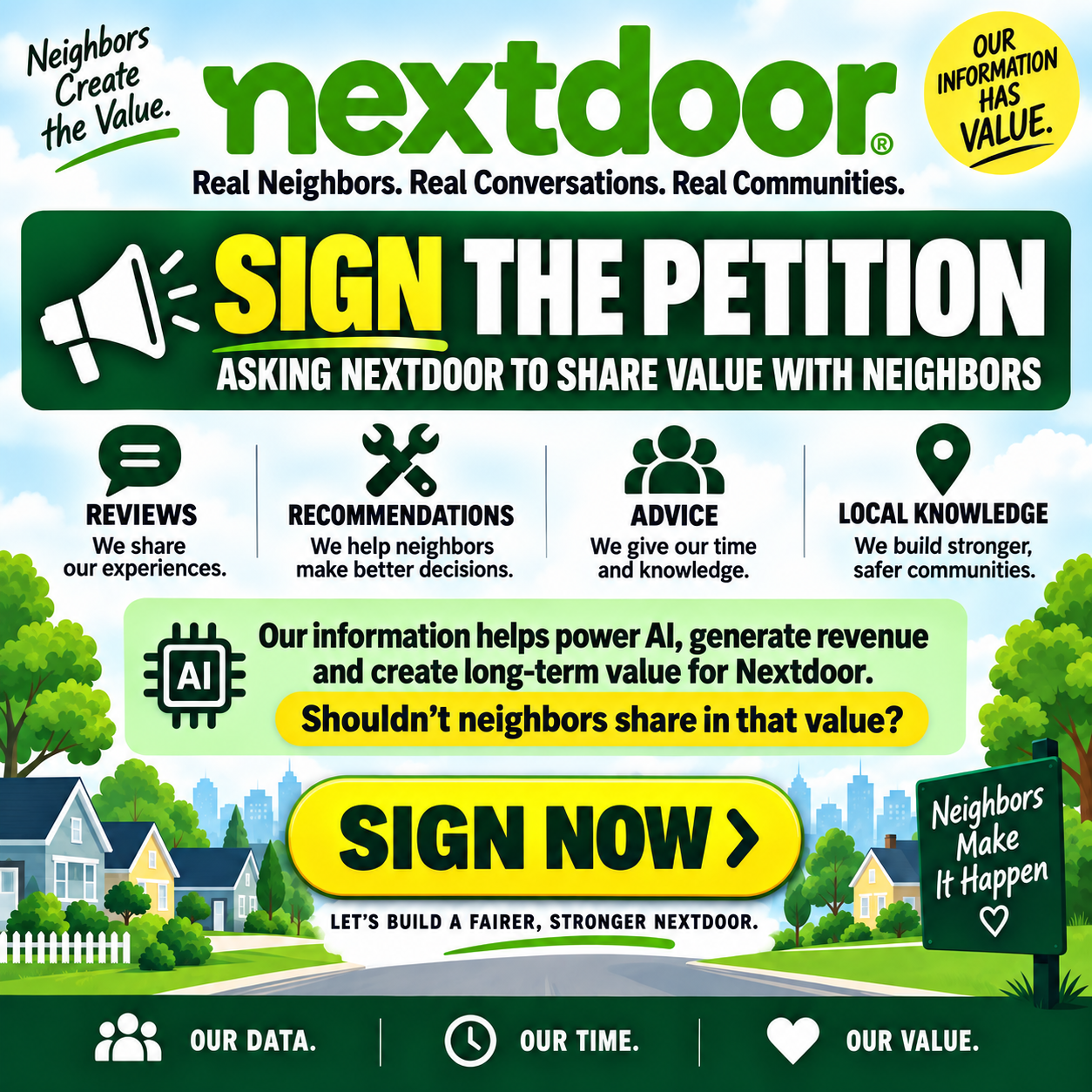
If neighbor reviews, recommendations, and local knowledge become increasingly valuable to Nextdoor—especially in the age of AI—should the neighbors creating that value participate in it?
I've launched the Neighbor Value-Sharing Petition to start that conversation.
If you agree, please sign it and share it.
Tomorrow: Day 99.
Then comes 100.
The funny thing is, I started this journey looking for Nextdoor's data.
I didn't expect Nextdoor's response to become data of its own.
👉 Follow the saga at NielFlamm.com/blog
Day 97: The Stock Is Moving. My Email Is Moving. But Is the Company Learning?
Welcome to Day 97.
Let's start with some good news for Nextdoor shareholders.
NXDR had a good week. It moved from roughly $2.38 to $2.49, up about 4.6%. Investing.com
That's progress.
But perspective matters. NXDR remains below its 52-week high, and it's also below Citigroup's $2.85 price target. Citi raised that target from $2.30 in August while maintaining its Neutral rating. Yahoo Finance
As a shareholder, I'll happily take an up week.
Now, back to our regularly scheduled programming.
Another Email Is Coming
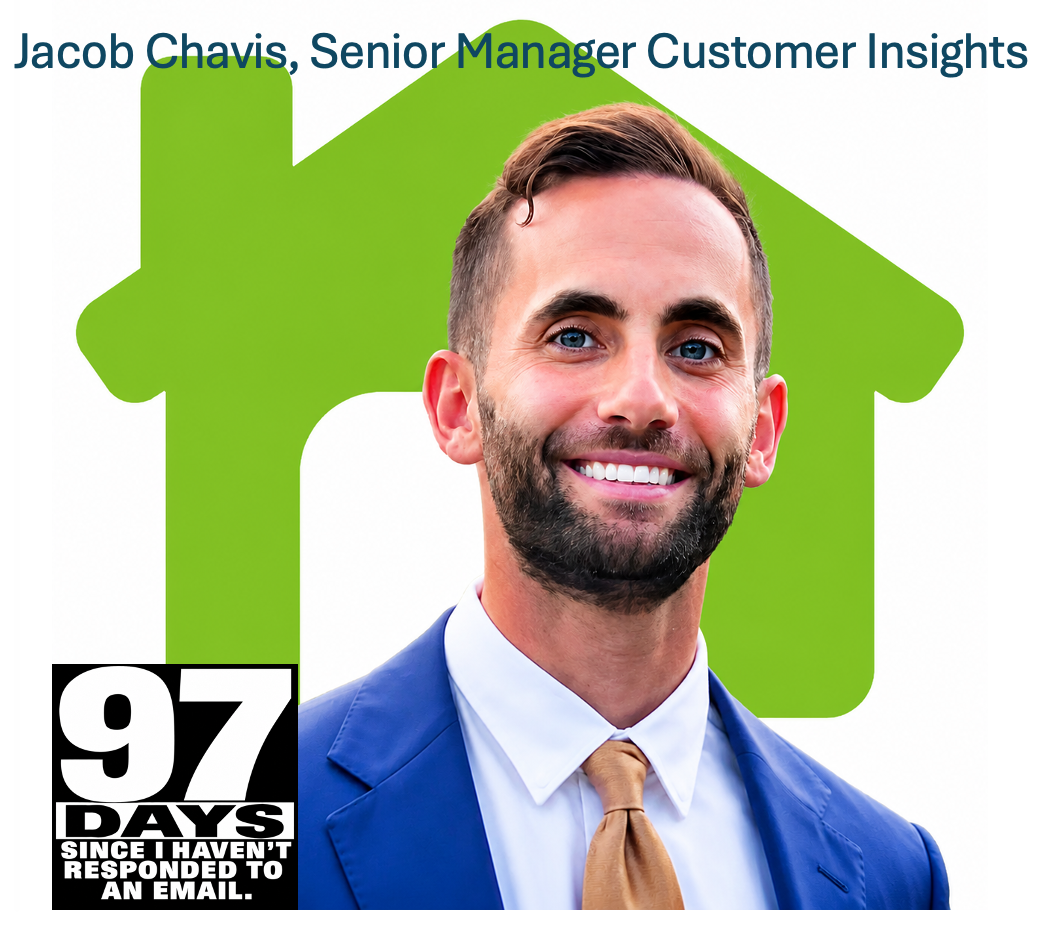
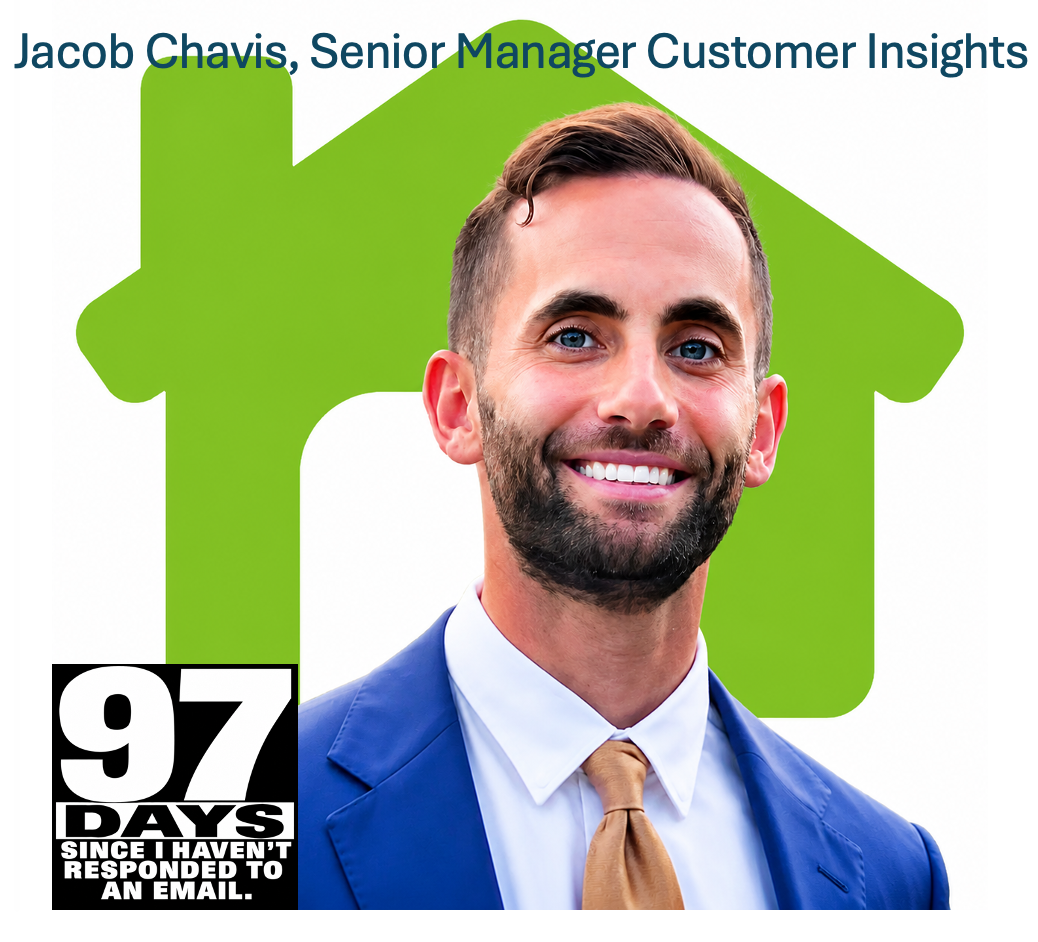
I will be sending another email asking Nextdoor for the detailed Insights studies I've now been requesting for 97 days.
Not the public blog posts.
Not links back to the summaries.
The detailed data that Nextdoor's own posts told readers they could request.
The question hasn't changed.
But after 97 days, maybe there's another question worth asking.
What Is the Cost of an Unfinished Task?
I've encountered this repeatedly during my career in Learning & Development.
People tend to measure the cost of doing something.
We don't always measure the cost of not finishing it.
Think about what's happened here.
One unanswered request became a follow-up.
The follow-up became another email.
Then another.
It became blog posts.
LinkedIn posts.
A 97-day running case study.
And now we're approaching Day 100.
That's organizational debt.
Every time an issue gets passed along, ignored, misunderstood or left without an owner, the organization doesn't necessarily make it disappear.
Sometimes it accumulates interest.
Imagine the Alternative
Imagine if somewhere around Day 3 someone had simply written:
“Niel, here's the data.”
Or:
“Niel, we're sorry, but we're not providing the detailed study.”
Or:
“Here's who handles these requests.”
Three sentences.
Done.
Instead, I'm preparing another email on Day 97.
That's why this stopped being merely about two Insights studies a long time ago.
For me, it has become a fascinating real-world example of organizational follow-through.
You can have talented employees.
You can have executives appearing on podcasts.
You can have AI strategies.
You can have a rising stock price.
But organizations are also judged by something much less glamorous:
Can somebody just finish the task?
NXDR had a good week.
I'm glad.
I'm a shareholder. I want more good weeks.
But I'm also still waiting for an answer to a question that should never have survived for 97 days.
Another email is coming.
Three more days until Day 100.
At this point, I'm genuinely curious which arrives first:
The studies—or triple digits.
👉 Follow the continuing case study at NielFlamm.com/blog
Day 94: LinkedIn Thinks I Should Meet Nextdoor’s Head of People. I Agree.
Sometimes an algorithm has impeccable timing.
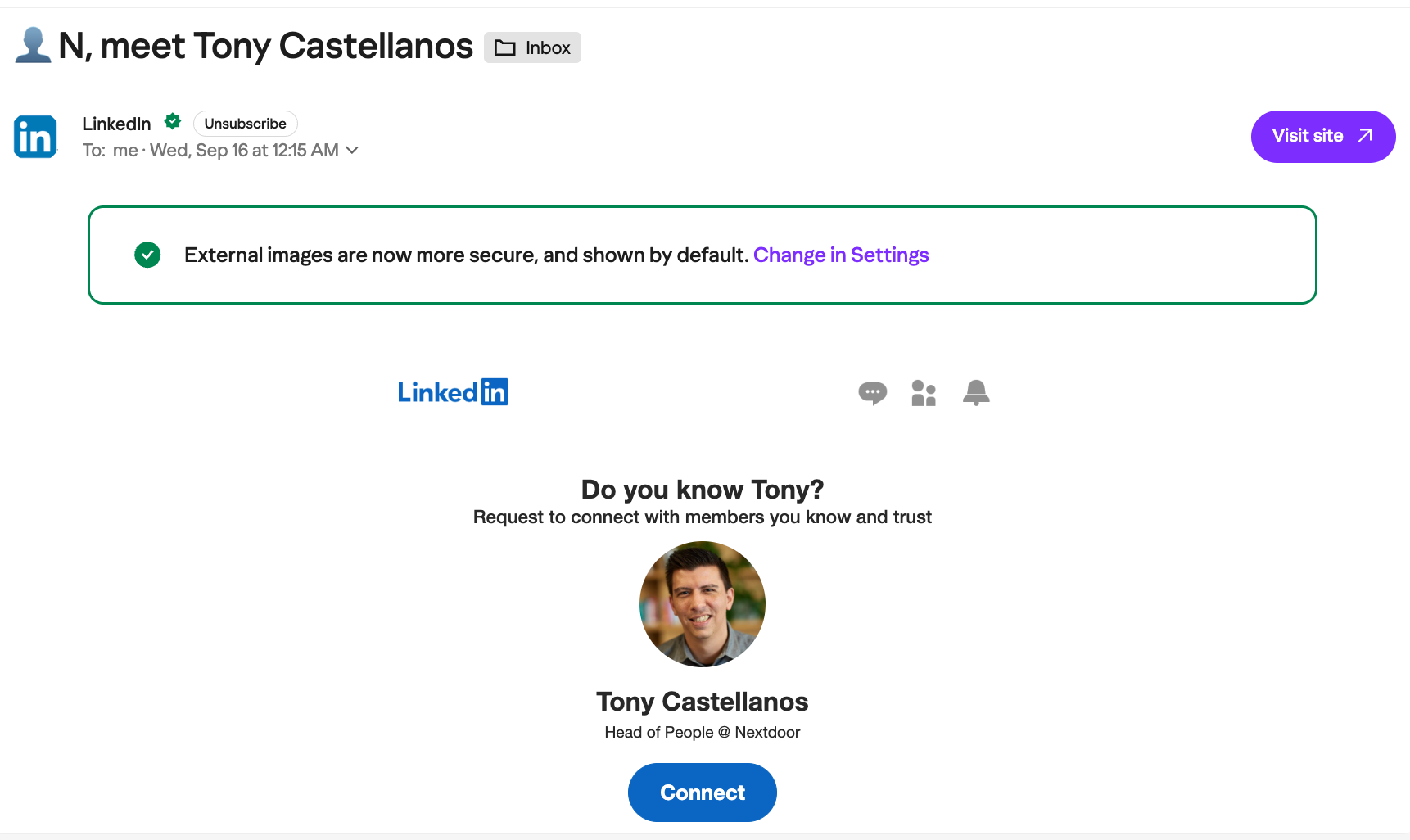
At 12:15 this morning, I received an email from LinkedIn with the subject line:
“N, meet Tony Castellanos.”
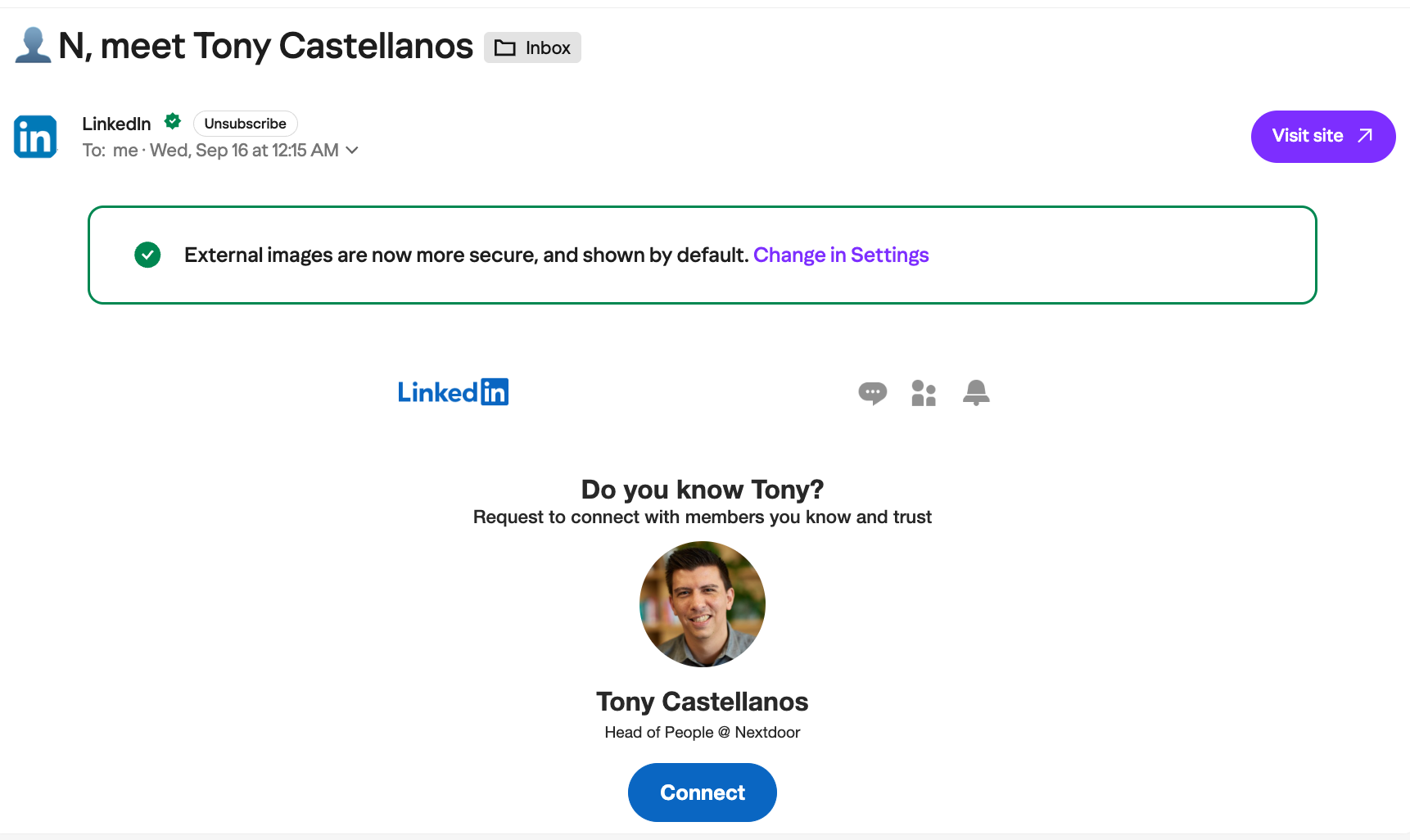
LinkedIn asked:
“Do you know Tony?”
Well, LinkedIn, not exactly.
But after 94 days, I would absolutely love to get to know him.
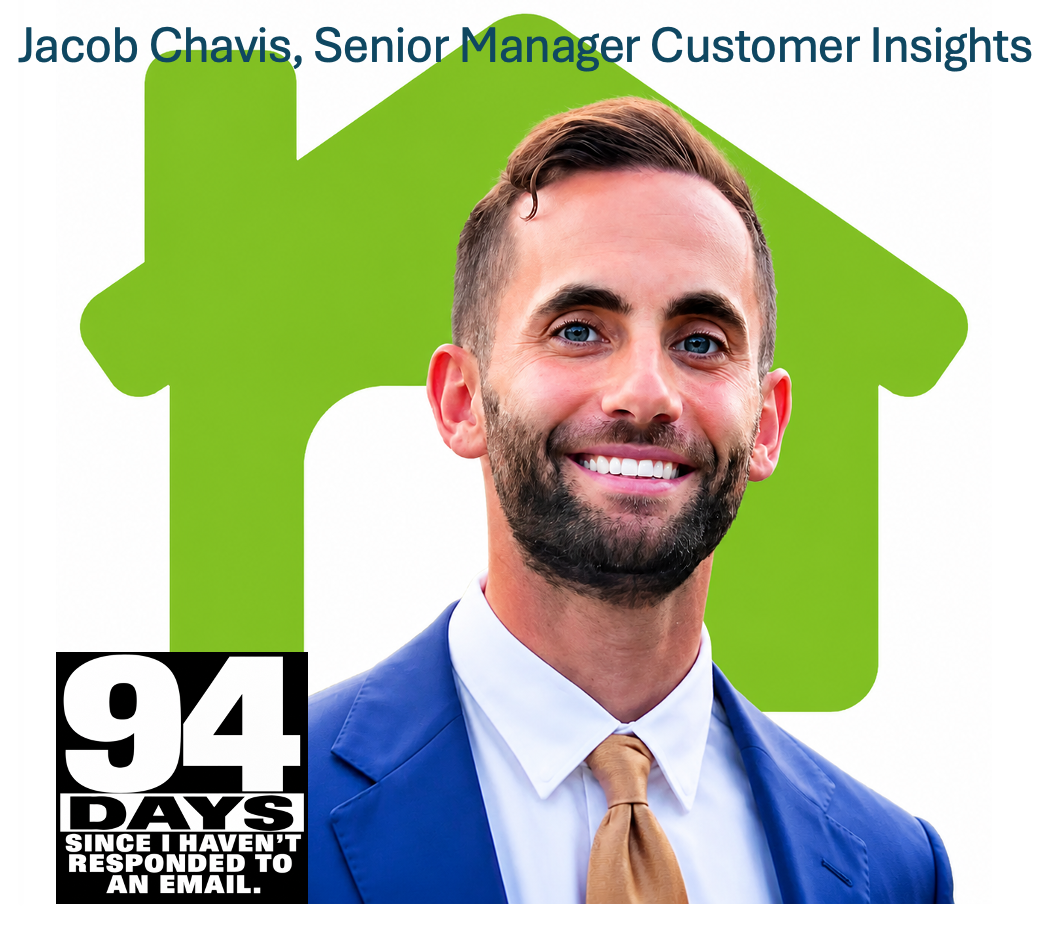
Tony Castellanos is Nextdoor’s Executive Vice President, People. Nextdoor promoted him to that position in March, giving him responsibility for its People organization, including talent acquisition, compensation, HR business partnering, and benefits. Nextdoor also describes the People function under his leadership as a strategic advisory organization that partners with senior leaders on important talent and organizational decisions. Nextdoor
So LinkedIn, your recommendation got me thinking.
Tony, Want to Have a Virtual Coffee?
I've tagged Tony a few times during this ongoing Nextdoor case study.
I may have even included him on an email or two. After 94 days, the distribution list has gotten a little crowded.
But this isn't about blaming Tony for my unanswered request.
He's not running Nextdoor Insights.
He didn't publish the Home Insurance research.
He's not responsible for sending me the data.
And I wouldn't expect the Head of People to suddenly open a spreadsheet and say:
“Niel, good news. I found your missing insurance study!”
That's not his job.
But the email made me think about something bigger.
What Does the Head of People Think?
My original request remains remarkably simple.
Nextdoor published an Insights article telling readers that they could reach out for detailed data, additional audience segments, and strategic recommendations.
I reached out.
And today is Day 94.
So I'd genuinely be interested in Tony's perspective—not necessarily on where the spreadsheet is, but on what happens organizationally when something like this continues for more than three months.
What does Nextdoor's Head of People think when a shareholder responds to a publicly advertised invitation for information and, 94 days later, still hasn't received the requested material or a definitive explanation that it isn't available?
Does he see a communication problem?
A process problem?
An ownership problem?
An escalation problem?
A training problem?
Or does he look at the situation and think Nextdoor has handled it appropriately?
I'd actually like to know.
And Then There’s Risk
This is where the People perspective becomes especially interesting.
I'm not suggesting that Tony is Nextdoor's chief risk officer, general counsel, or head of investor relations. He's not.
But senior People leaders often have a broad view of organizational behavior, leadership practices, and how internal decisions can affect employees and the business.
Nextdoor itself says Tony's People organization is designed to operate as a strategic advisor to the business. Nextdoor
So from that perspective, I'd be curious about his thoughts on organizational risk.
Not because I am declaring that Nextdoor has created some specific legal liability. That's a different question for lawyers.
I'm talking about something much more basic.
What happens when a small problem is allowed to become a 94-day problem?
The original request could have been resolved with a few sentences:
Yes, here's the data.
No, we can't provide it.
It's restricted, and here are the requirements.
That language in the article was incorrect.
Someone else handles these requests.
Any one of those would have provided closure.
Instead, we're on Day 94.
This Is Becoming a Case Study in Organizational Behavior
That's one of the reasons I've remained fascinated by this.
The longer it goes, the less interesting the actual research data becomes.
The organizational response becomes the story.
Who owns the question?
Who notices when something falls through the cracks?
Who has the authority to resolve it?
When does somebody say, “Why are we still dealing with this?”
How does feedback move through the organization?
Does escalation produce resolution—or another layer of silence?
Those are People questions.
They're also leadership questions.
And they're exactly the kinds of questions that fascinate me after more than two decades working in Learning & Development.
Sometimes what looks like a knowledge problem is really a performance problem.
Sometimes what looks like a communication problem is really an ownership problem.
And sometimes an issue survives for 94 days because nobody has decided it's their job to end it.
Tony Has Talked About Human Judgment
There's another reason LinkedIn's recommendation made me smile.
Nextdoor has recently highlighted Tony's work bringing AI into its People organization. The company says the goal is to use technology for transactional work while letting people spend more time on work that requires human judgment. Nextdoor
I actually like that philosophy.
And this seems like a pretty good opportunity for some human judgment.
Forget AI.
Forget another automated workflow.
Forget another corporate process.
A human being could probably resolve this.
Maybe over coffee.
So Yes, LinkedIn. I’d Like to Meet Tony.
LinkedIn apparently thinks Tony Castellanos and I should know each other.
I'm willing.
Tony, if you happen to see this, the invitation is sincere.
Phone.
Video.
Virtual coffee.
I'll even buy my own coffee.
I don't expect you to personally produce the Insights data. I'd simply be fascinated to hear how someone responsible for Nextdoor's People organization views what has now become a 94-day customer/shareholder communication journey.
What worked?
What didn't?
Where should ownership have existed?
What organizational risks can emerge when relatively simple questions remain unresolved?
And perhaps most importantly:
How would you prevent Day 94 from becoming Day 100?
Because tomorrow, unless something changes, there will be a Day 95.
Thanks for the introduction, LinkedIn.
Tony, the coffee invitation is open.
Follow the continuing case study at NielFlamm.com/blog.
Day 93: Nextdoor Turned the Comments Off Again. So Much for Progress.
Well, that didn't last long.
A few days ago, I actually did something that might surprise people who only see my Nextdoor posts occasionally:
I applauded Nextdoor.
I had previously provided feedback about Nextdoor disabling comments on some of its LinkedIn posts. Then I noticed newer posts where commenting was available again.
I said that was progress.
I said companies should be willing to change course.
I even wrote:
“Nice move, Nextdoor. Keep going.”
Apparently, I should have added:
“…but please don't put it in reverse.”
Because here we are.
It's Day 93 of my ongoing Nextdoor case study, and they've once again turned off comments on a Nextdoor LinkedIn post.
And the post they chose makes this particularly interesting.
The Publix Post Has Comments Turned Off
Nextdoor's recent LinkedIn post celebrates Publix Super Markets ranking No. 4 on PEOPLE's 100 Companies That Care list.
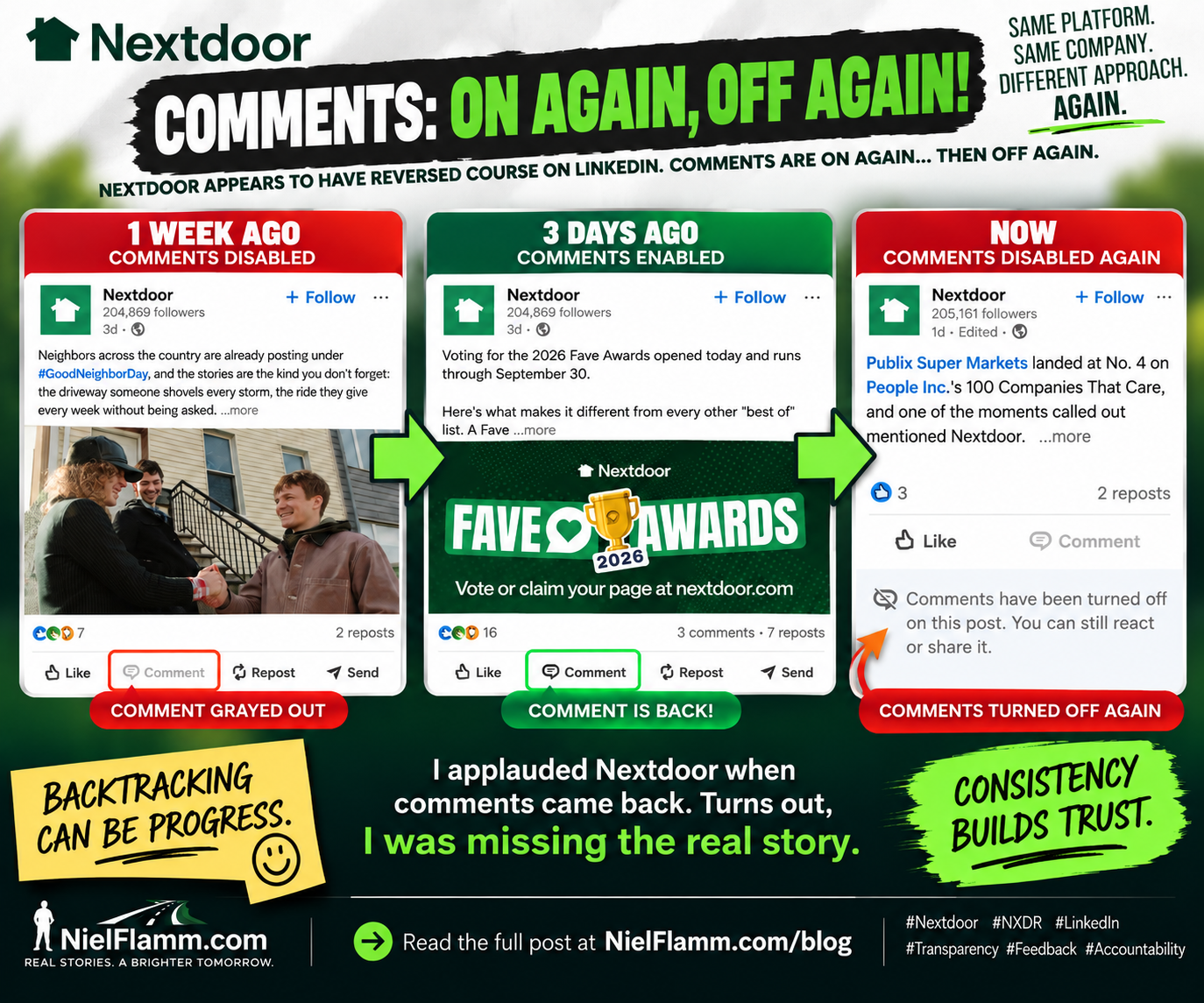
Nextdoor's connection to the story is that a Publix associate used the Nextdoor app while helping neighbors before Hurricane Milton. Nextdoor's post says this demonstrates what can happen when a network is built around real local neighborhoods. LinkedIn
I've already written about why I think there's another, more interesting story here:
Nextdoor didn't make the Top 100.
But now there's another layer.
Look at the screenshot.
The Comment button is grayed out, and LinkedIn states:
“Comments have been turned off on this post.”
LinkedIn lets Page administrators turn comments on or off, even after a post has been published. LinkedIn
So once again, Nextdoor is publishing something publicly on a social network while choosing not to allow the public to respond beneath that particular post.
Wait… Weren't We Moving Forward?
That's what makes this frustrating.
I had just praised Nextdoor for what seemed like a change in direction.
Comments had been disabled.
Then newer posts allowed comments.
I noticed.
And instead of finding another reason to complain, I did exactly what I think someone providing fair feedback should do:
I acknowledged the improvement.
That's important.
If I'm going to point out things I believe Nextdoor gets wrong, then I should be equally willing to acknowledge when I think it gets something right.
I did.
Now we're apparently going backward again.
This Is Exactly Why Communication Matters
Nextdoor describes itself as “the essential neighborhood network” and says it connects neighbors to conversations that matter locally. LinkedIn
Conversation.
That's the interesting word.
Because conversation generally requires more than one participant.
Posting a corporate message and disabling responses isn't really a conversation.
It's a broadcast.
Broadcasting information isn't inherently wrong. Companies do it every day.
But for a company whose entire product is built around people talking to one another, repeatedly switching comments on and off creates an odd contradiction.
A social network should probably be social.
And Why This Post?
That's the question I'm especially curious about.
Why disable comments on this post?
I don't know.
Maybe it was intentional.
Maybe there's a communications strategy behind it.
Maybe Nextdoor anticipated comments it didn't want.
Maybe it has absolutely nothing to do with criticism.
I don't have access to Nextdoor's internal decision-making, so I won't invent a motive.
But I can certainly observe the result:
Nextdoor published a post celebrating another company's recognition for caring about people and communities—and didn't allow people to comment on it.
That's… interesting.
Especially after I realized I had initially been missing the real story.
I Was Missing the Real Story
At first, my reaction to the Publix post was basically:
Nextdoor is playing Six Degrees of Kevin Bacon.
A Publix employee did something wonderful.
The employee happened to use Nextdoor.
Publix made PEOPLE's list.
Nextdoor then highlighted its connection to the story.
I thought that was the story.
It wasn't.
The more interesting question was:
Why wasn't Nextdoor itself on the list?
Technology companies including Salesforce, NVIDIA, Intuit, Adobe, ServiceNow and Hewlett Packard Enterprise made the 2026 Companies That Care list.
These aren't organizations that decided they had to choose between corporate responsibility and running successful businesses.
They demonstrate that companies can pursue their missions, invest in employees and communities, make money, and create value for shareholders.
That's the standard I want Nextdoor to pursue.
Don't borrow someone else's spotlight.
Earn your own.
And Comments Are Part of the Bigger Picture
This isn't really about one LinkedIn button.
It's about something I've been discussing throughout this case study:
Does Nextdoor's behavior match Nextdoor's message?
Nextdoor talks about connection.
Community.
Trust.
Neighbors.
Conversation.
Local businesses.
Good neighbors.
But I've also provided feedback about what I see as problems with its volunteer moderator model, its approach to monetizing small businesses, communication and transparency, shareholder value, and the platform's long-running “Karen” reputation.
And now we're back to comments being disabled on a corporate LinkedIn post.
Again.
None of these things alone define Nextdoor.
But collectively they raise a question I've asked repeatedly:
Does the experience match the mission, vision and values?
Day 93—and the Other Question Still Hasn't Been Answered
And yes, there's another reason today is Day 93.
I'm still waiting for the detailed data referenced in Nextdoor's Home Insurance Insights research.
I've also requested the detailed data referenced in its Financial Advising and Investing research.
I'm not asking for the public blog summaries.
I'm asking for the detailed data Nextdoor told readers they could request.
It's been 93 days.
I've emailed.
I've clarified the request.
I've offered phone.
Video conference.
Virtual coffee.
A simple answer would still resolve it:
Yes, we can provide it.
No, we can't provide it.
It's restricted.
Here are the requirements.
Someone else handles it.
Those are answers.
Silence isn't.
Hearing vs. Listening—Again
Maybe this is why I keep returning to my Learning & Development background.
There is a difference between hearing feedback and listening to feedback.
Listening doesn't mean agreeing.
It doesn't mean giving me what I want.
It doesn't mean leaving every LinkedIn comment section open forever.
And it certainly doesn't mean a company has to implement every suggestion somebody posts online.
Listening means considering the information, making a decision, and communicating.
That's why I was willing to applaud Nextdoor when comments came back.
I thought perhaps the company had reconsidered.
Maybe it had.
Now comments are off again.
So I'll provide feedback about that too.
Nextdoor, Pick a Direction
If comments are going to be open, open them.
Moderate them.
Respond when appropriate.
Ignore ridiculous comments when appropriate.
Let people disagree.
That's what social networks do.
If comments are going to be disabled, that's Nextdoor's decision too.
But then let's acknowledge the irony of the neighborhood conversation company limiting conversation on its own corporate social media.
You can't build a brand around community dialogue and then appear uncomfortable when the dialogue isn't completely controlled.
Moderating conversation and preventing conversation are two very different things.
I applauded Nextdoor when I thought it was moving forward.
Today, I'm pointing out that it appears to have taken a step backward.
That's not negativity.
That's consistency.
When I see improvement, I'll acknowledge it.
When I see something I think deserves feedback, I'll provide it.
And when Nextdoor finally answers my 93-day-old research request?
I'll acknowledge that too.
Until then:
Day 93.
The detailed data still hasn't arrived.
And apparently, the comments haven't either.
Follow the continuing case study at NielFlamm.com/blog.
Nextdoor Didn’t Make the Top 100. Why Not?
The more I thought about Nextdoor’s LinkedIn post celebrating Publix making PEOPLE’s 100 Companies That Care, the more I realized I was focused on the wrong part of the story.
Yes, Publix ranked No. 4.
Yes, Nextdoor highlighted a Publix associate who used the Nextdoor app to discover an elderly neighbor needed help before Hurricane Milton.
It's a great story, and the employee deserves recognition.
But there's another question that I find much more interesting:
Where was Nextdoor?
Nextdoor didn't make the Top 100.
For a company whose identity revolves around neighbors, community, connection, trust and helping people locally, that's something worth examining.
Technology Companies Made the List
This wasn't a ranking limited to grocery stores, hospitals and nonprofits.
Technology companies made it.
Companies including Salesforce, Intuit, Hewlett Packard Enterprise, Adobe, ServiceNow and NVIDIA were recognized.
Salesforce ranked an impressive No. 5.
So technology isn't the barrier.
And that makes me wonder:
For a company that promotes itself as a platform for connection and community, why wasn't Nextdoor there?
We Don't Know Why—and That's Important
I don't know whether Nextdoor applied.
I don't know whether it was evaluated.
I don't know whether it qualified but didn't score high enough.
And because the published ranking ends at 100, I don't know whether Nextdoor would have been No. 101 or No. 1,001.
I'm not going to manufacture an explanation.
But I can look at some of the issues I've documented and ask whether they provide opportunities for Nextdoor to improve.
Because that's what feedback should ultimately accomplish.
Start With Small Businesses
Nextdoor talks frequently about supporting local businesses.
I've also provided feedback about what I see as an increasingly aggressive effort to monetize those businesses.
Business Pages.
Advertising.
Paid products.
Opportunity Alerts.
Nextdoor needs to make money.
Let me emphasize that because I'm a shareholder:
I WANT NEXTDOOR TO MAKE MONEY.
My concern is where intelligent monetization ends and what I've described as a money grab begins.
If you're going to position yourself as the champion of neighborhood businesses, those businesses should feel like valued members of the ecosystem—not simply another opportunity to extract revenue.
Nextdoor needs to make money with small businesses, not merely from them.
There's a difference.
Then There’s the Moderator Model
I've also repeatedly provided feedback about what I believe is a flawed volunteer moderator model.
I've questioned consistency.
Training.
Accountability.
Quality assurance.
Centralized oversight.
And what happens when personal neighborhood disputes collide with moderation authority.
When moderation works, most people probably never notice it.
When it doesn't, moderation can become the entire Nextdoor experience.
If Nextdoor wants to sell trust, its moderation system needs to consistently create trust.
That requires more than asking unpaid neighbors to police other neighbors.
And Then There’s the “Karen” Problem
Let's address the person demanding to speak with the neighborhood manager.
Nextdoor has faced a long-running public reputation in commentary as something of the “Karen” of social-media platforms.
Fair or unfair, the reputation exists.
Suspicious-neighbor posts.
Parking complaints.
Garbage-can disputes.
Political arguments.
Dog-poop investigations worthy of CSI: Suburbia.
And the classic:
“Did anyone else hear that boom?”
Nextdoor can't control every ridiculous thing someone posts.
But Nextdoor can influence the experience surrounding those posts.
Moderation.
Product design.
Algorithms.
Enforcement.
Community standards.
Leadership.
If a platform develops a cultural reputation for complaining, suspicion and neighborhood conflict, marketing alone isn't going to change it.
You have to change the experience that created the reputation.
But Here’s What Really Got My Attention About Those Tech Companies
Companies such as Salesforce, NVIDIA, Intuit, Adobe, ServiceNow, and HPE aren't charities.
They're businesses.
And some of them are extraordinarily profitable businesses.
That's important because sometimes conversations about corporate responsibility create a false choice:
Make money
or
do good.
The companies appearing on this list demonstrate that it doesn't have to work that way.
Caring and Making Money Aren’t Opposites
Take Salesforce.
Salesforce ranked No. 5 on the Companies That Care list.
In fiscal 2026, Salesforce reported a 20.1% GAAP operating margin, generated approximately $14.4 billion in free cash flow, and returned approximately $14.3 billion to shareholders through stock repurchases and dividends.
At the same time, its community efforts included its AI for Impact initiative and millions of dollars in funding, technology, and expertise for nonprofits.
Then there's NVIDIA.
NVIDIA made the Companies That Care list while also returning enormous amounts of capital to shareholders. During fiscal 2026, NVIDIA reported approximately $40.4 billion in share repurchases and $974 million in dividends.
Intuit made the list while continuing to operate a profitable technology business and connecting its community initiatives directly to its mission of “powering prosperity.”
See the pattern?
These companies didn't have to choose.
They could make money.
They could return money to shareholders.
They could invest in employees.
They could support communities.
And they could still work toward fulfilling their stated missions, visions and values.
Mission Shouldn’t Be a Substitute for Results
This is where I think the comparison becomes particularly relevant to Nextdoor.
Mission statements are wonderful.
Values are wonderful.
Community is wonderful.
But shareholders can't deposit a mission statement.
And customers can't experience corporate values that exist only on a website.
Mission, vision, and values shouldn't substitute for business results.
But the reverse is equally important:
Business results shouldn't require abandoning mission, vision and values.
Great companies figure out how to do both.
That's the standard.
And That’s Why Nextdoor’s Absence Interests Me
Think about the proposition Nextdoor is trying to sell.
It's the neighborhood platform.
The connection platform.
The place where real people connect with real neighbors.
The place where local businesses connect with customers.
The place where communities supposedly become stronger.
If I were designing a company specifically to compete for something called “100 Companies That Care,” that sounds like a pretty good starting point.
Yet Nextdoor didn't make the Top 100.
Meanwhile, companies that don't have “neighborhood connection” at the center of their entire identity did.
That's fascinating.
Maybe Connection Needs to Start at Home
Here's the question I'd ask Nextdoor:
Does the experience inside and around Nextdoor match the values Nextdoor markets outside?
Do employees feel connected?
Do neighbors trust the platform?
Do small businesses feel supported—or monetized?
Do volunteer moderators have the training, oversight, and accountability they need?
Does leadership welcome difficult feedback?
Does the platform's actual reputation resemble the brand Nextdoor wants people to see?
Is the company building sustainable profitability?
And are shareholders seeing the value created by all of it?
Those aren't accusations.
They're questions.
But they're questions I think any company built around connection should be willing to ask.
Profitability Is Part of Caring Too
This may sound strange, but I believe it.
A company that can't sustain itself can't fulfill its mission for very long.
Profit matters.
Cash flow matters.
Shareholder returns matter.
Capital allocation matters.
Employees need a financially healthy employer.
Customers need a financially sustainable product.
Communities benefit when companies can continue investing in them.
And shareholders provided capital with the expectation that management would create value.
Profit isn't the enemy of purpose.
Done correctly, profit helps fund purpose.
That's why I'm impressed when a company can simultaneously generate profits, reward shareholders, invest in employees and communities, and remain aligned with its stated values.
Imagine the Better LinkedIn Post
Rather than Nextdoor posting:
“Publix made the list, and somebody from Publix used Nextdoor!”
Imagine next year:
“Nextdoor Named One of PEOPLE’s 100 Companies That Care.”
Now we're talking.
No Six Degrees of Kevin Bacon.
No connection through Publix.
No borrowed spotlight.
Nextdoor's accomplishment.
Then imagine being able to add:
Revenue growing.
Profitable.
Employees engaged.
Small businesses succeeding.
Moderation improving.
Neighbors finding genuine value.
Shareholders receiving returns.
Community mission intact.
That's the story I'd love to write.
Here’s My Challenge to Nextdoor
Don't dismiss the Top 100 list.
Study it.
Look at the technology companies that made it.
Look at how they treat employees.
Look at their philanthropy.
Look at their community investment.
Look at their corporate cultures.
And importantly, look at how some of them simultaneously make money and create shareholder value.
Then look inward.
Fix what needs fixing.
Improve the moderator model.
Make small businesses feel like partners rather than ATMs.
Continue improving communication.
Address the platform's “Karen” reputation by improving the actual experience.
Listen to feedback—even when it's uncomfortable.
Build sustainable profitability.
Create shareholder value.
And make sure the company's actions reflect the mission, vision and values it talks about publicly.
Because you don't have to choose between:
Caring about communities
and
caring about shareholders.
The best companies can do both.
Nextdoor's mission should actually give it an advantage.
Now it needs to prove it.
Don't just connect yourself to Companies That Care.
Become a profitable Company That Cares.
And give the neighbors, employees, small businesses and shareholders something worth celebrating.
If Nextdoor makes that list someday?
I'll happily applaud them.
Read my continuing Nextdoor case study at NielFlamm.com/blog.