

Day 63: If the Rules Aren’t Consistent, Are They Really Rules?

It's Day 63, and this morning while continuing my study of the Nextdoor app, I found another example that has me questioning its moderation model.
A neighbor posted:
“Not to get political, but I keep hearing about this runoff happening next week and I am so torn on the candidates. Does anyone have any thoughts?”
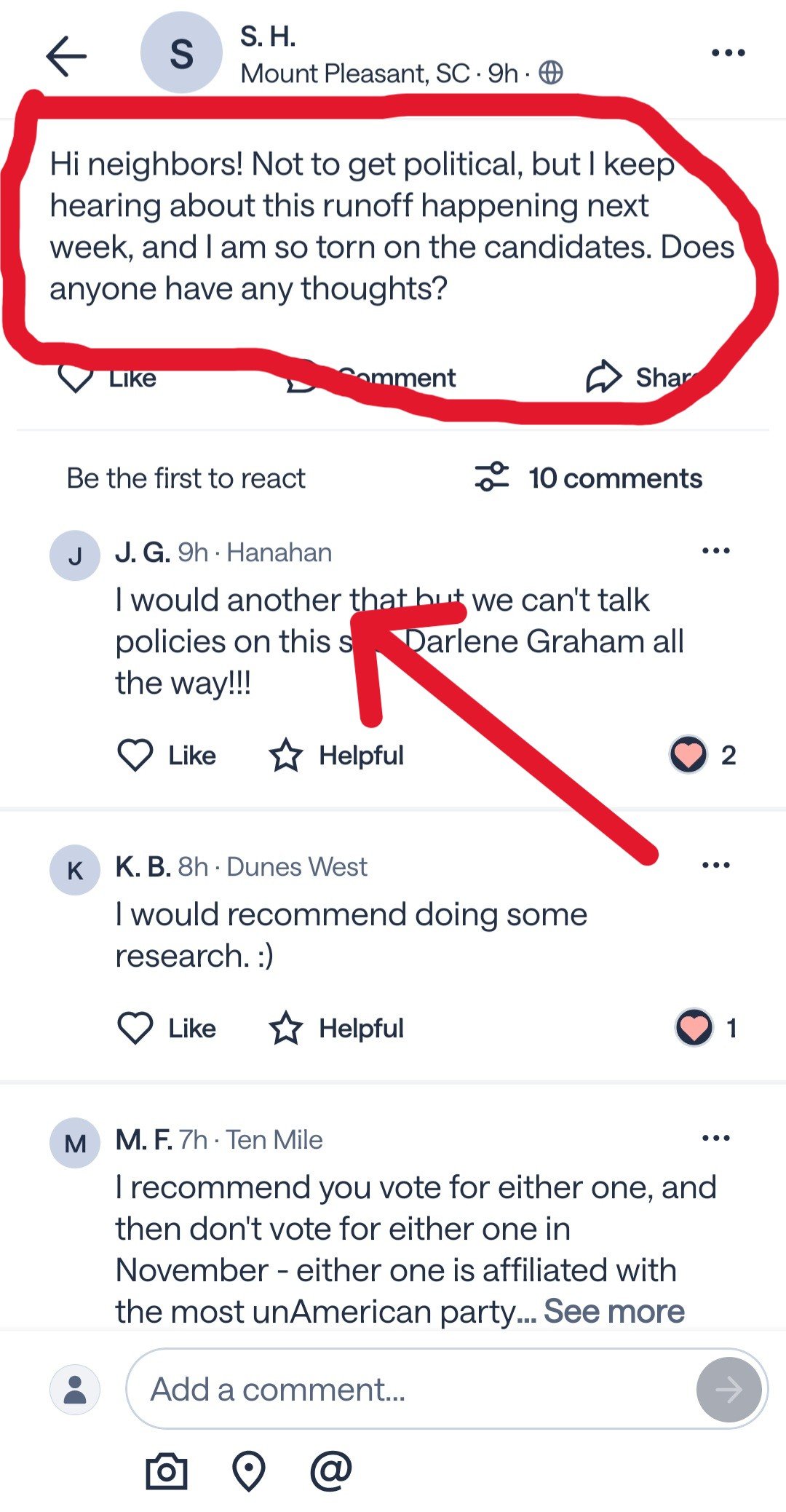
Whenever something begins with “Not to get political…”, we can probably guess where it's headed.
Politics.
And that's exactly what happened.
Neighbors discussed candidates, political parties, voting choices, and opinions. Some users even pointed out:
“We can't talk politics on this site.”
Another wrote:
“Not the place for politics. PLEASE STOP.”
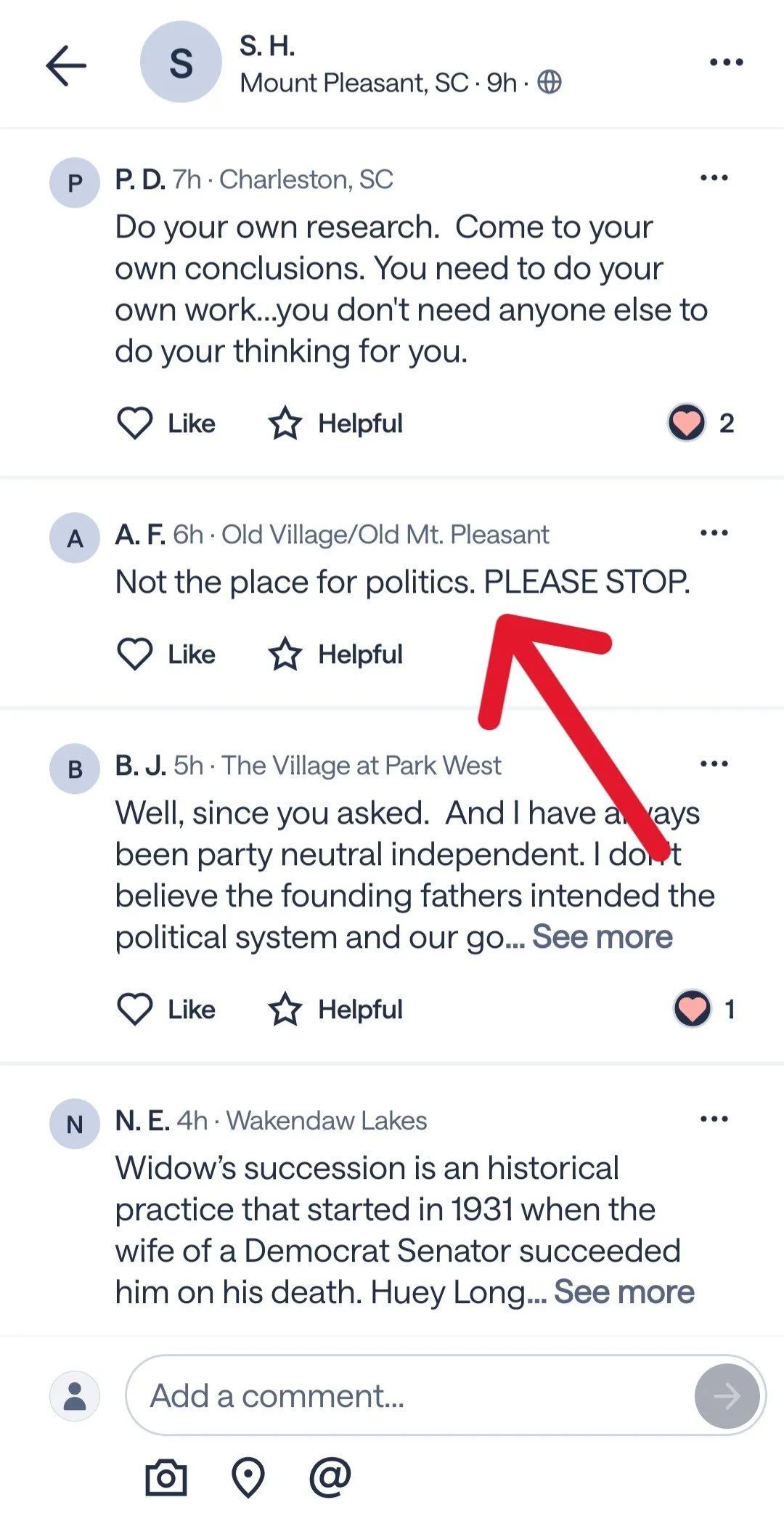
Yet, approximately nine hours after the original post, it was still there.
Here's my moderation question.
Nextdoor permits certain local political discussions, but restricts broader national politics.
This discussion involves a U.S. Senate seat. South Carolina voters elect the senator statewide, but that person then goes to Washington to vote on national legislation and policy.
So where's the line?
Is a U.S. Senate race local because the candidates campaign within South Carolina?
Or national because the winner becomes one of 100 U.S. senators?
More importantly:
Do Nextdoor's moderators agree on the answer?
That's the larger issue I've been documenting.
A moderation system is only as effective as its consistency, training, quality assurance, and enforcement.
If Moderator A removes something while Moderator B leaves essentially the same content up for nine hours—or indefinitely—the policy isn't producing consistent outcomes.
That's not merely a neighbor problem.
That's a process problem.
And when moderation relies heavily on unpaid neighbors making judgment calls about other neighbors, quality control becomes incredibly important.
I've said it before:
We inspect what we expect.
So who's inspecting the moderators?
Who's measuring agreement between them?
Who's auditing incorrect removals—and incorrect decisions to leave content up?
What are the accuracy metrics?
These aren't rhetorical questions. I'd like to see the data.
I've been asking questions about Nextdoor's research, moderation, communication, and accountability for 63 days.
Maybe this post complies with Nextdoor's rules. If so, explain why.
Maybe it doesn't. If so, why was it still there nine hours later?
Either answer would be useful.
What isn't useful is having policies whose enforcement appears unpredictable depending on the moderator, neighborhood, or day.
Day 63. Another post. Another moderation question.
And somehow, still no Jacob Chavis.
Join the discussion at NielFlamm.com/blog. Leave some feedback—I'd love to hear your perspective.

Where Are Nextdoor's Moderators?

The Nextdoor experiment continues, and once again I find myself asking the same question:
Where are the moderators?
I came across a post from a neighbor that asked what I thought about whether golf carts should be driven across grassy common areas. The neighbor even compared it to commercial landscaping crews using zero-turn lawn mowers.
Whether you agree with the comparison or not, it was a discussion.
Then came the comments.
One neighbor called another "unintelligent."
According to the timestamp, the comment remained on the platform.
That leaves me asking the same questions I've been asking for weeks:
Where are the unpaid moderators?
Who reviews their decisions?
Is there any quality assurance process?
How is this type of personal attack allowed to remain while other users are suspended for much less?
For those who can't see the screenshot, I've included it in today's post on NielFlamm.com/blog.
As a shareholder, I'm also scratching my head.
The stock closed around $2.54 today.
What value is the market seeing if the platform continues to struggle with consistent moderation and identity verification? That's a question I'm trying to understand as I continue following the company.
On a different note, I've started using Citizen, and my initial experience has been positive.
Within minutes, I learned about a fatal crash approximately 3.9 miles from me, could see how many active users were nearby, and viewed other developing stories, including reports of a gastrointestinal outbreak affecting multiple states.
It's still early, but I'm looking forward to comparing the two platforms as I continue using Citizen.
Competition has a way of making every company better.
And that's good for users, advertisers, and shareholders alike.
Join the discussion on NielFlamm.com.
The Nextdoor Experiment Continues: When Does Moderation Become a Barrier to Community?
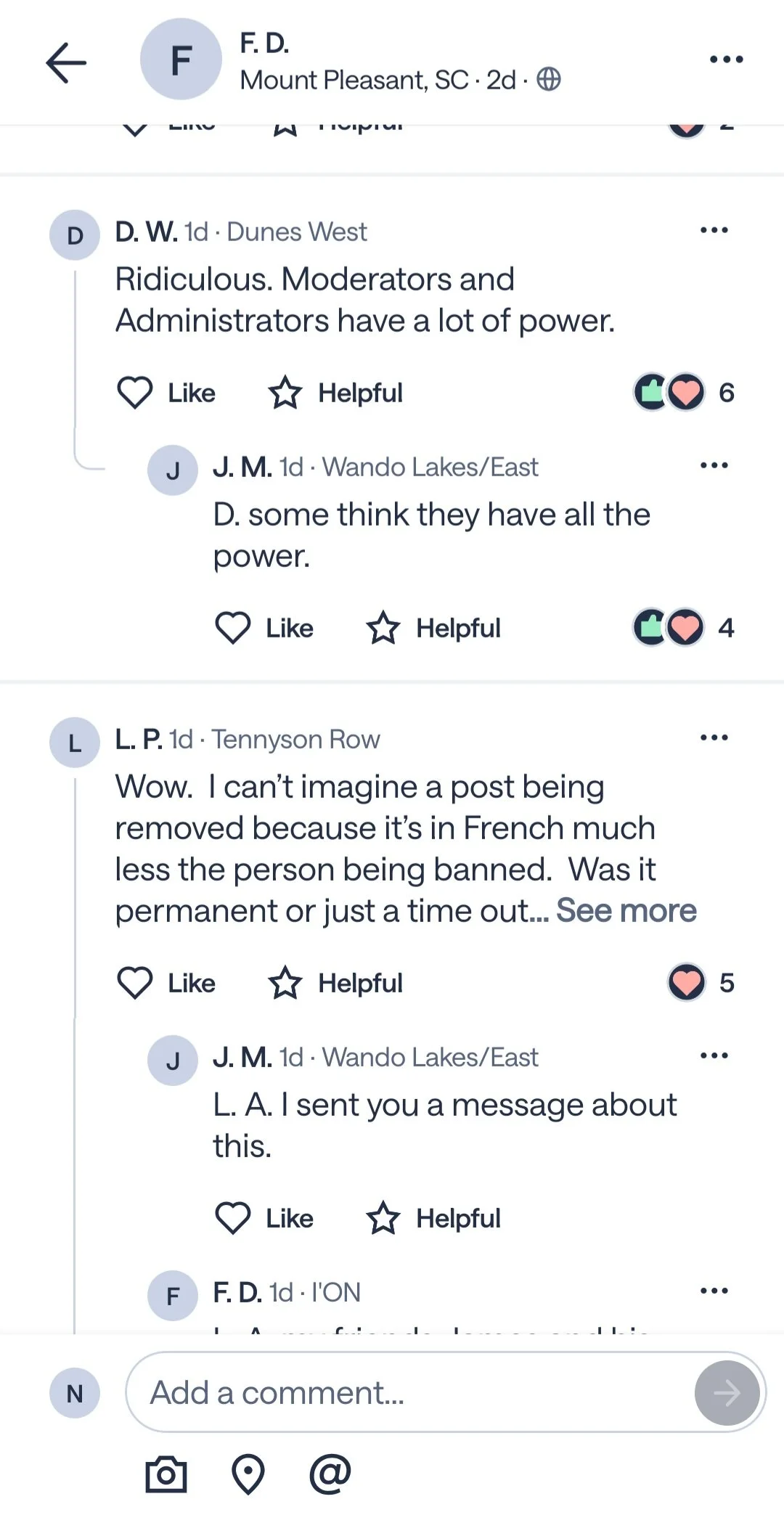
The Nextdoor experiment continues, and this latest example left me asking more questions.
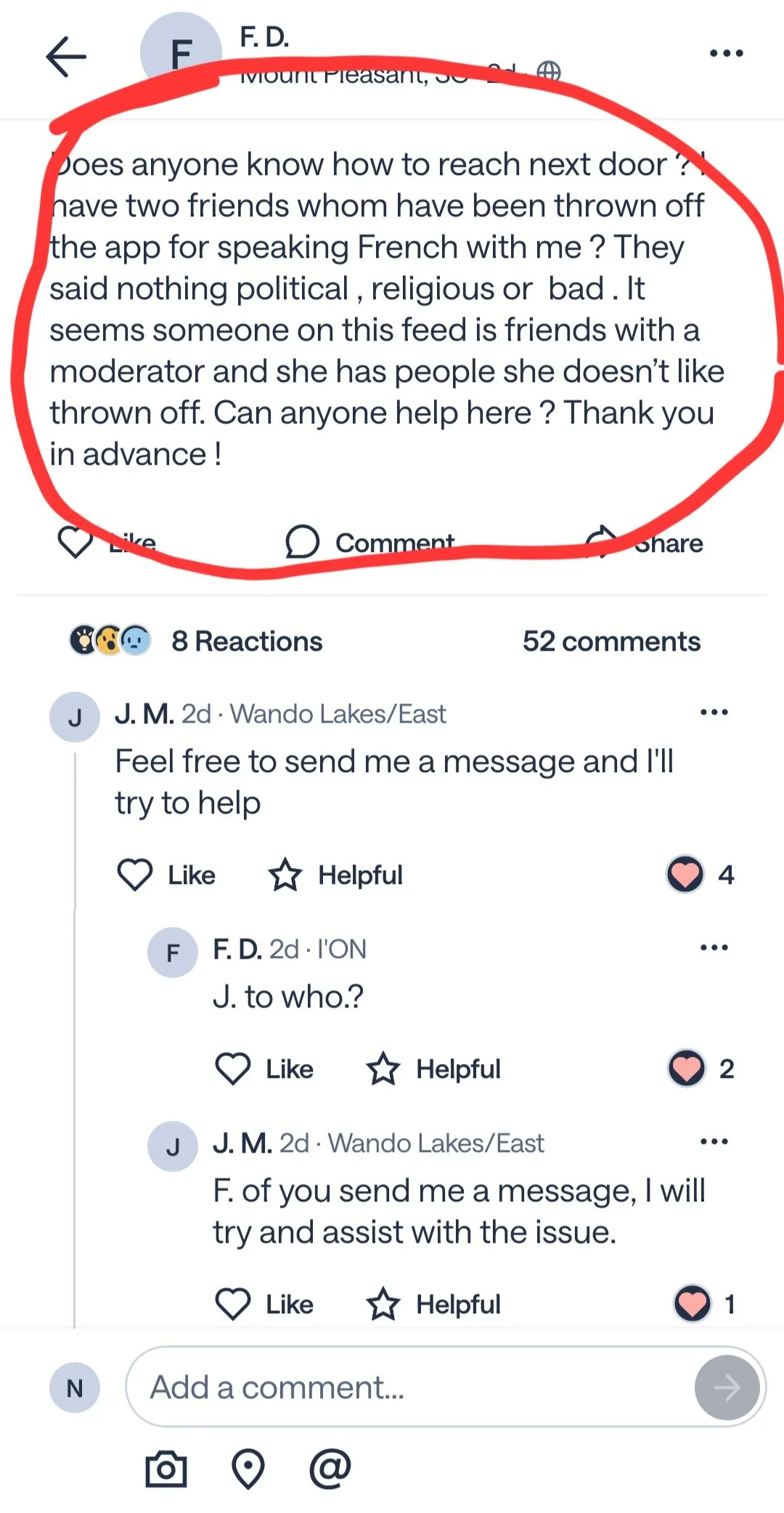
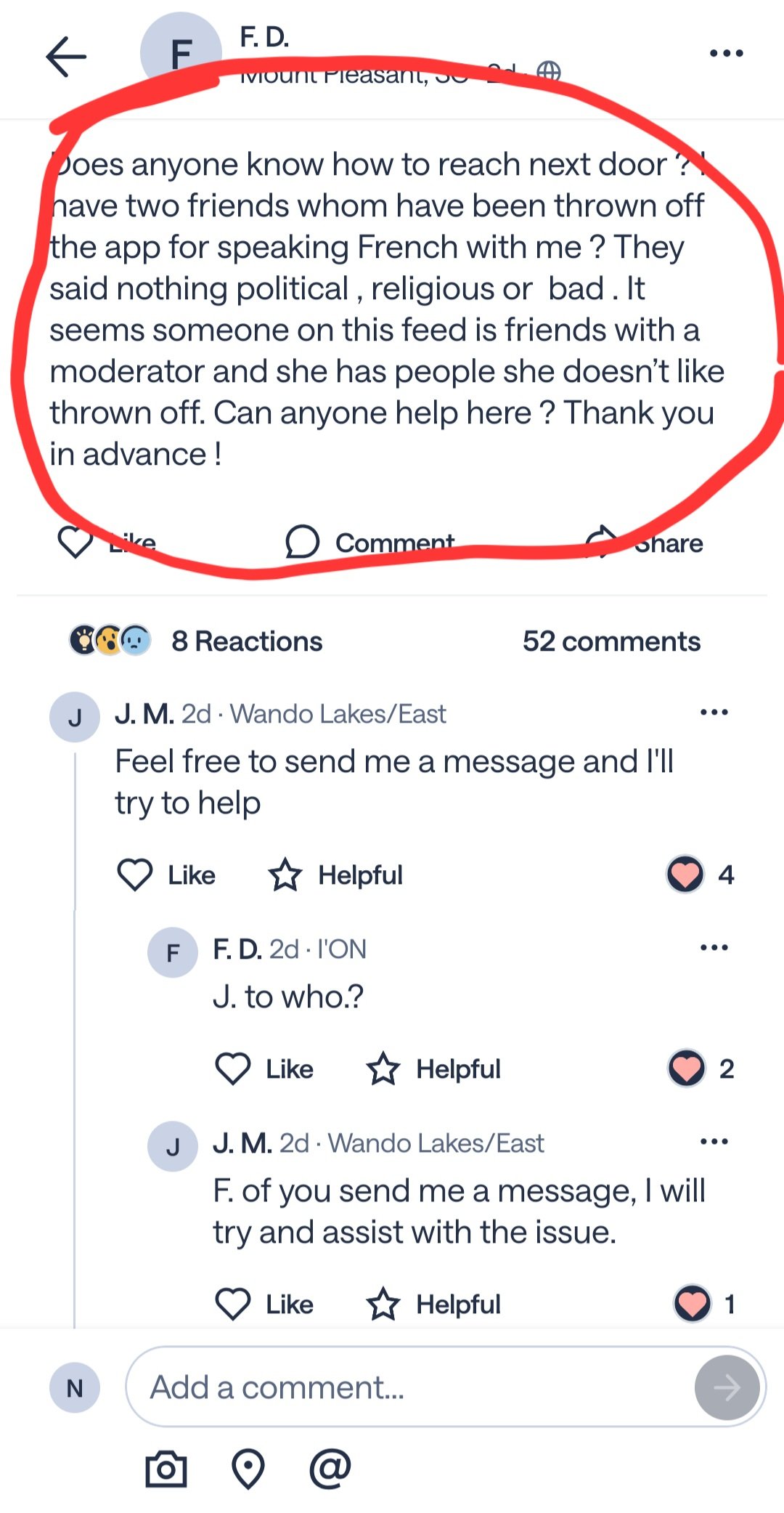
While browsing the Low Country Nextdoor platform, I saw that a neighbor had a post removed and their account suspended for writing a post in French.
French.
A language spoken by millions of people worldwide.
The first question that came to mind:
Where in Nextdoor’s Terms and Conditions does it state that posts must be written only in English?
If the concern was understanding the content, there are countless free translation tools available. A moderator could have copied and pasted the text into Google Translate in seconds and determined whether the post was appropriate.
This wasn’t a discussion about nuclear codes, Area 51 secrets, or the next strategic move of the New York Yankees.
It was a neighbor attempting to connect with other neighbors.
That raises a bigger question:
Is the moderation process helping build community, or unintentionally creating barriers to it?
Nextdoor promotes itself as a platform connecting neighbors. But communities are diverse. People speak different languages, come from different backgrounds, and have different ways of communicating.
A strong moderation system should consider context.
It should encourage connection.
It should apply rules consistently.
This is another example where I believe Nextdoor’s unpaid moderator model deserves a closer look:
What training do moderators receive?
Are there guidelines for language-related posts?
Is there a quality assurance process reviewing suspensions?
Are decisions consistent across neighborhoods?
When moderation decisions feel unpredictable, trust in the platform declines.
As a shareholder, I also continue watching the business side. The stock recently moved upward, which is positive for investors, but the long-term question remains:
Can Nextdoor build a sustainable business while creating a consistent and trusted experience for every neighbor?
Community is built through connection—not unnecessary barriers.
Join the discussion on NielFlamm.com.
The Nextdoor Experiment Continues: When Are Politics Allowed?
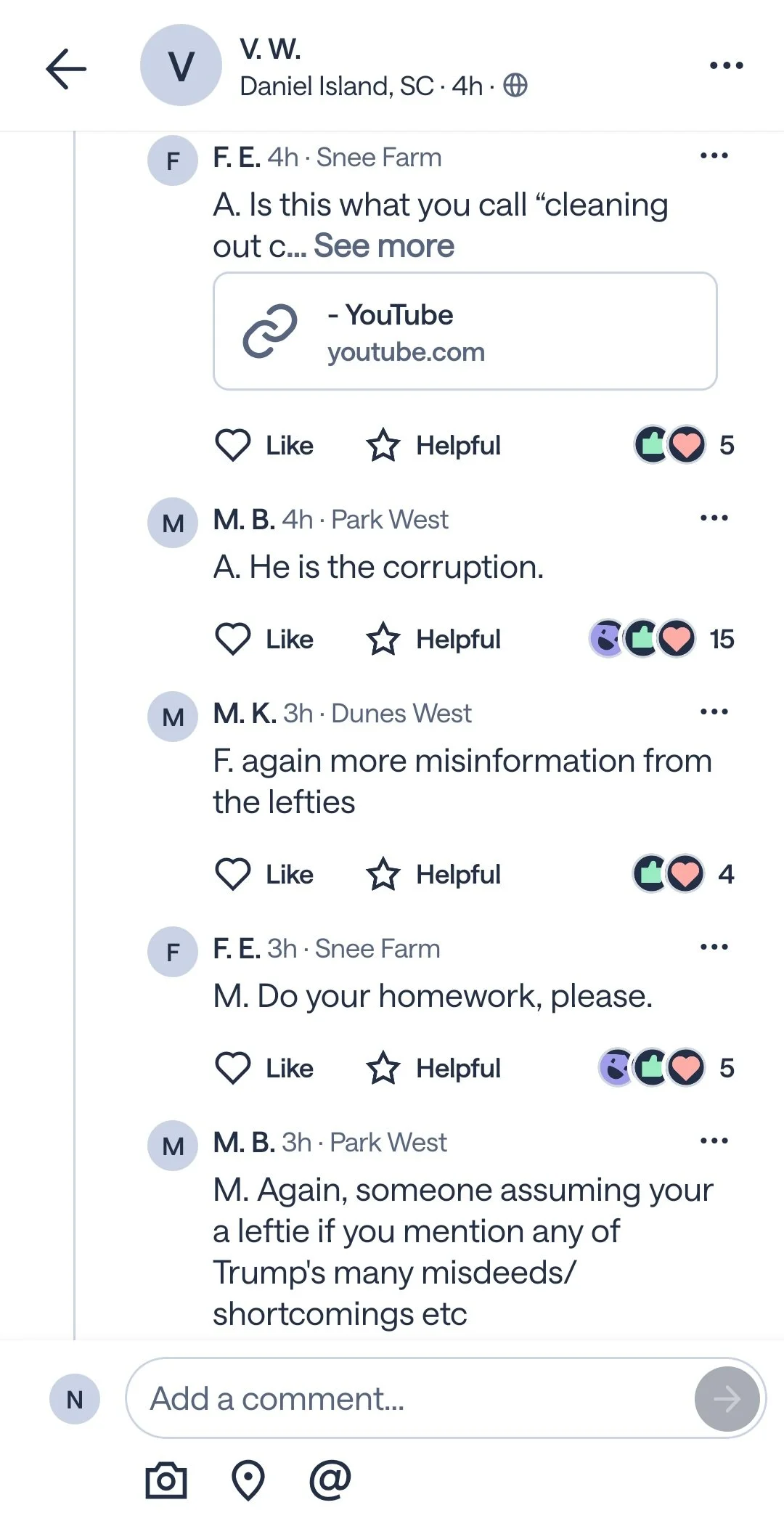
The Nextdoor experiment continues, and I have no clue what's going on with moderation in Mount Pleasant, South Carolina... assuming there are active moderators.
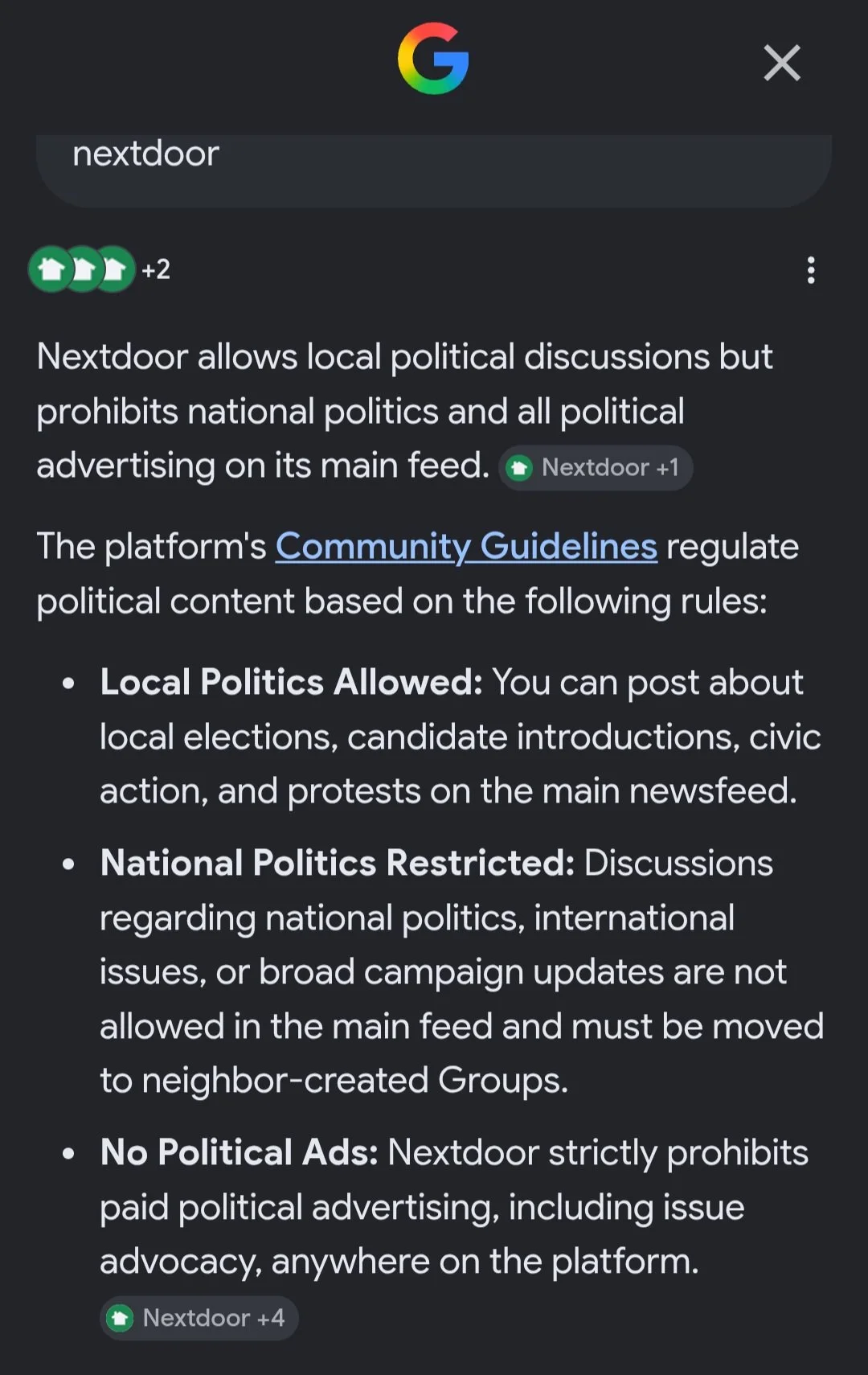
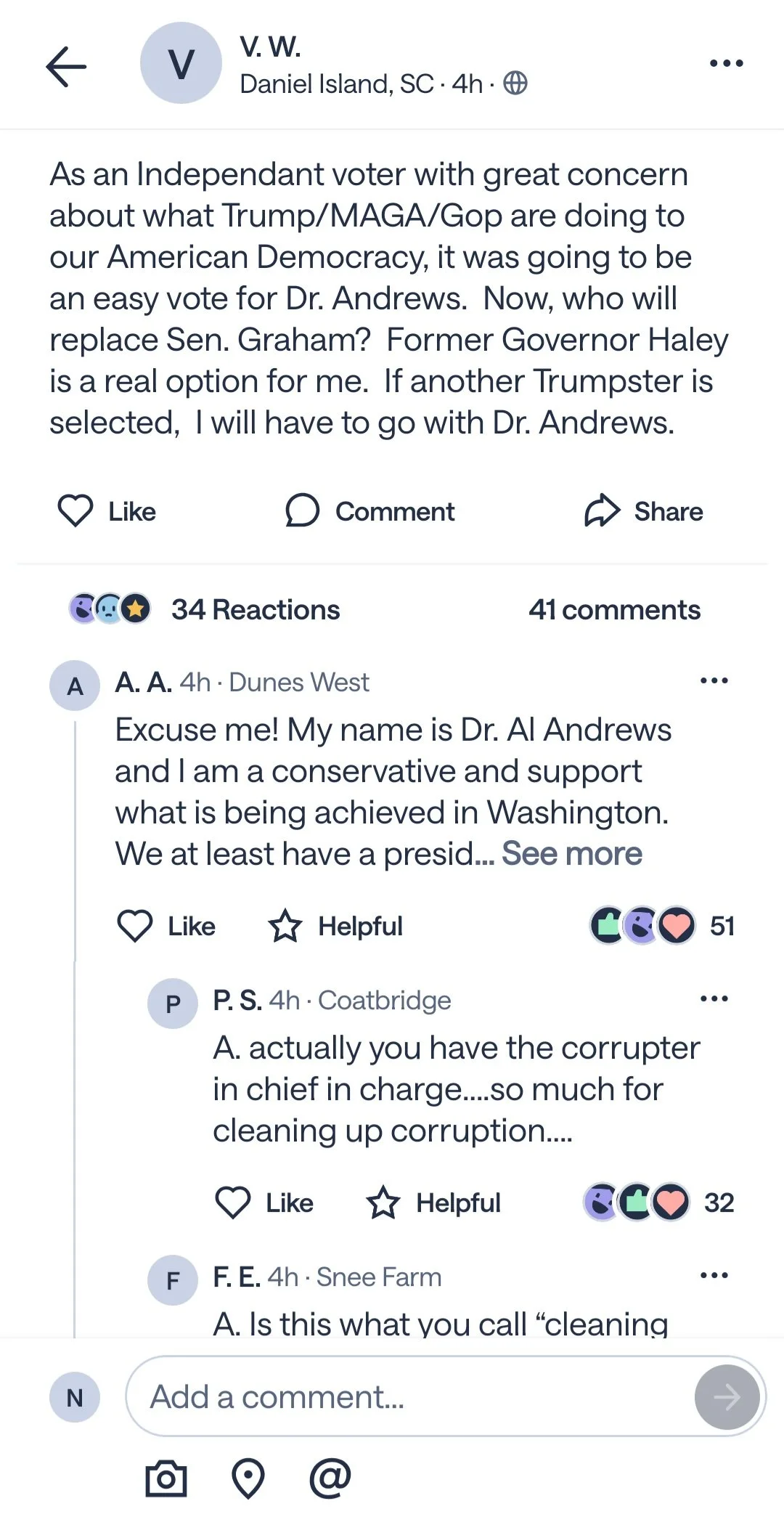
While browsing the platform, I came across a political discussion started by a self-described independent voter discussing MAGA, the future following the death of Senator Lindsey Graham, and what comes next politically. The conversation quickly evolved into a back-and-forth between left- and right-leaning viewpoints.
When I captured the screenshot, the thread had been active for about four hours.
That made me think.
I remember neighbors in my area being suspended over political discussions.
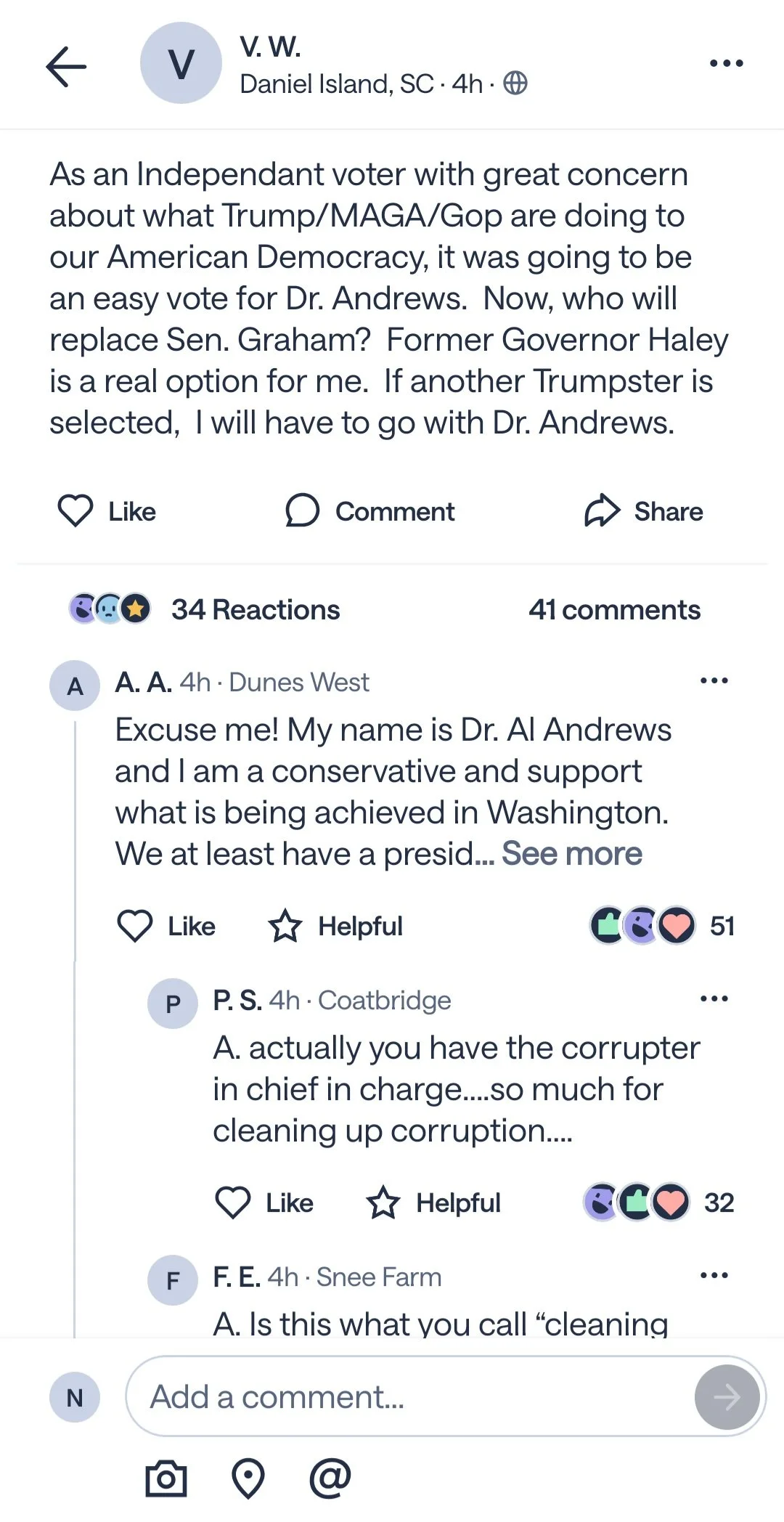
So I did what many people do—I searched online to better understand Nextdoor's policy.
My understanding is that discussions about local politics may be permitted, while national political discussions generally are not.
If that's accurate, then this thread appears to raise questions about how those policies are being applied.
Once again, I find myself asking:
Are there active moderators in my area?
If so, how often are they reviewing content?
Is there any quality assurance process to ensure moderation decisions are consistent?
Why do some political discussions remain visible while others reportedly result in suspensions?
These are questions about consistency, not ideology.
Whether someone is conservative, liberal, independent, or somewhere in between shouldn't matter.
The same standards should apply to everyone.
Sometimes it feels like the unpaid moderators are asleep at the wheel, the guards aren't guarding, and the police aren't policing.
For years, I've heard there are three topics guaranteed to start an argument:
Politics
Religion
Whether the New York Yankees are the greatest franchise in sports history.
(I'm sure Boston Red Sox fans—and probably Los Angeles Dodgers fans, too—have already stopped reading.)
Humor aside, moderation works best when the rules are clear and applied consistently.
If users can't predict how those rules will be enforced, confidence in the platform begins to erode.
Consistency builds trust.
Inconsistency invites questions.
Join the discussion on NielFlamm.com.
#Nextdoor #NXDR #Leadership #ContentModeration #CommunityManagement #TrustAndSafety #Transparency #CorporateGovernance #SocialMedia #CustomerExperience
The Nextdoor Experiment Continues: When Does a Comment Cross the Line?
The Nextdoor experiment continues.
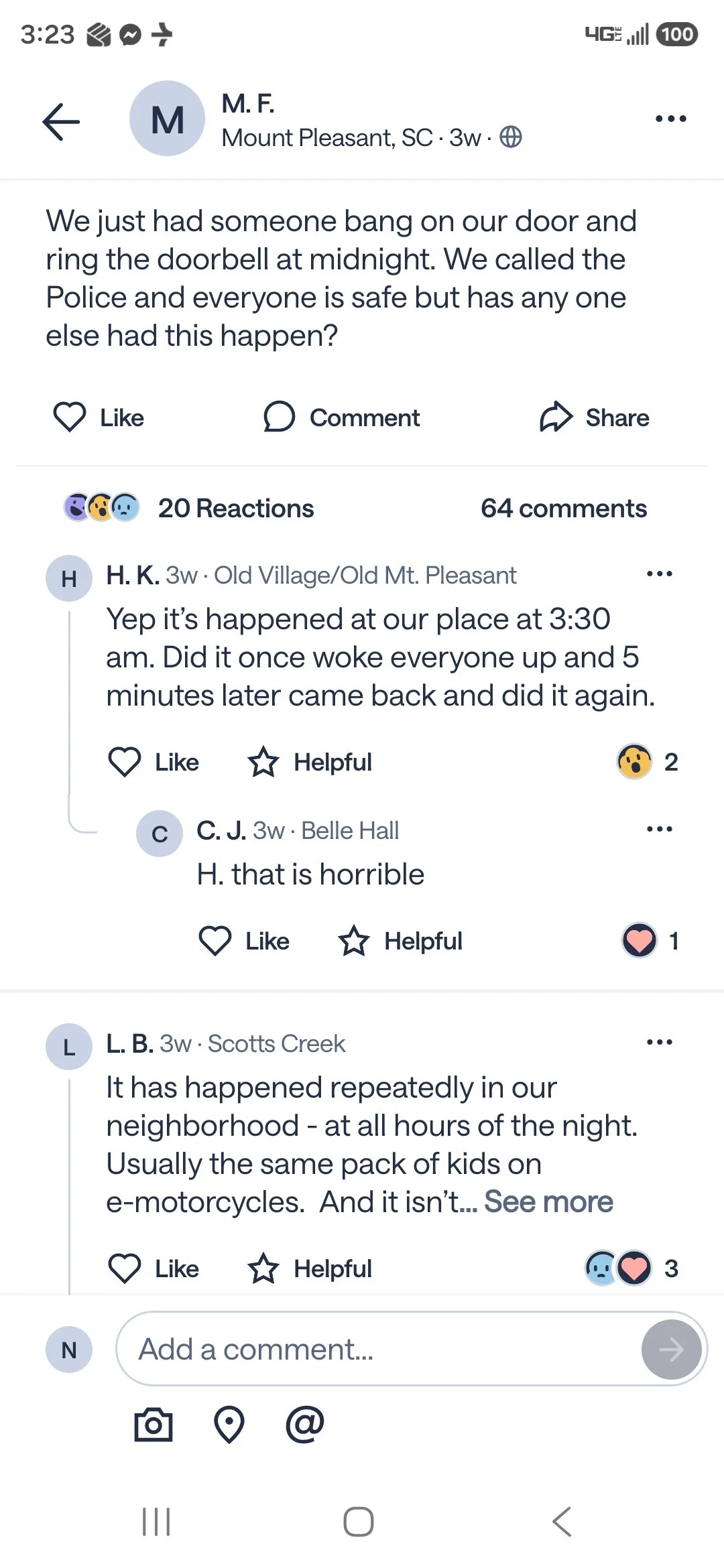
While browsing the platform on Saturday, I came across a neighborhood post that immediately caught my attention.
The original post was about someone whose age is unknown who rang a doorbell and ran away.
Back in my day, we called it “ding dong ditch.”
Annoying? Sure.
A nuisance? Absolutely.
But what really stood out wasn’t the original post.
It was one of the comments.
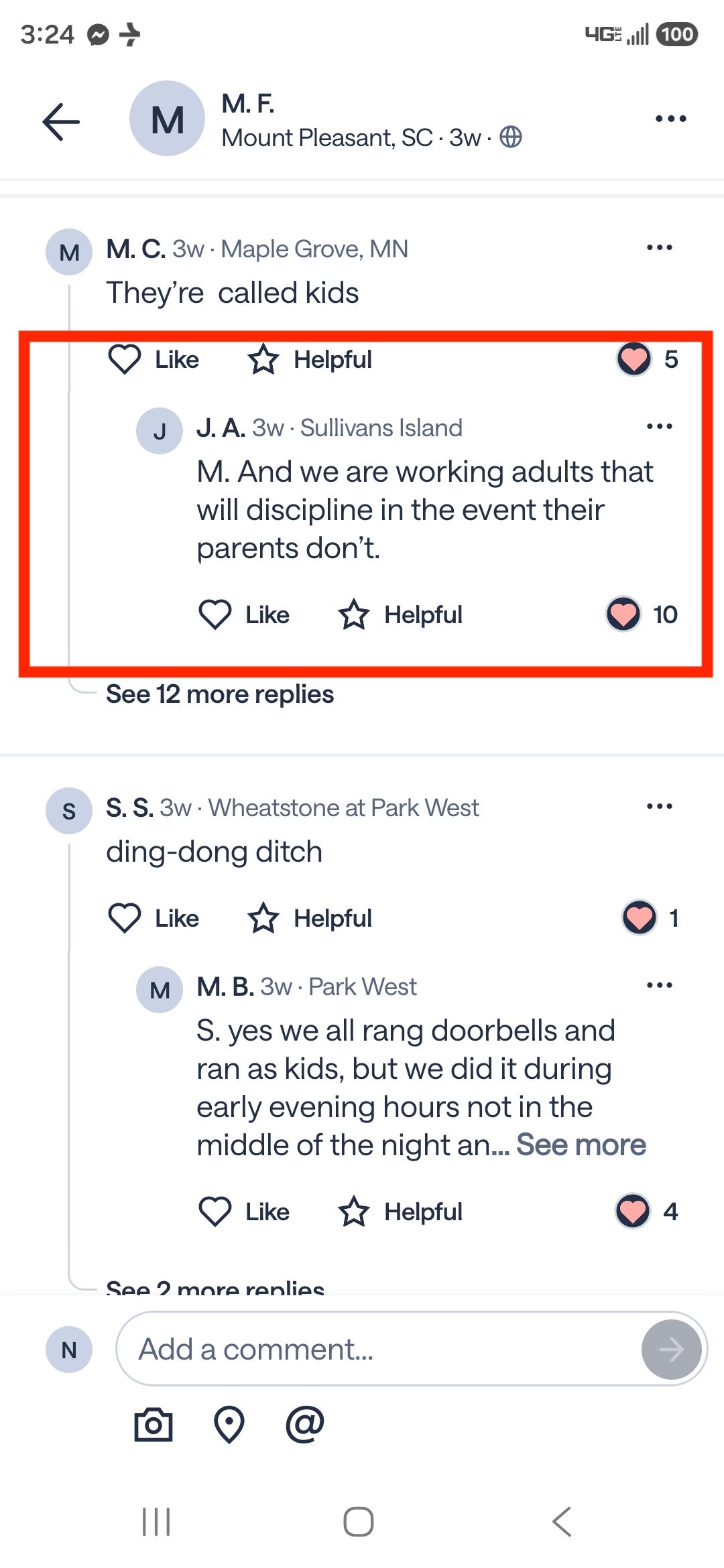
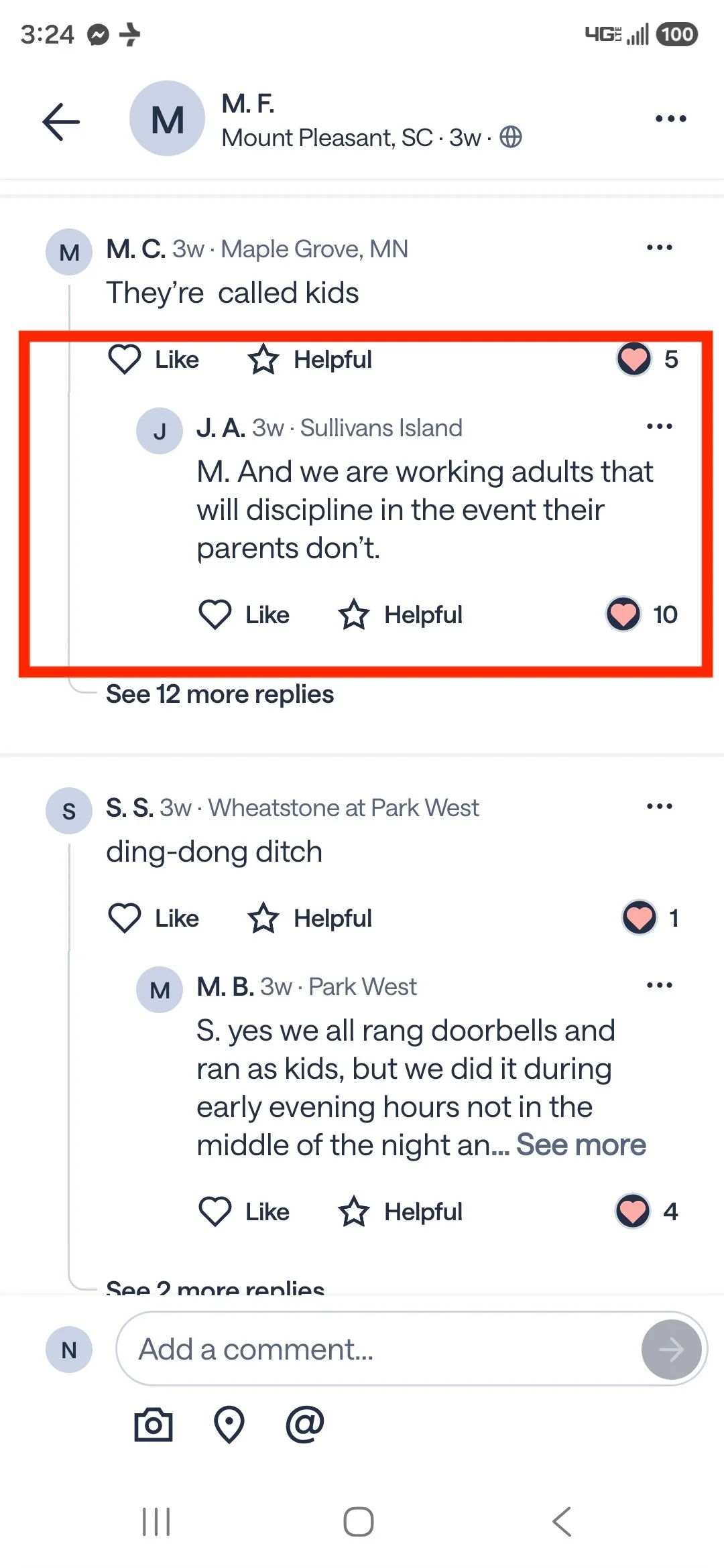
A neighbor commented that if the parents didn’t discipline the child or children, they would.
To me, that’s no longer discussing the issue—it’s a statement that could reasonably be interpreted as a threat.
According to the timestamp, this comment had remained on the platform for approximately three weeks.
That brings me back to a question I’ve been asking repeatedly:
How is this comment allowed to remain while other posts are removed much more quickly?
I don’t know why this particular comment remains visible.
Perhaps no moderator has reviewed it.
Perhaps it has been reviewed and determined not to violate the Community Guidelines.
Perhaps there simply aren’t enough moderators actively reviewing content in this area.
I don’t know.
What I do know is my own experience.
I was suspended for repeatedly posting items I had for sale.
On another occasion, I was suspended for providing negative feedback about the moderation process.
Yet here is a comment that appears to suggest someone will personally discipline another person’s child, and it has remained visible for weeks.
That’s the inconsistency I’m trying to understand.
This isn’t about one comment.
It’s about whether moderation is applied consistently and fairly.
If Nextdoor wants neighbors, advertisers, investors, and shareholders to trust the platform, consistency matters just as much as the written policies.
Otherwise, moderation begins to look less like a standard and more like a perception.
And perceptions shape trust.
Maybe I’m just not one of the “cool kids.”
Or perhaps—borrowing from Mean Girls—the moderators wear pink on Wednesdays.
Either way, consistency should never depend on who’s posting.
Join the discussion on NielFlamm.com.