
The Nextdoor Experiment Continues: Moderation Should Be Consistent, Not Selective
The Nextdoor experiment continues.
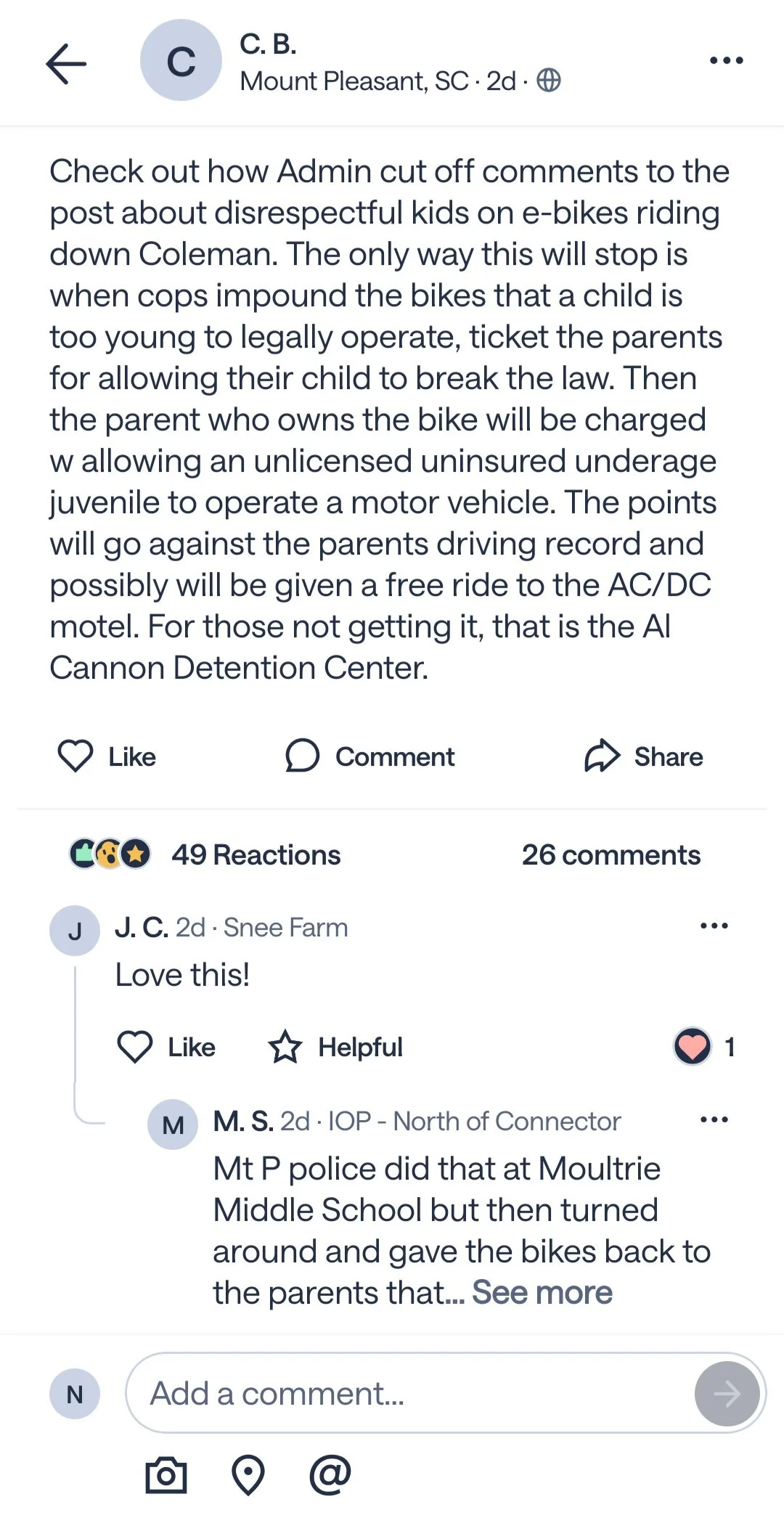
I had some time today to browse the platform and noticed one of the hotter topics here in South Carolina’s Lowcountry: e-bikes.
The topic itself wasn’t what caught my attention.
It was the moderation.
According to the timestamp, the original post was created two days ago. An administrator had redacted part of the original post because it contained comments disparaging a moderator or the moderation team.
That immediately caught my attention.
Why?
Because I was previously suspended after one of my own posts was removed for negative feedback about the moderation process, which I was told was a violation for criticizing the moderator and the moderation team.
So my question is simple:
Why is this post still live two days later?
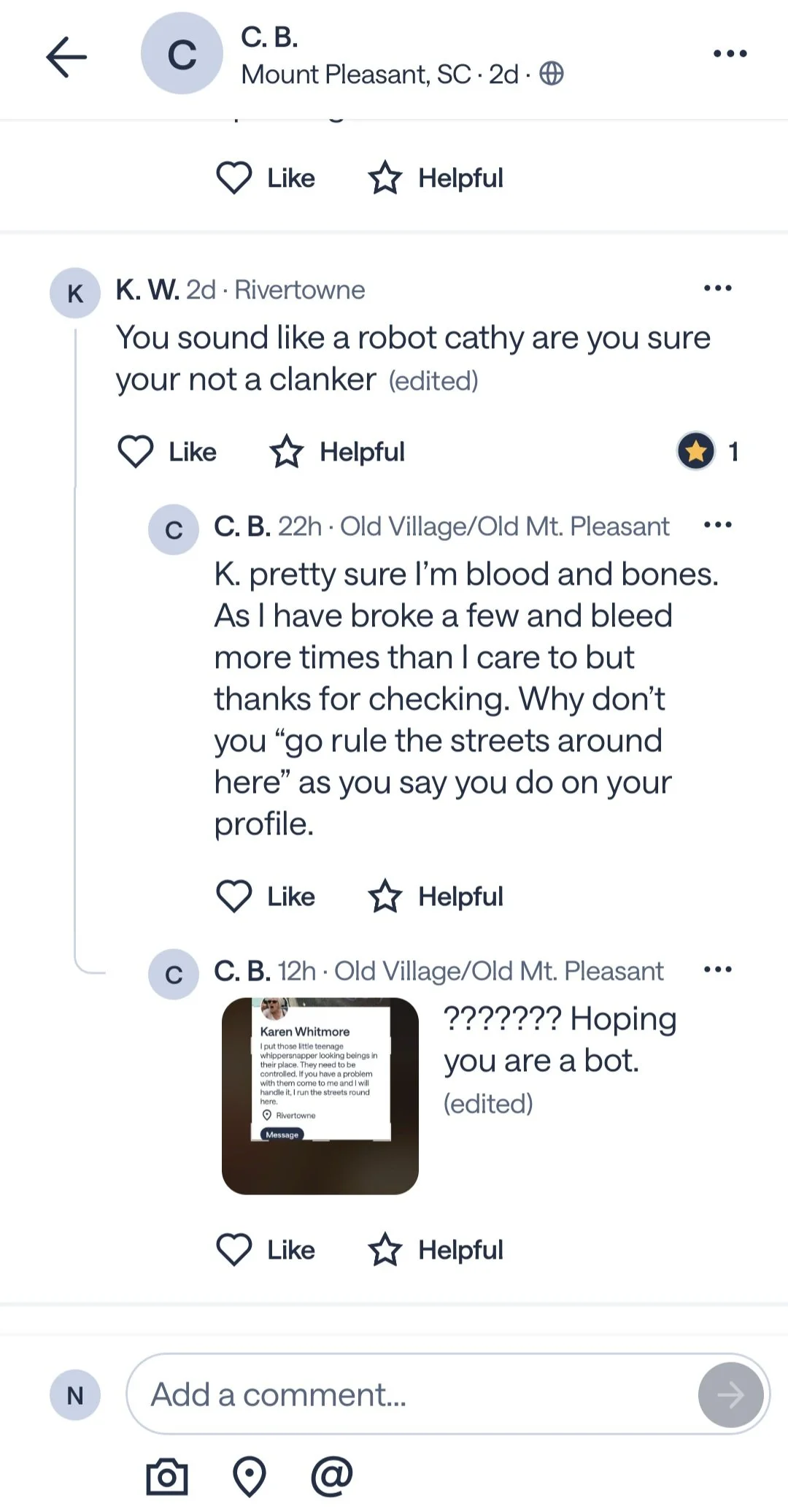
As I continued reading, I found comments that appeared to move beyond discussing the topic and toward personal conflict between neighbors.
Again, I found myself asking the same question.
How is this permitted to remain while other posts are removed much more quickly?
The inconsistency raises several questions about the moderation model:
What is the documented process for unpaid moderators?
How often are moderators expected to review activity in their neighborhoods?
Is every neighborhood actively moderated?
Is there a quality assurance process that reviews moderator decisions for consistency?
How are moderation decisions audited to ensure similar situations receive similar outcomes?
As many of you know, my experiment also continues because I’m still able to access the platform using a parody email address and an address outside my own neighborhood, raising additional questions about verification and oversight.
No moderation system will ever be perfect.
But consistency should be the goal.
If Nextdoor wants neighbors, advertisers, investors, and shareholders to have confidence in the platform, it may be time to invest in a stronger combination of trained employees, better technology, and independent quality assurance rather than relying primarily on an unpaid moderation model.
Processes don’t improve on their own.
Leadership improves them.
After more than 15 years, I believe it’s fair to ask whether the moderation model established under CEO Nirav Tolia’s leadership—and continued throughout the organization—is ready for meaningful modernization.
What do you think? Should community moderation remain largely volunteer-based, or is it time for a more professional, accountable approach?
Join the discussion on NielFlamm.com.
