

Day 63: If the Rules Aren’t Consistent, Are They Really Rules?

It's Day 63, and this morning while continuing my study of the Nextdoor app, I found another example that has me questioning its moderation model.
A neighbor posted:
“Not to get political, but I keep hearing about this runoff happening next week and I am so torn on the candidates. Does anyone have any thoughts?”
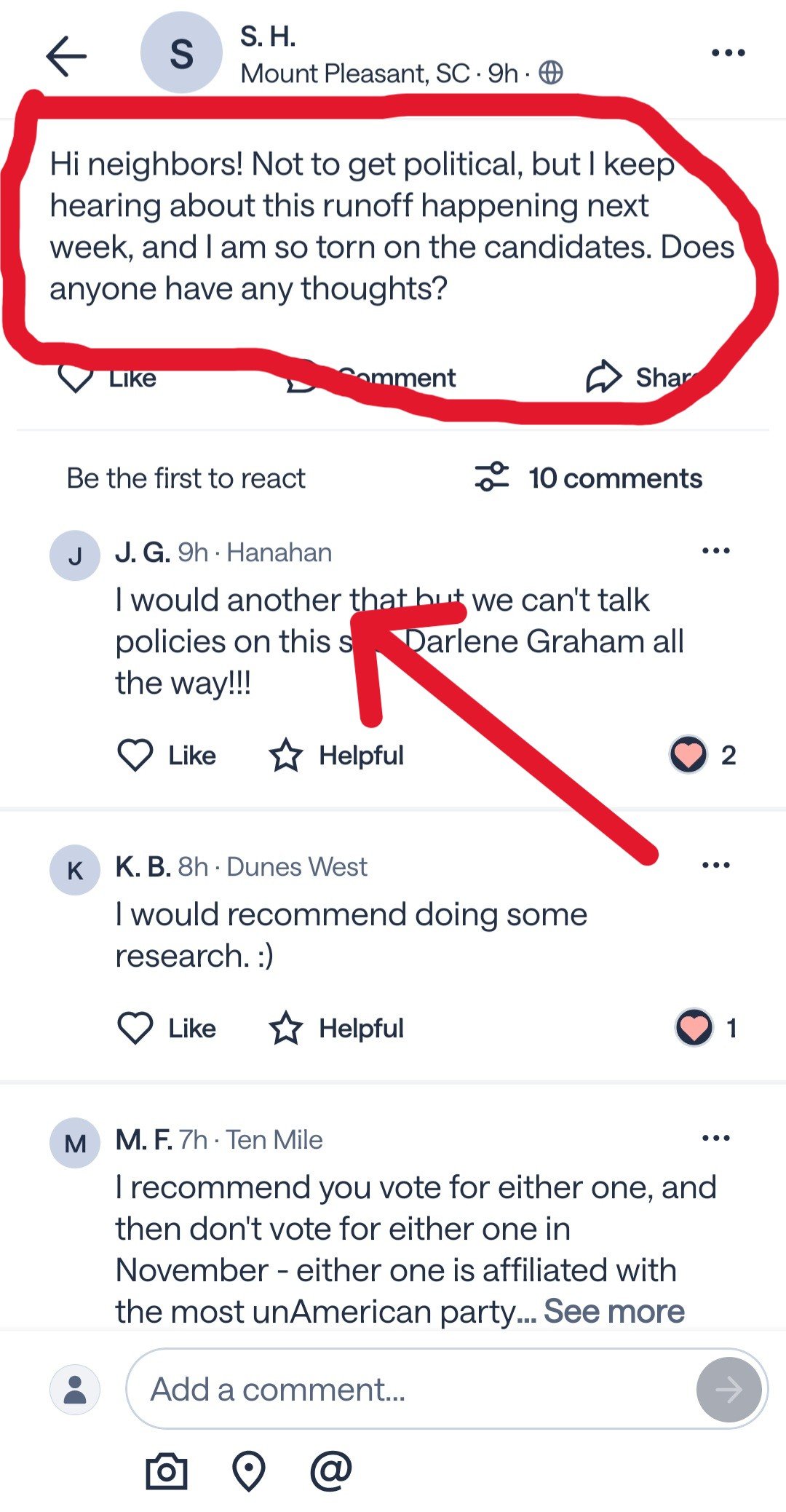
Whenever something begins with “Not to get political…”, we can probably guess where it's headed.
Politics.
And that's exactly what happened.
Neighbors discussed candidates, political parties, voting choices, and opinions. Some users even pointed out:
“We can't talk politics on this site.”
Another wrote:
“Not the place for politics. PLEASE STOP.”
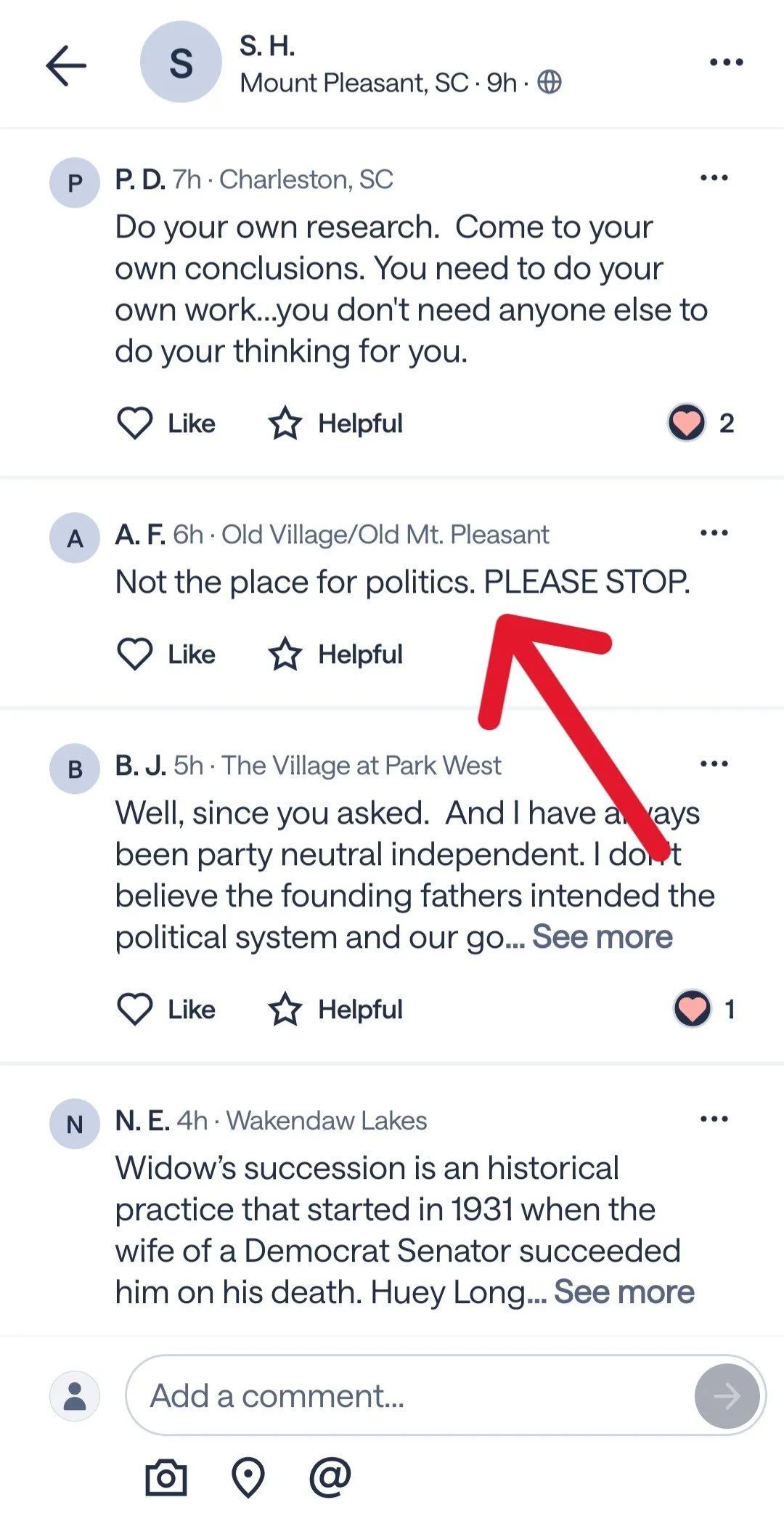
Yet, approximately nine hours after the original post, it was still there.
Here's my moderation question.
Nextdoor permits certain local political discussions, but restricts broader national politics.
This discussion involves a U.S. Senate seat. South Carolina voters elect the senator statewide, but that person then goes to Washington to vote on national legislation and policy.
So where's the line?
Is a U.S. Senate race local because the candidates campaign within South Carolina?
Or national because the winner becomes one of 100 U.S. senators?
More importantly:
Do Nextdoor's moderators agree on the answer?
That's the larger issue I've been documenting.
A moderation system is only as effective as its consistency, training, quality assurance, and enforcement.
If Moderator A removes something while Moderator B leaves essentially the same content up for nine hours—or indefinitely—the policy isn't producing consistent outcomes.
That's not merely a neighbor problem.
That's a process problem.
And when moderation relies heavily on unpaid neighbors making judgment calls about other neighbors, quality control becomes incredibly important.
I've said it before:
We inspect what we expect.
So who's inspecting the moderators?
Who's measuring agreement between them?
Who's auditing incorrect removals—and incorrect decisions to leave content up?
What are the accuracy metrics?
These aren't rhetorical questions. I'd like to see the data.
I've been asking questions about Nextdoor's research, moderation, communication, and accountability for 63 days.
Maybe this post complies with Nextdoor's rules. If so, explain why.
Maybe it doesn't. If so, why was it still there nine hours later?
Either answer would be useful.
What isn't useful is having policies whose enforcement appears unpredictable depending on the moderator, neighborhood, or day.
Day 63. Another post. Another moderation question.
And somehow, still no Jacob Chavis.
Join the discussion at NielFlamm.com/blog. Leave some feedback—I'd love to hear your perspective.
We Expect What We Inspect
A few weeks ago, I wrote about my experience at a local Starbucks where the music being played didn't exactly sound like it came from the corporate-approved playlist. Think death metal, explicit rap, and enough profanity to make me wonder if someone had hijacked the speakers.
I submitted feedback through the Starbucks website chat because I thought someone should know. My goal wasn't to get anyone in trouble. It was simply to share a customer experience that didn't match what I've come to expect from Starbucks.
Fast forward to today.
As I write this blog post, I'm sitting in that same Starbucks.
Something feels different.
I believe the store manager is here. I could be wrong, but here's why I think so:
The music isn't death metal, trap music, or The Best of "Weird Al" Yankovic. It's what I'd expect to hear in a Starbucks.
She's spent a significant amount of time working on an iPad, which looked like inventory or operational work.
She's now working tableside on a laptop.
I overheard what sounded like a discussion about scheduling with one of the baristas.
None of those things stood out to me the last Sunday I visited.
There's an old saying I've used throughout my career:
We expect what we inspect.
Whether you're leading a coffee shop, a Fortune 500 company, or a small business, it's difficult to know what's really happening if leaders never spend time where the work is being done.
Now, am I the reason she's here today?
Probably not.
Did my feedback play some small role?
Maybe.
I have no way of knowing, and I'm not going to pretend otherwise.
What I do know is this: today's customer experience feels noticeably different from the one I wrote about a few weeks ago. The atmosphere is calmer, the music fits the environment, and it feels more like the Starbucks experience I expected in the first place.
Sometimes customers don't expect perfection.
They simply want to know someone is paying attention.
What do you think? Have you ever noticed a business improve after you provided respectful, constructive feedback? I'd love to hear your experience.
Join the discussion on NielFlamm.com.
When the Playlist Becomes the Customer Experience
This afternoon I was doing what I normally do on a weekend—working on my blog (yes... more of my "I hate Nextdoor" content), stopping at Costco Wholesale, then settling into the Starbucks on Highway 41 in Mount Pleasant, near Rivertowne.
My order? A Venti Black Iced Tea with an extra pump of Classic and a Cheese Danish. Great combination.
I arrived around 5:00 PM and planned to spend a couple of hours writing. Around 6:30 PM, something changed.
The café music stopped.
Then music started playing from a different source somewhere in the back of the store. First came death metal. Then a rap song filled with profanity, including the N-word. Curious, I asked Shazam what it was. The only thing it identified was a sample from Star by Sly and the Family Stone. (Yes, I'm old enough to remember them.)
It was one of those moments where you wonder who is actually in charge of the customer experience.
For full transparency, I laughed at myself because I've been on the other side.
When I was about 13, I was helping run the Village Delicatessen in Westbury. Before customers came in, I'd blast Def Leppard's Hysteria while drinking wine coolers. Later, while working at Piece By Peace on the Upper East Side, someone decided that Darude's "Sandstorm" was appropriate store music. In both cases, though, the music stopped when customers walked in.
Today, I provided feedback while I was still in the store using the Starbucks website chat. I explained exactly what happened, noted that I had short videos of both songs, and even offered to share them with local management.
After about 20 minutes of answering questions, I was asked to call a phone number instead.
That experience was more disappointing than the music.
Here are my suggestions for Starbucks:
• If a customer clearly states they're trying to provide store feedback, don't spend 20 minutes collecting information only to redirect them to another channel.
• Customer experience impacts revenue. I skipped the grilled cheese and left.
• Consider creating or expanding a Customer Experience QA team that periodically visits stores, much like secret shoppers. Today's technology makes it easier than ever to understand what customers actually experience in your locations.
One final thought.
I don't care what's on the secret menu nearly as much as I care about feeling heard, welcomed, and valued as a customer.
If you'd like to see the short videos from today's visit, they're available at NielFlamm.com/videos/starbucks.
I'd love to hear from others in customer experience, retail, hospitality, and leadership.
How should companies make it easier for customers to provide feedback before they decide not to come back?
Join the discussion on NielFlamm.com.
The Nextdoor Experiment Continues: Moderation Should Be Consistent, Not Selective
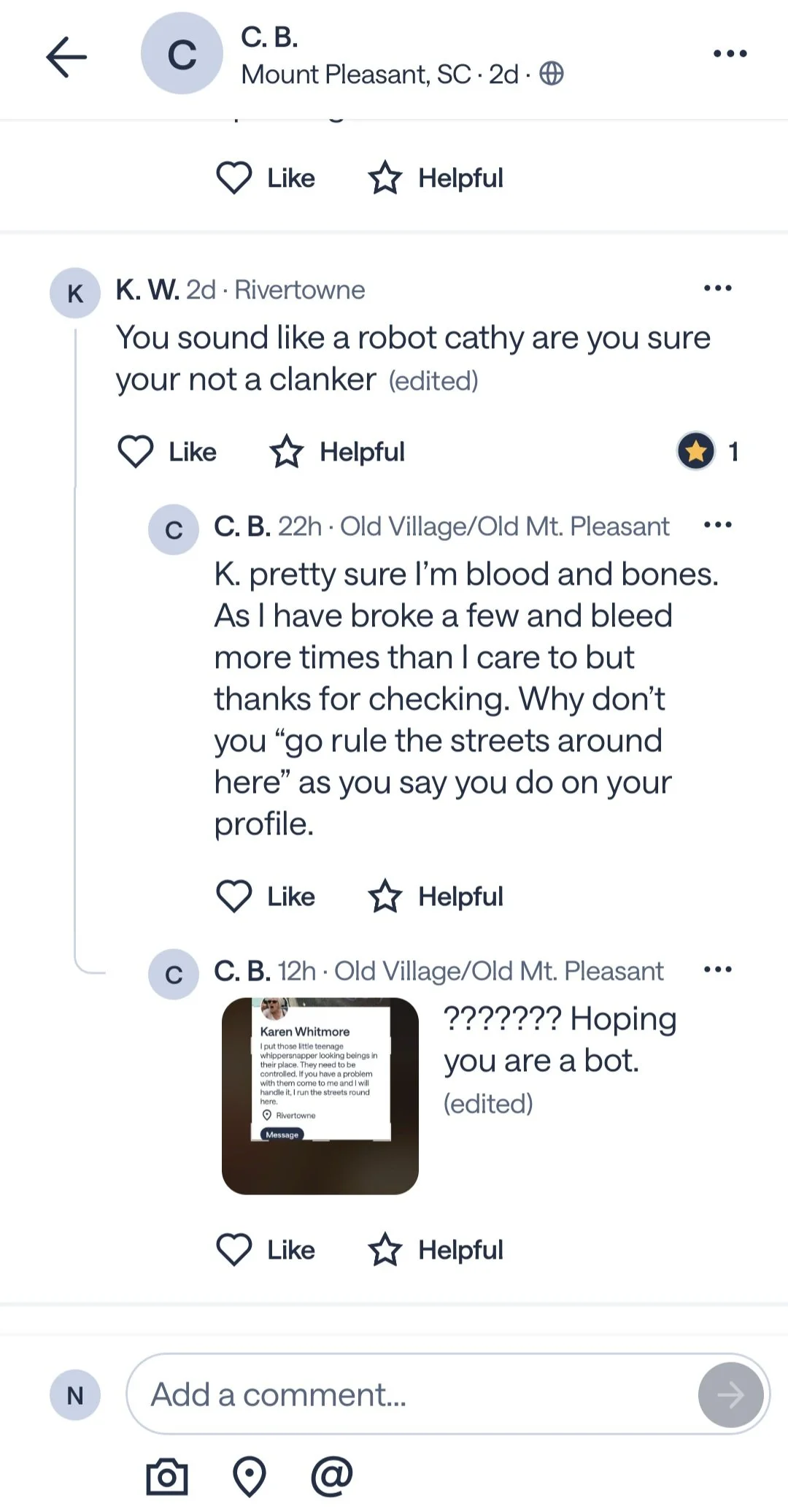
The Nextdoor experiment continues.
I had some time today to browse the platform and noticed one of the hotter topics here in South Carolina’s Lowcountry: e-bikes.
The topic itself wasn’t what caught my attention.
It was the moderation.
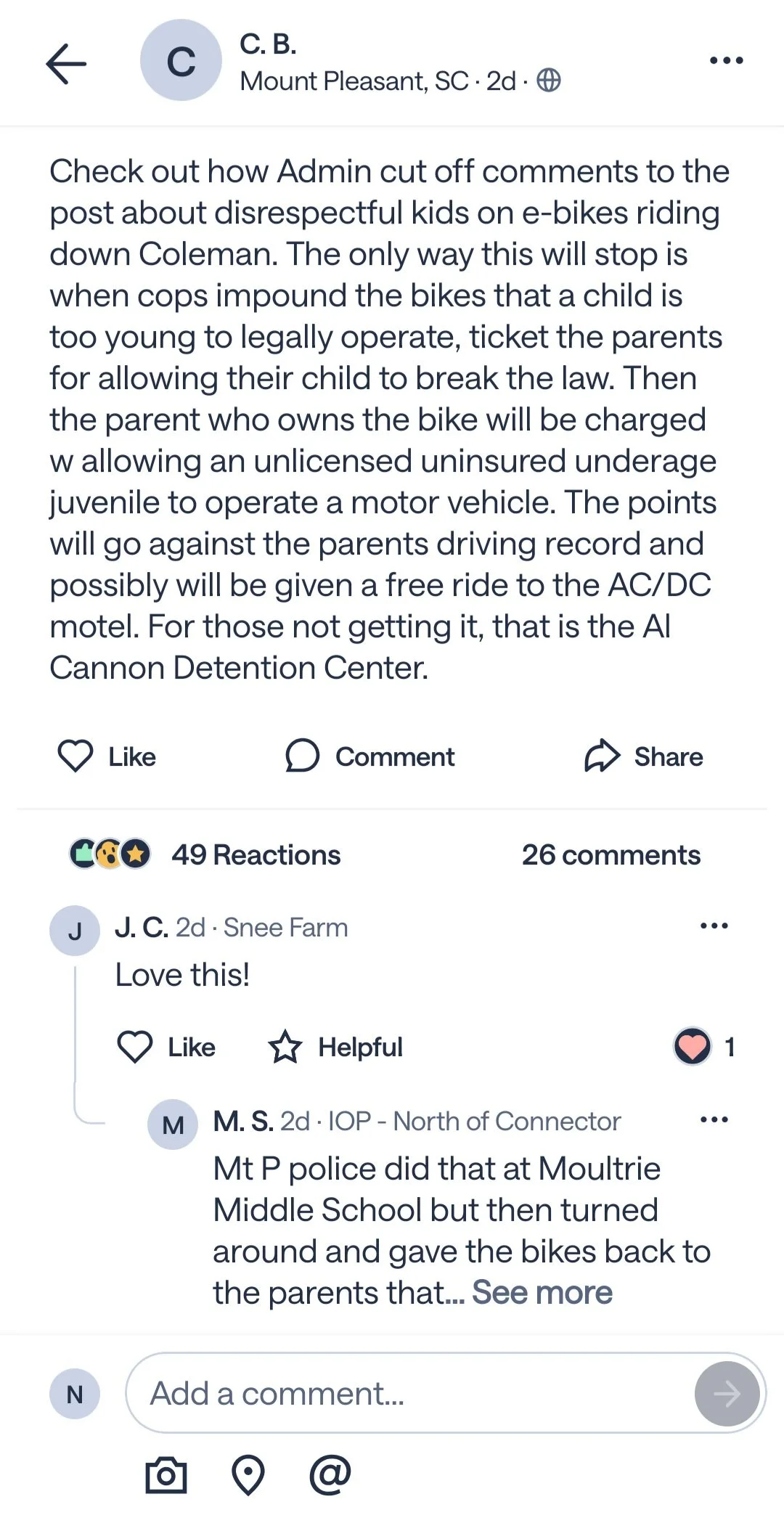
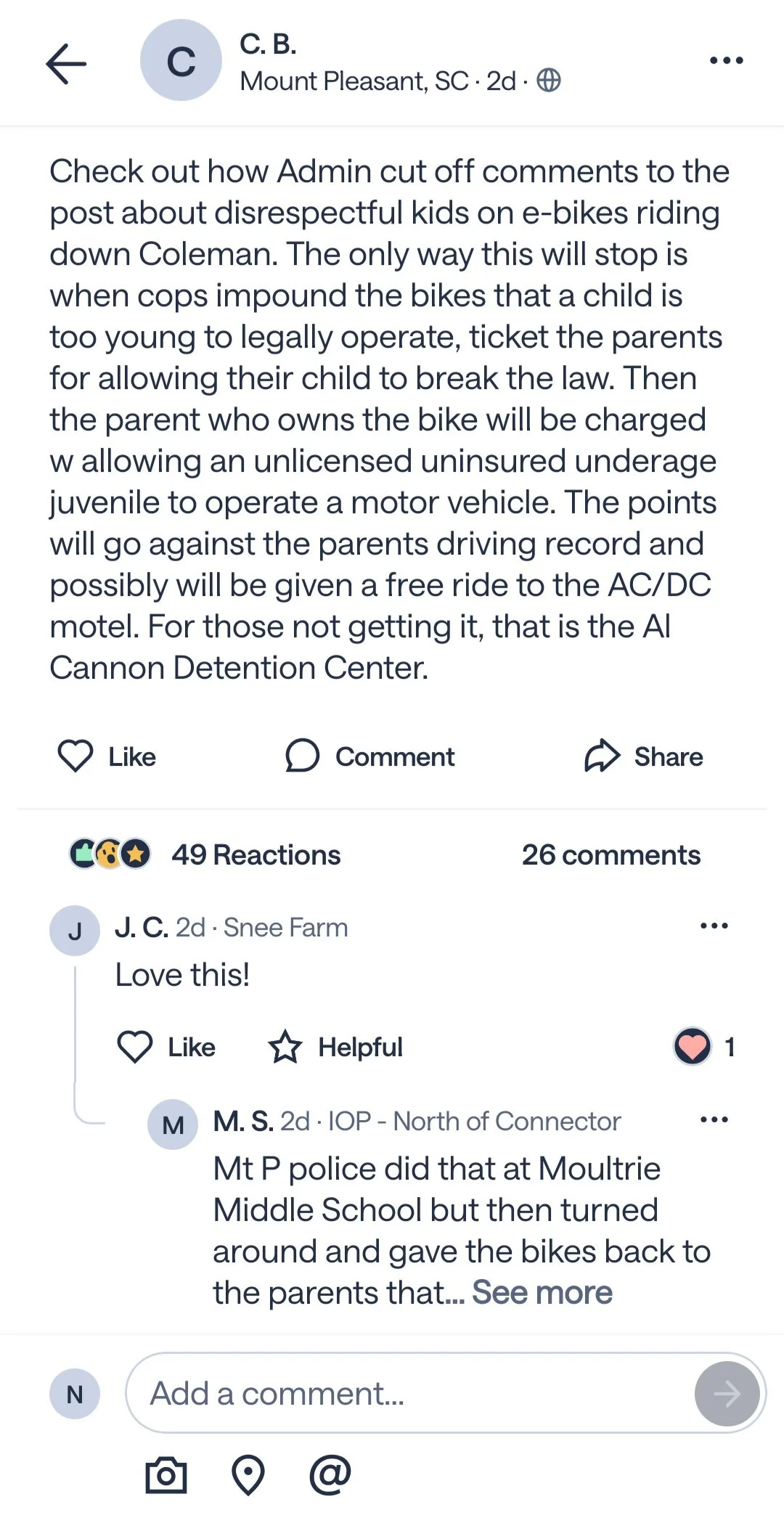
According to the timestamp, the original post was created two days ago. An administrator had redacted part of the original post because it contained comments disparaging a moderator or the moderation team.
That immediately caught my attention.
Why?
Because I was previously suspended after one of my own posts was removed for negative feedback about the moderation process, which I was told was a violation for criticizing the moderator and the moderation team.
So my question is simple:
Why is this post still live two days later?
As I continued reading, I found comments that appeared to move beyond discussing the topic and toward personal conflict between neighbors.
Again, I found myself asking the same question.
How is this permitted to remain while other posts are removed much more quickly?
The inconsistency raises several questions about the moderation model:
What is the documented process for unpaid moderators?
How often are moderators expected to review activity in their neighborhoods?
Is every neighborhood actively moderated?
Is there a quality assurance process that reviews moderator decisions for consistency?
How are moderation decisions audited to ensure similar situations receive similar outcomes?
As many of you know, my experiment also continues because I’m still able to access the platform using a parody email address and an address outside my own neighborhood, raising additional questions about verification and oversight.
No moderation system will ever be perfect.
But consistency should be the goal.
If Nextdoor wants neighbors, advertisers, investors, and shareholders to have confidence in the platform, it may be time to invest in a stronger combination of trained employees, better technology, and independent quality assurance rather than relying primarily on an unpaid moderation model.
Processes don’t improve on their own.
Leadership improves them.
After more than 15 years, I believe it’s fair to ask whether the moderation model established under CEO Nirav Tolia’s leadership—and continued throughout the organization—is ready for meaningful modernization.
What do you think? Should community moderation remain largely volunteer-based, or is it time for a more professional, accountable approach?
Join the discussion on NielFlamm.com.
If AI Can Watch My Groceries, Why Can’t It Help Moderate Nextdoor?
One of Nirav Tolia’s favorite topics on the speaking circuit is AI.
That got me thinking.
If AI is such a core part of Nextdoor’s strategy, why isn’t it being used more effectively to improve moderation?
AI isn’t new. I’ve watched it evolve over the past 25 years, and today it’s part of my everyday life.
Take a trip to my local Harris Teeter.
I walk through self-checkout, scan my groceries, bag my items, and leave. Cameras, sensors, and AI are constantly evaluating what’s happening. When something falls outside an expected pattern or decision matrix, the system alerts a human associate to step in.
It’s AI first.
Human review second.
That’s a scalable model.
Now compare that to what I continue to observe on Nextdoor.
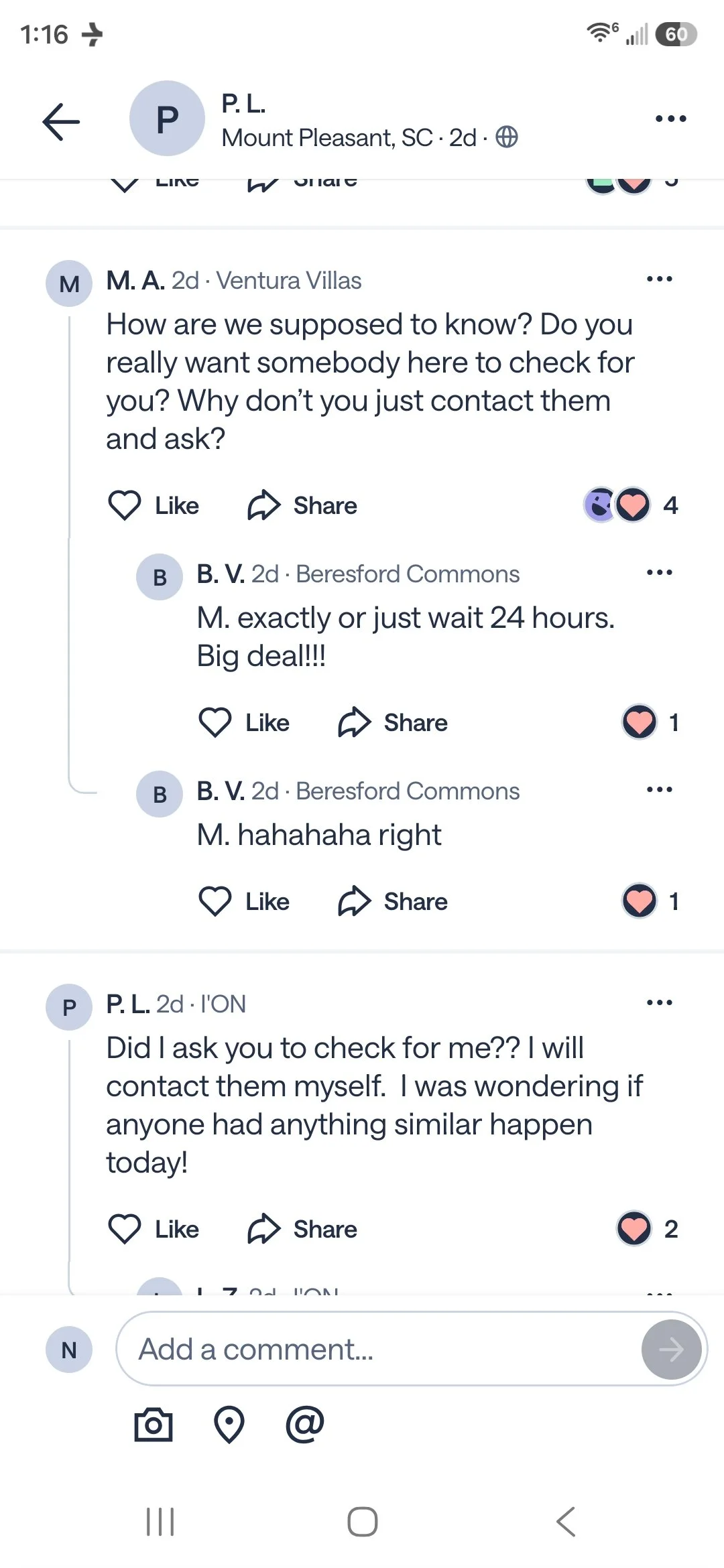
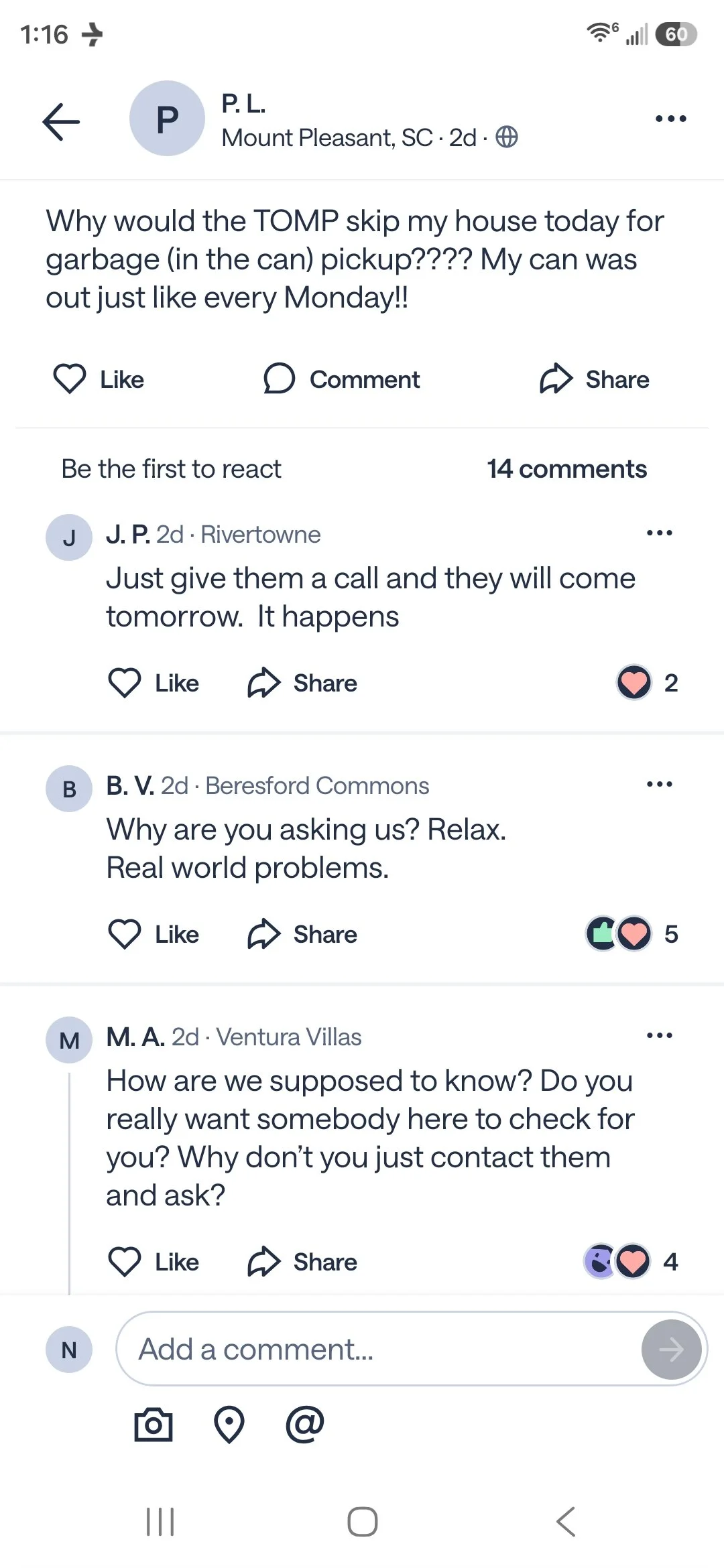
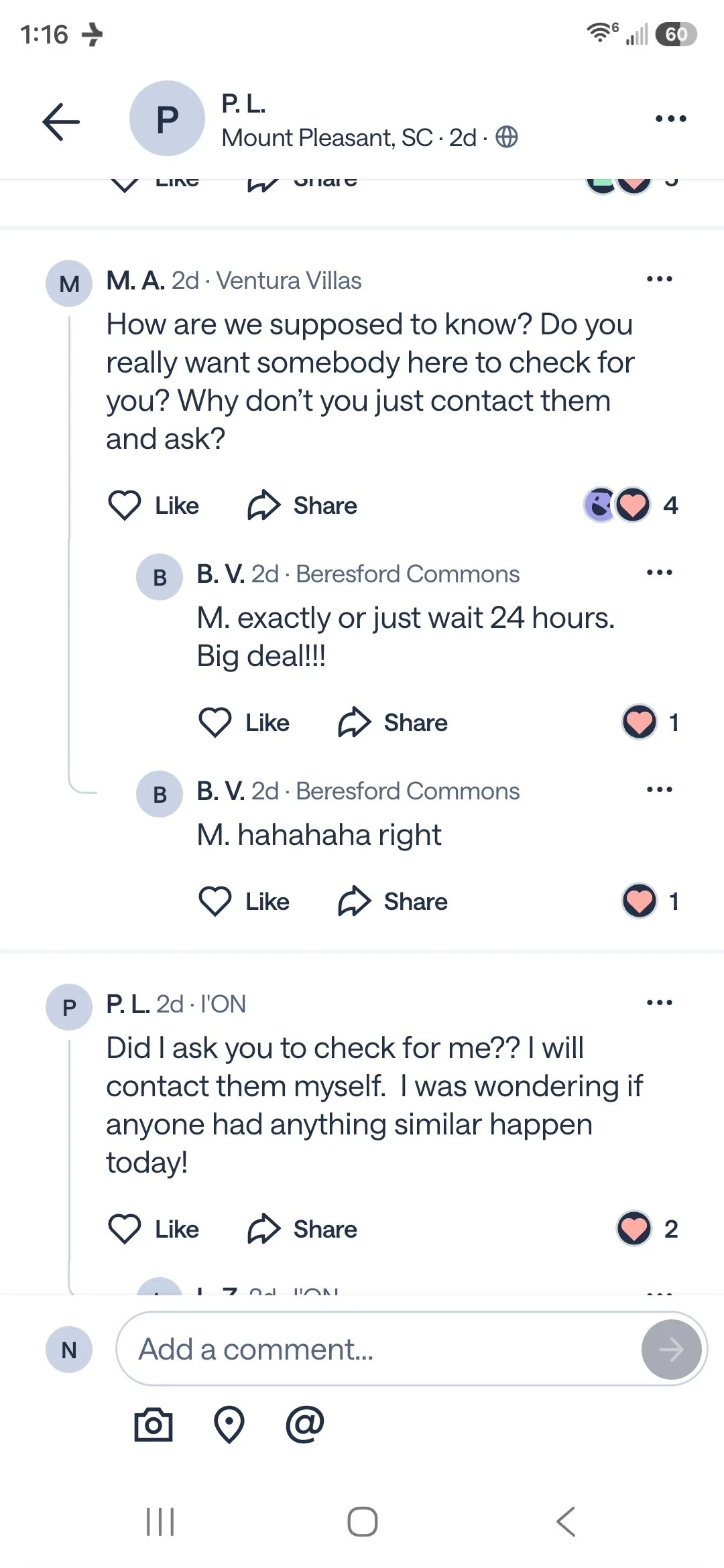
The attached example contains snarky comments that remained visible two days after they were posted. This isn’t an isolated example; it’s part of a pattern I’ve documented during my ongoing Nextdoor experiment.
Why isn’t AI identifying conversations that are escalating into personal attacks or unconstructive exchanges and routing them to trained reviewers?
Instead, Nextdoor continues to rely heavily on a decentralized network of unpaid moderators. While many volunteer with good intentions, any moderation system benefits from consistent standards, quality assurance, and ongoing coaching.
To me, the current model feels like the inmates running the prison while the warden sits in the office, removed from the chaos.
If AI can help prevent mistakes at a grocery store checkout, surely it can help create a more consistent and constructive online community.
Join the discussion on NielFlamm.com.