
The Ankle Report: My Low-Tech Fluid Monitoring System
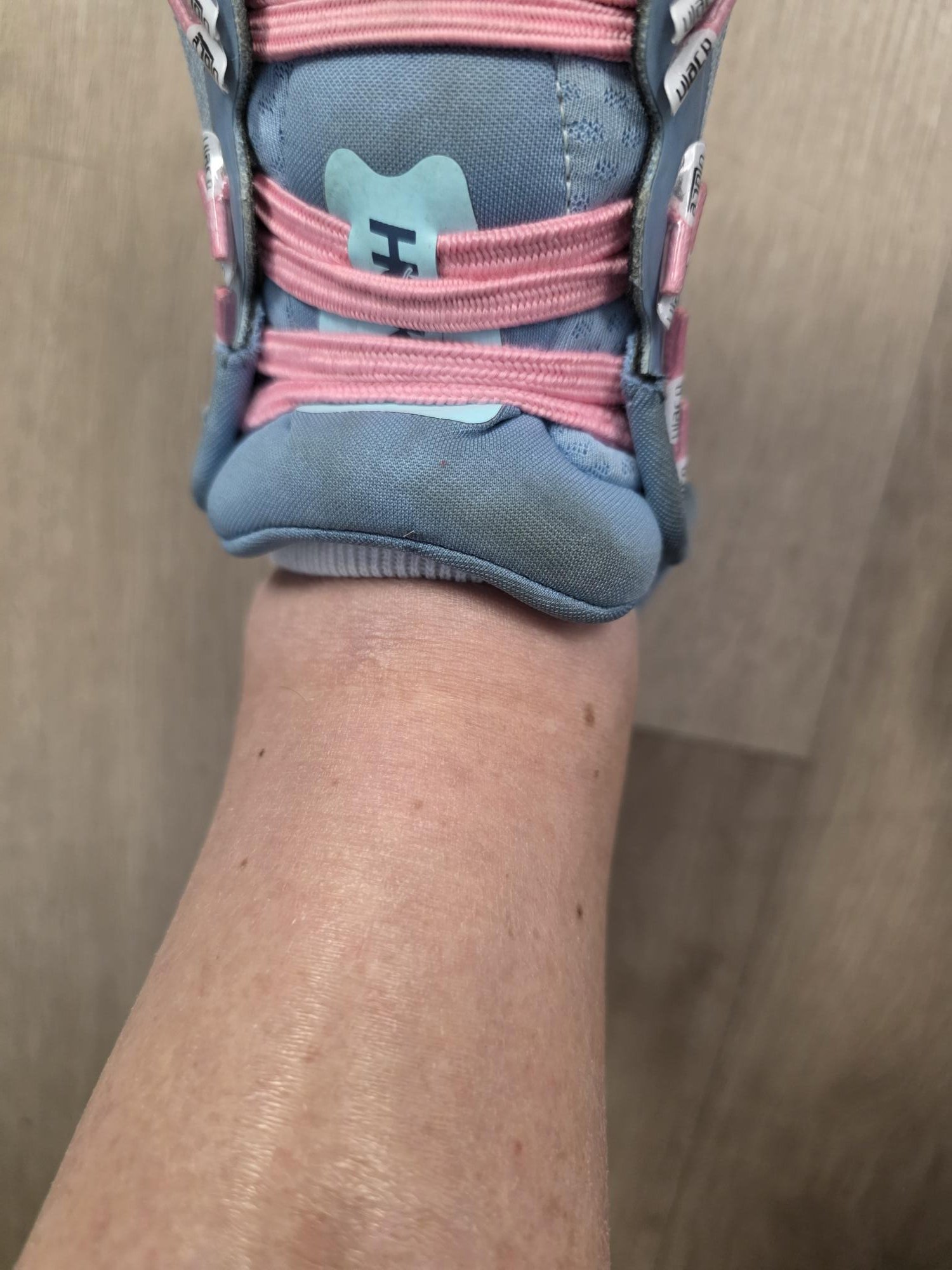
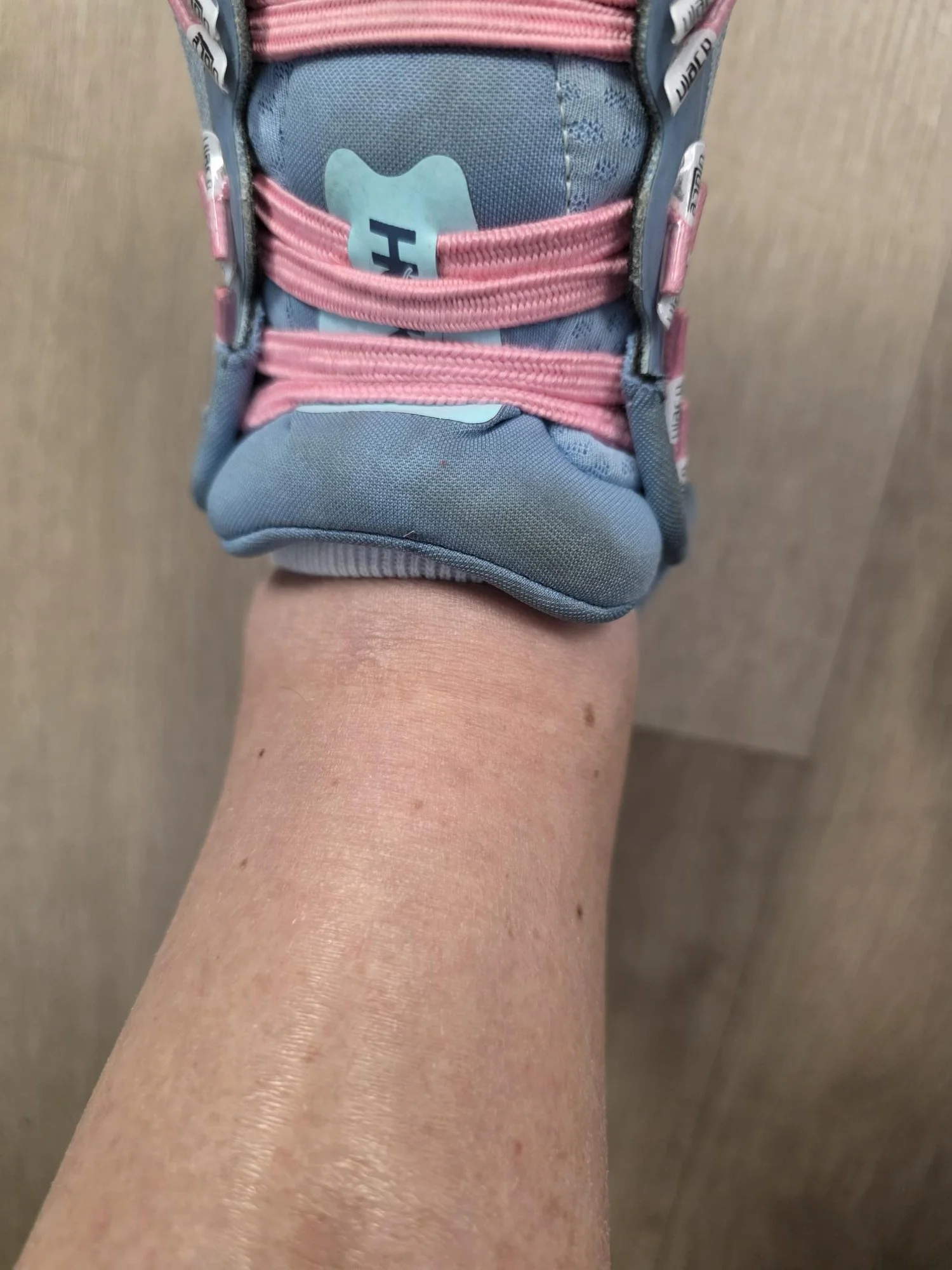
Lately, I’ve found myself spending more time looking at my ankle.
I mean, why wouldn’t I?
It’s a great-looking ankle.
More importantly, it’s the only one I have left, so it gets 100% of the ankle-related attention around here.
But lately, I’m not admiring it purely for its aesthetic qualities. I’m checking it for edema and fluid retention.
My Built-In Fluid Gauge
As someone living with End-Stage Renal Disease (ESRD) and receiving dialysis, fluid is something I have to pay attention to.
My kidneys still have some function. I still urinate normally, so I don’t retain fluid in exactly the same way as someone whose kidneys have stopped producing urine altogether.
Still, I can retain more fluid than I should.
And one of the easiest places for me to notice it?
My ankle.
Gravity is very dependable. Fluid can settle into the lower part of the body, so I can look at my ankle and get a visual clue that perhaps I've been a little too enthusiastic with the beverages.
Apparently, my ankle has become a medical instrument.
No batteries.
No Bluetooth.
No subscription.
Just look down.
The Other Fluid Gauge: My Residual Limb
My ankle isn't the only place where fluid retention becomes noticeable.
I can also retain fluid in my residual limb, which creates an entirely different problem.
My prosthetic socket doesn't suddenly become more accommodating because I'm retaining extra fluid. If my residual limb changes volume, getting into the prosthetic can become more challenging.
The prosthetic basically says:
“Sorry, we're at capacity.”
So fluid management isn't just something I think about during dialysis. It can affect something as basic as putting on my leg and getting on with my day.
Then Winter Joins the Party
Winter brings another issue.
When the air gets dry, my skin tends to get drier too. Add fluid-related swelling and stretching into the equation, and I've noticed my skin can start cracking more.
So apparently my body has seasonal programming.
Summer: Watch the swelling.
Winter: Watch the swelling AND the cracking.
Excellent.
Learning to Pay Attention
Living with ESRD has taught me that sometimes the useful signs aren't dramatic.
Sometimes it's simply noticing that my ankle looks a little puffier than usual.
Or that my residual limb isn't fitting into my prosthetic quite as easily.
Or that my skin is behaving differently.
None of those observations replaces what my dialysis team measures or tells me. They're simply ways I've learned to pay attention to my own body between treatments.
And since I only have one ankle left, I might as well put it to work.
For now, I'll continue monitoring it.
Part ankle. Part fluid gauge. Still pretty good-looking.
Remember This Infographic About My Last Labs?
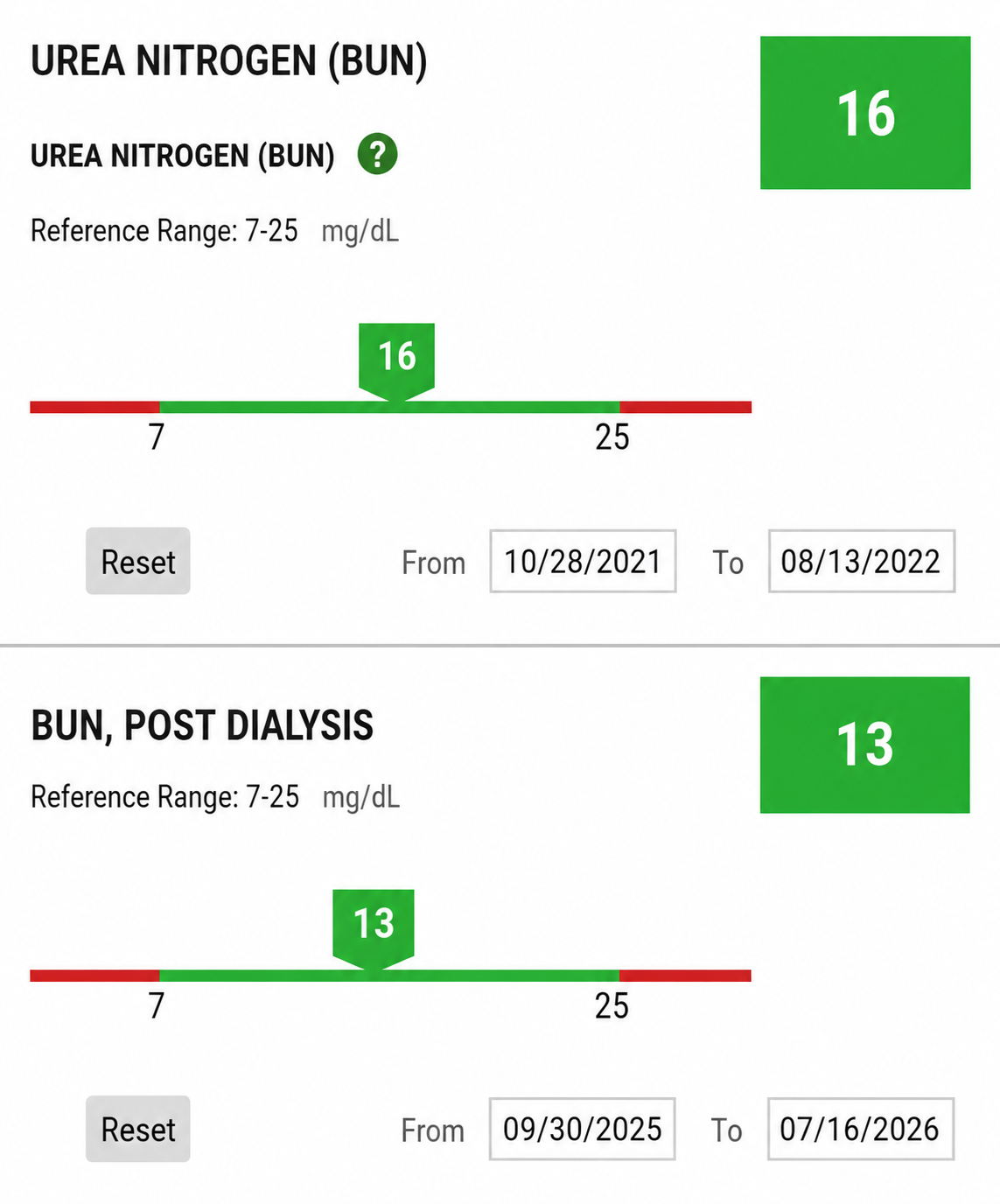
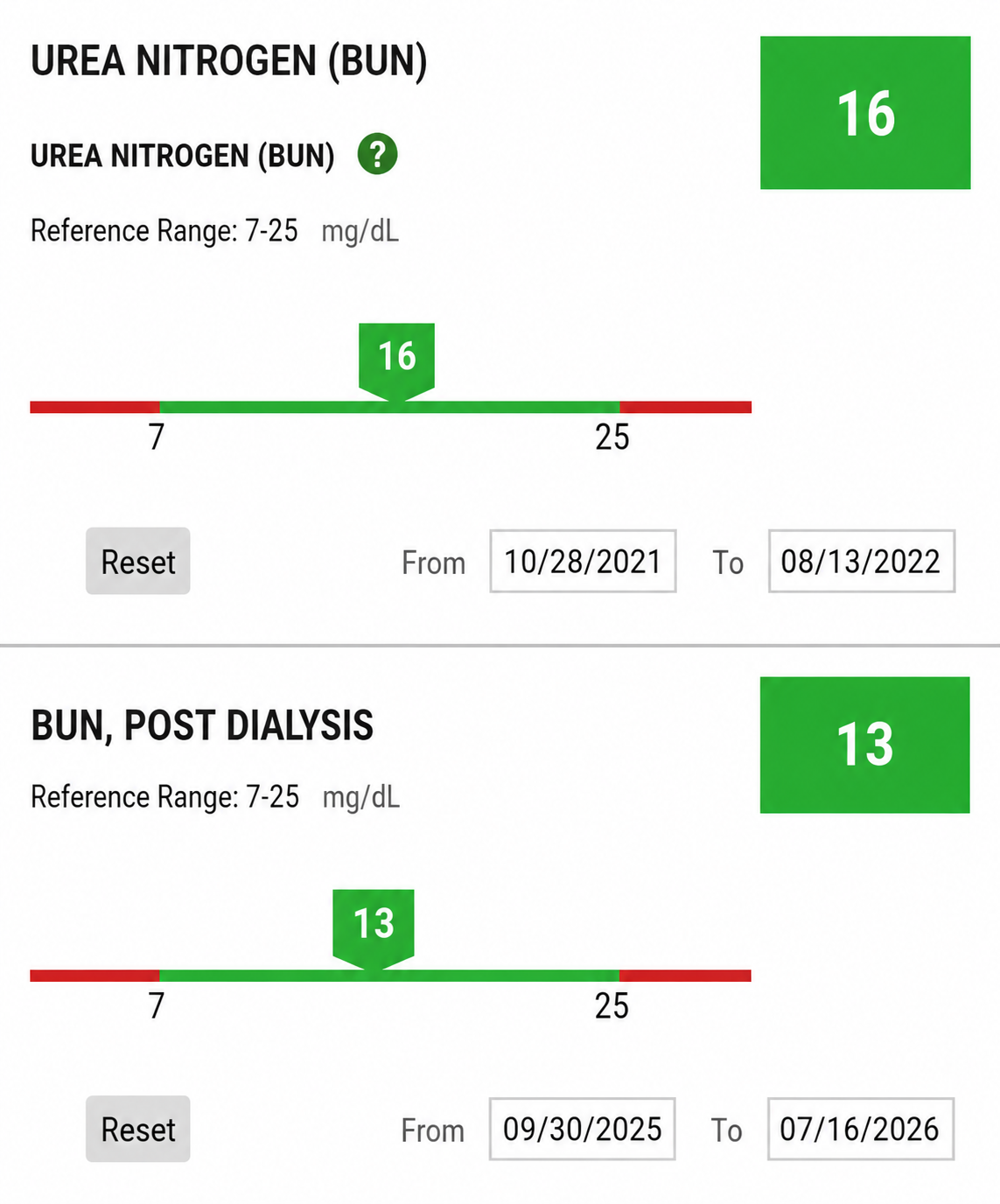
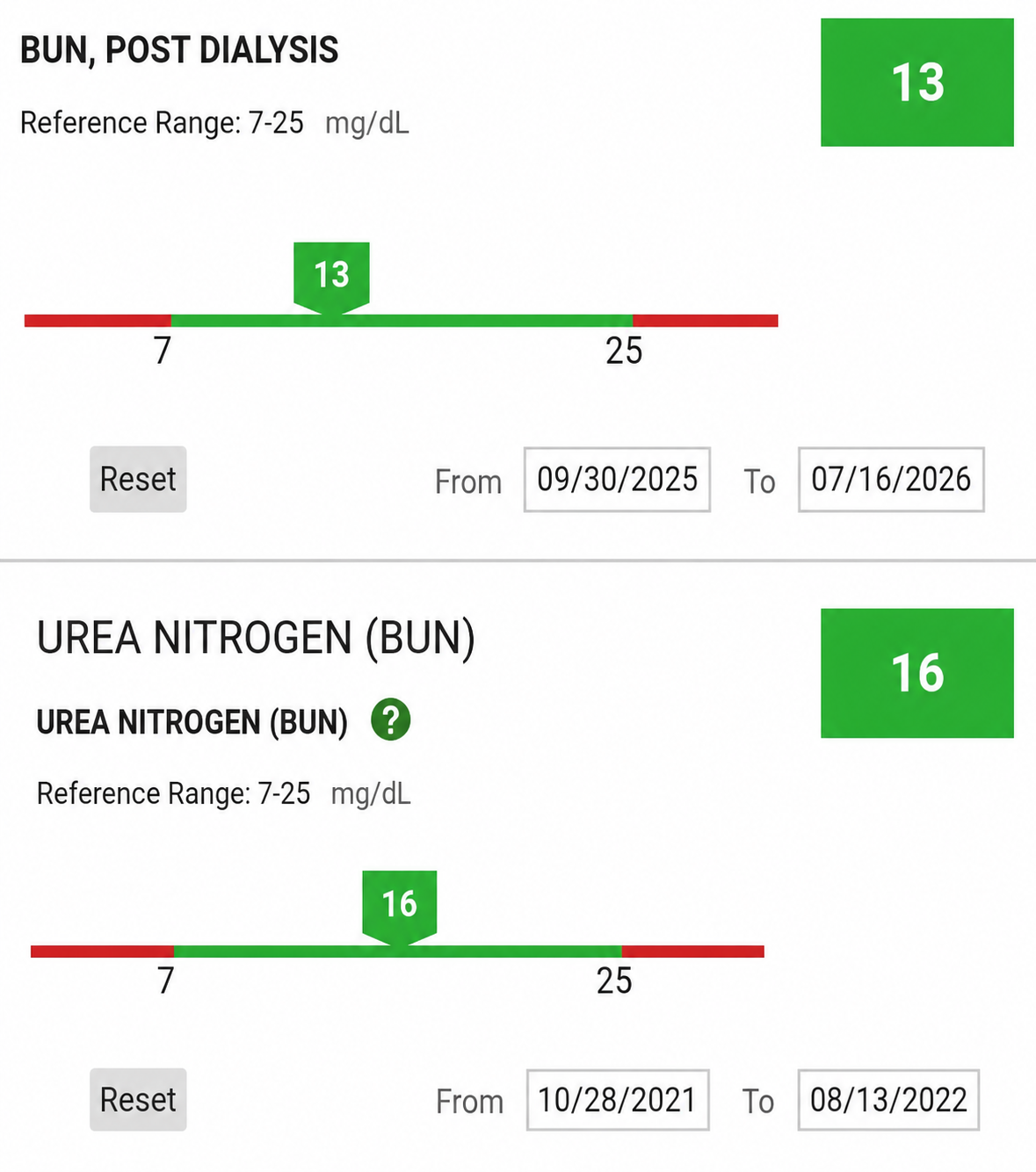
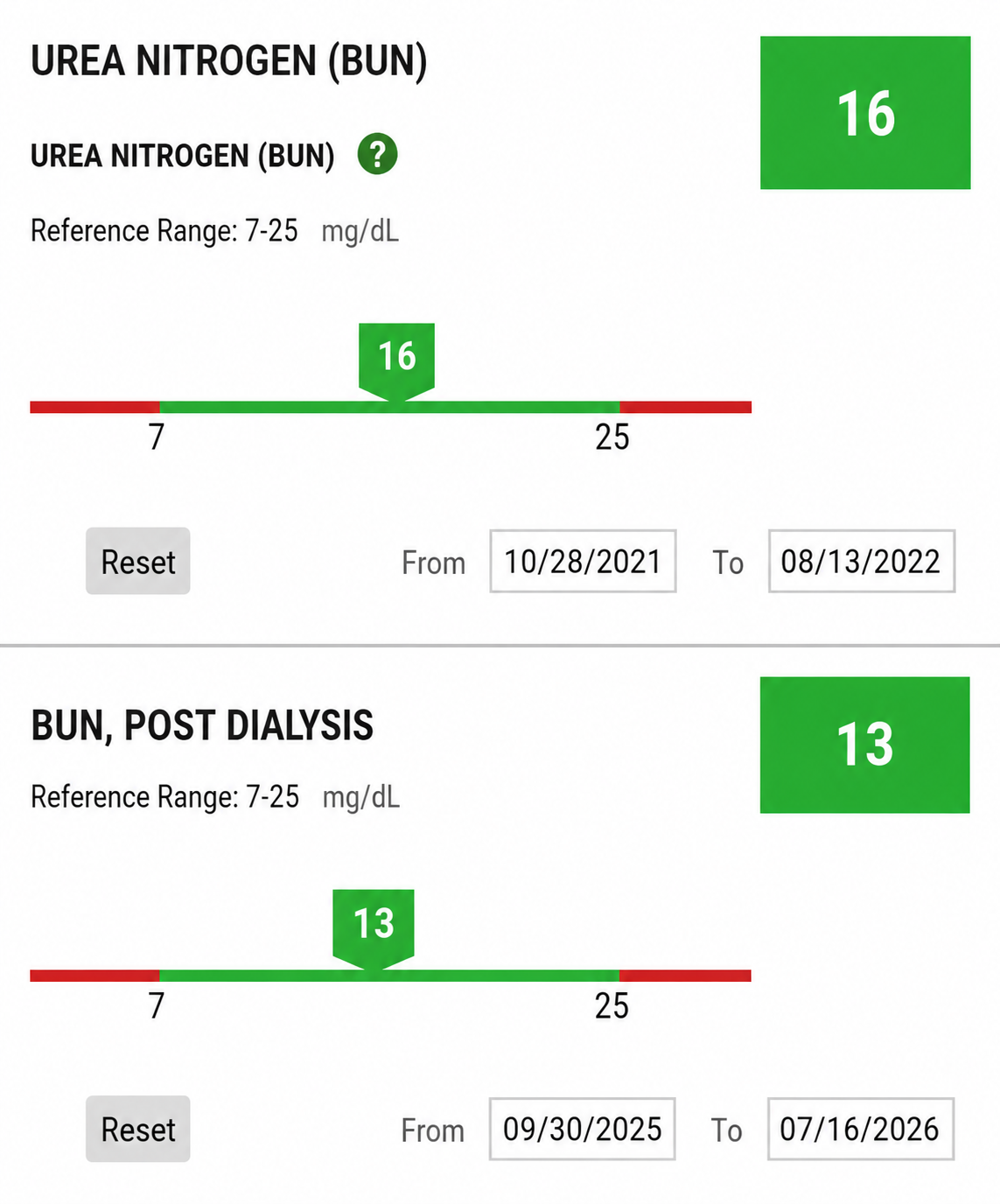
Remember the infographic I shared about my latest dialysis lab results? I was excited because my pre-dialysis BUN had fallen into the normal range for the first time since I started tracking it in October 2025.
On Mondays, either my nephrologist or a Physician Assistant from the nephrology practice stops by the dialysis clinic to check in on patients. I had a feeling the conversation I had with Clark was coming.
He reviewed my labs—not just the BUN, but the entire panel—and simply said:
"We're going to run them again."
As encouraging as the BUN result was, a few other values were out of whack. My phosphorus was very, very low, along with a couple of other numbers that deserved another look.
By the time Clark reviewed everything, I was already well into my dialysis treatment. That meant it was too late to draw a true pre-dialysis sample and then compare it with a post-dialysis sample.
So, we may repeat the labs on Wednesday to see whether last week's results were an anomaly or the beginning of a new trend.
I'm as curious as you are.
Stay tuned!
Join the discussion on NielFlamm.com.
Monthly Dialysis Labs: A Surprising Number I Haven't Seen Since 2025
Every month during dialysis, I have a full set of lab work done. The nice part? No extra needle stick. The blood is drawn directly through the dialysis tubing while I'm already connected.
The monthly labs help monitor many aspects of living with End Stage Renal Disease (ESRD), including:
Potassium – helps reduce the risk of dangerous heart rhythm problems.
Creatinine – shows how well my kidneys are filtering waste.
Phosphorus – high levels can pull calcium from the bones, while levels that are too low can affect oxygen delivery to muscles and lead to weakness.
Iron
Hemoglobin
Sodium
Chloride
Carbon Dioxide
Total Serum Protein
Albumin
Magnesium
Platelet Count
White Blood Cell Count
The number I paid the closest attention to this month was BUN (Blood Urea Nitrogen).
Here's the simple version. When we eat protein, our bodies break it down, producing ammonia, which is toxic. The liver converts that ammonia into urea. Urea travels through the bloodstream to the kidneys, where healthy kidneys filter it into urine.
With ESRD, that process doesn't work very well, so BUN levels can rise because waste isn't being removed efficiently.
During dialysis, my care team measures BUN before treatment and after treatment to see how effectively the dialysis removes that waste.
When I reviewed my results on Saturday, July 18, something caught my attention.
For the first time, when my monthly labs were tracked starting in October 2025, my pre-dialysis BUN was in the normal (green) range.
Even more interesting, my post-dialysis BUN wasn't dramatically lower. Normally, I'd expect to see a much bigger drop after treatment.
So now I'm left with a few questions:
Are my kidneys somehow recovering a little?
Was this simply an unusually good month?
Did my diet or hydration affect the result?
Or was it just one of those lab quirks that occasionally happens?
The answer is... I don't know.
One lab result doesn't establish a trend, especially with ESRD. But after months of watching these numbers, seeing that green result definitely made me stop and smile.
I'll be watching closely next month to see whether this was the beginning of a trend or simply a one-time surprise.
Either way, I'll keep sharing the journey.