

Holy Moses: A Pregnant Nun, West Texas and… a Cow?

Every once in a while, the algorithm drops something in front of me that makes me ask:
How the hell did I get here?
This time, it was the short film Holy Moses, starring Amanda Seyfried.
It's only about 15 minutes long, but somehow it connects a pregnant nun in 1960s Ireland with a man at a gas station in West Texas in the late 1980s.
And what ties these two worlds together?
A cow.
Yes.
A COW.
The premise was strange enough that once I started watching, I needed to know where this was going.
Amanda Seyfried plays Mary, the pregnant nun, and the story jumps across decades and thousands of miles through what is described as a peculiar miracle.

It's weird.
It's religious.
It's mysterious.
And it's ambiguous enough to make me wonder what exactly I watched after it ended.
But unlike sitting through a two-hour movie only to discover I have no idea what happened, Holy Moses asks for about 15 minutes of my life.
I can make that investment.
And I actually found it interesting.
It feels less like a traditional short film and more like someone opening the door to a much bigger story, letting me look inside for a few minutes, and then closing it again.
Apparently, that isn't entirely accidental. Writer-director Eli Powers created Holy Moses as a proof of concept with the possibility of expanding the idea.
I'd watch that.
Because now I have questions.
Lots of questions.
And most of them somehow involve...
THE COW.
🐄 Watch Holy Moses here:

The Hinge Experiment: Wait… I Have a Match!

Well, this is awkward.
When I was considering whether The Hinge Experiment™ had run its course, Hinge apparently heard me.
I got a match.
Her name is Airica.
And even more shocking?
We're already talking about meeting Sunday.
Steve the Iguana may have to unpack his bags. 🦎
From Zero Matches to Airica
My last Hinge update wasn't exactly optimistic.
My match queue was empty.
Matches: 0.
Conversations: 0.
Dates: 0.
Meanwhile, traffic to NielFlamm.com was doing considerably better than my dating life.
I was legitimately starting to wonder whether it was time to delete Hinge and move along. After all, there's only so much entertainment I can squeeze out of screenshots saying:
“No matches right now.”
Apparently, Hinge took that personally.
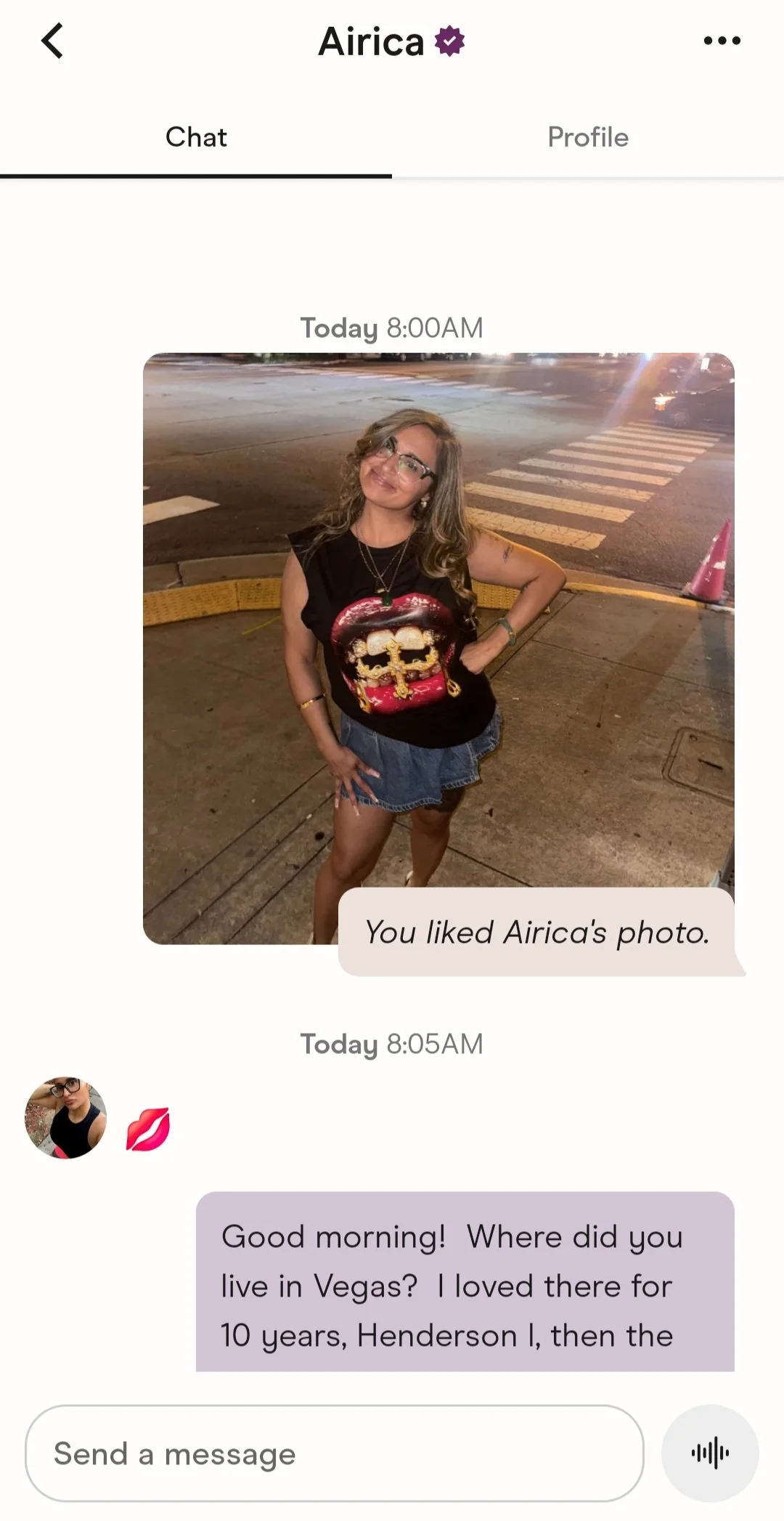
This morning, I liked one of Airica's pictures.
Five minutes later?
💋
Well, hello there.
A response!
From a human!
This changes everything.
Okay, probably not everything. Calm down, Niel.
And We Already Have Something in Common
I noticed that Airica had lived in Las Vegas.
I lived there for about ten years, so I immediately had something to ask about.
My opening wasn't Shakespeare:
“Good morning! Where did you live in Vegas? I lived there for 10 years…”
But I've already established during this experiment that I don't exactly spit mad game.
I'm more of a:
“Hello. Here is a relevant question based upon information you voluntarily provided. Would you care to discuss?”
kind of guy.
Somehow, despite this irresistible charm, the conversation continued.
And now we're making plans for Sunday.
Yes.
An actual day.
For an actual potential date.
With an actual person.
WHAT IS HAPPENING?
There Is One Small Issue
Airica is in Lexington, South Carolina.
That's about a 90-minute drive for me.
Some people might look at that and immediately say:
“Too far.”
I don't.
I like driving.
An hour and a half isn't exactly a commute I'd want to make every morning, but for an opportunity to meet someone I'm interested in?
That's manageable.
Besides, I've spent longer than 90 minutes scrolling through dating profiles with absolutely nothing to show for it.
At least this drive has a destination.
And if we meet and discover there's chemistry?
Then we figure out geography.
If we meet and discover there isn't?
I had a Sunday drive.
There are considerably worse outcomes.
Let's Not Get Ahead of Ourselves
If you've followed The Hinge Experiment, you already know I've learned this lesson.
A match isn't a date.
A conversation isn't a date.
Making plans for a date isn't even necessarily a date.
Until two human beings are physically sitting in the same place at the same time, I'm keeping the champagne firmly corked.
Actually, let's make that Coke Zero.
But this already feels different from some of my previous matches because we're actually discussing meeting.
That's what I've wanted all along.
I'm not looking for an eternal Hinge pen pal.
I'm not trying to collect matches.
I'm not interested in exchanging “Good morning!” messages until Social Security sends us both birthday cards.
Let's meet.
Have a conversation.
Laugh.
Eat something.
See whether we enjoy being around each other.
Dating apps are supposed to be the introduction—not the entire relationship.

So Much for Deleting Hinge
And here is perhaps the funniest part.
I was asking:
Is it time to delete the app?
Hinge apparently responded:
“Not so fast, Baldy.”
Fair enough.
The experiment gets an extension.
As of right now:
Matches: 1.
Active conversations: 1.
Potential Sunday dates: 1.
Distance: About 1½ hours.
Niel's expectations: Cautiously optimistic.
Steve the Iguana: Furious. 🦎
Sorry, Steve.
You're back on the bench.
At least until Sunday.
Because if this date actually happens, The Hinge Experiment will finally accomplish something I've been trying to make happen since I started it:
A date from a dating app.
What a concept.
Stay tuned.
This could get inter
esting.

Day 109: Nextdoor Honored Five Great Neighbors. Only One Story Really Needed Nextdoor.

Day 109.
I'm still asking Nextdoor for the detailed data behind the original two Insights studies I requested.
But before getting into today's observation, let me give Nextdoor some credit.
You're welcome. 😂
I've spent 109 days publicly asking for the research Nextdoor said readers could request.
And recently, Nextdoor published a new study on neighborhood trust with substantially more methodology and research information than I've been asking to see.
I liked it.
I said so.
So, Nextdoor, you're welcome for the free accountability service.
Please let me know where the first two detailed reports I originally requested are.
I'm not asking for another summary.
Could you share the underlying research that started this 109-day project?
Now, About Those Good Neighbors
Nextdoor recently published its 2026 Good Neighbor Day honoree roll call.
And I genuinely like these stories.
They selected five honorees from more than 1,300 nominations, representing five regions of the country.
These are people doing exactly what good neighbors should do.
They're feeding people.
Helping someone recovering from a hospital stay.
Taking out trash cans.
Plowing driveways.
Maintaining neighborhoods.
Helping people when they need it.
Bravo.
But while reading Nextdoor's own descriptions of the five honorees, something jumped out at me.
Of the five individual stories, only one explicitly describes Nextdoor as part of how the actual good-neighbor work operates.
That would be Dorea in Raleigh, North Carolina.
Nextdoor says Dorea cooks free dinners for roughly 100 neighbors every Wednesday and that the operation “runs on Nextdoor.” By late September, the project had served more than 2,800 meals.
That's fantastic.
And that, to me, is exactly where Nextdoor makes sense.
A neighbor has a need.
Another neighbor wants to help.
Nextdoor becomes the conduit connecting them.
Simple.
Useful.
Local.
Neighborly.
Then I Read the Other Four Stories
The other four honorees are equally deserving.
But something is different.
Bhagwat Gupta spent years helping rebuild and improve his Texas neighborhood.
Dan Schaefer organized meals and continued helping a neighbor recovering alone.
Dan Brinsky plowed a neighbor's driveway throughout the winter so she could visit her husband in the hospital.
Karl and Debbie Word helped neighbors during a medical emergency and kept up their property while they dealt with it.
Wonderful stories.
But in Nextdoor's descriptions of those four acts, Nextdoor isn't presented as the mechanism that made the help happen.
The neighbors are the story.
Which got me thinking again about something I've been saying for months.
What Exactly Is Nextdoor?
Is Nextdoor a social-media platform?
Is it a neighborhood communication platform?
Is it a recommendation platform?
Is it a business-review platform?
Is it an advertising platform?
Is it a local-services marketplace?
Is it a research and consumer-insights company?
Is it a lead-generation platform for businesses?
Is it all of them?
Because maybe that's part of the problem.
Too many lanes.
I've questioned whether Nextdoor is trying to be so many things that its clearest value proposition gets buried underneath everything else.
And ironically, Nextdoor's own Good Neighbor stories may illustrate the question better than I ever could.

Dorea's Story Shows Me the Nextdoor I Understand
Dorea's story is incredibly easy for me to understand.
Someone cooks meals.
Other people need meals.
Neighbors volunteer.
People donate.
People help deliver.
Nextdoor helps connect them.
Boom.
There's the product.
There's the value.
That’s the reason the platform exists.
Nextdoor doesn't have to be the hero.
Dorea is the hero.
Nextdoor helps the hero find the people who need her—and helps other neighbors find a way to participate.
That's a powerful role.
In fact, I think it's more powerful than trying to make Nextdoor the center of every story.
Maybe the Best Version of Nextdoor Is the Conduit
This is where I keep coming back.
Nextdoor doesn't necessarily need to be the neighborhood.
The neighbors already are the neighborhood.
It doesn't need to create neighborliness.
People were helping the person next door long before there was an app for it.
Technology can make those connections easier.
Someone needs help.
Someone else can provide it.
Someone needs a recommendation.
Someone nearby has experience.
Someone lost a dog.
Someone three streets away just saw it.
Someone needs a plumber.
Someone nearby knows one.
Someone has extra food.
Someone else needs dinner.
Connect them.
That's a value proposition I can understand immediately.
But Then Come All the Other Lanes
Reviews.
Recommendations.
Advertising.
Business Pages.
Paid opportunities.
Consumer research.
Insights reports.
Social feeds.
Local discussions.
Business discovery.
Content.
AI.
And somewhere inside all of that is the original idea:
Neighbors connecting with neighbors.
Maybe all of those other businesses ultimately support that mission.
That's certainly a possible strategy.
But I think Nextdoor's own Good Neighbor post raises a worthwhile strategic question:
Has Nextdoor added so many lanes that the simplest reason for using Nextdoor has become harder to see?
The Good Neighbor stories don't prove the answer is yes.
But they certainly made me ask the question again.

Five Honorees. One Particularly Clear Platform Story.
That's what stood out to me.
Not because the other four honorees somehow matter less.
Quite the opposite.
Their actions are the entire point.
But Dorea's story gives me something the others don't:
A crystal-clear example of what Nextdoor itself contributed.
Nextdoor connected people.
That's it.
And that's enough.
Maybe Nextdoor doesn't need another lane.
Maybe it needs to become exceptionally good at the lane its own name has been describing all along.
Next. Door.
Neighbors helping neighbors.
Technology making the connection easier.
The people do the rest.
And now, back to Day 109
I gave Nextdoor credit for the latest research report.
I gave Nextdoor credit for recognizing these five neighbors.
And I'll continue giving the company credit when I think it gets something right.
Now let's finish some unfinished business.
Where are the detailed reports from the first two studies I requested?
It's Day 109.
You showed with the latest research that greater transparency is possible.
Great.
Now let's close the loop on the first two.
Then we'll be square.
Read Nextdoor's 2026 Good Neighbor Day honorees here:
Announcing Nextdoor's 2026 Good Neighbor Day honorees
👉 NielFlamm.com/blog

Two Strange Calls After Being Blocked: Coincidence? Maybe. But I’m Documenting It.
Well, here's another interesting addition to the Nextdoor case study.
Over the last two days, I've received two calls to my Google Voice number.
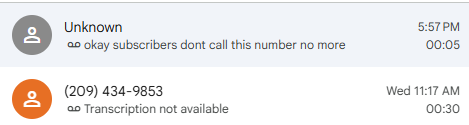
Normally, that wouldn't be particularly interesting.
Except no one had called that number right before this.
Then I got blocked on X by Nextdoor CEO Nirav Tolia.
And now I've received two calls in two days.
Coincidence?
Absolutely possible.
But considering everything I've been documenting lately, I'm at least raising an eyebrow.
Then Came This Voicemail
One call left a voicemail.
It's short.
Very short.
The message sounds to me like:
"Tell that subscriber not to call this number anymore."
That's it.
No introduction.
No company name.
No explanation of who the caller is.
No explanation of what number I'm supposedly calling.
No explanation of what "subscriber" they're referring to.
Just a strange voicemail telling someone—or apparently telling me—that a subscriber shouldn't call a number anymore.
Okay then.
Do I Know Who Called?
No.
That's important.
I don't know who made the call.
I'm not sure whether the caller has anything to do with Nextdoor.
I don't know whether it has anything to do with Nirav Tolia.
I'm not sure whether this is related to my posts, emails, X accounts, or the ongoing case study.
And I certainly don't have evidence that anyone at Nextdoor initiated these calls.
I'm not going to turn timing into proof.
But I'm also not going to pretend the timing didn't catch my attention.

Two Calls After None
That's what makes this interesting to me.
I had no calls coming into this Google Voice number immediately before this.
Then, within the last two days, I received two.
That happened during the same period in which I've been publicly documenting being blocked again on X.
One of the calls leaves this odd voicemail.
Maybe it's spam.
Maybe it's a wrong number.
Maybe someone has the wrong Google Voice number.
Maybe it's completely unrelated.
There are plenty of ordinary explanations.
But when something unusual happens during an already unusual series of events, I document it.
That's what I've been doing throughout this entire Nextdoor case study.
Document first. Conclude only when the evidence supports it.
This Is Why Screenshots, Emails and Recordings Matter
One theme running through this case study has been documentation.
If I send an email, I keep it.
If an account blocks me, I take a screenshot.
If I make a mistake, I correct it.
And if an unusual voicemail arrives during an unusual sequence of events, I'm going to preserve that too.
I'm not claiming the voicemail came from Nextdoor.
I'm not claiming Nirav had anything to do with it.
I'm not claiming there's some mysterious corporate operation happening behind the scenes.
Frankly, that would require evidence I don't have.
What I am saying is:
This happened.
Two calls arrived within two days after a period of none.
One left a strange voicemail.
And the timing caught my attention.
Coincidence Is Still an Answer
Sometimes weird timing is just weird timing.
If I get no more calls, maybe this becomes nothing more than another bizarre footnote in the story.
If the calls continue, I'll continue documenting them.
That's the beauty of keeping a record.
I don't have to invent the ending before the story gets there.
For now, I'll put this one in the file labeled:
"That's Odd."
Not "Nextdoor Did It."
Not "Nirav Did It."
Just:
That's. Odd.
And we'll see what happens next.
👉 NielFlamm.com/blog

Day 108: New X Account. Blocked Again. That Makes Three.

Well, that didn't take long. 😂
One important correction to my previous version of this story.
I created another X account.
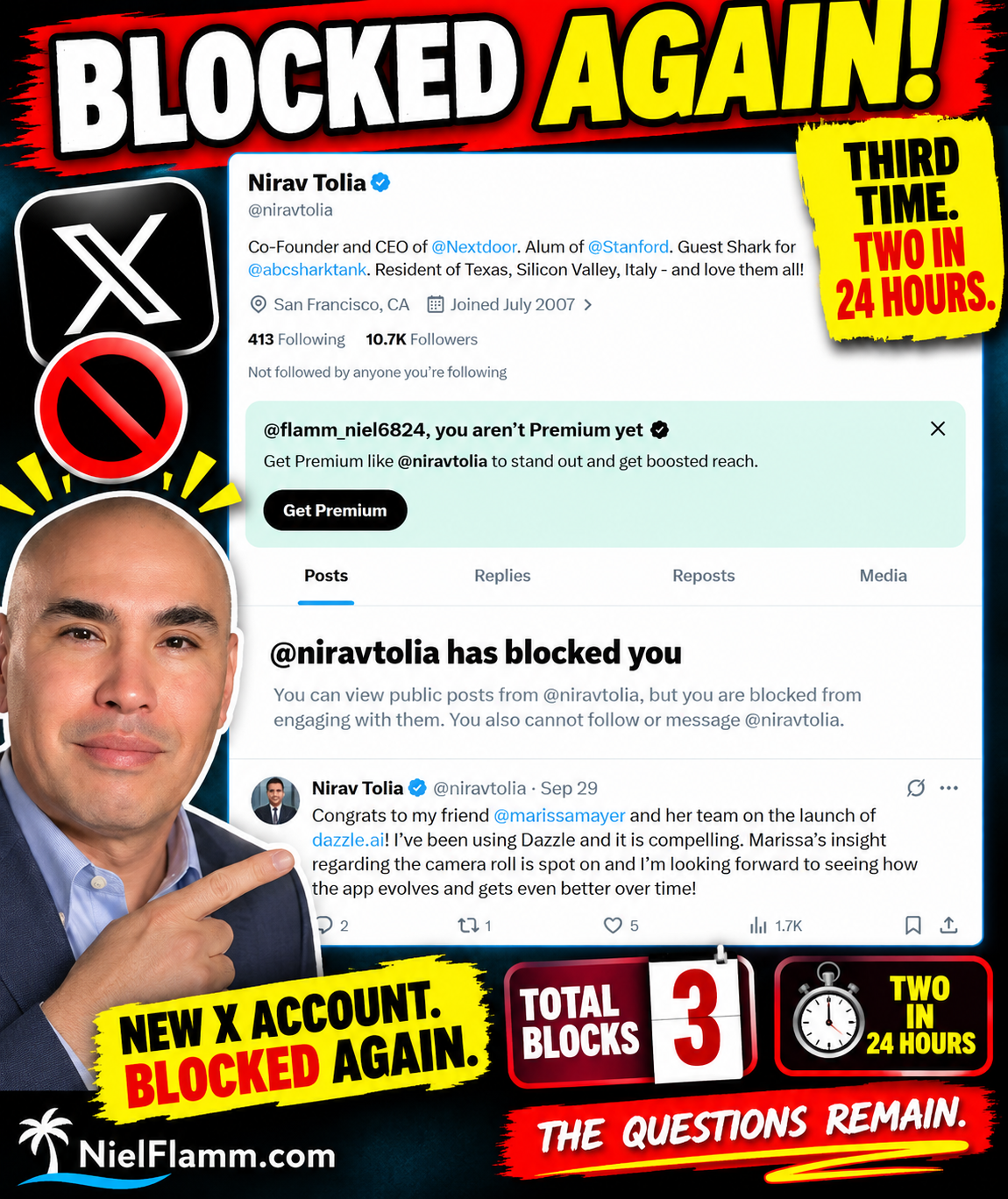
Nirav had already blocked my original account, so I created a new one and kept doing what I've been doing: posting about my experience with Nextdoor and sharing feedback.
Could creating another account to get around a block violate X's Terms and Conditions?
Possibly.
I'm not going to pretend otherwise. It's a risk I'm taking, and if X decides I've violated its rules, I'll deal with the consequences.
But here's what happened next.
Within about 24 hours:
The new account was blocked too.
Based on my records, that's now three blocks, with two different accounts blocked within roughly 24 hours.
At this point, I feel like I'm participating in the world's strangest game of digital Whac-A-Mole.
Who Is Actually Pressing the Button?
Here's something I’m not sure about.
I’m not sure whether Nirav blocked me personally.
The screenshot tells me his account blocked mine. It doesn't tell me who was operating his account when it happened.
Maybe it's Nirav.
An executive assistant can help manage the account.
Maybe someone else has access.
I don't know.
And that's an important distinction because I'm trying to document what actually happened, not fill the gaps with assumptions.
What I do know is that @niravtolia blocked another account I used to provide feedback about Nextdoor.
Again.
Somebody Is Paying Attention
That's the part I find fascinating.
For over 100 days, I’ve been requesting detailed Nextdoor Insights research that the company advertised as available by contacting its Insights representative.
Getting the research has proven remarkably difficult.
Getting blocked?
Apparently we're pretty efficient at that. 😂
Whether Nirav himself is seeing my posts or someone else managing his account, somebody is noticing.
And if company resources are involved—and, again, I don't know that they are—I'd rather see those resources directed toward something that helps Nextdoor.
Find another advertiser.
Improve the small-business experience.
Improve moderation.
Answer customers.
Answer shareholders.
Develop another revenue opportunity.
Build something that increases engagement.
Create company value.
As a shareholder, that's considerably more interesting to me than another block.
Yes, I Created Another Account
I'm not going to bury that detail.
I created another X account after being blocked.
People can decide for themselves whether they think I should have done that.
X can decide whether it complies with its rules.
I'm comfortable owning the decision.
What I'm not doing is pretending to be someone else, inventing allegations, or hiding what I'm doing.
I'm putting my name on my commentary.
I'm taking screenshots.
I'm documenting dates.
And I'm publishing the history as I experience it.
If I'm wrong about something, please tell me.
I've made public corrections before.

Blocking Doesn't Stop the Historical Record
Here's the bigger issue.
Blocking an account doesn't erase the underlying questions.
It doesn't delete the emails I've sent.
It doesn't eliminate the screenshots.
It doesn't make 108 days disappear.
And it doesn't prevent me from writing about the experience elsewhere.
Nirav has a substantially larger social-media audience than I do.
That's fine.
I don't need a bigger audience to maintain a record.
Please provide screenshots, dates, emails, public statements, and the patience to keep everything organized.
I've got those.
Compare That With Sarah Leary
I've also been providing feedback about Nextdoor co-founder Sarah Leary.
I've noticed that the @sarahleary account I've been following stopped posting, while she's been posting through another account.
I don't know why she changed where she posts.
I have no evidence whatsoever that my commentary had anything to do with it.
But from my perspective, it looks different.
Don't want to engage with me?
Fine.
Ignore me.
Post somewhere else.
Don't respond.
Disagree.
There are plenty of options.
That looks better than repeatedly blocking accounts belonging to someone who is publicly documenting a company in which he owns shares.
And We Just Published a Study About Trust
The timing continues to amuse me.
I just wrote about Nextdoor's new study with The Harris Poll examining trust.
And I praised it.
Imagine that.
After months of providing feedback about Nextdoor research, I saw something I thought the company did well and said:
Bravo.
Then I connected the study's discussion of trust and communication with my experience dealing with Nextdoor.
And now another account is blocked.
It looks like you couldn't write this script.
Feedback Isn't Always Comfortable
I've spent more than 20 years in Learning & Development.
Feedback isn't always pleasant.
Sometimes it's wrong.
Sometimes it's poorly delivered.
Sometimes it's repetitive.
Sometimes the person receiving it wants nothing more than for the person providing it to disappear.
But feedback can also expose something worth examining.
A leader doesn't have to agree with it.
A company doesn't have to implement it.
A CEO doesn’t need to debate every shareholder on social media personally.
But I still think there is value in an organization asking:
Why does this person keep raising the same issue?
Maybe he's wrong.
Maybe the company is wrong.
Maybe both sides are missing something.
There's a remarkably effective way to find out.
Have a conversation.
So, Yes, Nirav—You Got Me Again
Third block.
Two accounts within roughly 24 hours.
And yes, one of those accounts was created after the previous one was blocked.
I'm not hiding that.
Maybe X eventually tells me I can't do that.
That's a chance I'm taking.
But this case study doesn't live on X.
It lives on my website.
The emails still exist.
The screenshots still exist.
And the questions still exist.
And I'm still documenting what happens.
Day 108.
Another account blocked.
The questions?
Still here.
👉 NielFlamm.com/blog