
World Cup 2026 Will Expose What Nextdoor Really Is
FIFA World Cup 2026 is coming to North America.
Millions of visitors. Dozens of host cities. Neighborhoods transformed overnight into unofficial fan zones.
And somewhere in the middle of all of it — Nextdoor's unpaid volunteer moderators trying to hold together a platform that was never really about unity in the first place.
Because Nextdoor markets itself as the app that connects neighbors.
But spend five minutes on it, and you'll find something closer to the opposite — a platform that monetizes suspicion, amplifies grievance, and turns the people living closest to you into the people you trust least.
And World Cup 2026 is about to pour gasoline on it.
When millions of visitors flood into host city neighborhoods, watch how fast "community" curdles into:
"Suspicious vehicle" reports filed against fans who don't look like they belong
Racial profiling dressed up as safety concerns — reported, ignored, or quietly deleted
"Out-of-towners are ruining our neighborhood" posts racking up hundreds of upvotes
Flag displays triggering nationality-based arguments that moderators don't know how to touch
Short-term rental rage that splits neighbors into economic factions
Noise complaints weaponized against certain households but not others
Local businesses accused of price gouging — with no context, no fairness, no appeal
The moderation will be inconsistent. The rule enforcement will be opaque. Some posts will disappear. Others — somehow — won't.
That's not a bug. That's the pattern.
Nextdoor has spent years positioning itself as the trusted hub for hyper-local connection. But what it's actually built is a digital space where fear travels faster than goodwill, where anonymity emboldens bad-faith reporting, and where the loudest, most territorial voices set the tone for everyone else.
World Cup 2026 won't just stress-test Nextdoor's moderation infrastructure.
It will expose what the platform has always been — not a town square, but a complaint box. Not a community builder, but a division engine with a neighborhood aesthetic.
The world is coming to North America to celebrate together.
Nextdoor will find a way to make it a neighborhood dispute.
Is Nextdoor a connector or a divider? Have you seen it bring people together — or push them apart?
𝗝𝗼𝘂𝗿𝗻𝗮𝗹𝗶𝘀𝘁𝘀 𝗦𝗵𝗼𝘂𝗹𝗱 𝗣𝗮𝘂𝘀𝗲 𝗕𝗲𝗳𝗼𝗿𝗲 𝗣𝗮𝗿𝘁𝗻𝗲𝗿𝗶𝗻𝗴 𝗪𝗶𝘁𝗵 Nextdoor
On #NationalLocalNewsDay (April 9th), Nextdoor announced early access for "Local Journalist Accounts" — a pilot already tested with 75+ reporters from outlets like The Dallas Morning News, Fort Worth Star-Telegram, and Hearst Newspapers.
The pitch: verified presence, DMA-wide reach from day one, and real-time search to monitor neighborhood conversations before a story goes to print.
On paper, it sounds like a lifeline for a struggling industry.
But journalists should read the fine print before signing on.
Here's the tension nobody in the press release is naming:
Journalism has historically stood against censorship, opaque moderation, and systems where speech is controlled without transparency or accountability.
Yet longtime Nextdoor users consistently describe exactly those problems:
- Unpaid volunteer moderators with significant enforcement power
- Little visibility into why posts are removed
- Vague Guidelines, inconsistently applied, and hard to appeal
- Public criticism quietly moderated away — while the company markets itself around "authentic community conversation."
That's not a minor footnote. That's a structural contradiction.
And for journalists, the stakes are higher.
Nextdoor offers immediate reach with no audience-building required — genuinely attractive when local newsrooms are hemorrhaging resources.
But reach comes with dependency.
Once journalists build sources and story pipelines inside a platform ecosystem, they become subject to that platform's rules, algorithms, and enforcement priorities — controlled by a private company with its own business interests.
If those systems lack transparency for ordinary neighbors today, what does that mean for editorial independence tomorrow?
A verified badge is not editorial freedom.
Reach is not the same as transparency.
And a company that moderates criticism while marketing "community conversation" deserves scrutiny — not just participation.
The right response isn't reflexive rejection.
Local journalism is in crisis. Nextdoor claims it reaches 1 in 3 U.S. households. The overlap is real.
But the right entry point is as a journalist, not a brand partner — asking publicly: What speech protections exist for journalist accounts? Who reviews moderation decisions affecting reporters? What recourse exists when content is removed?
Local journalism matters too much to trade those questions for a verified checkmark and a shortcut to distribution.
Subscribe to NielFlamm.com.
Nextdoor says it connects neighbors. This comedian just exposed why that's complicated.
John Crist's bit on neighborhood apps is genuinely funny.
It's also a little too accurate.
He describes maintaining two Nextdoor accounts — one progressive, one conservative — and arguing with himself as he watches strangers pile on. He backs out and lets the chaos run.
The crowd laughs. But sit with it for a second.
Nextdoor's founder, Nirav Tolia, has pointed to TransUnion’s address verification as the platform's backbone of trust. Real neighbors. Real accountability.
And yet — a comedian openly jokes about running burner accounts to manufacture conflict on the platform. Not as a hypothetical. As a bit rooted in something he actually does.
That raises real questions:
How robust is the verification in actually keeping bad actors out?
If one person can run two accounts and stoke division for sport, what does that do to Weekly Active User numbers the platform reports to investors?
And if the algorithm rewards conflict — which it clearly does — are we measuring engagement, or just outrage?
Comedy works because it tells the truth sideways.
John Crist didn't set out to write a platform audit. But he did.
If you work in community building, social platforms, or neighborhood tech, this 60-second clip is worth your attention.
🎭 Watch the short: https://www.youtube.com/shorts/9Kx4QSkbqX0
What's your experience with Nextdoor? Does it bring your neighborhood together — or surface the fault lines?
Subscribe to NielFlamm.com

NielFlamm.com Goes More Global 🌎

There’s a new update live now on NielFlamm.com.
Visitors can now actively translate the site into:
中文 (Chinese)
Tiếng Việt (Vietnamese)
日本語 (Japanese)
These were added to help support and welcome viewers from countries that continue to show strong interest in the content outside of the United States — currently among the highest international viewership on the site.
To use the feature:
➡️ Click the language dropdown on the right side of the website
➡️ Choose one of the three available languages
More language support and updates are coming soon.
Thank you to everyone around the world who visits, watches, reads, listens, and supports the content on NielFlamm.com. The international traffic, comments, shares, and engagement genuinely mean a lot.
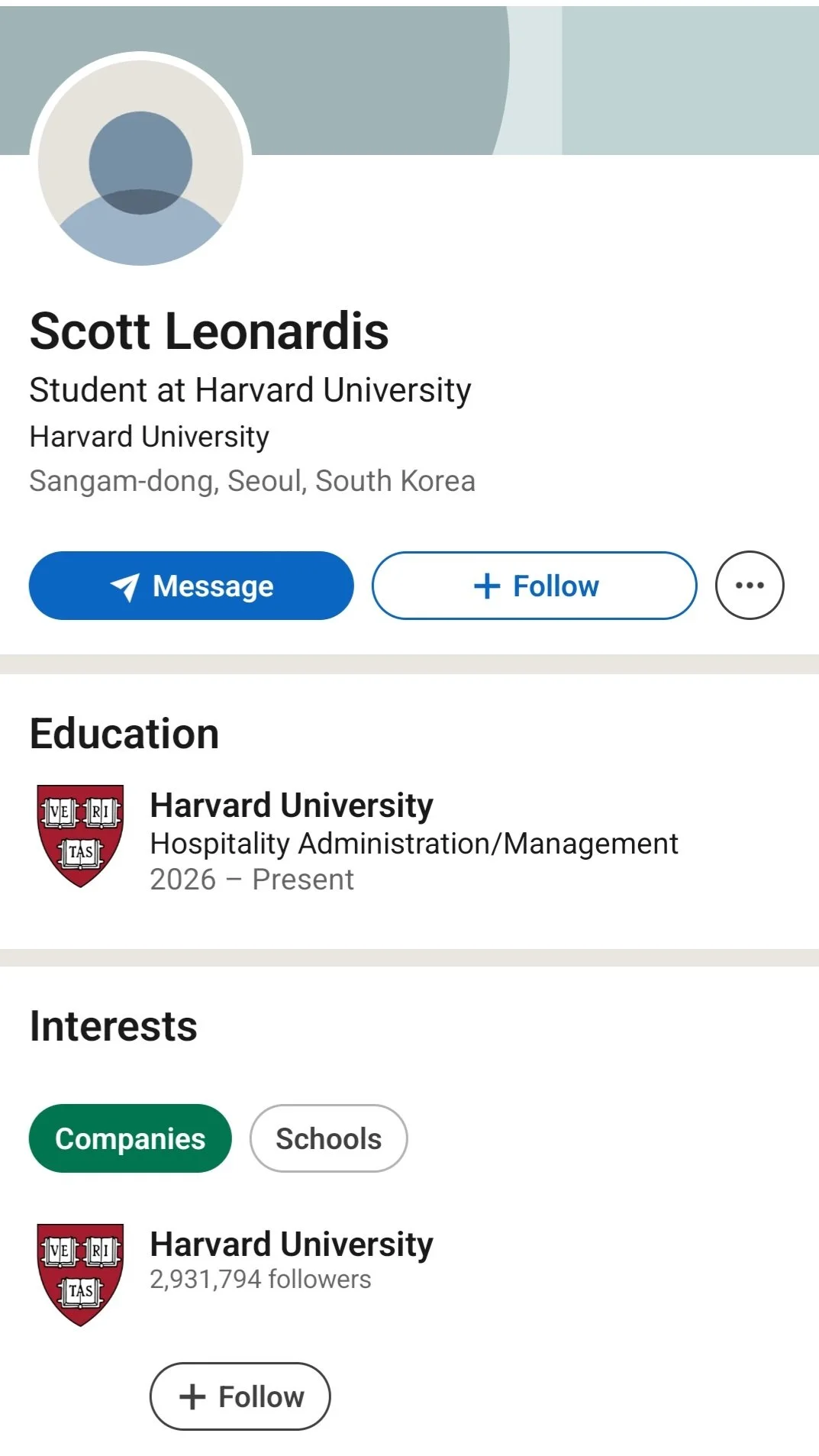
رسالة التوظيف التي شعرت أنها “ليست طبيعية”
في وقت متأخر من مساء الأحد، تلقيت رسالة من موظف توظيف بخصوص فرصة عمل فيمجال
Learning & Development مجال.
احترافية.
مخصصة بشكل شخصي.
وتتضمن ملف LinkedIn.
ونعم… لقد قمت بالرد عليها.
لكن شيئًا ما لم يكن مريحًا.
ما اكتشفته بعد ذلك أثار تساؤلات كبيرة حول عمليات الاحتيال الوظيفي، وجمع السير الذاتية، والتنقيب عن المعلومات الشخصية التي تستهدف الباحثين عن عمل.
وإلى Scott Leonardis — شكرًا لك على أسلوبك اللطيف والمهني طوال التفاعل.
شاهد هذا الفيديو التشويقي أولاً… ثم انتقل إلى الصفحة لترى كيف تطورت القصة وما الذي اكتشفته: