
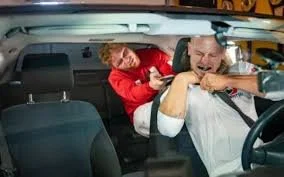
I Thought I'd Seen Every Violent Sport... Then I Discovered CarJitsu
There was a time when I thought I had seen every possible way humans could legally beat each other up for entertainment.
I was wrong.
Let's take a trip down memory lane.
🥊 Boxing – The Original "Hold My Beer"
Boxing has been around for centuries. Two people climb into a ring, politely touch gloves, and then spend the next twelve rounds trying to rearrange each other's facial features.
Someone once looked at getting punched in the head repeatedly and said, "You know what would make this better? Let's sell tickets."
Millions still tune in, and somehow every heavyweight champion eventually promises they're "bringing boxing back."
🤼 Professional Wrestling – Where Logic Goes to Die
Professional wrestling wasn't just a sport growing up—it was Saturday morning religion.
Back in the days of Mean Gene Okerlund holding the microphone while trying to keep a straight face, the Junkyard Dog dancing to the ring, "Rowdy" Roddy Piper talking trash to anyone with ears, and Hulk Hogan reminding us to say our prayers and eat our vitamins, life was simple.
The villains cheated.
The heroes flexed.
Someone got hit with a folding chair.
The referee somehow missed everything.
Fast forward to today and there are fireworks, cinematic entrances, drones, LED floors, and enough pyrotechnics to invade a small country. The storylines somehow make even less sense than they did in the 1980s, and yet I still stop channel surfing when I hear someone yell, "OH MY GAWD!"
🦵 Kickboxing – The Cool Cousin
Kickboxing exploded in popularity during the 1980s and 1990s thanks to martial arts movies and action heroes that somehow defeated twenty bad guys without getting a scratch.
It combined punches and kicks into one package and made everyone believe they could become Jean-Claude Van Damme after taking six classes at the local strip mall dojo.
Reality usually involved sore hamstrings and a pulled groin.
🥋 MMA – "What If We Didn't Have Rules?"
Mixed Martial Arts started with one simple question:
"What happens if we throw every fighting style into a cage and lock the door?"
The early days looked like someone accidentally scheduled a karate class against a sumo wrestler and forgot to tell security.
Today it's a worldwide phenomenon with elite athletes who train year-round and make things that should be impossible somehow look routine.
It's also the only sport where hearing someone say, "He only got choked unconscious once," is somehow considered encouraging.
👋 Power Slap – Humanity Has Officially Run Out of Ideas
Then came Power Slap.
Apparently someone watched people slap each other in a bar and thought, "This deserves a television contract."
The rules are simple:
Stand there.
Don't move.
Get slapped by another grown adult with the force of a pickup truck hitting a mailbox.
Then try not to fall into next Tuesday.
I'm convinced doctors watch this with both hands covering their faces.
🚗 CarJitsu – Now I've Officially Seen Everything
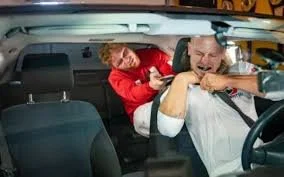
Then, while doom scrolling through social media, I stumbled onto something called CarJitsu.
At first I thought it was a parody.
It wasn't.
It's literally Brazilian Jiu-Jitsu...
inside a car.
Two competitors climb into a compact vehicle and proceed to grapple, twist, choke, and fold themselves into positions that would make a chiropractor retire on the spot.
The steering wheel becomes a weapon.
The seatbelt becomes strategy.
The headrest somehow becomes defense.
I watched one clip.
Then another.
Then another.
Because I couldn't believe this was an actual thing.
Somewhere, a guy pitched this idea and another person replied, "Brilliant! Let's film it."
What's next?
Competitive Fighting in an Elevator?
Ultimate Thumb Wrestling?
Extreme Musical Chairs?
If history has taught us anything, someone is already working on it.
The internet remains undefeated at finding new ways for humans to ask, "What if we did this... but dumber?"
And apparently I'll keep watching every ridiculous second of it.
Nextdoor, Pharma, and the Lowest-Hanging Fruit
I came across a pharmaceutical marketing benchmark survey that mentions Nextdoor as part of the media landscape.
One thing stood out to me: Nextdoor didn't even lead the study. It was simply referenced as another channel.
And, by the way, this is now Day #3 since I requested the complete insurance study from Jacob Chavis. Still no report. Still no acknowledgment. At this point, I'm not surprised.
Back to the survey.
My first reaction was that this feels like picking the lowest-hanging fruit.
A census tells us where populations are aging. Local demographic data shows where seniors live. It's hardly groundbreaking to conclude that neighborhoods with older residents will have greater demand for medications that improve quality of life.
Any competent regional pharmaceutical sales team already knows which physicians are prescribing what, which pharmacies are dispensing it, and where the opportunities exist. Compensation plans, quotas, bonuses, and territory strategies have relied on those metrics for years.
And if AI is truly the revolutionary force that Nextdoor leadership frequently promotes, why not simply overlay prescribing trends, demographic data, and ZIP code maps? The opportunities would become obvious without another marketing survey.
My larger concern is perception.
After watching the outstanding miniseries Dopesick, which explored the devastating impact of Purdue Pharma, OxyContin, and the Sackler family's pursuit of profit, I find it disappointing to see neighborhood platforms associated with pharmaceutical marketing studies without acknowledging the broader societal consequences that can accompany profit-driven healthcare initiatives.
Healthcare is essential. Medications save lives.
But when marketing becomes the primary focus without equal discussion of responsibility, history reminds us that communities can pay a heavy price.
In other news, NXDR is up today, but so is much of the broader market. I'm still watching to see whether the recent momentum holds or whether the bottom eventually falls out.
These are my personal opinions and observations and should not be interpreted as investment or medical advice.
Day 2: The Study That May or May Not Exist
Nextdoor recently published another LinkedIn article, this time highlighting a survey about FIFA and Canadian neighbors' excitement about hosting part of the world's biggest sporting event.
https://dailyhive.com/vancouver/vancouverites-split-hosting-fifa-world-cup
As I read it, one question immediately came to mind:
Where is the link to request the full study?
I couldn't find one.
Does the complete research actually exist for public review? Or is this another example where the optics of looking neighborly stop at the marketing copy?
This is now Day #2 since I sent Jacob Chavis a direct request for the complete insurance study referenced in another Nextdoor publication.
So far, I've received:
No report.
No acknowledgment.
No "We're working on it."
No "You'll receive it shortly."
Not even a polite "No."
It almost makes me wonder whether there's an unofficial policy that says, "Don't engage with Niel Flamm."
Organizations often deny having unofficial practices while employees describe cultures that say otherwise. Years ago, officers in the NYPD alleged unofficial productivity expectations despite formal denials. Wells Fargo's incentive culture became infamous even though the company didn't have an official policy encouraging fraudulent accounts. Employees at major cellular carriers have also described "performance metrics" that felt a lot like quotas.
Which leads me to a fun challenge.
If anyone from Nextdoor would like to anonymously provide verifiable evidence that there is an unofficial policy directing employees not to engage with me, send it to:
The information must be verifiable and not AI-generated.
First one to provide credible documentation wins a gift card for dinner for two at your favorite neighborly restaurant.
Ready...
Set...
Go.
I came across a Facebook video today that immediately reminded me why Nextdoor's unpaid moderator model doesn't work.
Watch it here:
https://www.facebook.com/share/v/1LCFC3TzYb/
The video shows what can happen when someone believes they have authority beyond what was intended. The result is an environment where people stop engaging because they don't feel heard or treated fairly.
That's exactly the risk of relying on unpaid neighborhood moderators with inconsistent oversight and accountability.
The frustrating part is that this is fixable.
I've repeatedly suggested that Nextdoor implement a Quality Assurance scoring program similar to those used in customer service organizations, where moderator decisions are routinely reviewed for consistency, policy adherence, professionalism, and bias. I even suggested that Karen Romero lead such an initiative through coaching, calibration sessions, and measurable quality metrics.
I've also raised another question that I believe deserves an answer.
What vetting and ongoing safeguards exist to protect users if an unpaid moderator becomes unhinged and decides to retaliate against a local neighbor?
Moderators operate within communities tied to real identities and local information. If someone abuses that position, what oversight exists? What audit trail is reviewed? What protections are in place for the people they moderate?
I've asked these questions repeatedly at multiple levels within Nextdoor.
So far, the response has been silence.
I'm not simply saying the model is broken and walking away. I'm proposing practical improvements and asking reasonable governance questions.
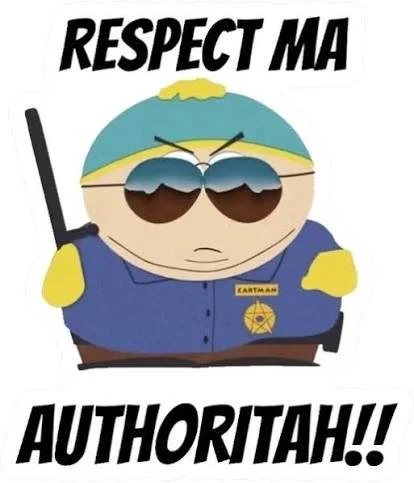
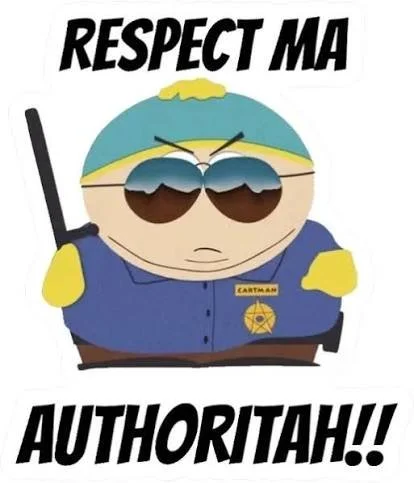
For a little humor, I added a picture of Eric Cartman and his famous catchphrase, "Respect my authoritah!" While it's meant to be comedic, it's often the image that comes to mind when I think about unpaid moderators sitting behind a monitor, wearing an imaginary badge and sunglasses, convinced they've been granted far more authority than they actually have.
Leadership doesn't have to agree with every suggestion, but acknowledging thoughtful feedback and explaining existing safeguards would go a long way toward building trust with users and shareholders alike.
The issue isn't the volunteers themselves.
The issue is a moderation model that lacks the transparency, oversight, and quality controls necessary to inspire confidence.
Communities deserve consistency. Volunteers deserve coaching. Users deserve answers.
And great leaders don't ignore difficult questions.
Leadership Starts with How I Treat the "Little Person"
Today, while making my usual social media rounds, I shared my dissatisfaction with Nextdoor, its culture, and CEO Nirav Tolia.
I started thinking about where I learned one of the most valuable lessons of my life.
It wasn't in a boardroom or a Stanford classroom.
It came from working everyday jobs—sweeping floors in a deli, delivering newspapers, cleaning gum off a movie theater carpet, and doing the kinds of jobs that keep society moving.
Those experiences taught me a simple creed:
Treat everyone as if they were the CEO.
The person making the sandwich at Jersey Mike's. The attendant pumping gas in Oregon. The landscaping crew cleaning up the neighborhood. The janitor, the cashier, the receptionist, the call center agent.
Everyone deserves to be acknowledged. Everyone deserves to be heard.
That's where I believe the culture problem at Nextdoor begins.
I'm not a billionaire investor. I'm not a celebrity entrepreneur. I don't have a television show or a Founding Shark title. And I don't automatically agree with every mention of AI as the solution to everything.
Does that mean my feedback should be ignored? My questions silenced? My LinkedIn account blocked for expressing shareholder concerns?
Leadership isn't measured by how you treat influential people. It's measured by how you treat the person with no power at all.
I'd rather treat the building environmental services engineer like they're the CEO than imitate a CEO who dismisses the little person.
Because one approach builds loyalty and trust.
The other builds resentment.