
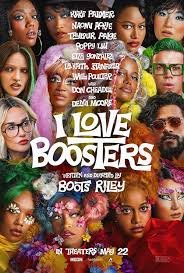
Movie Review: I Love Boosters
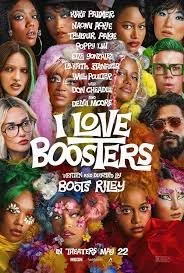
I finally found some time to watch I Love Boosters—but I didn't finish it.
In my latest movie review, I explain why I initially thought it was trying to capture a Wes Anderson vibe, why that comparison didn't work for me, and the irony I found in the film's message.
Watch the full review and join the discussion:
Nextdoor Got Me… But Not the Way They Think
Nextdoor and #NiravTolia got me.
The dark side is strong with you.
For months, I’ve been publishing my original articles on https://NielFlamm.com/blog, then sharing either the full article or a shortened version across multiple social media platforms.
One platform I generally skip is Nextdoor. Based on my experiences, I don’t have much confidence that posts critical of the company would survive moderation for long. I also recently resubscribed under a "verified" address/name combo that isn't my own for an experiment.
Then it hit me.
By reposting my commentary on X, including replies involving Sarah Leary, I was helping generate engagement on a platform that offers monetization opportunities through programs like revenue sharing, creator subscriptions, and other creator incentives.
So…
You got me.
Going forward, I’ll be a little more strategic about where I distribute my content and where I send my clicks.
If I’m going to spend time creating articles, videos, and commentary, I’d rather direct readers to my own platform than contribute engagement that may ultimately benefit the very people I’m questioning.
And who knows…
Maybe I won’t be the one helping fund a 2027 Rolls-Royce Ghost. 😄
All kidding aside, this has been a good reminder that attention has value. Every click, view, comment, and share contributes to someone’s ecosystem.
I’m simply choosing to be more intentional about where mine goes.
Be a part of the discussion on NielFlamm.com.
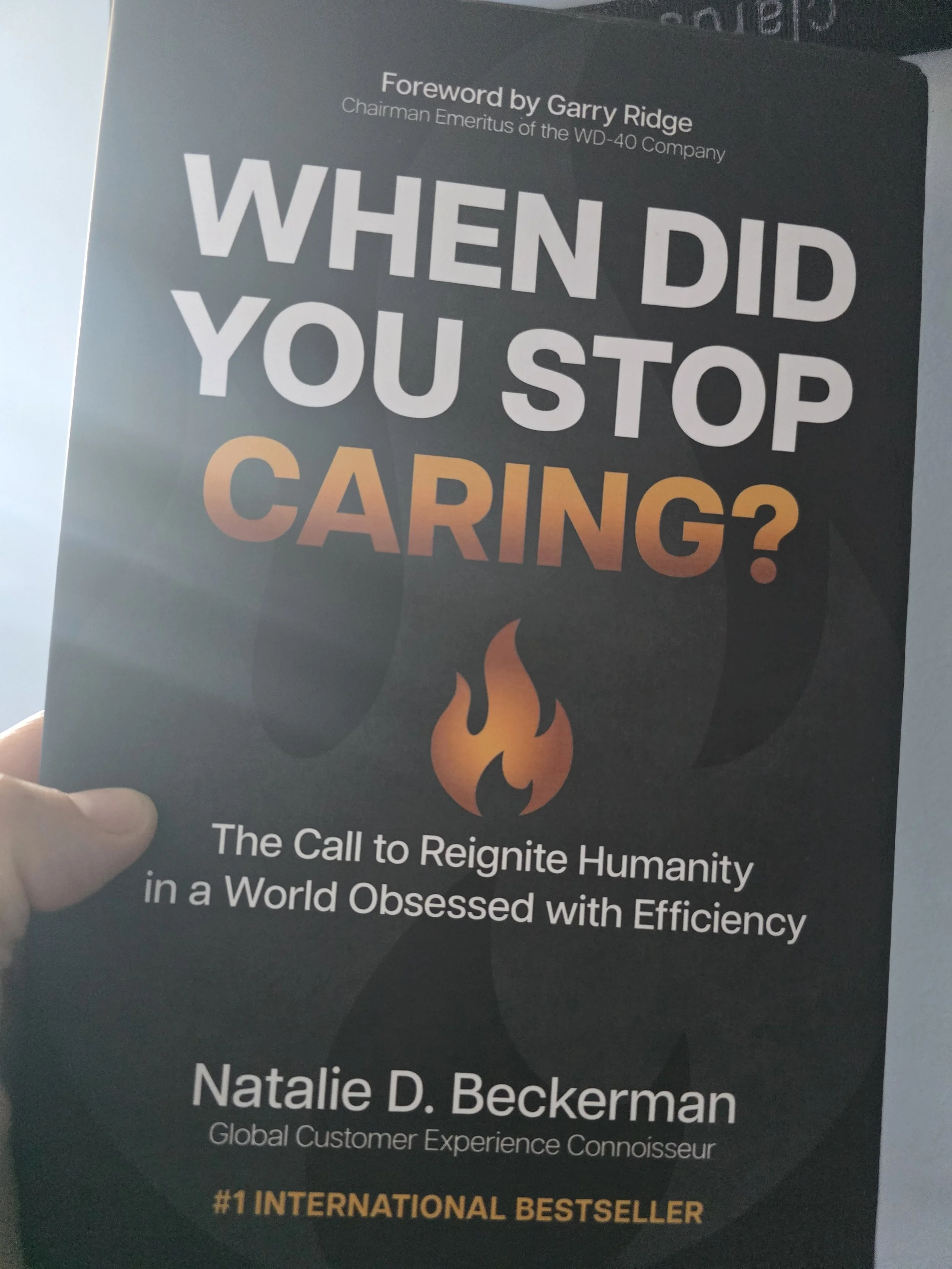
Three Books Every Leader Should Keep Within Reach
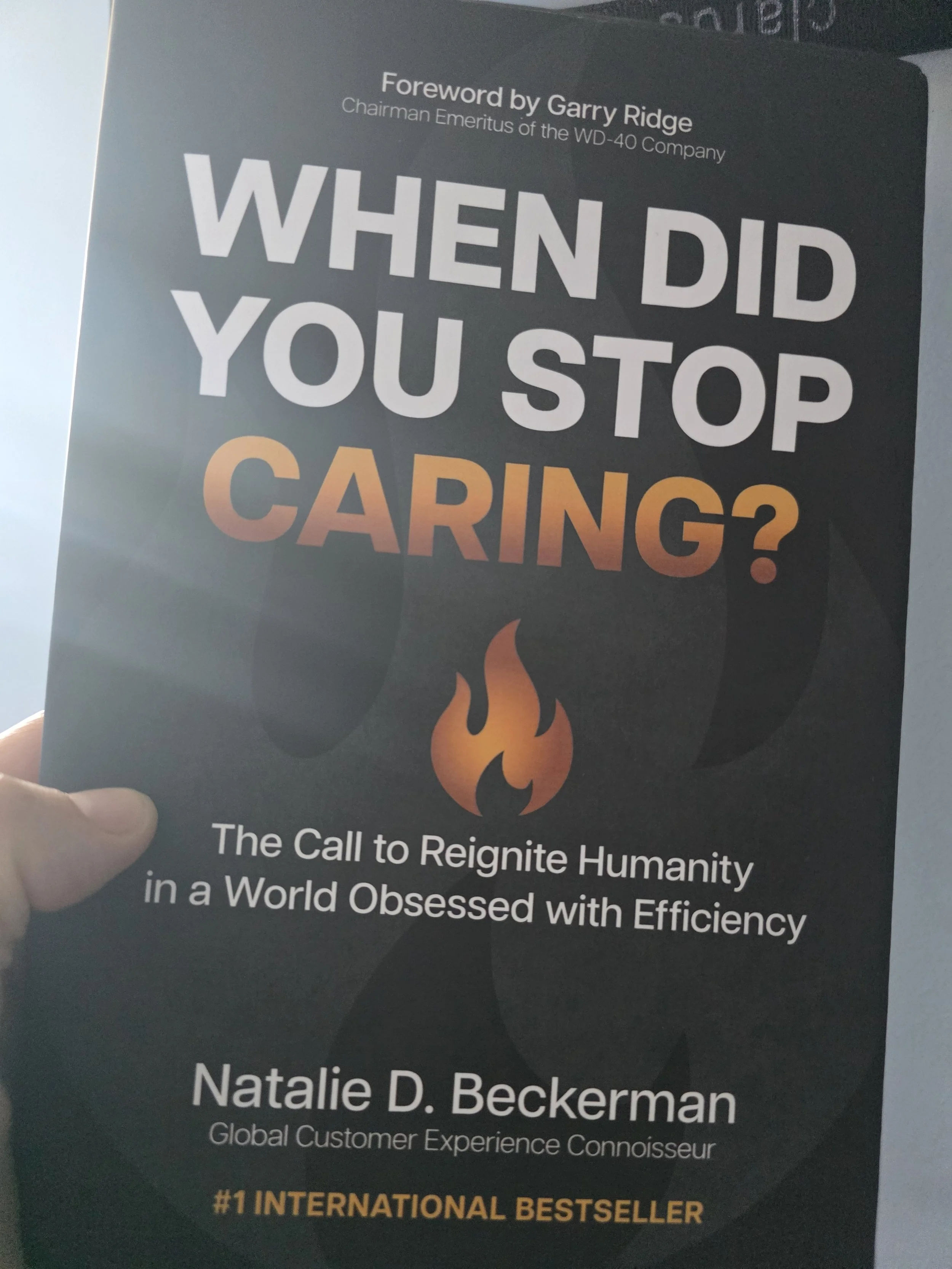
There are three books that I believe every leader, coach, mentor, and Learning & Development professional should have available at a moment’s notice.
📘 Good to Great by Jim Collins taught me that greatness isn’t accidental. It’s built through disciplined people, disciplined thought, and disciplined action. It has been a cornerstone in how I think about leadership and organizational excellence.
📙 The Tipping Point by Malcolm Gladwell changed the way I think about ideas, influence, and how small actions can create extraordinary change. I had the opportunity to hear Malcolm deliver a keynote years ago at what was then ASTD (now ATD), and his insights have stayed with me ever since.
Over the years, I’ve encouraged many of my team members to read both books as part of my coaching and mentoring. They generate great conversations about leadership, culture, and personal growth.
Now, I’m adding a third book to that list.
📕 When Did You Stop Caring? by Natalie Beckerman.
I’m just getting into it, but one thing already stands out: leadership isn’t just about strategy, metrics, or results. It’s about people. It’s about choosing to care, even when it’s difficult. That message resonates deeply with me.
When I have the opportunity to lead, coach, and mentor teams again, I plan to give each leader these three books. And if I can get a signed copy of Natalie’s book, even better.
The best leaders never stop learning.
And they never stop caring.
I Was Offended… Apparently I’m a Senior Now
Today, I was offended.
Not by politics.
Not by social media.
Not even by hospital cafeteria coffee.
No… I was personally attacked by kindness.
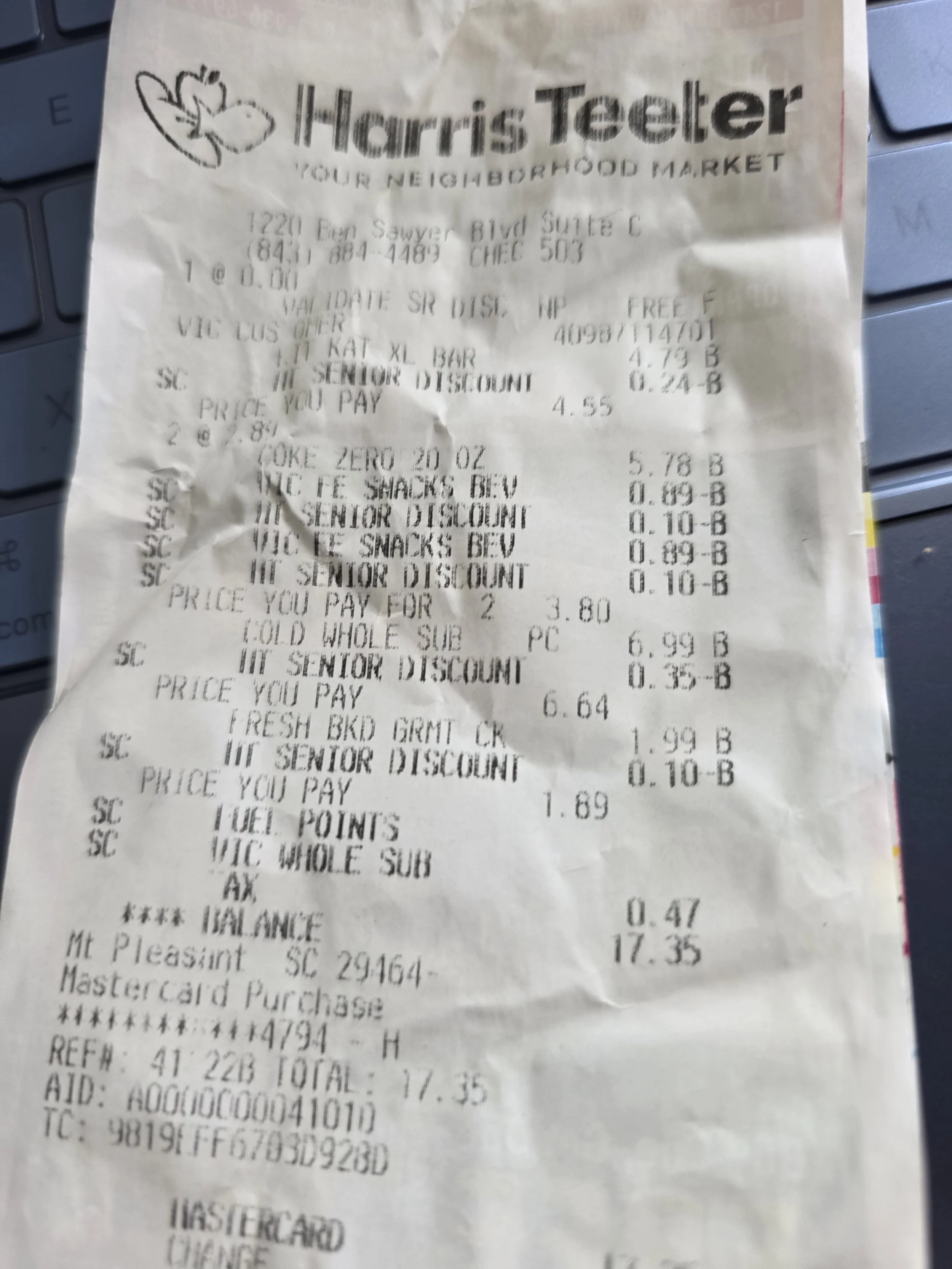
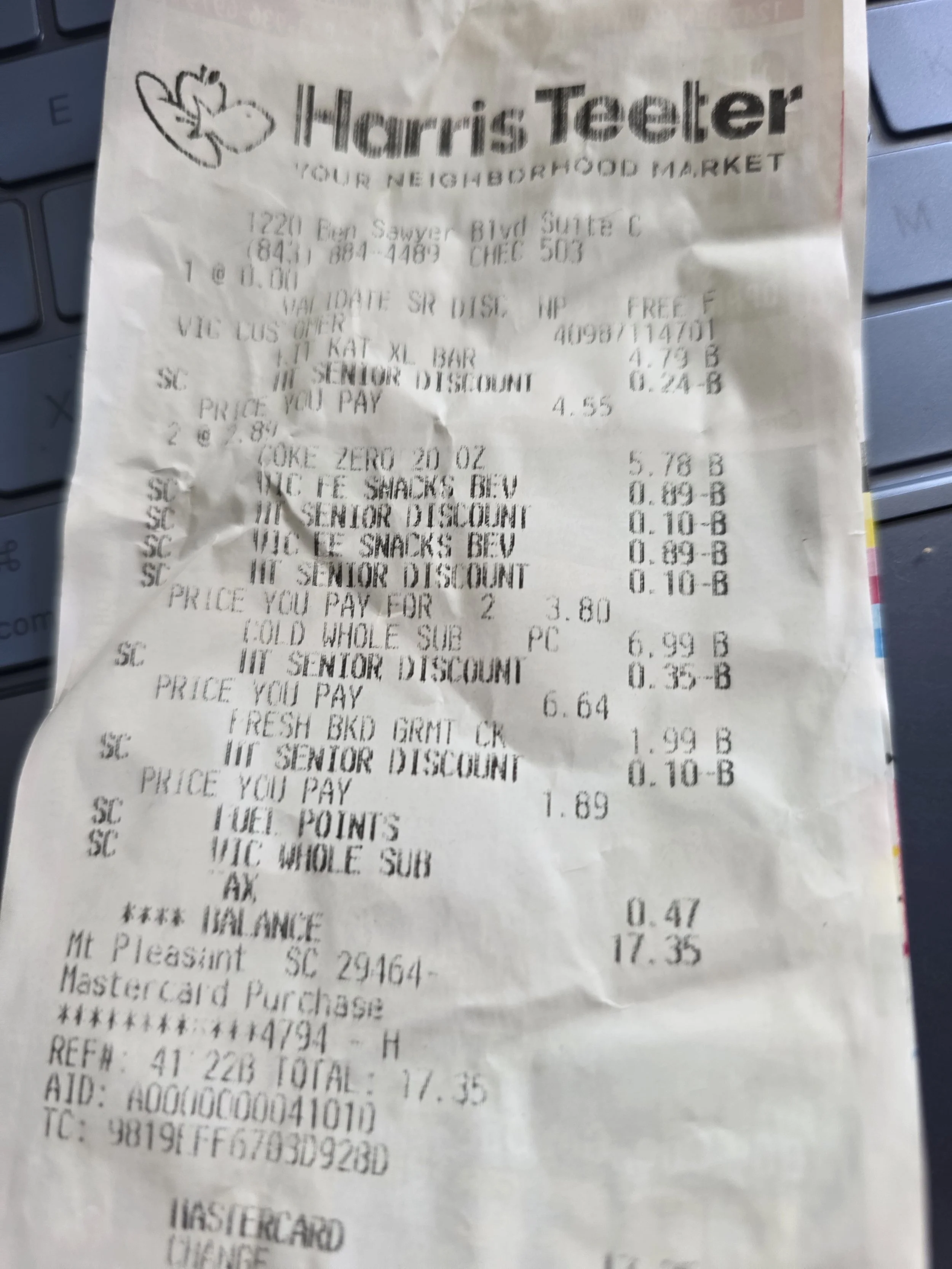
I stopped by Harris Teeter on Ben Sawyer in Mount Pleasant to grab lunch before heading to the hospital to spend time with my mom. It wasn’t exactly a gourmet feast—a sandwich, a Coke Zero, a KitKat, and yes… a chocolate chip cookie.
Before anyone starts judging my nutritional choices, remember… hospitals burn emotional calories.
I rolled up to the self-checkout and hadn’t even entered my alternate ID or scanned my first item when a very pleasant Harris Teeter employee walked over and said:
“Let me give you an additional discount.”
Now we’re talking!
I’m thinking maybe it’s Customer Appreciation Day.
Maybe they liked my smile.
Maybe they recognized my dazzling personality.
I happily started scanning each item while the self-checkout AI watched me like I was starring in CSI: Grocery Store. Every beep felt like I was proving my innocence.
Finally, I hit Pay.
That’s when I saw it.
Senior Discount.
…Excuse me?
Senior?
Who?
Me?
Are you absolutely serious?
I thought I looked pretty good for my age. Half Asian genes are supposed to buy you extra time before aging catches up. We don’t gently age—we apparently hit the wall decades later… and then gravity just wins in one spectacular weekend.
Sure, I qualify for an AARP membership.
But I always viewed that as more of a suggestion than an identity.
Now I’m wondering if I should start saying things like, “Back in my day…”
Should I begin eating dinner at 4:15?
Am I required to complain about gas prices and the weather?
Should I start carrying hard candy in my pockets?
I guess the next logical step is downloading the OurTime dating app.
Apparently, society has spoken.
On the bright side…
If someone wants to save me money because they think I’ve earned enough birthdays, who am I to argue?
I’ll take the discount.
But I’m still recovering emotionally.
Now if you’ll excuse me, I need to go yell at some kids to stay off my lawn.
…The lawn I don’t even have.
Getting older is weird.
At least the Coke Zero was still full price.
Day #11: Three Requests, Still No Study
Day #11: Three Requests, Still No Study
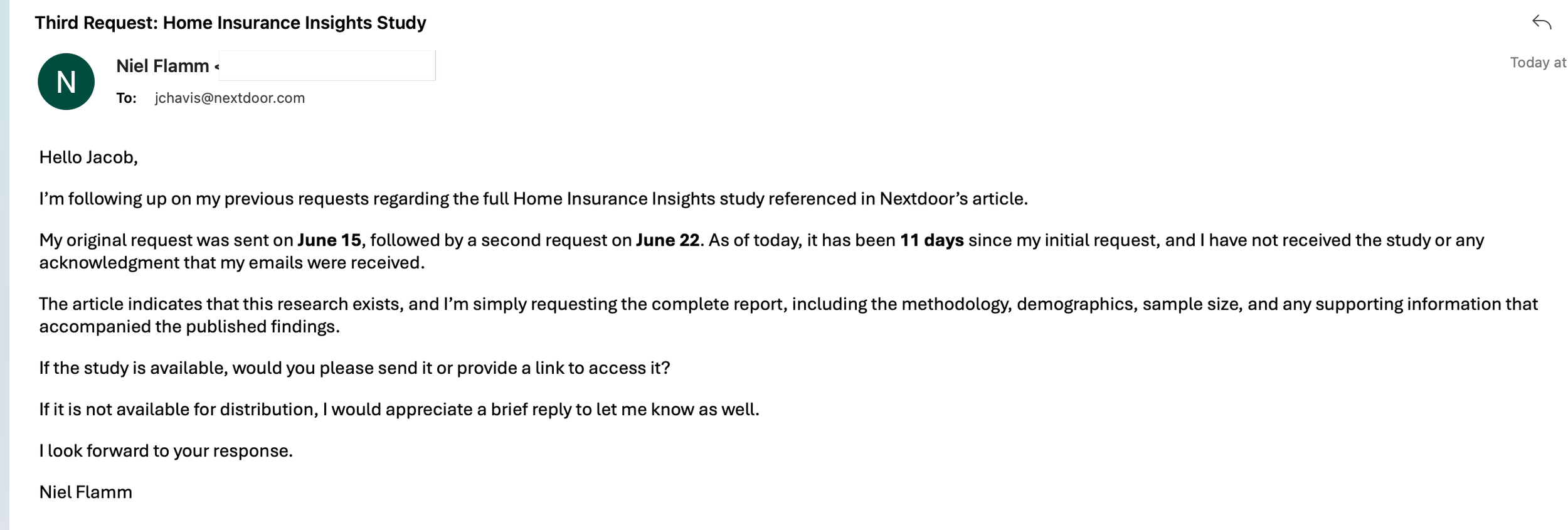
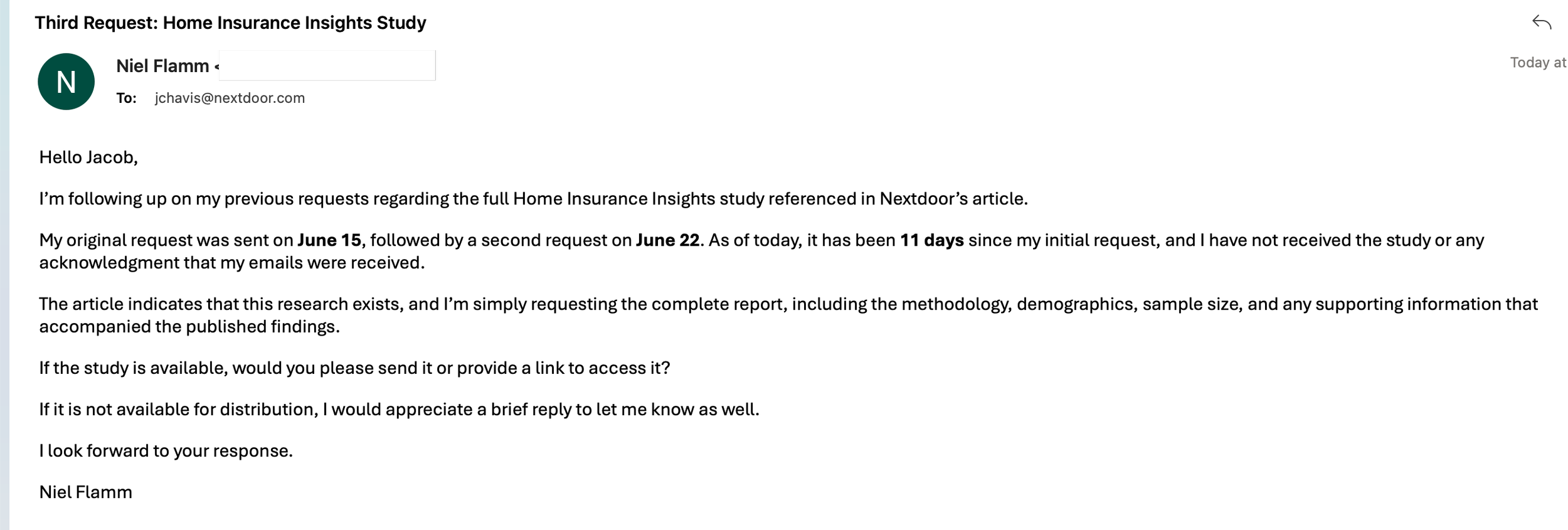
Today I sent my third request for the Home Insurance Insights study referenced by Nextdoor.
Here’s the timeline:
June 15: Initial request for the full study.
June 22: Follow-up request.
Today: Third request.
As of today, it’s been 11 days since my original email.
The result?
No acknowledgment.
No explanation.
This isn’t about whether I agree or disagree with the findings.
It’s about transparency.
If a company publicly references research, it seems reasonable to expect that someone requesting the underlying methodology, demographics, and supporting information would at least receive a response.
Instead, the silence has become the story.
It also raises a broader question.
If this is how an investor is treated when requesting information referenced in a public article, what should users, local businesses, advertisers, or other shareholders expect when they have a question that needs attention?
Leadership sets expectations.
Culture determines whether those expectations are met.
At some point, a simple reply becomes less about one email and more about how an organization values communication and accountability.
If the study arrives tomorrow, I’ll gladly share that update too.
Join the discussion on NielFlamm.com.