

✈️ LaGuardia, I Owe You an Apology
I already wrote about my first reaction to arriving at LaGuardia Airport after not flying through LGA for a very, very long time.
But now I found a picture of LaGuardia from the 1990s, which is much closer to the airport I remember.
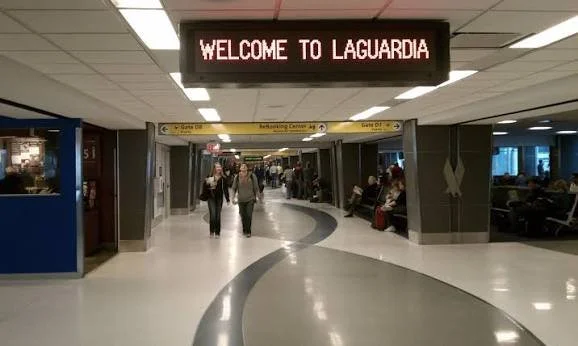
Put that picture next to the photos I took this weekend and...
Are we sure this is the same airport?
Seriously.
The old LaGuardia wasn't exactly an airport you arrived at early to soak up the atmosphere.
Low ceilings.
Fluorescent lighting.
Narrow corridors.
Crowded gate areas.
People sitting wherever they could find a spot.
Limited food choices.
And yes, I remember seeing rats running around in the drop ceiling.
That old photo brought it all back.
Then look at LaGuardia today.
📸 The Before-and-After Is Ridiculous
The 1990s picture almost looks like it came from a completely different era of air travel.
Because, well...
It did.
Compare that with the pictures I took this weekend.
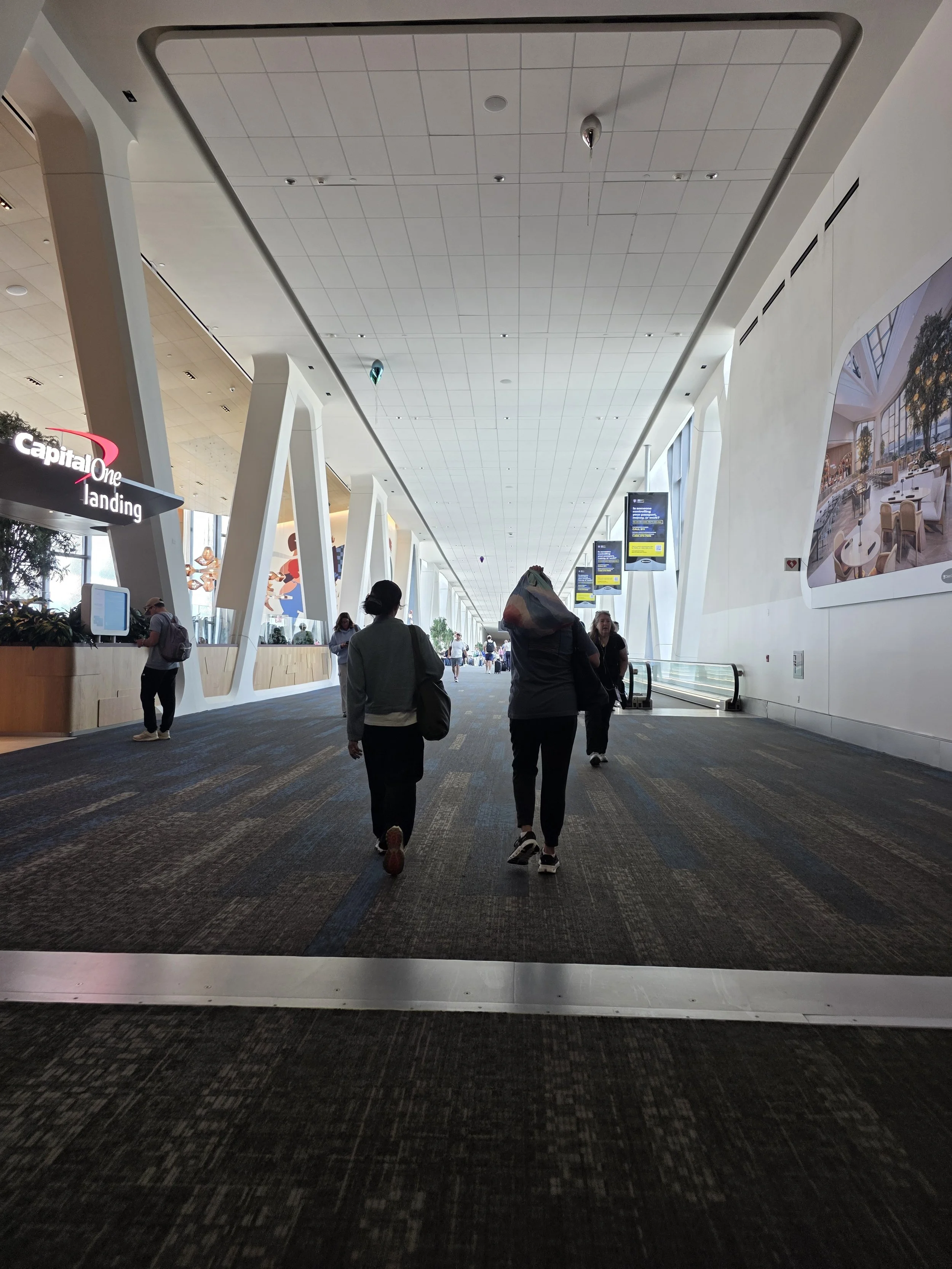
Huge open spaces.
High ceilings.
Natural light.
Modern architecture.
Wide walkways.

Moving walkways.
Plenty of seating.
Restaurants and food options everywhere.
The difference isn't subtle.
It's astonishing.
Walking into the American Airlines check-in area, I actually stopped to take a picture because I couldn't believe I was standing in LaGuardia.
The check-in area is huge, bright, clean, and open.
Then I made my way farther into the terminal and had essentially the same reaction.
This is LGA?!
If your last memory of LaGuardia looks anything like that picture from the 1990s, you might have the same reaction I did.
🗽 And Then There's the View
I also took a picture of the view from LGA.

That's another thing I had forgotten about flying through LaGuardia.
You're right there in Queens, with New York City surrounding you, and depending on your approach or departure, you can get some fantastic views.
On my flight into New York, I caught a great view of Lower Manhattan during our descent.
On the way home, I got another chance to appreciate where the airport sits.
But there was still one final test.
⏰ What About the Famous LGA Delays?
The physical airport may have changed, but there was one part of the old LaGuardia experience I was fully expecting to revisit:
The delay.
Before all of these improvements, delays and LGA seemed to go together like New York and pizza.
You'd get to the airport.
Find your gate.
Sit down.
And wait.
Then you'd hear:
"Ladies and gentlemen, we have a short delay..."
And everyone familiar with LaGuardia would collectively think:
Of course we do.
This time, I was actually expecting a delay before departure.
And then something very strange happened.
We left.
No hours sitting around.
No endless mystery delay.
No wondering if I needed to find somewhere to sleep.
We got on the plane and took off.
I even recorded video of the takeoff because after everything I remembered about LGA, departing without that expected delay almost seemed worthy of documentation.
✈️ This May Change How I Travel to New York
Over the years, I've often used Newark (EWR) or JFK, depending on where I was going.
If I needed a rental car or was heading to the northern New Jersey suburbs, Newark often made sense.
JFK was another option depending on the flight and destination.
LaGuardia?
For a long time, it wasn't necessarily my first choice.
After this trip, that may change.
For getting into Queens and New York City, LGA was incredibly convenient.
I flew nonstop from Charleston.
Landed at LaGuardia.
Got over to Astoria quickly.
And when it was time to leave, I went through a clean, modern, comfortable airport and actually departed without the delay I had been expecting.
From THIS to THIS
That's what makes the old picture so much fun to include.
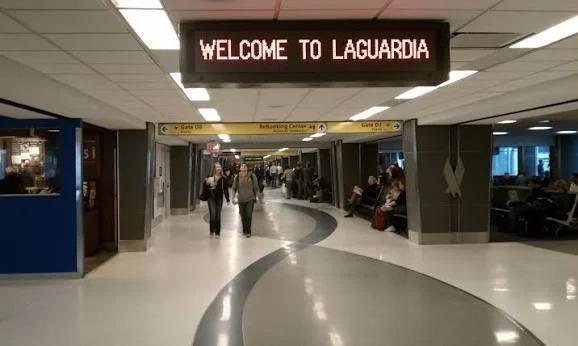
Look at 1990s LaGuardia.
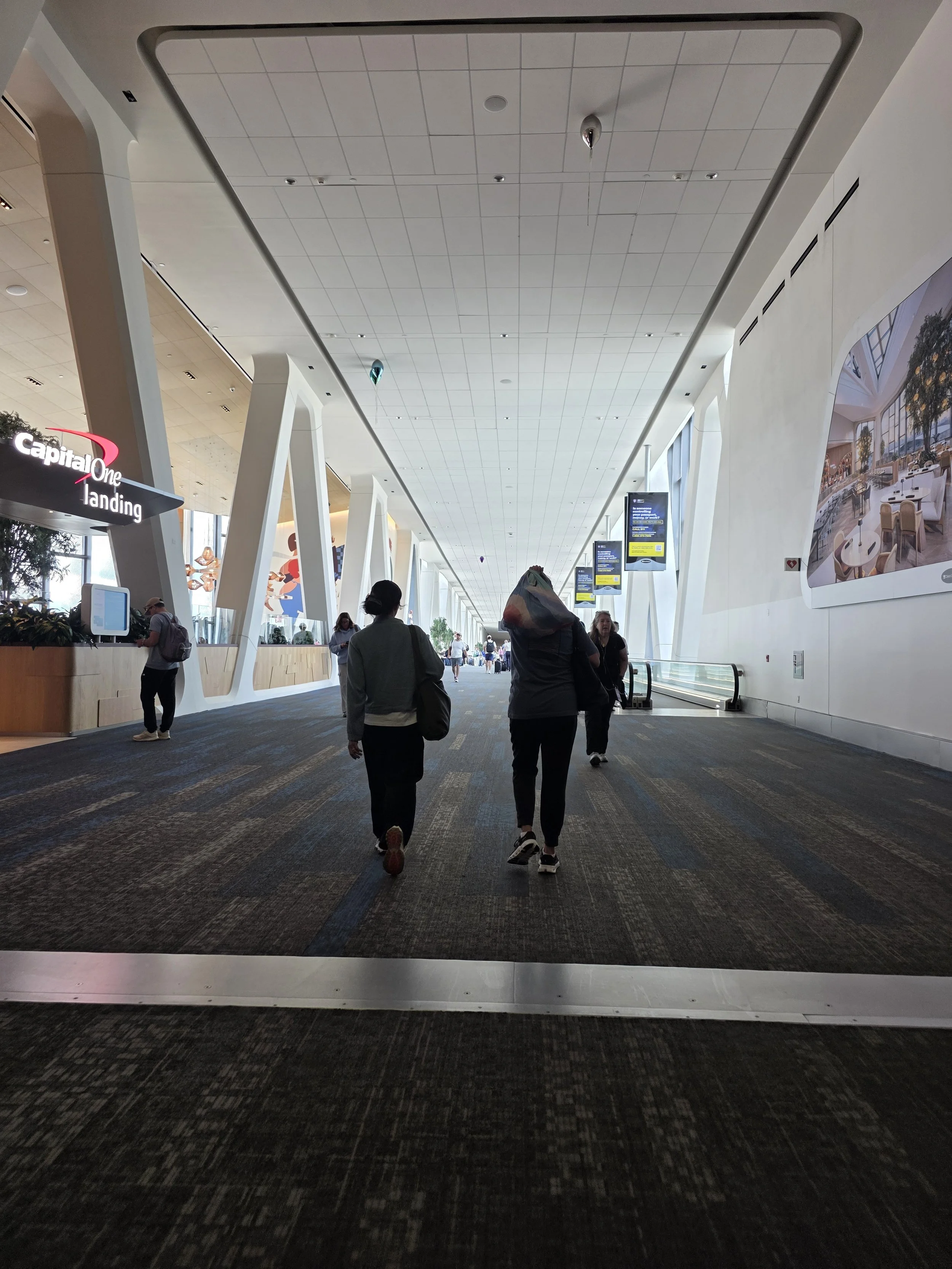
Then look at the pictures I took in 2026.
If you haven't flown through LGA in years, erase whatever image you have in your head.
Because that airport no longer exists.
Airports aren't usually something I get excited about. They're a means to an end.
You go through security, buy an absurdly expensive drink, find your gate, and hope the person sitting next to you understands the universally accepted laws governing airplane armrests.
But this transformation deserves recognition.
So, LaGuardia...
I owe you an apology.
I remembered you as crowded terminals, low ceilings, people sitting on the floor, rats above my head, and seemingly inevitable delays.
Instead, you gave me a beautiful modern airport, great views, tons of food choices, easy access to Queens, and an on-time departure.
And that old photo proves something else:
My memory wasn't exaggerating quite as much as you might think.
I can't believe I'm saying this, but...
I'm actually looking forward to flying through LGA again.
Nicely done, New York.

Insidious: Out of the Further — Did We Really Need a Sixth One?

I've enjoyed the Insidious franchise. Patrick Wilson, Rose Byrne, Lin Shaye, The Further, jump scares—these movies helped make PG-13 horror work.
Then I watched Insidious: Out of the Further, the sixth movie in the franchise.
This time I found myself thinking about Poltergeist, Hellraiser, Thirteen Ghosts... and yet another 2026 movie playing with time loops and temporal paradoxes.
Did Insidious need a sixth chapter? And is this one worth seeing in a theater, or should you wait for streaming?
🎬 Watch my full movie review at NielFlamm.com/videos/moviereviews

Day 72: “We Cannot Lose Our Humanness.” Are You Kidding, Nextdoor?

I saw Nirav Tolia is back on the podcast circuit, this time with Scott D. Clary on Success Story.
The title certainly got my attention:
“The Man Who Connected 100 Million Neighbors Says AI Is About to Make Us All Lonelier.”
Podcast:
https://lnkd.in/d6ncXhpj
Video:
https://lnkd.in/dY9AazUx
One of the first statements from Nirav highlighted in the LinkedIn post was:
“We cannot lose our humanness.”
I read that and thought:
He's kidding, right?
Not because I disagree with the statement.
Actually, I completely agree with it.
My issue is the disconnect between the rhetoric and what I've been observing and experiencing with Nextdoor.
What Does “Humanness” Actually Require?
Being human isn't simply having conversations about the dangers of AI.
To me, humanness includes:
Listening.
Empathy.
Accountability.
Acknowledging someone even when the conversation is uncomfortable.
And that's where Nirav's statement becomes fascinating when compared with what's happening at the company he leads.
It's Day 72 since I requested the detailed Home Insurance Insights research.
Enough said about that.
But this isn't only about me.
What About Nextdoor's Small Businesses?
I've been watching the reaction to Nextdoor's new pay-to-play approach, where businesses may have to pay to comment as businesses when a neighbor posts looking for a service.
And I've seen small-business owners who are not happy.
These aren't giant corporations with unlimited marketing budgets.
They're plumbers.
Landscapers.
Contractors.
Cleaners.
Handymen.
Local service providers.
Many operate on razor-thin margins.
They're also part of the small-business economy that helps keep communities—and the United States—running.
So while Nirav is discussing preserving our humanness in an AI-driven world, I'd like to know:
Who's listening to them?
Was someone sitting with Nirav when this monetization strategy was discussed asking:
“What does this mean for the small businesses that helped build engagement on our platform?”
Was there a focus group?
A beta?
Did anyone calculate the impact beyond Nextdoor's potential revenue?
Was there an effort to create buy-in?
Did anyone practice the very human behavior of listening before acting?
Maybe there was.
If so, please tell us about it.
Another Chapter in the White Paper on Rhetoric
That's increasingly what I find fascinating about studying Nextdoor.
The external messaging sounds terrific.
Community.
Connection.
Neighbors.
Humanness.
Then I compare those words with what I'm observing.
A shareholder waiting 72 days for detailed research he's repeatedly requested.
Small businesses questioning a new monetization model.
Corporate LinkedIn posts where comments are frequently unavailable.
Communication that, from my perspective, too often feels one-directional.
That's not an AI problem.
That's a human communication problem.
Nirav is right about one thing:
We cannot lose our humanness.
But perhaps the first place to demonstrate that philosophy isn't another podcast.
Maybe it's inside Nextdoor.
Listen.
Respond.
Show empathy.
Explain difficult decisions.
Engage with people who disagree.
Be accountable.
Otherwise, this becomes another fascinating chapter in my growing white paper on the difference between corporate rhetoric and corporate behavior.
And AI didn't create that problem.
Humans did.
Day 72.
Follow the continuing Nextdoor study at NielFlamm.com/blog.
Please subscribe at NielFlamm.com so you don't miss a post if the platform where you're reading this decides not to show you the next one.
The Hinge Experiment: Pop Quiz, Hotshot. What Do You Do?
Well, yesterday I decided to put it out there.
My phone number.
Okay, technically not my real phone number.
It's a Google Voice number, which I highly recommend for anyone navigating the wonderful, confusing, occasionally terrifying world of online dating. I'm not immediately handing over my primary number to someone I just met on an app.
I'm optimistic.
I'm not insane.
But after several rounds of “Good morning,” unanswered questions, and my increasingly desperate attempts to determine whether we're actually going to have a conversation, I finally sent Kelli:
“Hey! If you want to chat/text...”
And then I gave her the number.
The ball—or perhaps the bomb—is officially in her court.
Pop Quiz, Hotshot
This whole thing is beginning to remind me of one of my favorite lines from Speed:
“Pop quiz, hotshot.”
There's a bomb on a bus. The bus goes over 50 miles per hour; the bomb is armed. It drops below 50, it explodes.
What do you do?
Except this isn't Keanu Reeves trying to save a bus.
This is online dating.
So...
Pop quiz, Kelli.
A guy you've matched with has tried starting conversations.
He's asked questions.
He's suggested going on an actual date.
He's attempted humor.
He's even offered Morse Code as an acceptable means of communication.
Now he's given you a phone number.
What do you do?
Actually, let's change movie genres.
Bottom of the Ninth
Kelli, it's the bottom of the ninth.
Three men on.
Full count.
For my non-baseball readers, that means three balls and two strikes.
The next pitch matters.
There's a stare-down happening between you and the pitcher.
The crowd is silent.
The pitcher gets the sign.
He comes set.
You're standing in the batter's box.
Here comes the pitch...
What are you going to do?
Swing?
Take the pitch?
Step out of the box?
Call time?
Go home?
Download WhatsApp and ask me if I've ever considered cryptocurrency?
At this point, all possibilities remain on the table.
I've done what I can do.
I put the number out there.
If she wants to text or call, she can.
If she doesn't?
Well...
Steve the Iguana remains on standby.
BUT WAIT! THERE'S MORE!
Just when you thought The Hinge Experiment was becoming a one-woman scientific study...
I MATCHED WITH GINA!
Yes!
MATCH NUMBER TWO!
We have officially doubled the number of matches.
That's 100% growth!
If this were a quarterly earnings call, I'd have a PowerPoint deck prepared, and we'd be discussing our extraordinary year-over-year performance.
So now we have two separate storylines.
Kelli: The number has been provided. The pitch has been thrown. We're waiting to see whether she swings.
Gina: A brand-new match. A completely blank canvas. Unlimited possibilities.
Could Gina be the one who actually communicates?
Could there be a conversation?
Could there be a date?
Could I finally retire my plans to become the weird reptile guy walking the beaches of South Carolina?
I have absolutely no idea.
But suddenly, The Hinge Experiment has a sequel.
Let's see what happens.
And Gina...
No pressure.
But there is currently an imaginary iguana whose future depends on you.
A Correction—and an Apology to Sarah Leary
I've spent more than 70 days publicly questioning Nextdoor, its leadership, and what I see as failures in communication and accountability.
So accountability has to work both ways.
Sarah Leary, I owe you an apology.
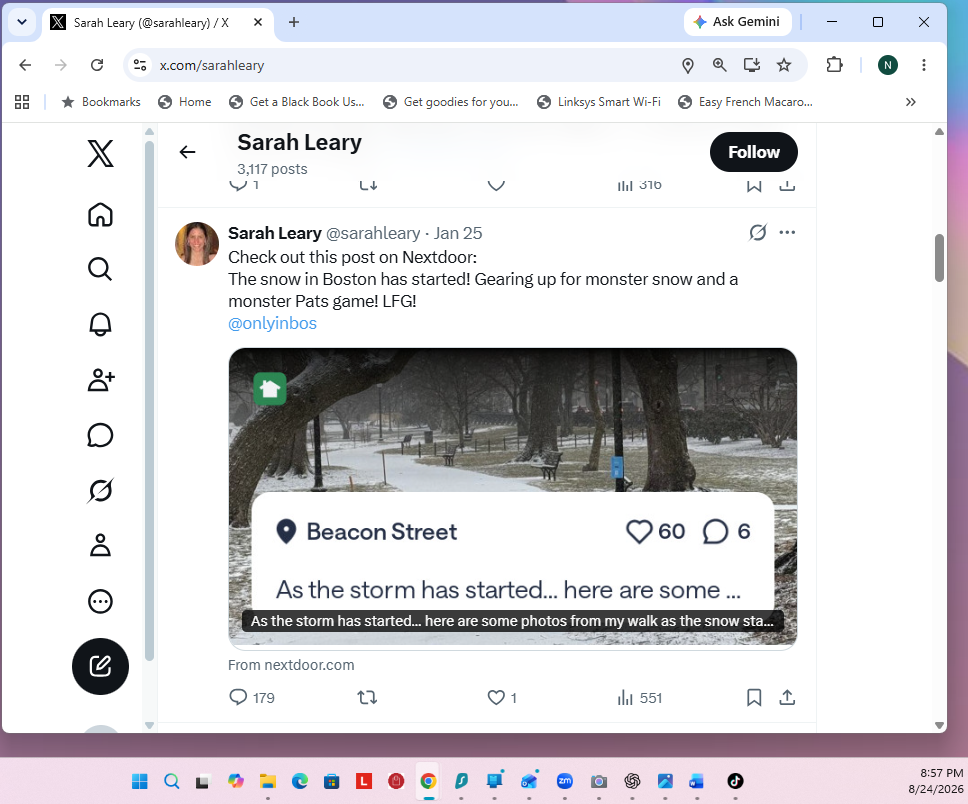
On August 14, 2026, I publicly questioned what happened to an X post on Sarah's account after I could no longer find it.
I noticed it was missing the day before.
It was the Beacon Street snow post where I had left numerous comments documenting my ongoing experience with Nextdoor—the company Sarah co-founded with Nirav Tolia.
At the time, I couldn't find the post.
I questioned whether Sarah had deleted it and whether my numerous Nextdoor comments had anything to do with its disappearance.
Well...
As of August 24, 2026, the post is there.
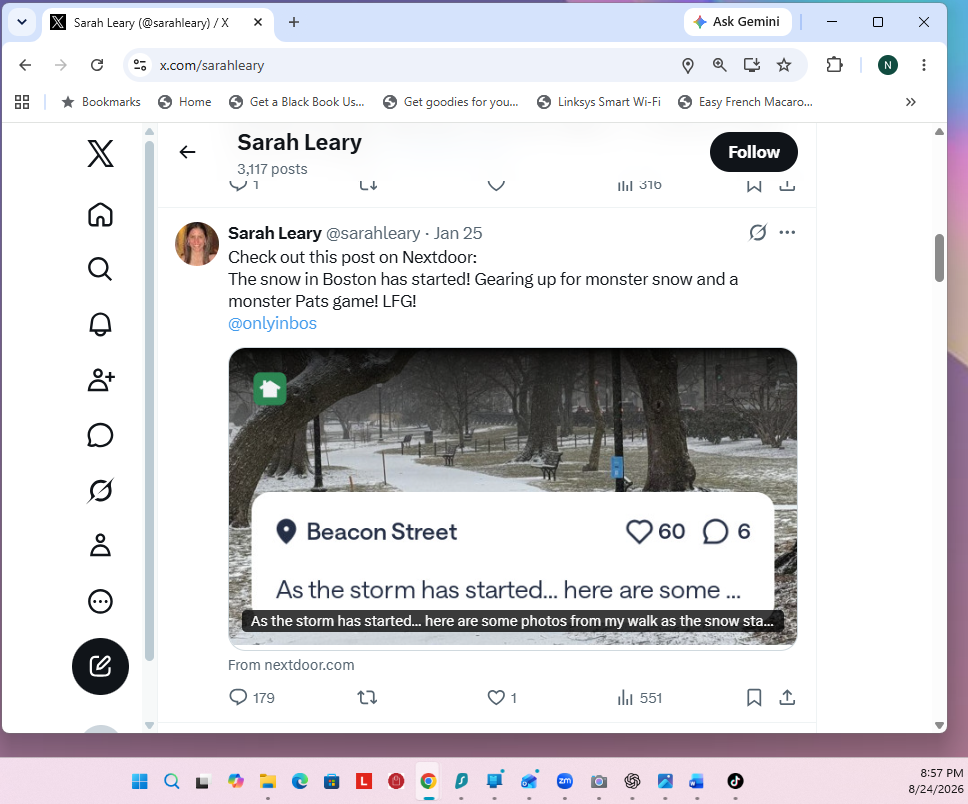
I can see it.
And yes, I've commented on it again on Nextdoor.
So what happened?
I don't know.
Maybe it was an X glitch.
Maybe its visibility temporarily changed.
Maybe it disappeared and returned.
Or maybe I didn't see it when I searched for it.
And that's the important part:
I don't know.
I’ve raised concerns about Nextdoor's communication, transparency, and accountability.
I can't demand those standards from a company and then exempt myself when I may have made a mistake.
My observation at the time was straightforward:
I couldn't find the post.
But suggesting Sarah personally removed it went beyond what I could actually establish.
There's a difference between:
“The post appears to be gone.”
and
“Sarah deleted the post.”
I should have maintained that distinction.
So, Sarah:
I apologize for stating or implying that you deleted the post when I didn't have evidence to support that.
That's on me.
This correction doesn't change my broader questions about Nextdoor. I'm still waiting for the detailed research I've requested. I still have questions about communication, moderation, verification, monetization, and leadership.
And I'll continue documenting those issues.
But this particular issue deserves a correction without a bunch of qualifications attached to the apology:
The Beacon Street post is there.
I don't know why I couldn't see it before.
I shouldn't have attributed its disappearance to Sarah without knowing what happened.
Accountability doesn't mean much if it only travels in the convenient direction.
If I expect Nextdoor and its executives to acknowledge mistakes, I have to be willing to do the same.
So, Sarah, sincerely:
My apologies.
And yes...I've already returned to the Beacon Street post to continue commenting about that company you and Nirav co-founded.
I said I was apologizing.
I didn't say I was retiring. 😏
Follow the continuing Nextdoor story at NielFlamm.com/blog.