
Radiance of the Seas: Day 1 – A Little Chaos, Some Great Food, and Sailing Under the Sunshine Skyway Bridge!
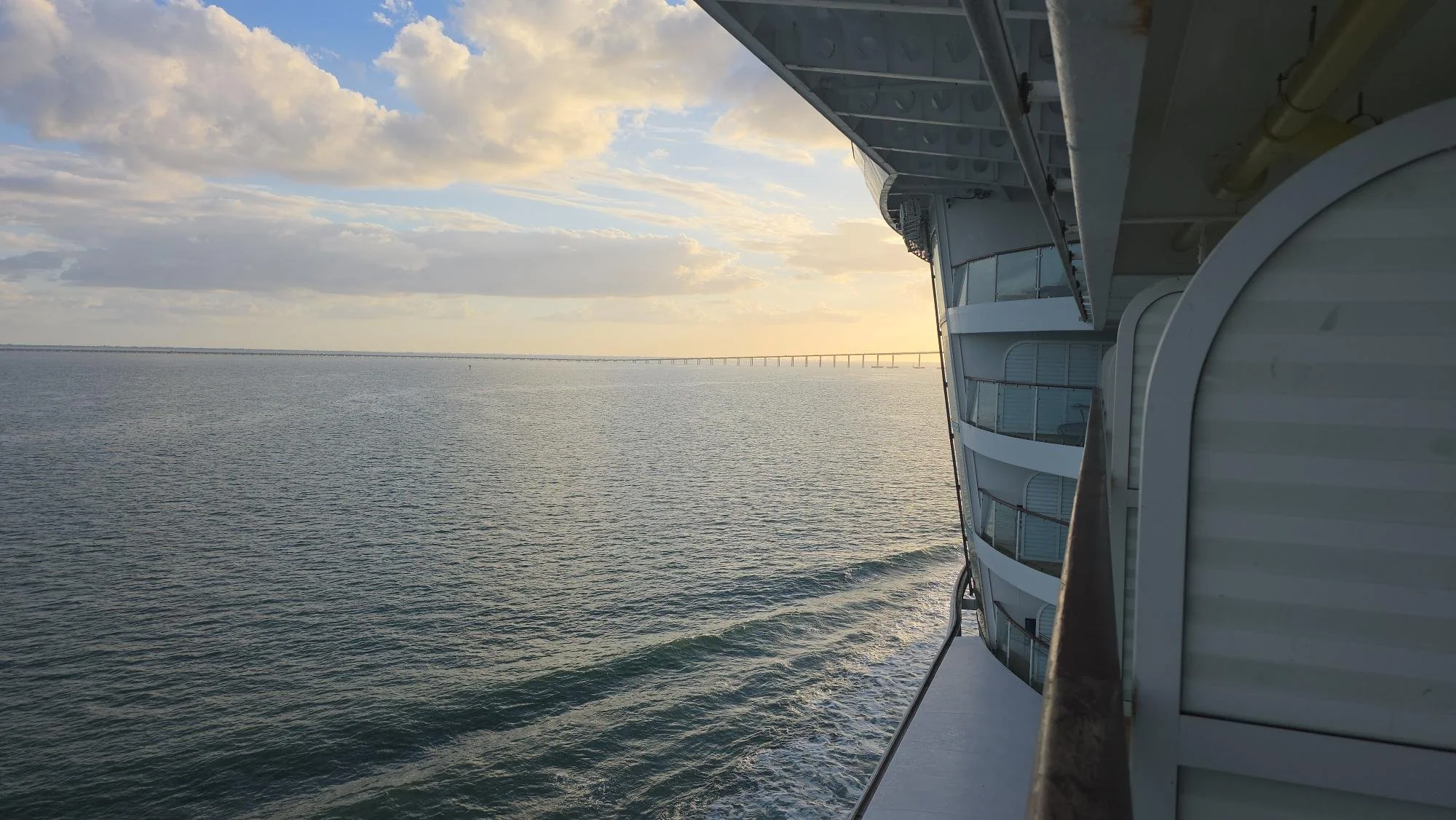
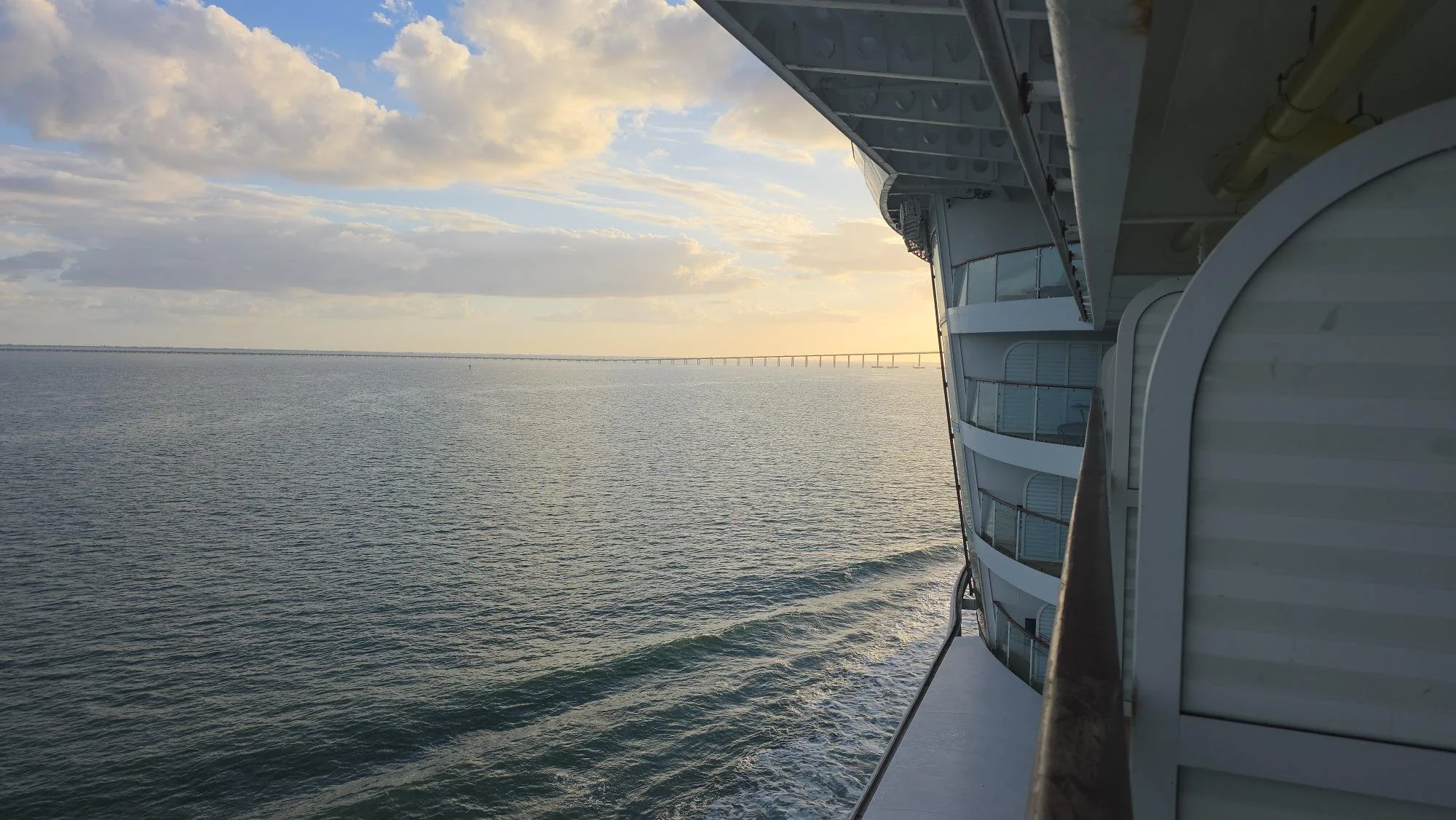
Well, I made it!
After the morning's adventures at Charlotte Douglas International Airport, including the American Airlines maintenance delay, I eventually made it to Tampa and boarded Royal Caribbean's Radiance of the Seas.
Not exactly the smooth start I had envisioned, but hey, I'm on vacation now!
Apparently, the day wasn't quite done testing me.
Getting to the Ship: The Adventures Continued
Let's just say the ride from the airport to the cruise terminal wasn't exactly confidence-inspiring.
My Uber driver drove a 2026 Honda CR-V Hybrid. From my perspective, he didn't seem particularly comfortable driving it. I wasn't thrilled, but I eventually made it to the terminal.
Then there were the missing sunglasses.
A pair of Oakleys that I really like. Gone. I have no idea where they disappeared, and I was already annoyed.
Then came the moment when I thought I had lost my cell phone.
Cue the minor freak-out.
Thankfully, it was safely tucked away in my backpack. Crisis averted!
Eventually, I made it onto the ship. Later than I wanted, but that's okay. Timing isn't always up to me, and I'm learning that I'm not in control of everything.
Sometimes you just have to roll with it.
The Key: A Pretty Nice Way to Start a Cruise
Once onboard, I took advantage of the special lunch associated with Royal Caribbean's The Key program.
My selections included:
Caesar salad
Shrimp cocktail with three absolutely enormous shrimp
Sweet and sour tofu
That tofu was awesome!
I finally sat down, ate, and started to feel like I was actually on vacation.
Muster Drill: Thank You, Modern Technology!
One thing I really appreciate about cruising these days is the muster drill.
If you've cruised before, you probably remember the old routine.
Everyone had to report to their assigned muster station, stand around in tight quarters, wait for everyone to show up, listen to the captain's instructions, and eventually get dismissed.
And there's always that ONE passenger who doesn't seem to understand that showing up is mandatory.
Thankfully, things have changed.
With the newer process, you can review the safety information and check in at your assigned station without the old-fashioned mass gathering.
Much quicker. Much easier.
On the way to my muster station, I also passed some Halloween decorations around the ship. Since today is October 29, the timing is perfect!
My Cabin, Missing Oakleys, and a Nap
After completing muster, I headed to my cabin.
Naturally, the first order of business was another search for my missing sunglasses.
I dug through the backpack, hoping those Oakleys had magically reappeared.
Nope.
Still missing.
I waited for my luggage, unpacked, met my room steward, and finally got to do something I'd been looking forward to all day.
Take a nap.
There is something wonderful about finally getting into the cabin, putting my belongings away, and knowing I don't have to drive anywhere, catch another flight, or navigate an airport.
I'm on a ship. Someone else gets me somewhere.
I like this arrangement.
The Sunshine Skyway Bridge: A First for Me!
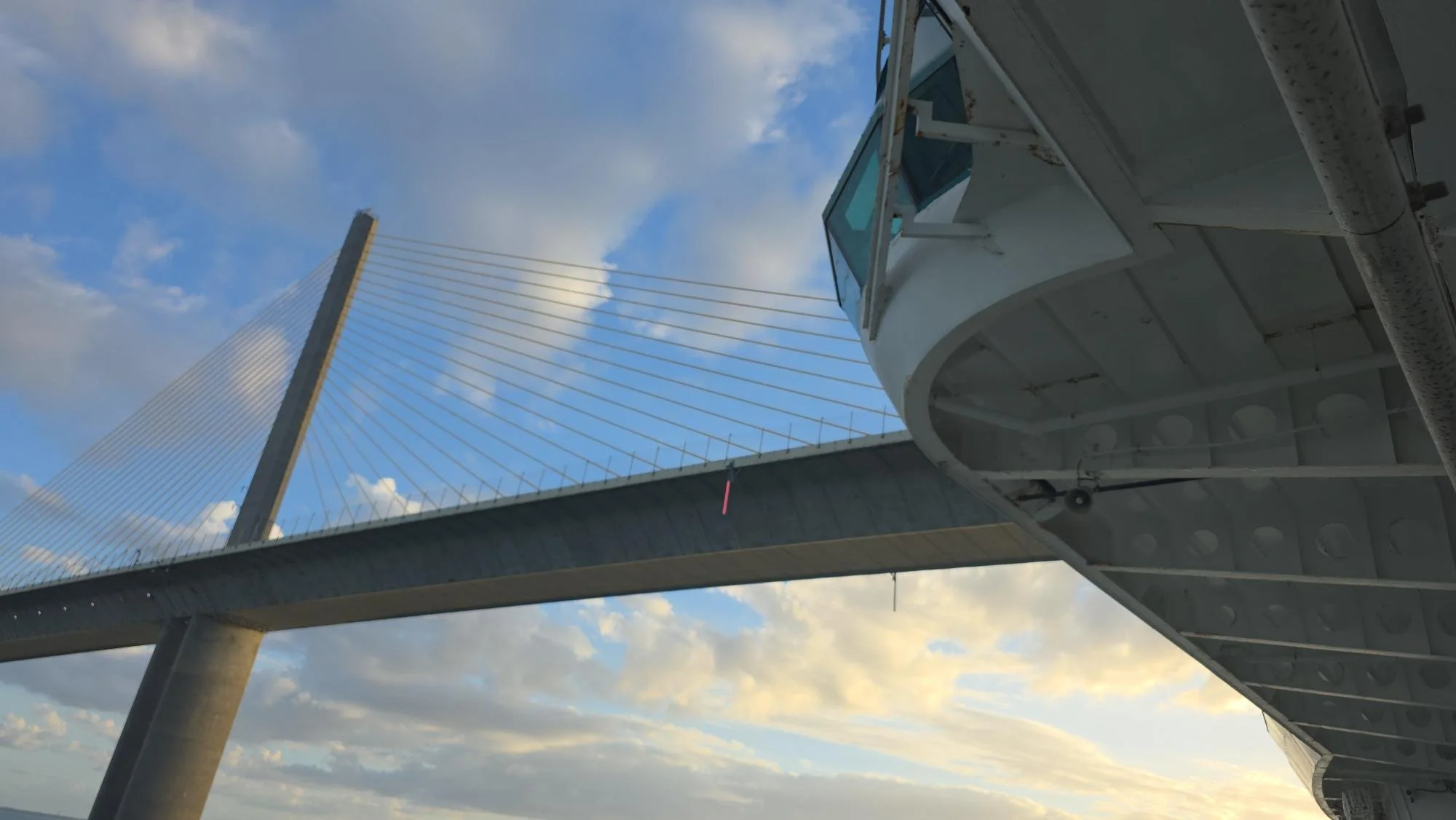
The captain announced we'd pass under the Sunshine Skyway Bridge at approximately 6 p.m.
He mentioned we'd have about six feet (two meters) of clearance.
Well, that got my attention!
I set an alarm for 6 p.m., got up, cleared my head, and headed outside.
What a sight!
I've driven across bridges plenty of times, but watching a cruise ship pass underneath one is an entirely different experience.
I'd never done that before, and I'm glad I made the effort to get outside and see it.
It's one of those little travel experiences that I didn’t necessarily plan for but end up remembering.
Definitely a highlight of the day.
Dinner: Let the Vacation Eating Begin!
By around 7 p.m., it was time for dinner.
And if there's one thing I intend to do on this cruise, it's enjoy the food.
Tonight's dinner lineup:
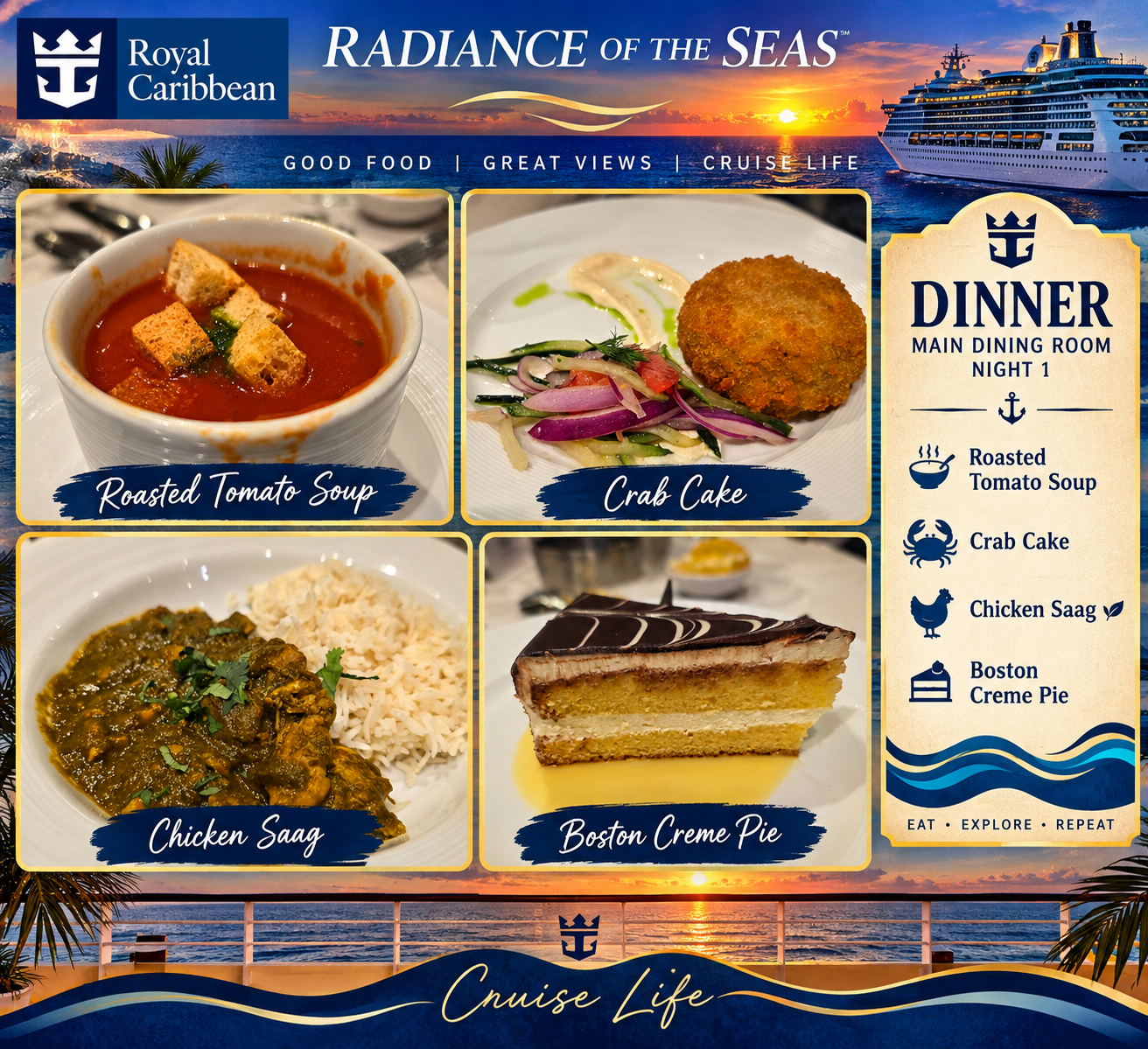
Roasted tomato soup
Crab cakes
Caesar salad
Chicken saag
Pellegrino sparkling water
And because dinner isn't complete without dessert:
Boston cream pie
Decaf coffee
A pretty good way to wrap up the evening!
Between the Key lunch and dinner, I've made a respectable start on my cruise dining adventures.
And there's still plenty of bacon to come.
Tomorrow: A Day at Sea!
Tomorrow is a sea day.
No airports. No Uber drivers. No luggage drama. No rushing to get somewhere.
Just the ocean, the ship, and whatever adventures I manage to find.
The main dining room starts serving brunch at 8:30 a.m. Will I make it? Who knows!
I'm officially on cruising time now.
Maybe I'll get up early. Maybe I'll sleep in. Maybe I'll wander around the ship, find some entertainment, eat something I probably don't need, and do a little people watching.
That's the beauty of cruising.
I don't have to plan every minute.
Today had its share of frustrations, but I made it aboard, enjoyed some great food, saw something I'd never seen before, and am finally settling in.
Tomorrow is another day, and I have absolutely no idea what I'll do with it.
Check back tomorrow to find out what I didn't do!
Fairfield Inn & Suites Charlotte Arrowood: When Free Still Isn’t Worth It
Sometimes, a hotel stay is just a place to lay a head for a few hours. After dinner with Airica, I drove about an hour and a half from Columbia, South Carolina, to the Fairfield Inn & Suites Charlotte Arrowood. The plan was simple: get some sleep and keep going in the morning.
I used Marriott Bonvoy points for this stay, so my out-of-pocket room cost was $0. Sounds like a win, right? Well, not every free night is a good deal.
Finding the Hotel and Checking In
The hotel sits back from the main road, and I actually missed the entrance on my first attempt. A quick trip around the block got me back on track.
Parking was easy. There were six accessible parking spaces, and when I arrived around 9 p.m., three were still available. I took one, leaving two for other guests who might need them.
Check-in was equally straightforward. One person was ahead of me, and the front desk staff member was friendly and efficient. She covered the usual information about Wi-Fi, breakfast, and coffee. I didn't get to experience breakfast because I left before it started at 6:30 a.m.
She wasn't particularly knowledgeable about the surrounding area, explaining that she drove about 40 minutes each way to work and wasn't from the neighborhood. Fair enough.
However, one thing immediately caught my attention: the glass partition between the two sliding entrance doors, with a pawn shop and a Chinese takeout business visible on the other side. In all my years of hotel stays, including some questionable properties, this was a first for me. It certainly wasn't the welcome I expected.
The elevator was conveniently located near reception. The hotel has three floors, and I was assigned Room 304 on the third floor.
The Cigarette Smoke Problem
Unfortunately, the experience began to go downhill before I even reached my room.
There is only one elevator, and as soon as I stepped out onto the third floor, I smelled cigarette smoke. When I opened the door to Room 304, a hearing- and wheelchair-accessible room, the odor was even more noticeable.
I wasn't interested in spending the next part of my evening negotiating for another room, so I decided to deal with it.
To give credit where it's due, the room itself was reasonably comfortable. Unlike some hotel rooms I've reviewed, this one was well lit. The bed was comfortable, the HVAC worked properly, the television functioned, and I had no trouble connecting to the Wi-Fi.
Those were the positives.
An Accessible Room That Missed the Mark
As a right above-the-knee amputee, I pay particular attention to hotel accessibility. I've written before about how businesses can technically meet accessibility requirements while still falling short of what disabled guests actually need.
This room was another example.
Yes, there were grab bars. Yes, the doorway was wide enough for wheelchair access. But accessibility involves more than checking a couple of boxes.
The bathroom had a bathtub rather than a roll-in shower. It had no removable handheld showerhead, shower chair, or stool. The bath products were mounted in the middle of the tub area, and there wasn't even any body wash.
Think about that for a moment.
Getting into and out of a bathtub can be particularly challenging for someone with a mobility disability. Without a shower chair, it becomes even harder. A handheld showerhead can also make bathing safer and more practical.
These aren't extravagant luxury requests. They're practical accommodations that can make a meaningful difference in someone's ability to use a bathroom safely and comfortably.
The room was labeled accessible, but the bathroom left me questioning how well the actual needs of disabled guests had been considered.
Checking Out Before Sunrise
I left around 5:30 a.m., well before breakfast was available. Nobody was at the front desk, so I walked out and left the checkout process to the hotel.
I've encountered this situation before, and I generally don't make a production out of it. The property can process the checkout when staff is available.
There were no major problems with the bed, television, climate control, or internet. If I were judging the room solely on those basics, the stay might have been perfectly adequate.
But the cigarette smoke and, more importantly, the shortcomings in the accessible bathroom overshadowed those positives.
Was It Worth the Points?
The room cost me $0 out of pocket because I redeemed Marriott Bonvoy points. Unfortunately, that doesn't automatically make it a good redemption.
I value my points because they can buy stays that are comfortable, convenient, and worth the effort of traveling. This experience didn't meet that standard.
The friendly front desk agent, comfortable bed, good lighting, and working amenities deserve credit. However, the smoke odor and the lack of essential bathroom features for someone with mobility limitations were significant negatives.
Would I stay here again? No. Would I pay cash for a room here? Absolutely not.
A free hotel room should still provide a reasonable experience, and an accessible room should offer more than the bare minimum.
This stay reminded me that the lowest price isn't always the best value, even when it’s zero.
Until next time, safe travels—and remember that accessibility is about more than a label on a reservation.
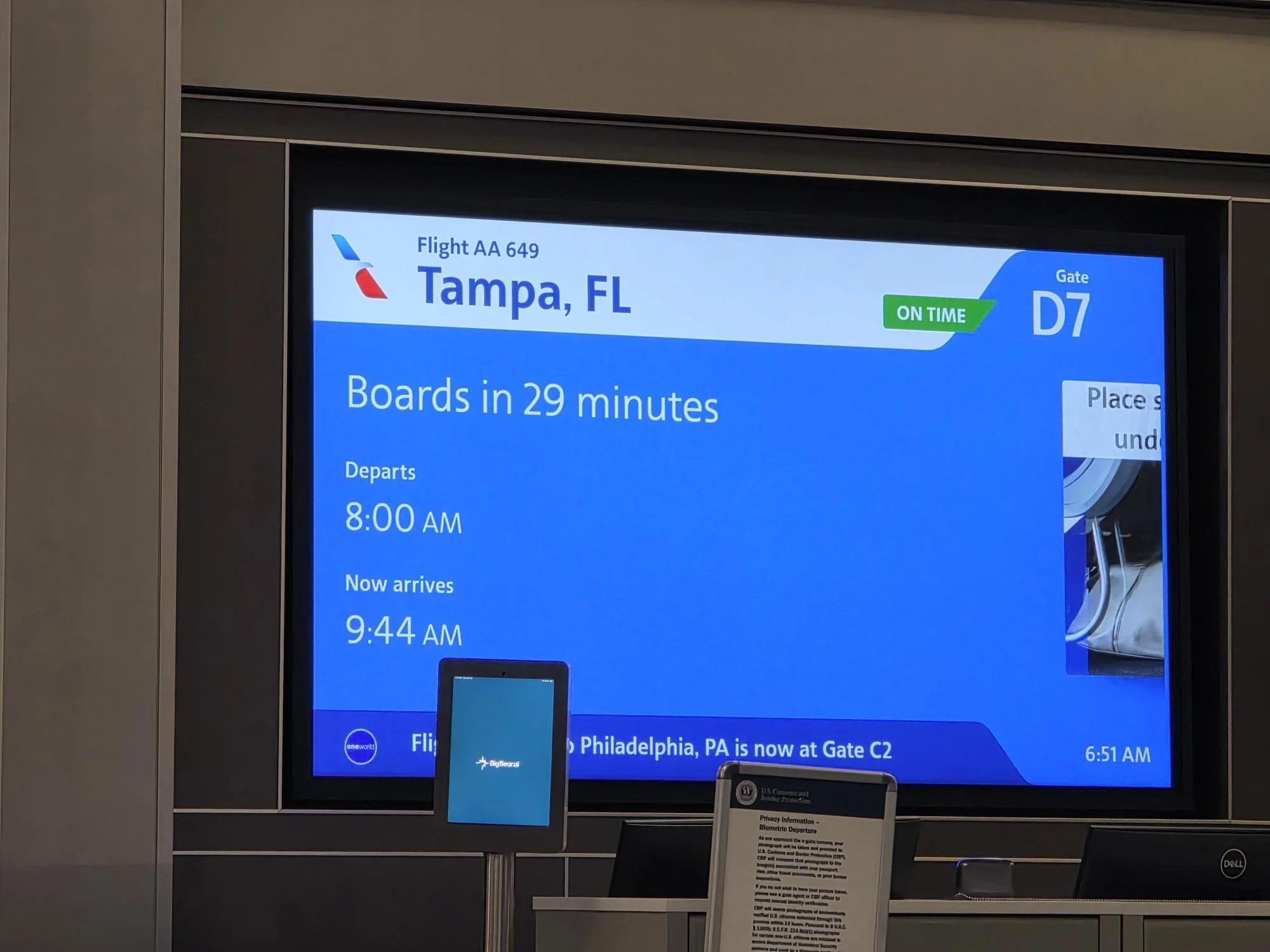
Cruise Day 1: CLT to TPA, and Then… We Have a Maintenance Issue! 🚨✈️🚢
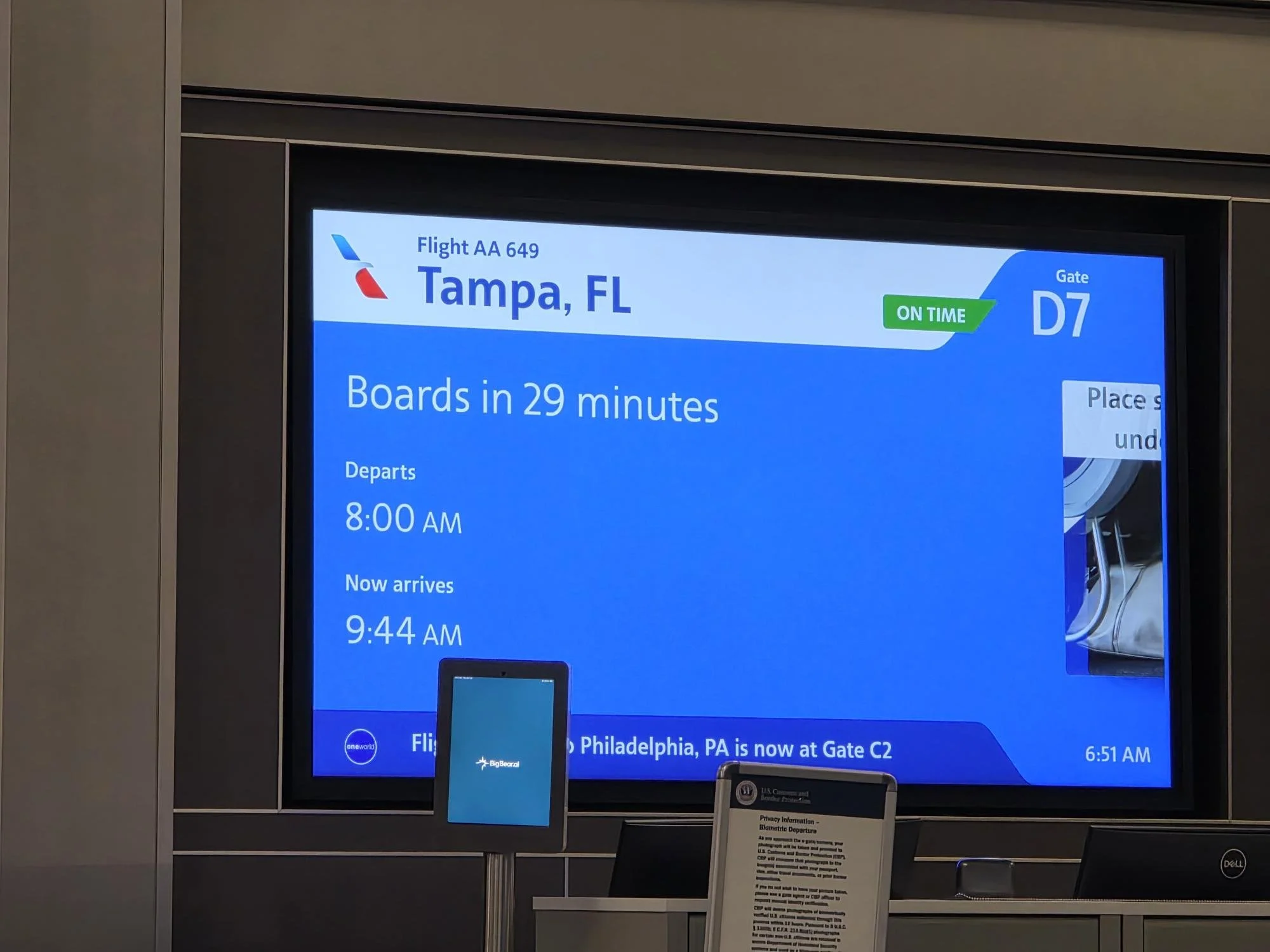
Well, folks, the adventure to Radiance of the Seas has officially begun. And apparently, a cruise vacation needs a little pre-cruise drama, so we’re starting with an unexpected twist at Charlotte Douglas International Airport (CLT).
As I mentioned in an earlier blog post, I changed my travel plans so I could spend some time with Airica. Now, I'm at CLT, headed to Tampa (TPA), where my Royal Caribbean cruise awaits.
What could possibly go wrong?
Oh, you know. The usual.
Getting to the Gate Was an Adventure in Itself
I got to the airport early, and thank goodness I did!
I've flown out of CLT fewer than a handful of times, and I've never parked there before. Naturally, I made a wrong turn. Fortunately, I got redirected and eventually made my way to where I needed to be.
Then came the bag drop.
Then TSA.
And that's where things are a little different for me these days. With a metal component attached to my leg below the knee, getting through security involves a different process than it used to.
After that adventure, I requested wheelchair assistance to the gate. No need to exhaust myself before the vacation even begins!
Once I arrived, I picked up a Coke Zero to get some caffeine into my system. Thursday started a whole lot earlier than I'm accustomed to, and I needed a little help getting my brain online.
I found a seat, opened my laptop, and started blogging.
Look at me, being productive at the airport!
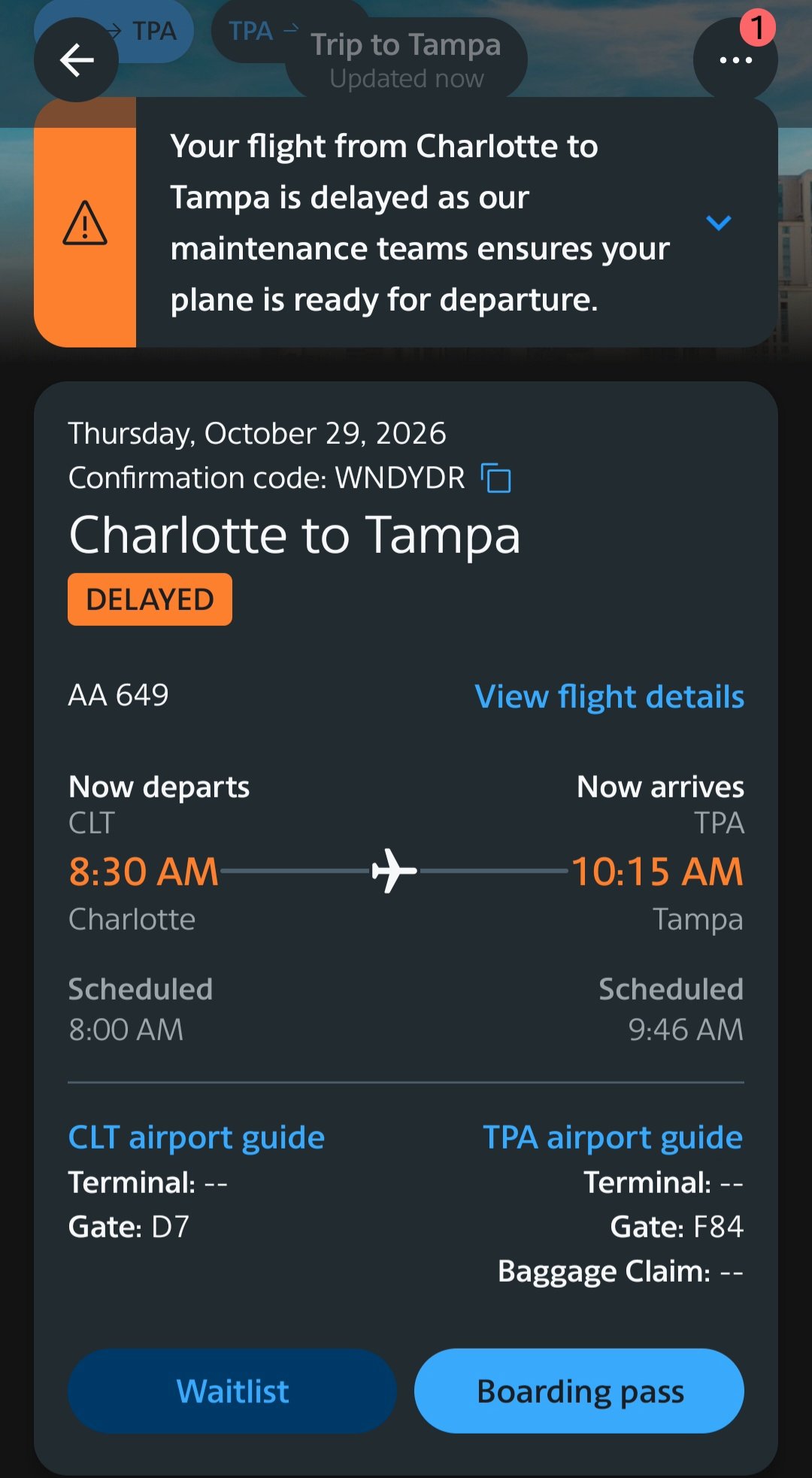
And Then… BAM!
I boarded the plane, settled into my seat, and waited for the flight attendant to take my beverage order.
I was ready to relax, enjoy my flight to Tampa, and start this cruise vacation.
Then came the announcement.
"There's a maintenance issue that's going to take longer than expected, and we're going to have you all deboard."
Well, that's a sentence nobody wants to hear after they've already boarded.
And just like that, everyone was getting off.
As I write this, we haven't been given any additional information. We don't know exactly what the maintenance issue is, how long it will take, or what happens next.
So here I sit, back on the ground at CLT, wondering when my Tampa adventure will resume.
At Least There's One Silver Lining
My ship doesn't require me to be onboard until 3 p.m.
That gives me some breathing room, assuming this maintenance delay doesn't turn into an episode of Airport: The Extended Edition.
I'm trying to keep things in perspective. I'd much rather have an airline identify and address a maintenance issue before we take off than have someone decide it's not worth the delay.
Safety first. Vacation second.
Although if the airline could hurry things along a little, that would be lovely.
I've got a ship to catch, an ocean to enjoy, bacon to eat, and people to watch.
And somewhere in Tampa, Radiance of the Seas is waiting for me.
Stay tuned. This cruise hasn't even started, and I've already got blog material. 😂
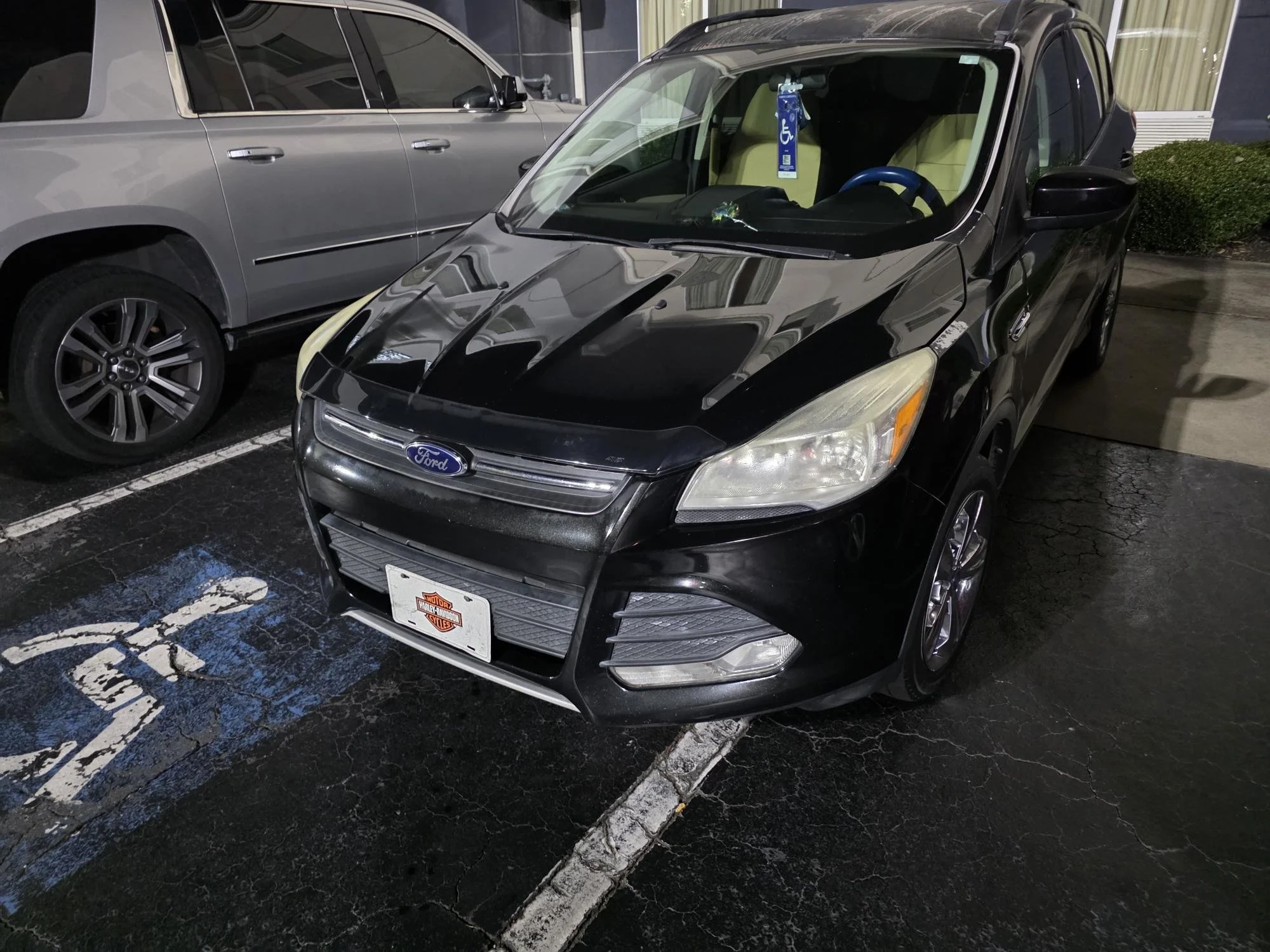
Parking Like You're Riding a Harley? This Ford Escape Missed the Mark!
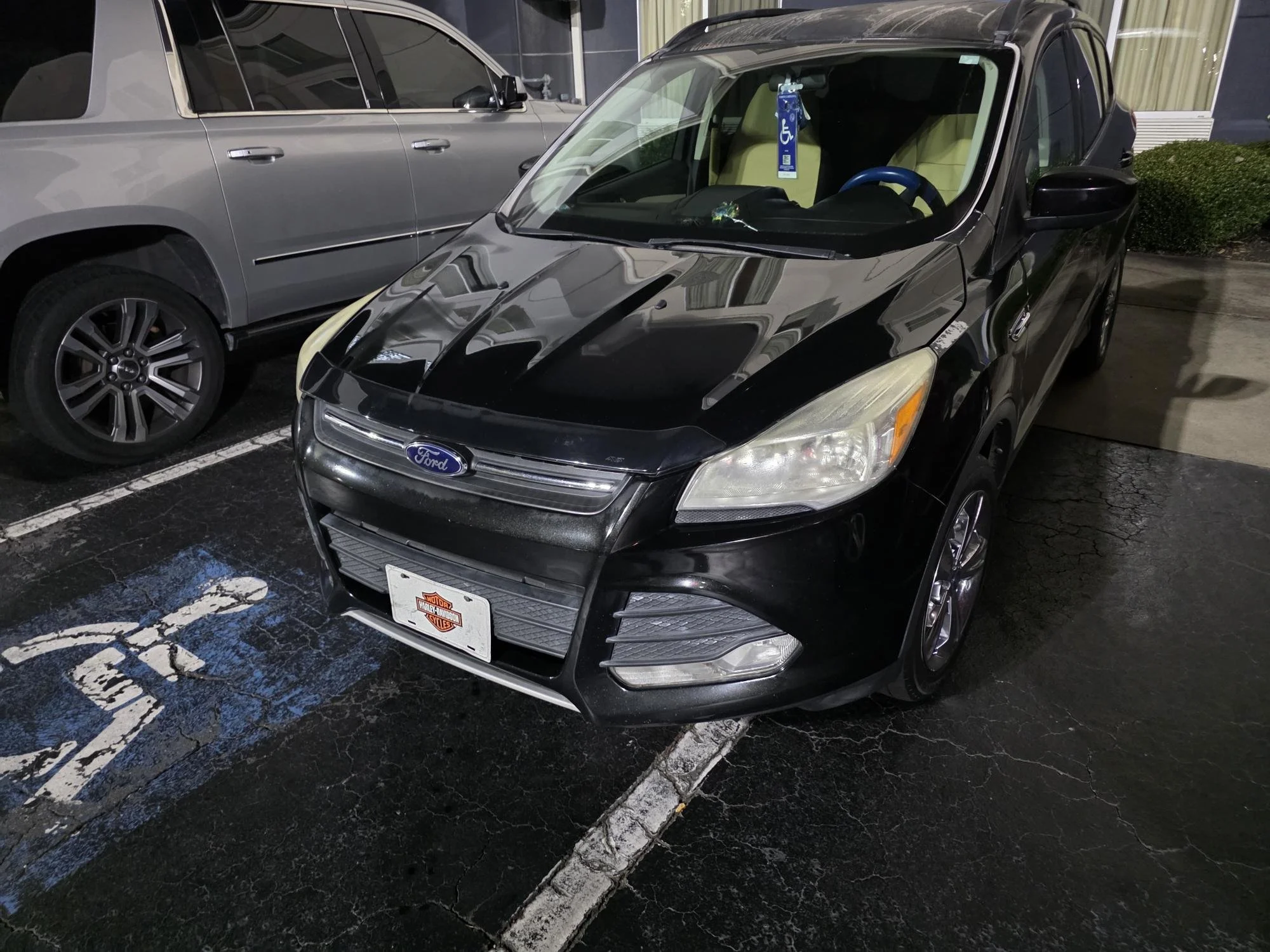
Sometimes I wonder if driver's education needs a refresher course in parking.
I was staying at a Fairfield Inn about 15 minutes from Charlotte Douglas International Airport (CLT). I'll save the details of my hotel experience for another blog post, but this little adventure happened when I got up and headed out to my car.
And then I saw this beauty of a parking job.
A black Ford Escape was parked diagonally across the parking-space line, its front end intruding into the neighboring space. A handicap symbol is even painted on the pavement nearby, making the whole scene a little more interesting.
Now, I noticed the Harley-Davidson placard on the front bumper. So naturally, my imagination started working overtime.
Maybe the driver thought they were parking their HOG and figured the passenger side was the center of the motorcycle? Perhaps they were still mentally cruising down the highway and forgot they were driving a four-wheeled vehicle.
Okay, I know. That explanation makes absolutely no sense. Neither does this parking job!
Come on, people! The lines are there for a reason. They're not decorative suggestions, and parking spaces aren't a game of automotive Twister.
As someone who lives with a disability, I pay attention to how people use parking spaces. A little consideration goes a long way, especially when accessible parking and enough room to get in and out of a vehicle matter.
I'm not suggesting every parking mistake deserves a public investigation. We've all had moments when we needed to straighten up. But there's a difference between being a little off-center and leaving your vehicle straddling a line like it owns the place.
The takeaway? Take five seconds, check your parking, and straighten the car before walking away. Your fellow drivers will thank you.
And to the driver of this Ford Escape: I hope you enjoyed your stay. Next time, let's leave the Harley-Davidson parking technique for the motorcycle!
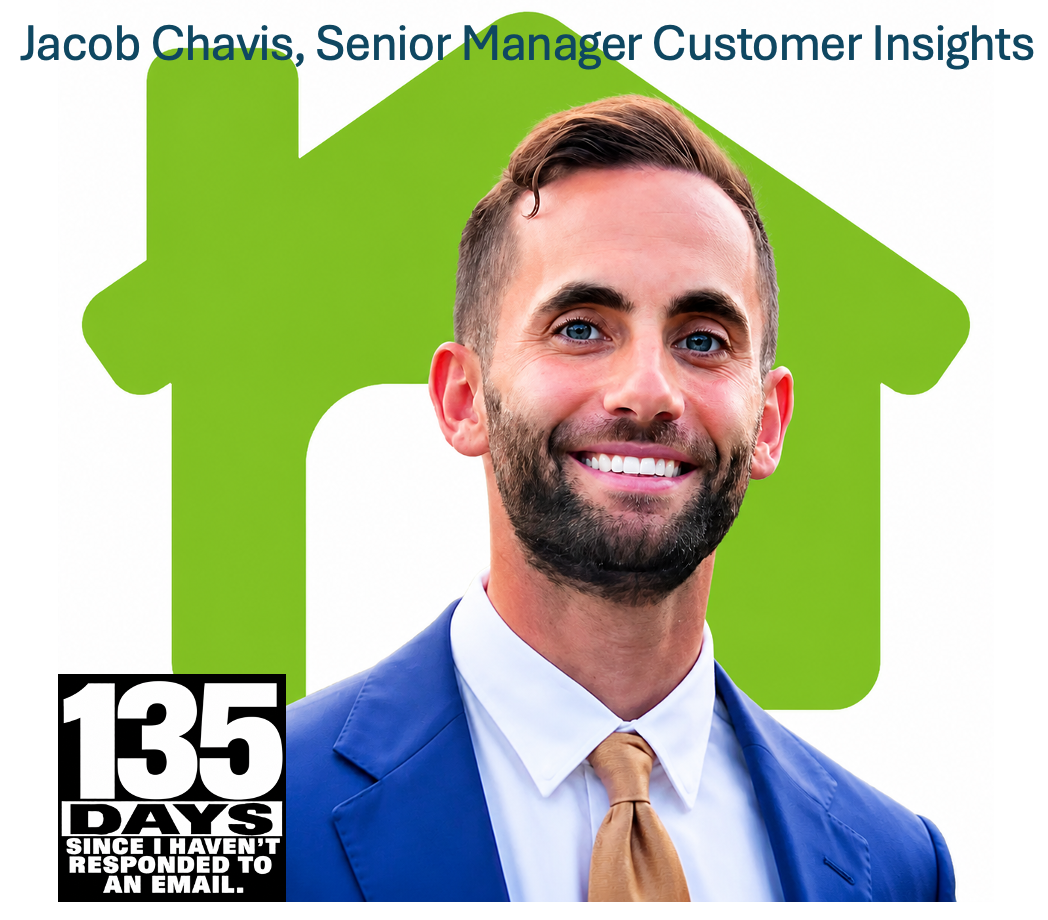
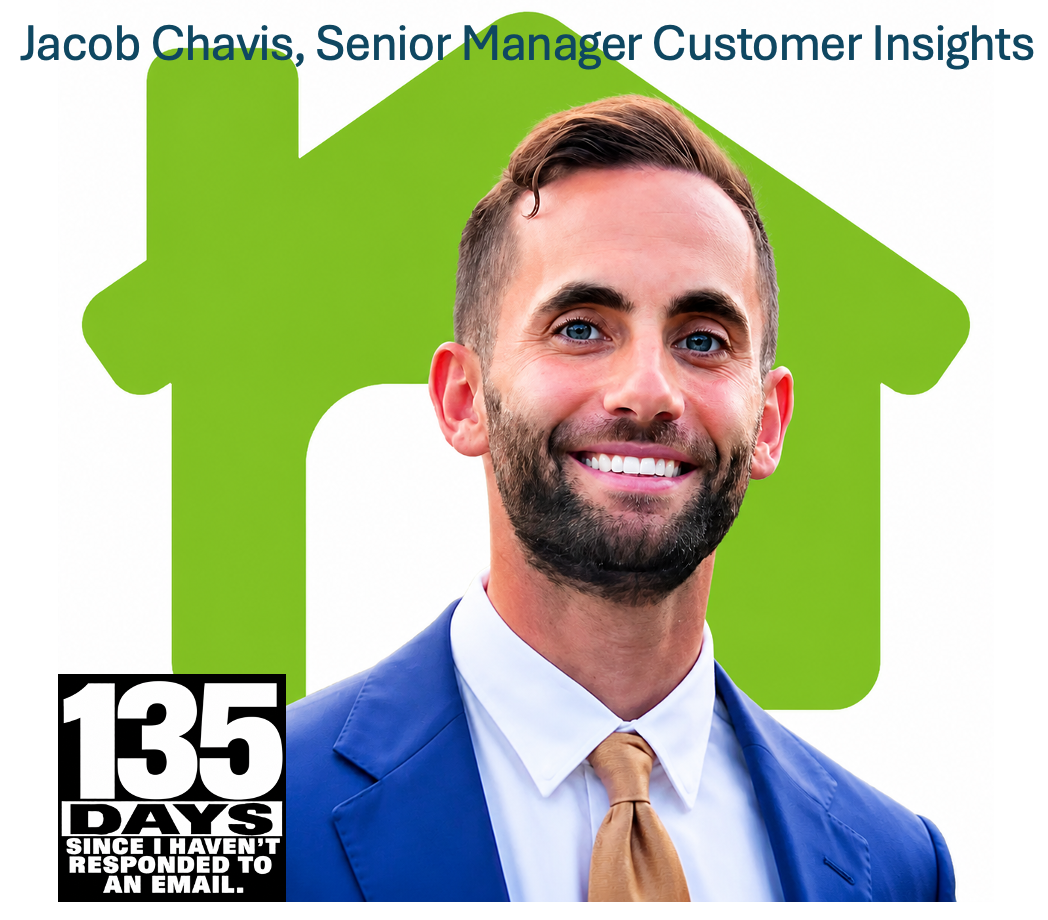
Day 135: Nextdoor Rings the Bell. The Questions Are Still Ringing.
Fifteen years of Nextdoor. A celebration at Nasdaq. A stock price of $2.37. And a research request that remains unresolved.
Today, Nirav Tolia and members of Nextdoor's leadership team celebrated the company's 15th anniversary by ringing the closing bell at Nasdaq.
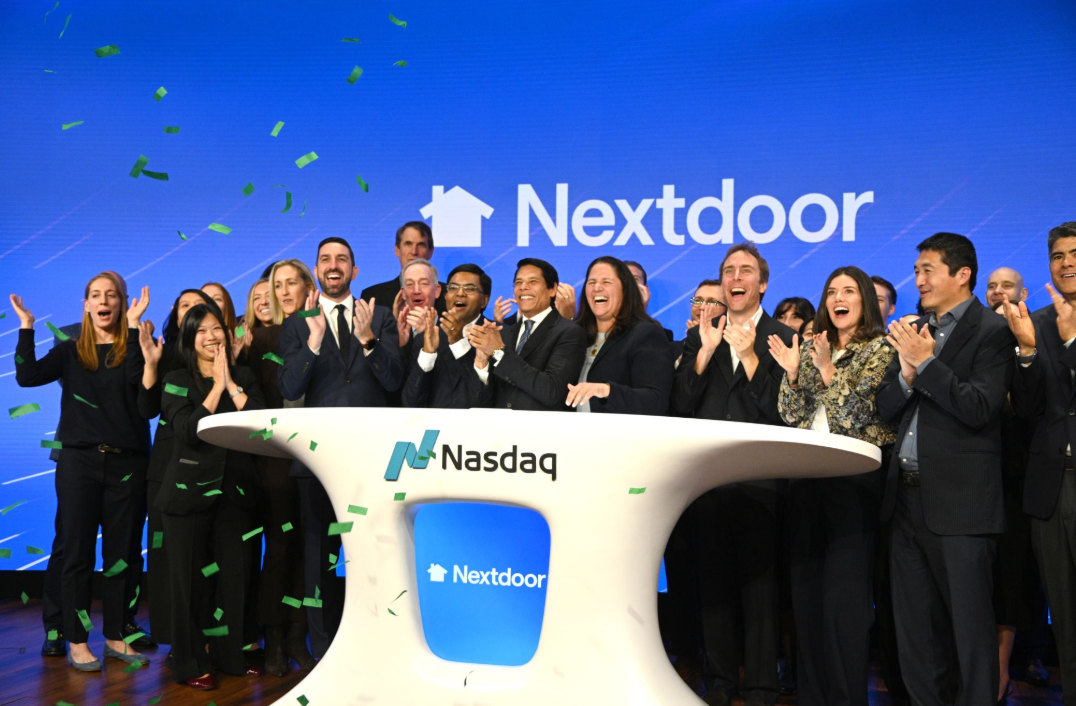
Look at the photograph. Everyone is smiling, applauding, and celebrating. The Nextdoor logo fills the background. It's a moment designed to communicate achievement, momentum, and success.
Now look at my E*TRADE screenshot.
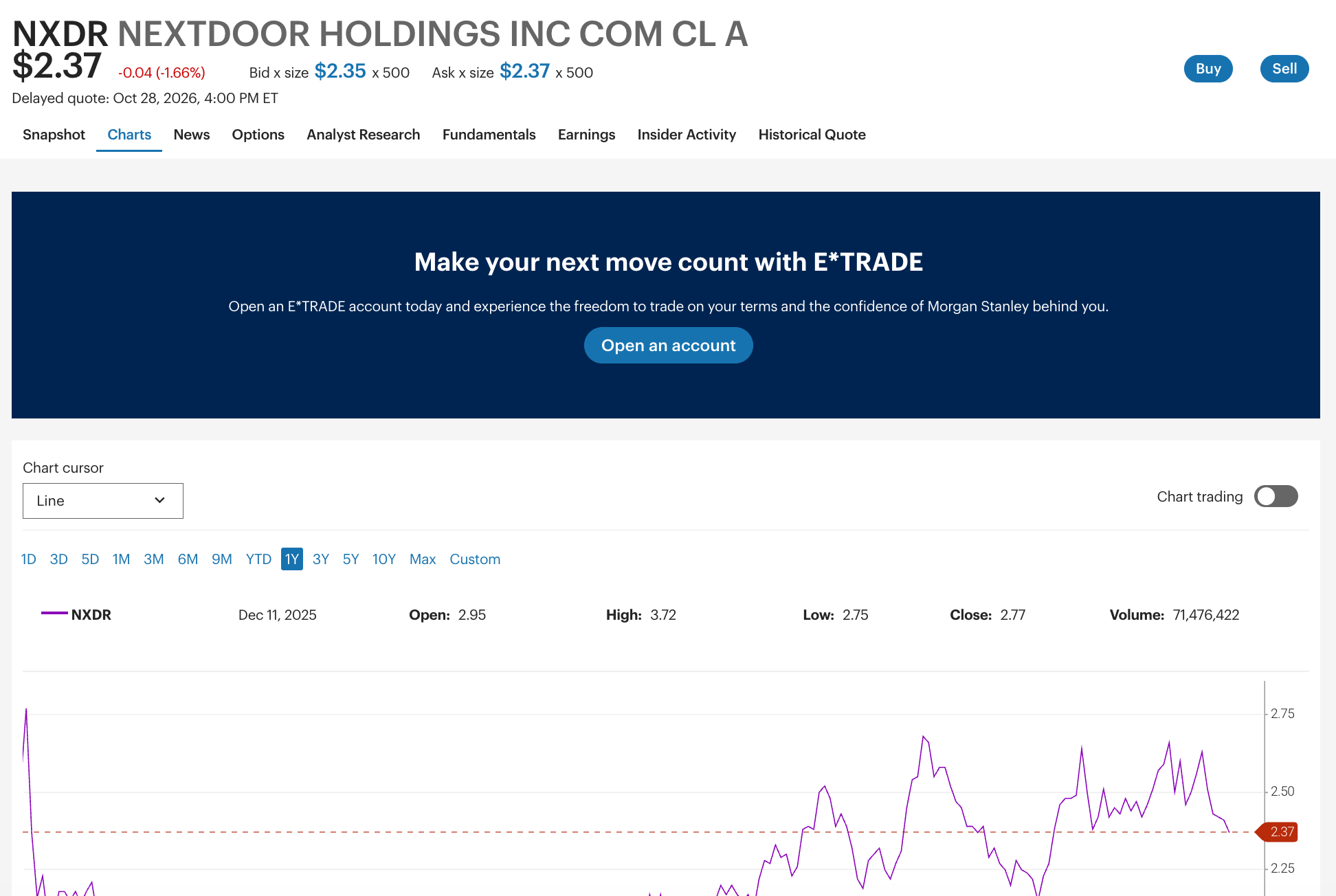
NXDR closed at $2.37 on October 28, 2026, down $0.04, or 1.66%, for the day.
Two pictures. Two very different messages.
I'm not suggesting that the ceremony caused the stock to fall. There's no evidence of that. Nor does one day's movement tell us whether Nextdoor is succeeding or failing as a business.
But I do think the contrast raises a worthwhile question:
What, exactly, are we celebrating—and how should we measure whether Nextdoor has delivered on its promise?
Day 135: A Thank-You to Nirav Tolia and Nextdoor
I'd like to thank Nirav Tolia and the Nextdoor team.
Seriously.
Thank you for not resolving my original request, made more than a year ago, for the detailed data behind Nextdoor's published research. Thank you for the subsequent communications that directed me back to public blog posts rather than providing the detailed reports I requested.
And thank you for letting that request remain unresolved for 135 days in this chapter of my case study.
I realize that sounds sarcastic. It is.
But there's a genuine point underneath it.
By not providing the information I requested—or clearly resolving the request in a way that ended the uncertainty—you gave me the opportunity to learn a great deal about the company.
I learned more about weekly active users (WAU), revenue, adjusted EBITDA, and the difference between a company's financial performance and its investors' returns.
I've taken a refresher course in stock terminology and the relationship between market performance and corporate milestones.
And today, I learned more about how a company can celebrate an anniversary with a stock-exchange bell-ringing ceremony.
That last lesson was particularly timely.
The ceremony is a public-relations opportunity. It creates photographs, social media content, and a positive story about the company's history. There's nothing inherently wrong with that. Companies use milestones to celebrate employees, attract attention and tell their stories.
But a ceremony is not proof of business success.
And a photograph of executives celebrating doesn't answer questions about users, investors, small businesses, or accountability.
Fifteen Years Later: What Does Nextdoor Have to Show for It?
Nextdoor began operating its platform in 2011. Its business has evolved, and there are real accomplishments worth acknowledging.
In its second-quarter 2026 results, the company reported $75 million in quarterly revenue, up 15% year over year; 22.9 million weekly active users on the platform, up 5%; and a net loss of about $2 million, compared with about $15 million a year earlier. Adjusted EBITDA was approximately $10 million.
Those are measurable improvements. I won't pretend otherwise.
But fifteen years in business should invite a broader examination than a list of quarterly highlights.
Here are the areas where I believe Nextdoor still has serious questions to answer.
1. The Business: Can Nextdoor Turn Its Potential Into a Durable Business?
Nextdoor has built a network spanning hundreds of thousands of neighborhoods. It has local conversations, recommendations, safety alerts, business listings, and advertising opportunities.
That is a valuable foundation.
Yet the company has also acknowledged in its regulatory filings that it is still scaling its monetization efforts and that its ongoing product transformation may not produce the engagement or monetization it expects.
My questions include:
Can Nextdoor consistently convert engagement into sustainable revenue?
Can it make the platform more useful without alienating existing users?
Can it improve trust and moderation while growing its commercial business?
Can it establish a durable path to GAAP profitability?
Can it demonstrate that its strategy produces lasting results rather than periodic bursts of optimism?
These claims don't mean Nextdoor has accomplished nothing. They're questions about whether the company has converted its substantial potential into the durable business its supporters expect.

2. Investors: Where Is the Long-Term Return?
Nextdoor became a publicly traded company in 2021. Investors have had years to evaluate the business, its strategy, and its execution.
But revenue growth and an improving operating picture don't automatically translate into strong returns for every shareholder.
My own experience led me to sell my NXDR shares on October 12. I decided I had waited long enough for the investment case to develop, and I was no longer willing to keep waiting for the outcome I had hoped to see.
Today, the screenshot shows NXDR at $2.37, down 1.66% for the session.
That single day's decline doesn't establish the company's long-term prospects. Similarly, executives ringing a bell doesn't mean shareholders have been rewarded.
The questions remain:
Has Nextdoor delivered the long-term shareholder value investors expected?
Can the company sustain revenue growth and improve profitability?
How should investors evaluate management's promises against actual results?
What milestones would demonstrate that the business has reached a new level of maturity?
A corporate anniversary is a calendar milestone. Shareholder value is measured over time.
3. Small Businesses: Are They Getting Enough Value?
Local businesses are a central part of Nextdoor's appeal. Neighbors recommend contractors, restaurants, service providers, and other local businesses. Those recommendations help people decide and can help businesses win customers.
Nextdoor has opportunities to monetize this local commercial activity through advertising and business products.
But one important question remains: how does the platform balance its commercial interests with the interests of the businesses and neighbors who make it useful?
I want to know:
Do local businesses clearly understand the value they receive from paid products?
Can they determine whether advertising generates meaningful results?
Does the platform provide a useful experience for businesses that rely on organic recommendations and free tools?
How does Nextdoor maintain trust when it monetizes local attention and community-generated knowledge?
Nextdoor offers free business tools, so it's inaccurate to say every business must pay to participate. The question is whether businesses of different sizes can understand and access meaningful value from the platform.
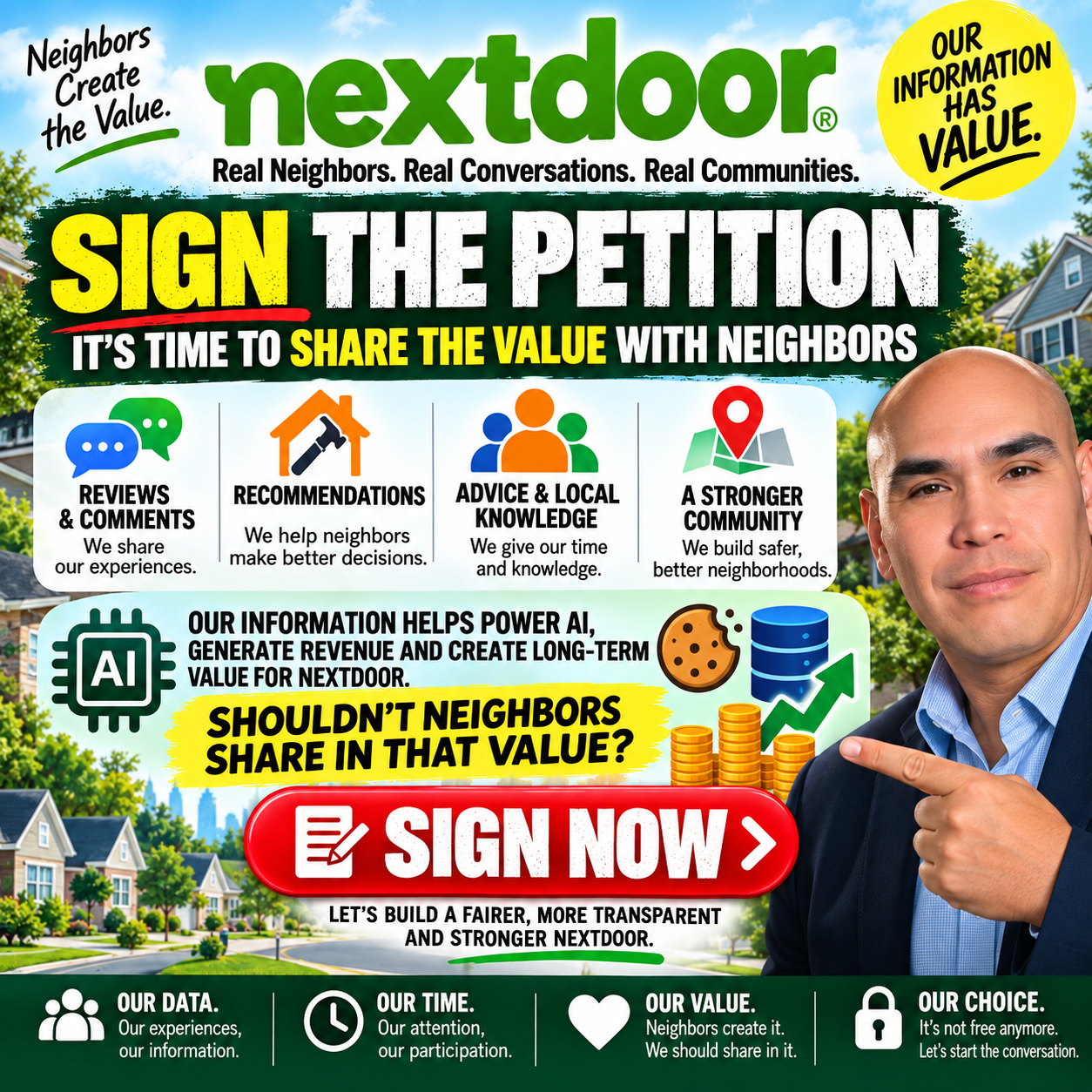
4. Users: Who Creates the Value, and Who Benefits?
This has been one of my central questions throughout the case study.
Neighbors create the content that makes Nextdoor useful. They recommend businesses, share local information, warn others about safety concerns, answer questions, and contribute knowledge about their communities.
Without those contributions, the platform would have far less value.
Yet users have raised concerns about content moderation, inconsistent decisions, communication, and the handling of appeals. I've documented my own experiences and the questions they have raised.
My questions include:
Are moderation decisions consistent and understandable?
Can users obtain meaningful explanations when content is removed?
Are appeals reviewed effectively?
Does Nextdoor communicate clearly when users raise substantive concerns?
Does the company recognize the value of the contributions that keep the network useful?
I don't expect every post to remain online or every appeal to succeed. A community platform needs rules.
But users should understand how those rules are applied and how they can challenge decisions.
And when community-generated knowledge becomes a commercial asset, I believe it's reasonable to ask whether the people contributing that value should have more choices about how it is used.
5. Leadership and Accountability: Who Answers the Difficult Questions?
This is where my personal case study comes back into focus.
I've spent months asking questions about Nextdoor's moderation, communication, research transparency, and leadership accountability.
One unresolved issue has been my request for the detailed data behind two Nextdoor Insights studies. The public posts described additional research details as available through contact with Jacob Chavis. I asked for the underlying detailed reports—not another link to the public summaries.
I have received communications directing me to those public summaries, but I have not received the detailed reports I requested.
As of Day 135, that request remains unresolved.
I recognize that the company may have restrictions or reasons it cannot share particular materials. If so, it can explain that. It can say the reports are unavailable, access is restricted, or someone else is responsible for the request.'
A clear resolution would help.
This isn't about demanding that a CEO personally answer every question sent to the company. It's about whether an organization has a reliable process for responding to substantive requests and closing the loop.
And that’s why today's celebration feels so disconnected from my experience.
The company can coordinate a public ceremony, publish a celebratory announcement, and put its leadership team in front of cameras. Those are visible activities.
But an unresolved research request reminds us that important work also happens outside the spotlight.

6. Transparency: Publicity Is Not the Same as Accountability
The bell-ringing ceremony is a publicity opportunity. I don't mean that as an accusation of wrongdoing. Public companies routinely use ceremonies and anniversaries to celebrate their history.
But publicity and accountability serve different purposes.
Publicity tells the world what a company wants people to see.
Accountability gives people ways to evaluate whether the company is delivering on its commitments.
Nextdoor can celebrate fifteen years of connecting neighbors. It can highlight its growth, products, and financial progress. It can point to new advertising initiatives and improved operating results.
And those accomplishments deserve to be assessed on their merits.
But there are other measures of progress:
Whether users trust the platform.
Whether moderation works consistently.
Whether businesses receive meaningful value.
Whether investors can see a credible path to sustained performance.
Whether leadership responds constructively to difficult questions.
Whether the company resolves legitimate requests for information.
A closing-bell pt captures all of that.
My Suggestion: Celebrate a Milestone That Means Something
Here's my suggestion to Nirav Tolia and Nextdoor.
Rather than making the bell-ringing ceremony the centerpiece of a fifteen-year celebration, I would prefer the company set clear, measurable milestones and celebrate when it achieves them.
For example:
Sustained GAAP profitability.
Consistent user growth accompanied by stronger retention and trust.
Clear evidence that local businesses are getting meaningful value.
Transparent and effective moderation and appeals processes.
A track record of responding to substantive questions and resolving them.
Demonstrable long-term value creation for shareholders.
These are examples, not a claim that the company has made no progress toward them. Some may already be improving; others will require time and evidence.
But they are the kinds of outcomes that would make a celebration especially meaningful to me.
A bell-ringing ceremony is a moment. Building a durable, trusted, and financially sustainable company is the achievement.
And a fifteenth anniversary is a fine time to reflect on both.
Day 135: The Bell Rang. My Questions Remain.
Nirav and the Nextdoor team were smiling in the photograph. I don't begrudge them the celebration. Employees deserve to celebrate the work they've done, and a company is entitled to mark its history.
But the market closed at $2.37 that day, according to my E*TRADE screenshot, and my questions about the company remain.
I am not suggesting that the stock decline was caused by the ceremony, nor am I claiming that one closing price defines Nextdoor's future.
I'm asking for a more meaningful standard of success than the ability to arrange a public celebration.
Fifteen years after launching the platform, Nextdoor has a substantial network, growing revenue, and recent improvements in its financial results. It also still needs to demonstrate durable profitability, build user trust, deliver value to businesses and shareholders, and ensure legitimate questions get clear answers.
I will keep documenting the gap between the company's promise and its execution.
So, congratulations to the employees who helped build Nextdoor over the past fifteen years.
As for the next milestone, I'd suggest choosing one that reflects measurable progress.
Don't ring the bell just because the calendar says fifteen years. Ring it when you've built something that stands up to the questions.
👉 Follow my continuing Nextdoor case study at NielFlamm.com/blog.