

Day 129: NXDR Is at $2.64. I've Seen This Movie Before.

The stock is rising, earnings are approaching, and I'm watching the same story unfold again.
I checked where Nextdoor Holdings (NXDR) was trading as I wrote this post: $2.64 per share.
Am I shocked? Not at all.
In fact, I expect the price to continue rising as we approach the next earnings report, scheduled for November 2. My theory is that short-term buyers are positioning themselves ahead of the announcement, hoping to benefit from the excitement and whatever numbers Nextdoor puts on the table.
That's my expectation, not a certainty. The market can always surprise us.
But here's what I think may happen.
The Run-Up to November 2
I expect NXDR to keep climbing through the earnings announcement and potentially for a few days afterward.
I also expect the earnings narrative to paint a glorious picture of Nextdoor-land.
Weekly active users are up. Revenue is up. Sales are up. The company will likely emphasize its progress, its advertising opportunities, and the potential of its neighborhood platform.
And those numbers may well show genuine progress. I'm not suggesting that improved metrics are meaningless.
But there's a bigger question that doesn't get answered by a polished earnings presentation:
What does all that progress mean for the long-term investor?
A company can report improving metrics and still leave investors waiting for a meaningful return. Revenue growth, user engagement, and operational progress are important, but they don't automatically translate into sustained stock appreciation or shareholder distributions.
That's the distinction I keep coming back to.

Why I Sold My Shares
I sold my NXDR shares on October 12.
I could only hold on for so long, waiting for the promise to turn into execution and for the long-term investment case to become more compelling.
I reached a point where I decided to sell at the price available to me rather than continue waiting for a future that might or might not arrive.
I don't regret that decision, even though the stock is now at $2.64.
Could it rise further? Absolutely.
Could it fall after earnings? That's possible, too.
I don't have a crystal ball, and I won't pretend to know what the market will do. I based my decision on my own assessment of the investment and how long I was willing to wait.
A rising stock price doesn't automatically answer the long-term questions.
A Facebook Reminder Took Me Back a Year
A few days ago, Facebook reminded me of something I had posted about a year earlier.
That reminder took me back to the beginning of my study of Nextdoor, Nirav Tolia, and the gap between the company's promises and its execution.
I began looking beyond the marketing messages and asking questions about users' experience on the platform.
What happens when the company removes posts and comments? How consistent is moderation? Where does accountability sit? How does the company respond when people raise questions? And how effectively does leadership listen to feedback?
Over time, my focus expanded to include research transparency, commercializing neighborhood knowledge, corporate governance, and the relationship between company performance and long-term shareholder value.
What started as a closer look at one platform became an ongoing case study of a public company and its leadership.
And here I am, roughly a year later, still asking some of the same questions.
The CEO, the X Posts and the Questions That Remain
One thing I documented early in this project was that Nirav Tolia hadn't reached out to the public in response to the issues I raised. I even started a countdown to track how much time passed.
Since then, Nirav has posted on X, but he has also blocked me twice from participating in conversations on his posts.
He has every right to control his own social media account. I don't know why he blocked me, and I won't pretend to.
But I do find the contrast interesting.
There are public conversations about topics that don't necessarily change the landscape of the platform, while questions about moderation, communication, accountability, and execution remain unresolved from my perspective.
Posting on X is communication. Blocking someone is a personal choice. Neither action, by itself, tells us whether the organization is listening to difficult feedback or fixing underlying problems.
The question isn't whether a CEO posts. It's whether the company learns, adapts, and follows through.

What About the Board?
This brings me to Nextdoor's board of directors.
A board has responsibilities that extend beyond supporting the CEO's strategy. Directors are expected to exercise independent judgment, oversee management, and consider the company's long-term interests.
I have questions about whether Nextdoor's governance provides enough visible accountability and whether leadership is effectively challenged when execution falls short.
I don't have evidence that the board is improperly aligned with Nirav, and I won't claim that it is. Directors can support a CEO while still exercising independent oversight.
But from the outside, shareholders and the public have limited visibility into the substance of those internal discussions.
If the board believes the current direction is working, it should be able to point to measurable results and explain how it evaluates progress, risk and leadership performance.
If problems persist, shareholders should understand how those concerns are being addressed.
A board's job isn't simply to stand behind the CEO. It's to help ensure the company delivers.
The Same Story, Another Earnings Report
As November 2 approaches, I expect the conversation around Nextdoor to focus on its numbers.
How many weekly active users? How much revenue? How strong are sales? What is management saying about the future?
Those are all reasonable questions.
But I will also be looking for evidence that the company is addressing the issues that don't fit neatly into a quarterly earnings slide: user trust, moderation, transparency, accountability, and the ability to turn a promising platform into a durable business.
I'm no longer a shareholder, but I still want Nextdoor to succeed. I would like to see it build a stronger business and deliver lasting value.
For now, I see a stock at $2.64, an earnings report approaching, and a year-old set of questions that still deserves attention.
The market may reward the next earnings narrative. The more important test is whether Nextdoor can sustain its progress beyond the announcement.
A good earnings report can move a stock. Consistent execution is what builds a business.
I'll be watching what Nextdoor reports on November 2—and, just as importantly, what happens after the headlines fade.
👉 Follow the continuing Nextdoor case study at NielFlamm.com/blog.

Day 107: NXDR Ends at $2.43 — What Is the Market Telling Us?

Day 107.
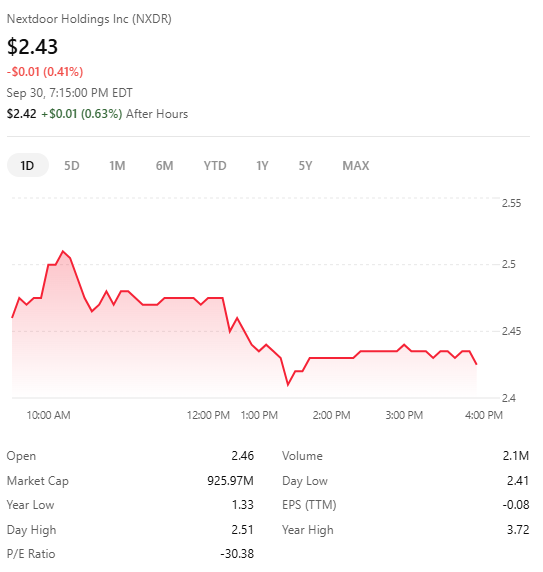
Today, Nextdoor Holdings (NXDR) finished at $2.43 per share, down slightly from Tuesday's $2.45 close. The stock traded between $2.41 and $2.52 during the session, with roughly 2.14 million shares changing hands.
One day doesn't tell the whole story.
The longer-term picture in the chart I've been watching is considerably more interesting.
A Year of Ups, Downs and Plenty in Between
Look at the one-year chart I included with this post.
NXDR has spent portions of the period down around the $2 range, while at other points it approached the upper $2.60s.
More recently, the movement has been just as interesting.
NXDR closed at $2.15 on September 9. By September 21, it had climbed to $2.64. It then fell to $2.38 on September 23, recovered to $2.51 on September 25, and finished September at $2.43.
That's quite a ride for a stock trading for less than $3.
And as a shareholder, it raises a question I've been asking throughout this Nextdoor case study:
What ultimately moves confidence in a company?
A Stock Price Isn't a Corporate Report Card
I want to be careful here.
A stock going up doesn't automatically mean management is doing everything right.
A stock going down doesn't automatically mean management is doing everything wrong.
And I'm certainly not going to look at today's two-cent decline and announce:
“The market has spoken about Nirav Tolia!”
😂
That's not how markets work.
Stock prices can move because of company financial results, expectations about future results, analyst opinions, broader market conditions, trading activity, liquidity, news, investor sentiment, and countless other factors.
NXDR itself demonstrates how quickly those expectations can change. In August, following its second-quarter results, analysts changed their views and price targets. More recently, NXDR has continued moving around considerably from session to session.
I can't attribute a specific Nextdoor decision to a particular movement on this chart.
No one else can either without evidence connecting the two.
But Confidence Still Matters
The chart still matters for my longer-term case study.
Markets ultimately involve people deciding what they believe something is worth.
And those decisions can include much more than yesterday's closing price.
Investors can consider:
Results. Strategy. Growth. Profitability. Execution. Leadership. Communication. Governance. Risk. And expectations about what happens next.
That's where confidence comes in.
A company can announce a brilliant strategy, but eventually investors can look for evidence that it worked.
A CEO can communicate a compelling vision, but eventually shareholders can compare that vision with results.
Management can make decisions that look strange today and brilliant two years from now.
Or the reverse.
Time has an interesting way of grading decisions.

That's Why I Keep Coming Back to Results
I've spent 107 days documenting my experience with Nextdoor.
I've asked about the detailed Insights data.
I've written about communication.
I've questioned transparency.
I've discussed moderation.
I've written about small businesses.
I've questioned how awards are judged.
I've discussed the economic value of neighbor-generated information.
I've praised Nextdoor when I thought it deserved praise.
I've provided feedback when I saw room for improvement.
That doesn’t mean today's $2.43 closing price validates my opinions.
It doesn't.
Likewise, if NXDR jumps to $3 tomorrow, that wouldn't suddenly invalidate the questions I've been asking.
What matters to me as a shareholder is what happens over time.
Decisions → Results → Confidence
Maybe that's the simplest way I can describe what I'm watching.
Leadership makes decisions.
Those decisions eventually produce results.
Those results can influence expectations.
And expectations can affect how investors value the company.
Not necessarily today.
Not necessarily tomorrow.
And certainly not because of one blog post, one executive interview, one Insights report, or one awkward email exchange.
But over time, execution has consequences.
That's why I'm interested in more than whether NXDR is green or red when I open the chart.
I'm interested in the decisions underneath it.
$2.43 Is Just Today's Number
Tomorrow it could be $2.35.
It could be $2.55.
Eventually it could be considerably higher—or considerably lower.
I don't know.
What I do know is that today's number becomes another point on that purple line.
$2.43.
Another trading day.
Another data point.
And another opportunity to remember that the market doesn't permanently value a company based on what leadership says it intends to accomplish.
Over the long run, investors also get to examine what actually happened.
That's the part of the chart I'll continue watching.
Day 107.
NXDR closes September at $2.43.
Let's see where the decisions, results, and confidence take it next.
👉 NielFlamm.com/blog

Day 88: NXDR Ends at $2.23—If Citigroup Sees $2.85, Why Doesn’t the Market?

It's Day 88 of my continuing Nextdoor case study, and today I'm looking at something that should be encouraging to me as a shareholder.
On August 17, 2026, Citigroup analyst Jamesmichael Sherman-Lewis maintained a Neutral rating on Nextdoor Holdings (NYSE: NXDR) but increased his price target from:
$2.30 → $2.85
That's a 23.9% increase in the price target.
Sounds pretty good, right?
Well...
NXDR ended today at approximately $2.23.
And that's where this gets interesting.
Citigroup says $2.85. The Market Says $2.23.
At $2.23, NXDR would need to gain approximately:
27.8%
to reach Citigroup's $2.85 target.
That's a substantial difference between what one major Wall Street analyst believes Nextdoor could be worth and what investors are currently willing to pay.
And on Day 88, that leads me to the obvious question:
If Citigroup sees $2.85 of potential value, why doesn't the market?
Don't Ignore the Word “Neutral”
Citigroup raised the target.
But it didn't upgrade NXDR to Buy.
The rating remained Neutral.
That's important.
Raising a target suggests the analyst sees greater potential value than before.
Maintaining Neutral isn't exactly someone running through Wall Street screaming:
“BUY NEXTDOOR!”
It's more like:
“There's more potential here...but we're still watching.”
As a shareholder, I understand the feeling.
NXDR Is Still Down 16.8% Since August 10
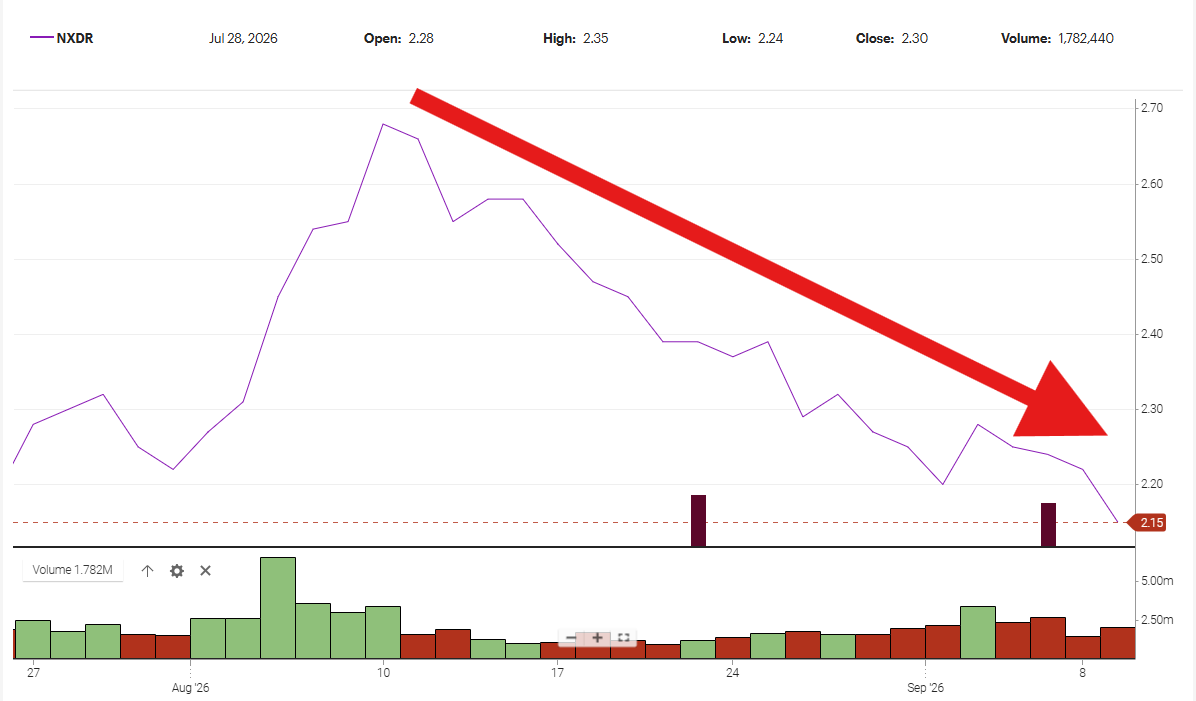
On August 10, NXDR closed around $2.68.
Today it ended at $2.23.
That's:
$0.45 lost per share.
Or approximately:
16.8%
Using roughly 387 million shares as a constant-share-count approximation, that $0.45 decline represents approximately:
$174 million in market capitalization.
That's an improvement from the approximately $205 million decline I calculated when NXDR was trading at $2.15.
But we're still talking about roughly $174 million in market value compared with August 10.
That gets my attention.
Markets fluctuate, share counts change, and one month of stock performance doesn't prove whether a CEO or strategy is succeeding or failing.
But shareholders can certainly ask why the market isn't assigning Nextdoor the value that Citigroup apparently believes is possible.
Where Is the Disconnect?
If analysts believe Nextdoor is worth more...
If management believes the strategy is working...
If advertising is growing...
If the small-business strategy creates value...
If AI-powered search improves the platform...
If verified recommendations differentiate Nextdoor...
Why isn't the market buying the story?
Maybe the market is wrong.
Maybe Citigroup is overly optimistic.
Or maybe investors see Nextdoor's potential but aren't yet convinced leadership can turn that potential into sustained shareholder value.
That's the possibility that interests me.
And What About That $100 Million Buyback?
This makes my recent question about Nextdoor's stock-repurchase program even more interesting.
Nextdoor has a $100 million share-repurchase authorization.
Yet the company repurchased zero shares during Q2 2026.
Put the numbers together:
NXDR closing price: $2.23
Citigroup target: $2.85
Difference: $0.62
Potential upside: ~27.8%
Buyback authorization: $100 million
If Nextdoor's Board and management genuinely believe the company is worth substantially more than $2.23:
At what price does Nextdoor believe Nextdoor is a bargain?
I'm not suggesting management blindly spend $100 million tomorrow.
Capital allocation isn't that simple.
But management already has authorization to repurchase shares.
If leadership believes NXDR is significantly undervalued, buying shares is one way to demonstrate that conviction.
Day 88: Less Storytelling. More Value Creation.
Nirav Tolia has been making the podcast rounds.
Nextdoor has been issuing announcements.
AI.
Verified neighbors.
Local businesses.
Recommendations.
Advertising.
Community.
Trust.
Great.
But ultimately:
Decisions drive value.
Not podcasts.
Not slogans.
Not press releases.
Execution.
Citigroup sees $2.85.
The market ended today at $2.23.
That's a $0.62 gap—or nearly 28% potential upside.
Someone eventually gets proven right.
And I Hope It's Citigroup
That's something that sometimes gets lost in my feedback.
I want Nextdoor to succeed.
I'm a shareholder.
If NXDR goes from $2.23 to $2.85—or considerably higher—I'm certainly not going to complain.
That's precisely why I've spent 88 days questioning leadership, communication, accountability, monetization and shareholder value.
I want Nextdoor to realize the potential people keep telling shareholders exists.
So on Day 88, my question for Nextdoor is simple:
If Citigroup sees $2.85, what does Nextdoor see?
More importantly:
What is leadership doing to close the gap between potential value and realized shareholder value?
Because shareholders can't spend price targets.
We own the stock that's actually trading.
Follow my continuing Nextdoor case study at NielFlamm.com/blog.

NXDR and The Gambler: Know When to Hold 'Em... and Know When to Walk Away
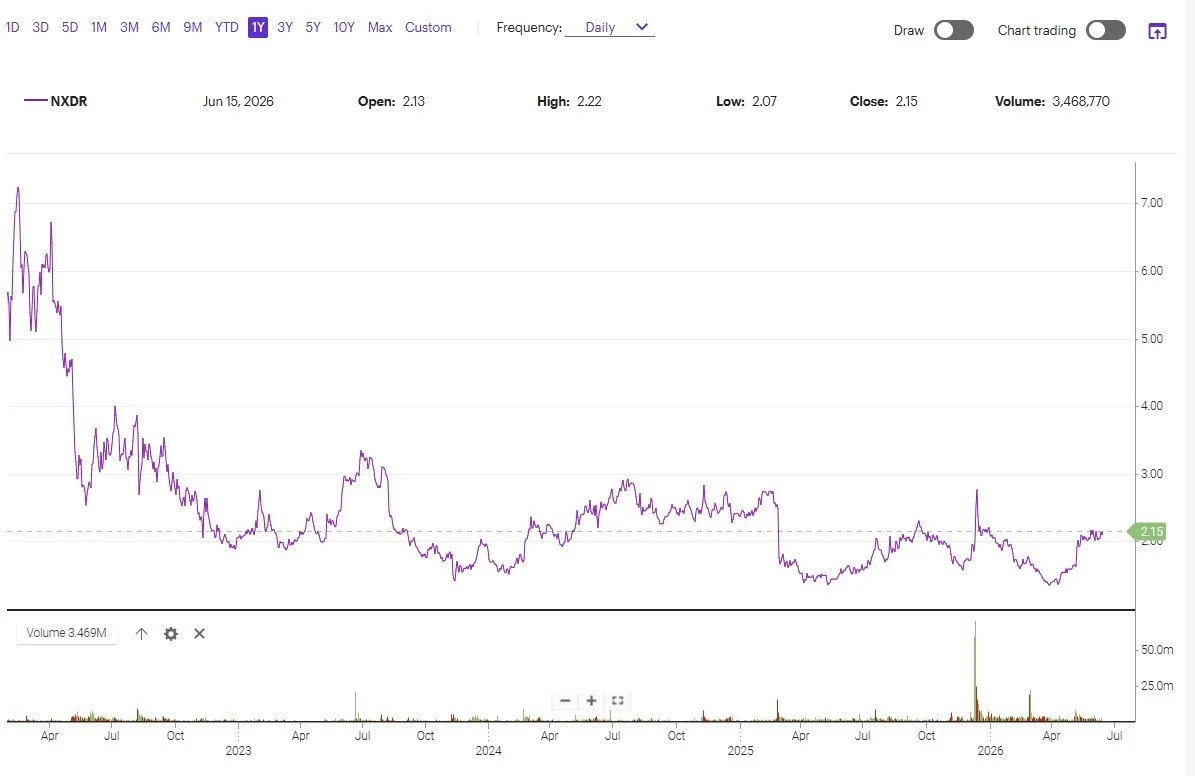
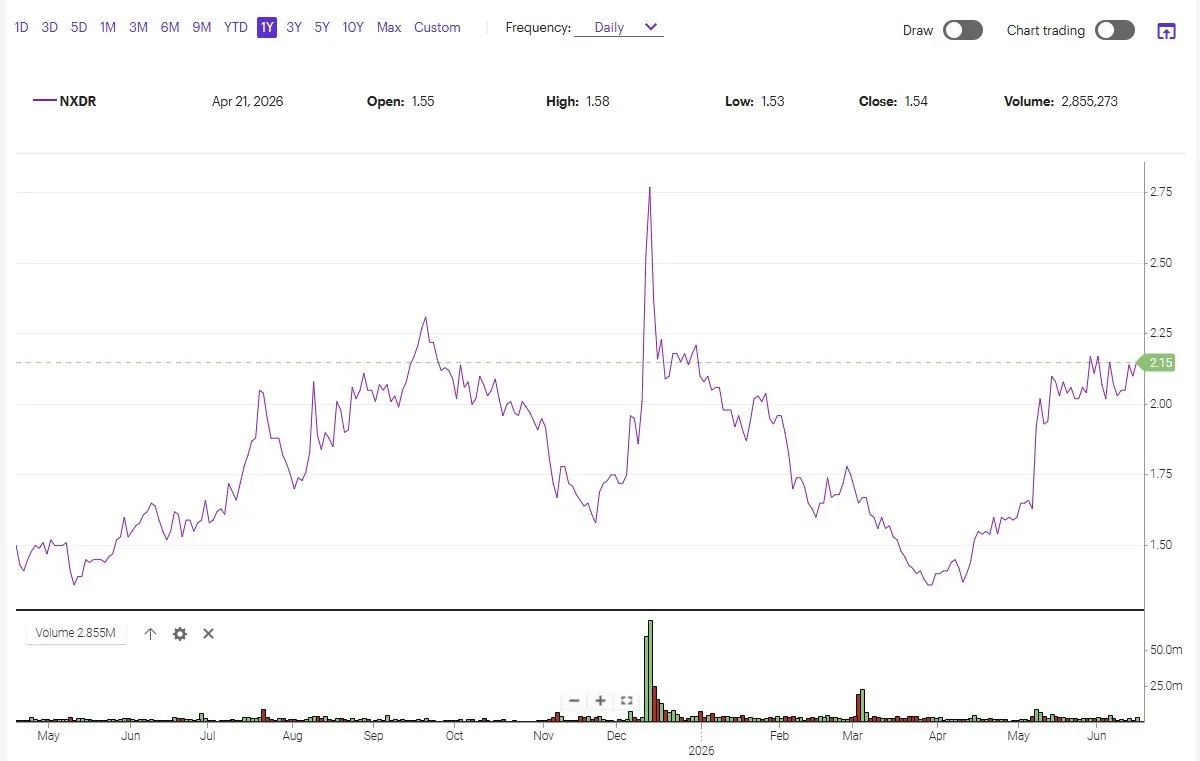
Looking at the 1-year chart of Nextdoor Holdings (NYSE: NXDR), the stock is up roughly $0.60 year over year, rewarding investors who bought during periods of pessimism.
Based on the historical trading patterns I've observed over the past four years, I believe July could bring another round of profit-taking as short-term investors lock in gains.
Kenny Rogers' The Gambler offers timeless investing wisdom: "Know when to hold 'em" and "know when to walk away." For investors, knowing the difference can mean everything.
That brings me to a larger question.
What is CEO Nirav Tolia doing to ensure minority shareholders receive a meaningful return on their investment?
If AI is truly the future of Nextdoor, why aren't users seeing a steady stream of innovative features that strengthen neighbor relationships and make communities more useful?
Instead, the public conversation often revolves around disputes over moderation, neighborhood division, sponsored surveys, and advertising initiatives.
Likewise, the recent publicity campaign featuring appearances on podcasts and interviews may generate headlines, but has it materially changed user engagement, revenue growth, or investor sentiment? The stock chart suggests investors are still waiting for stronger evidence of execution.
Nirav Tolia graduated from Stanford with a degree in English, and he is clearly an effective communicator. But public companies ultimately succeed by delivering measurable results, not compelling narratives. We expect a strategy supported by transparent metrics and product execution.
Some questions I'd like leadership to answer:
Where are the AI features that materially improve the neighbor experience?
How is AI translating into shareholder value?
Why does the platform still appear more divisive than connective?
What measurable milestones should investors expect over the next 12 months?
How will management demonstrate that AI investments are producing tangible financial returns?
As a shareholder, I want Nextdoor to succeed. But success requires more than media appearances and AI talking points. It requires products that users love, communities that thrive, and financial results that reward investors.
These are my personal opinions and observations and should not be considered financial advice. Always perform your own due diligence before making investment decisions.