
The Nextdoor Experiment Continues: When Are Politics Allowed?
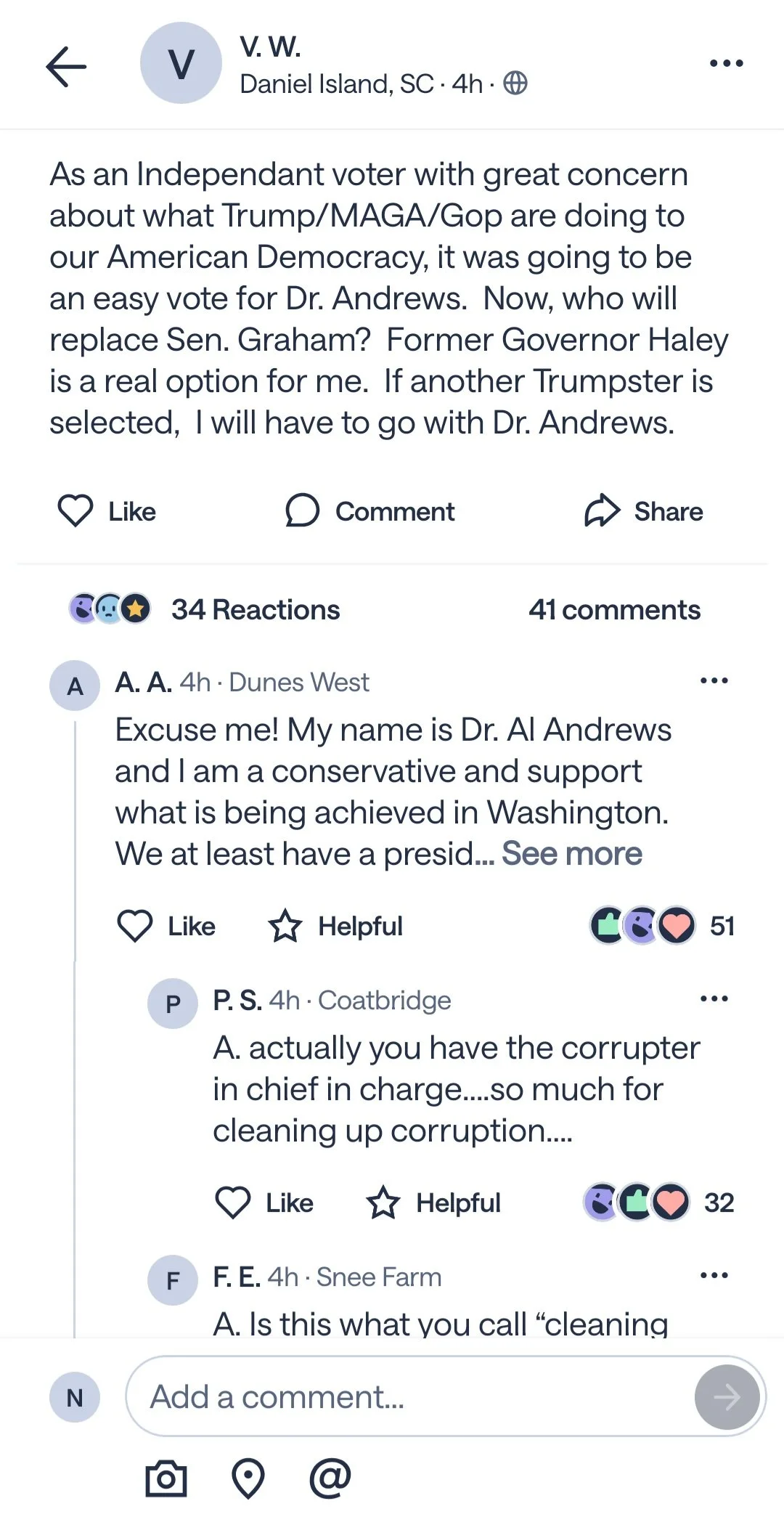
The Nextdoor experiment continues, and I have no clue what's going on with moderation in Mount Pleasant, South Carolina... assuming there are active moderators.
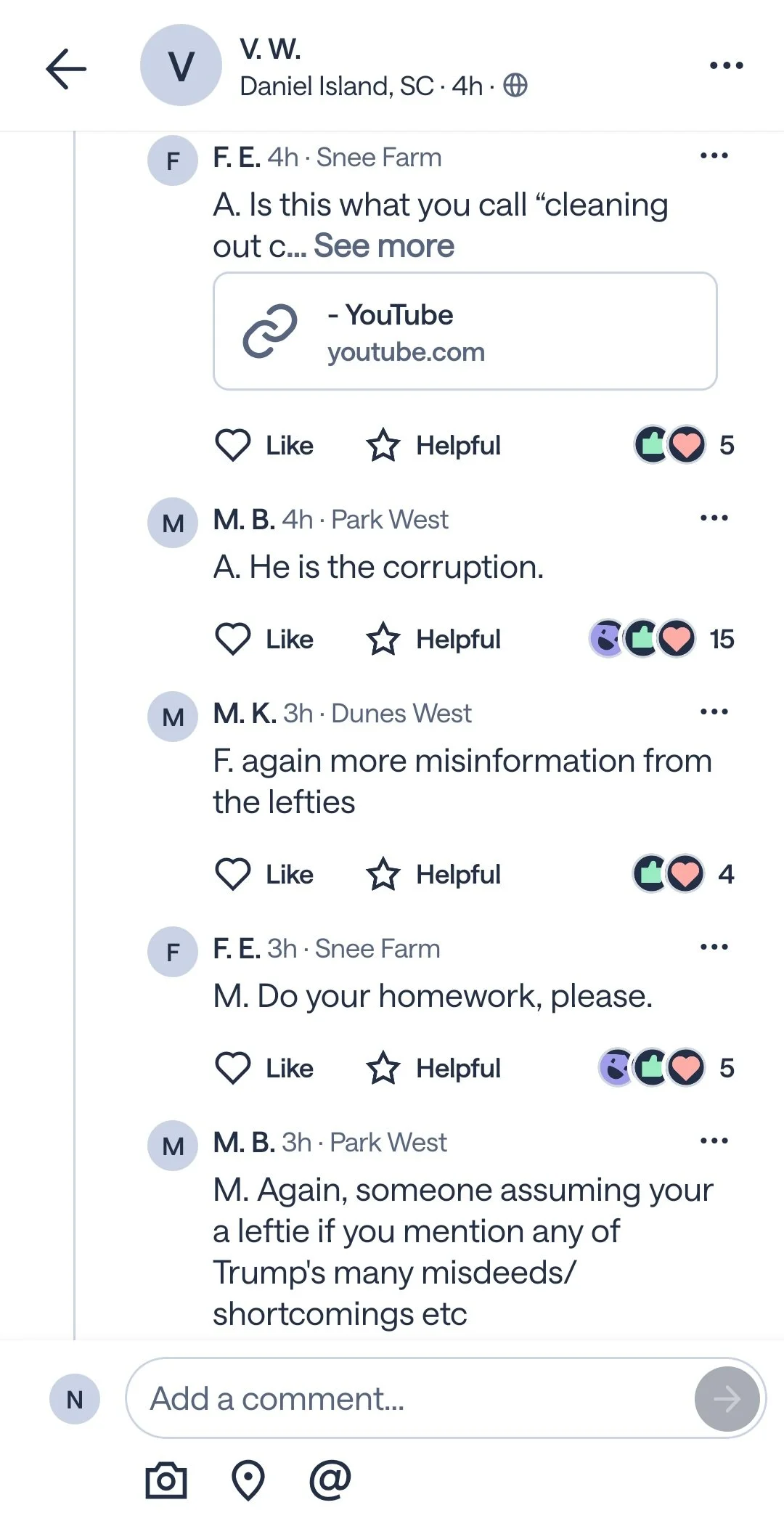
While browsing the platform, I came across a political discussion started by a self-described independent voter discussing MAGA, the future following the death of Senator Lindsey Graham, and what comes next politically. The conversation quickly evolved into a back-and-forth between left- and right-leaning viewpoints.
When I captured the screenshot, the thread had been active for about four hours.
That made me think.
I remember neighbors in my area being suspended over political discussions.
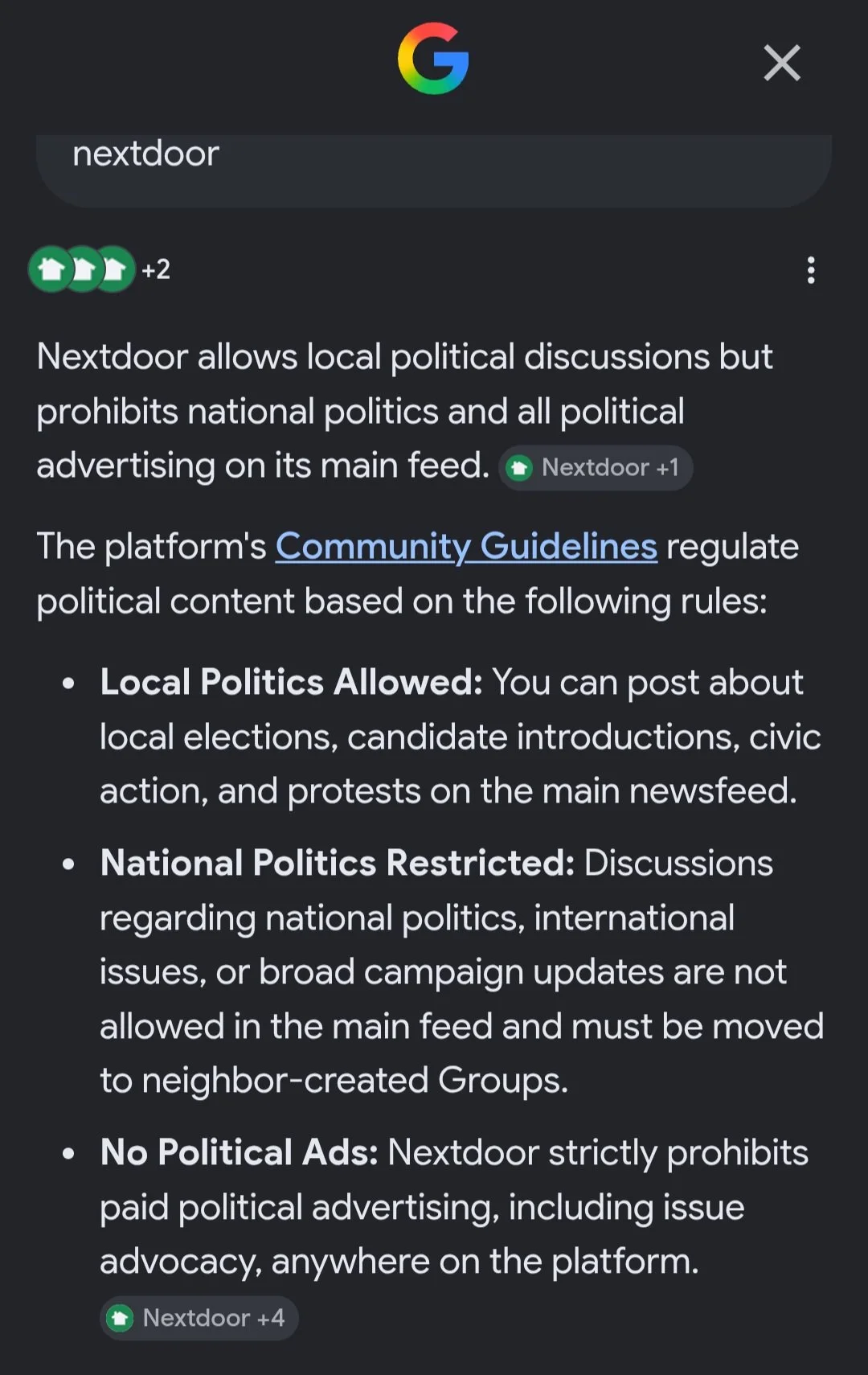
So I did what many people do—I searched online to better understand Nextdoor's policy.
My understanding is that discussions about local politics may be permitted, while national political discussions generally are not.
If that's accurate, then this thread appears to raise questions about how those policies are being applied.
Once again, I find myself asking:
Are there active moderators in my area?
If so, how often are they reviewing content?
Is there any quality assurance process to ensure moderation decisions are consistent?
Why do some political discussions remain visible while others reportedly result in suspensions?
These are questions about consistency, not ideology.
Whether someone is conservative, liberal, independent, or somewhere in between shouldn't matter.
The same standards should apply to everyone.
Sometimes it feels like the unpaid moderators are asleep at the wheel, the guards aren't guarding, and the police aren't policing.
For years, I've heard there are three topics guaranteed to start an argument:
Politics
Religion
Whether the New York Yankees are the greatest franchise in sports history.
(I'm sure Boston Red Sox fans—and probably Los Angeles Dodgers fans, too—have already stopped reading.)
Humor aside, moderation works best when the rules are clear and applied consistently.
If users can't predict how those rules will be enforced, confidence in the platform begins to erode.
Consistency builds trust.
Inconsistency invites questions.
Join the discussion on NielFlamm.com.
#Nextdoor #NXDR #Leadership #ContentModeration #CommunityManagement #TrustAndSafety #Transparency #CorporateGovernance #SocialMedia #CustomerExperience

Day 29: Silence Speaks, But So Does Momentum

Today marks Day 29 since I requested the full methodology and report for a study published by the Nextdoor Communications team, with Jacob Chavis listed as the point of contact.
Twenty-nine days.
No report.
No methodology.
No response.
At this point, the report has become secondary.
The larger issue is communication and accountability.
Over the past several days, I've intentionally made the day count in my graphics larger and more prominent. Why? Because I want to draw attention to what I believe is unacceptable behavior. Every passing day without a response tells part of the story.
What has surprised me over these past 29 days is the response from others.
I've received more reactions, comments, messages, and engagement than I expected. Whether people agree with me or not, they're participating in the conversation.
That tells me this discussion resonates beyond one unanswered email.
It's about expectations.
When a company publishes research and identifies a contact person, it's reasonable to expect that questions receive a response.
When they don't, people notice.
I've said it before, and I'll continue saying it:
We tolerate what we allow.
I won’t allow this behavior to become normal.
This isn't about being difficult.
It's about expecting professionalism, accountability, and follow-through.
As a shareholder, I don't believe those expectations are unreasonable.
The conversation continues, and so does my commitment to documenting this experience.
Ironically, the silence has generated far more attention than a simple reply ever would have.
Join the discussion on NielFlamm.com
The Nextdoor Experiment Continues: When Does a Comment Cross the Line?
The Nextdoor experiment continues.
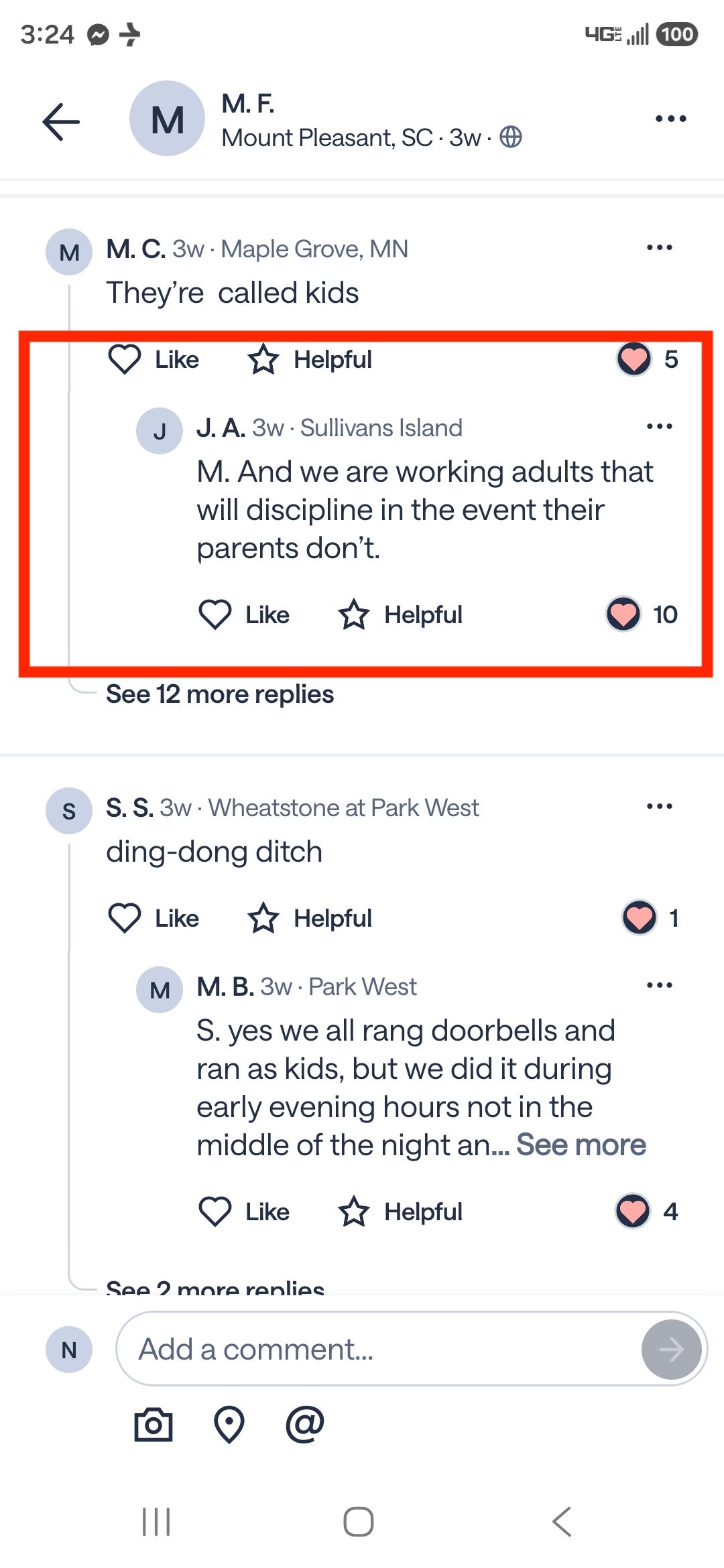
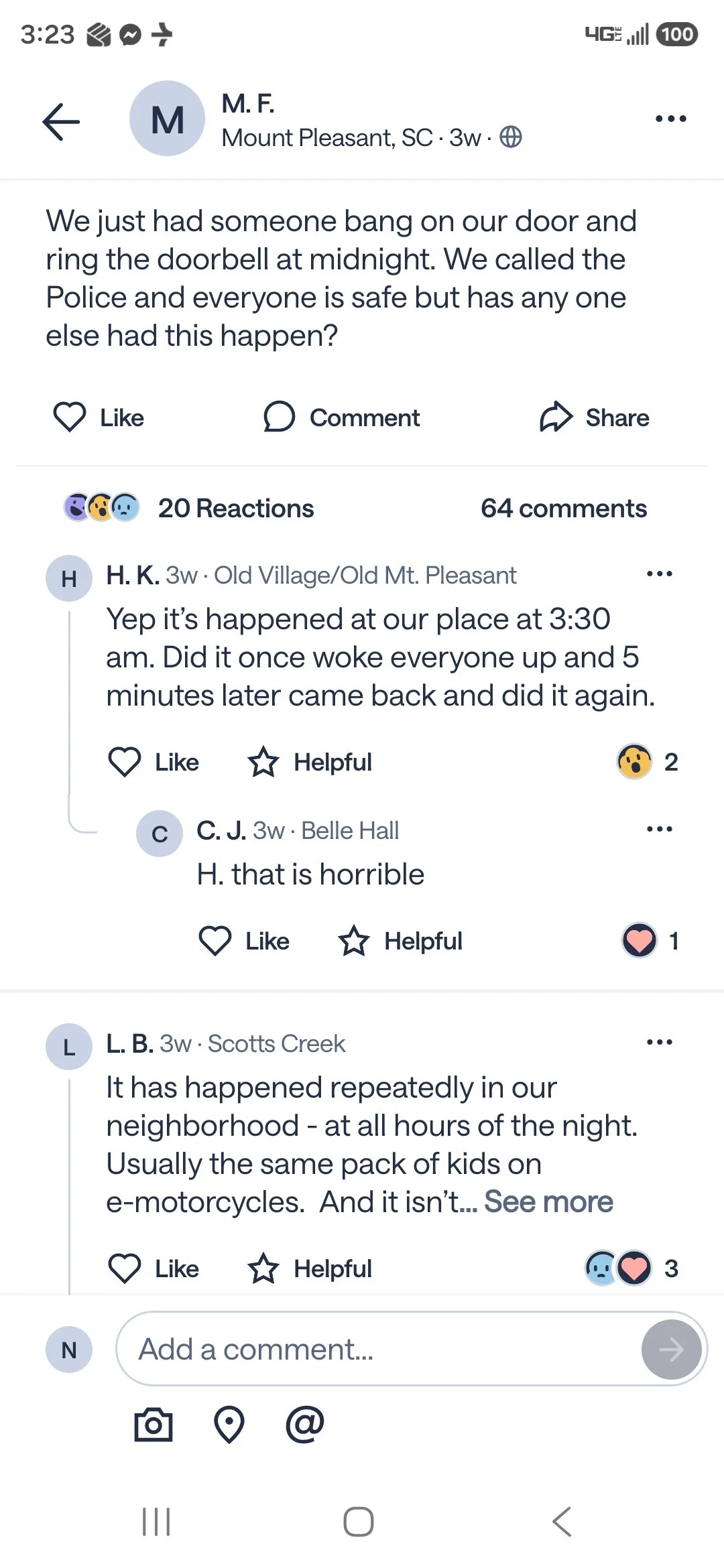
While browsing the platform on Saturday, I came across a neighborhood post that immediately caught my attention.
The original post was about someone whose age is unknown who rang a doorbell and ran away.
Back in my day, we called it “ding dong ditch.”
Annoying? Sure.
A nuisance? Absolutely.
But what really stood out wasn’t the original post.
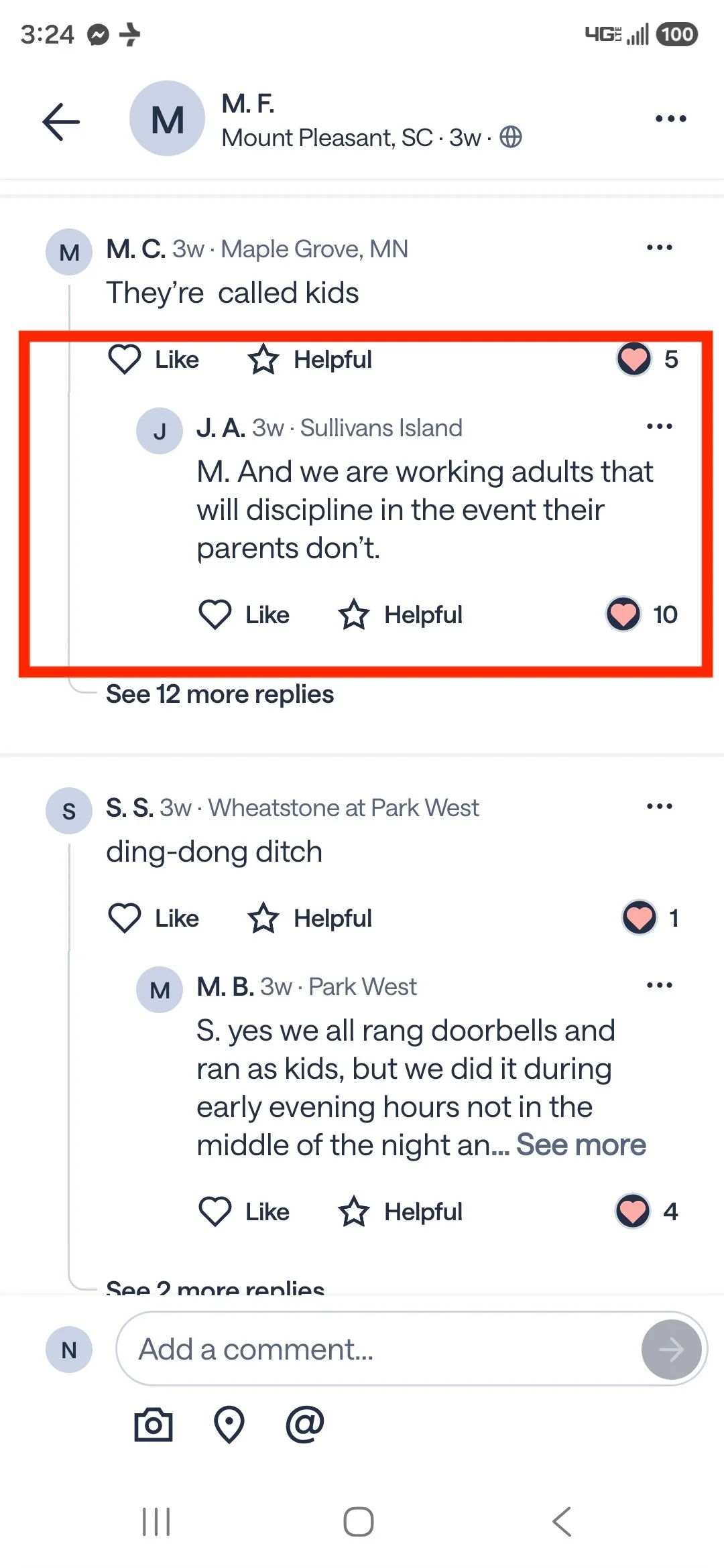
It was one of the comments.
A neighbor commented that if the parents didn’t discipline the child or children, they would.
To me, that’s no longer discussing the issue—it’s a statement that could reasonably be interpreted as a threat.
According to the timestamp, this comment had remained on the platform for approximately three weeks.
That brings me back to a question I’ve been asking repeatedly:
How is this comment allowed to remain while other posts are removed much more quickly?
I don’t know why this particular comment remains visible.
Perhaps no moderator has reviewed it.
Perhaps it has been reviewed and determined not to violate the Community Guidelines.
Perhaps there simply aren’t enough moderators actively reviewing content in this area.
I don’t know.
What I do know is my own experience.
I was suspended for repeatedly posting items I had for sale.
On another occasion, I was suspended for providing negative feedback about the moderation process.
Yet here is a comment that appears to suggest someone will personally discipline another person’s child, and it has remained visible for weeks.
That’s the inconsistency I’m trying to understand.
This isn’t about one comment.
It’s about whether moderation is applied consistently and fairly.
If Nextdoor wants neighbors, advertisers, investors, and shareholders to trust the platform, consistency matters just as much as the written policies.
Otherwise, moderation begins to look less like a standard and more like a perception.
And perceptions shape trust.
Maybe I’m just not one of the “cool kids.”
Or perhaps—borrowing from Mean Girls—the moderators wear pink on Wednesdays.
Either way, consistency should never depend on who’s posting.
Join the discussion on NielFlamm.com.
For Just $7, You Can Pretend to Be a Billionaire 💸🎰
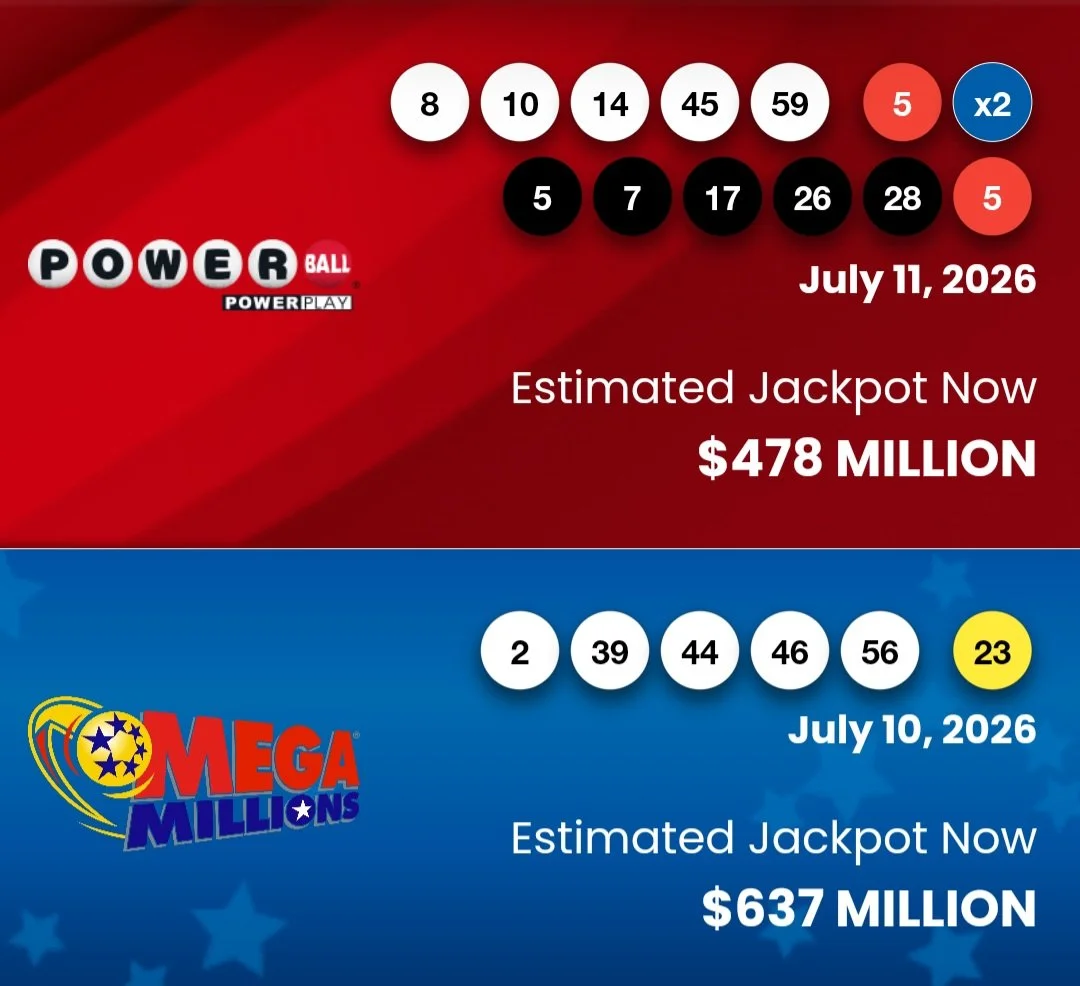
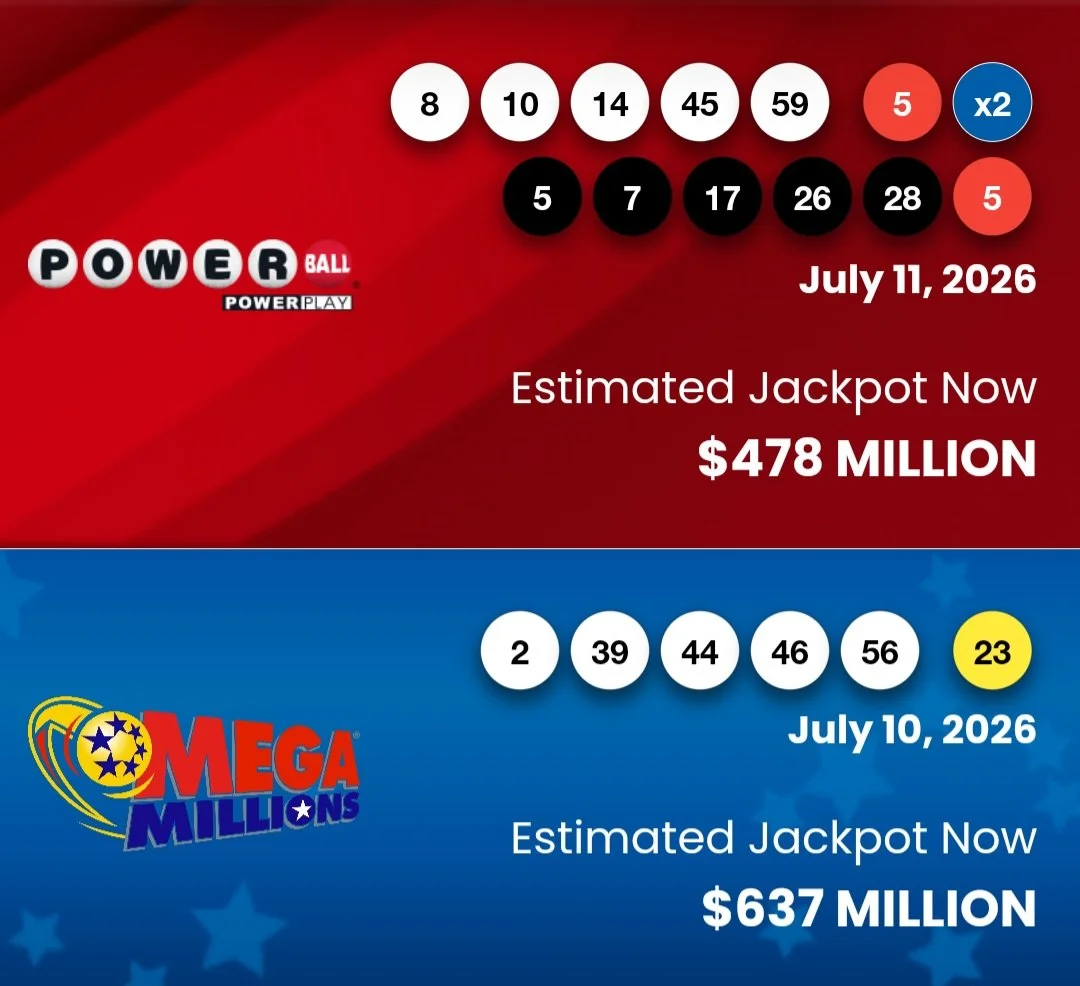
The combined jackpots for Powerball and Mega Millions have now climbed to over $1.1 BILLION.
Powerball (Monday): $476 million
Mega Millions (Tuesday): $637 million
The grand total to buy one ticket for each drawing? Just $7.
For the price of a fancy coffee, you can spend the next couple of days deciding whether your first purchase is a beach house, a sports car, or finally replacing that thing you’ve been saying you’ll replace for years.
The odds? Let’s just say they’re “character building.”
But if one of those tickets turns out to be the winner, remember who reminded you. A generous “thank you” contribution would be greatly appreciated by the Department of Niel’s Lottery Awareness Program.
And if you’re interested in putting together a lottery pool, let me know. We can increase our odds from “almost impossible” to… well… “slightly less almost impossible.”
Good luck, everyone!

Day 28: Four Full Weeks Without a Response

Today marks Day 28.
Yes, Days 27 and 28 happened to fall on a Saturday and Sunday, but the bigger picture remains the same.
It has now been four full weeks since I requested the methodology and report for a study published by the Nextdoor Communications team that listed Jacob Chavis as the contact.
No report.
No methodology.
No acknowledgment.
Realistically, this should have taken a few business days at most. Even if the report couldn’t be shared, a one-line response explaining why would have demonstrated professionalism and respect.
Instead, silence has become the response.
I also remember keeping track of CEO Nirav Tolia’s public engagement. There was a stretch of more than a month—from around Thanksgiving until New Year’s Day—with little public communication. Today, much of the messaging centers around AI, transformation, and the future.
AI is important.
But AI isn’t a substitute for accountability.
As a shareholder, I’m more interested in hearing why leadership believes the company’s performance justifies executive compensation.
After reviewing the SEC filings, I found myself asking:
What is the rationale for awarding executive bonuses while the company continues to report losses?
Executive compensation should align with the creation of long-term shareholder value.
One metric often highlighted is Adjusted EBITDA.
Adjusted EBITDA can be a useful operational measure because it removes items such as interest expense, income taxes, depreciation, amortization, stock-based compensation, restructuring charges, and certain one-time or non-recurring expenses.
However, it is not the same as profitability or cash generation.
It does not fully reflect:
Interest expense on debt.
Income taxes.
Capital expenditures needed to operate and grow the business.
Depreciation and amortization of assets.
Stock-based compensation that dilutes shareholders.
Changes in working capital.
Free cash flow available to the business.
That’s why I prefer looking at the complete financial picture rather than one adjusted metric.
As investors, we should ask:
Are executives being rewarded for building lasting shareholder value?
Or are they being rewarded for meeting adjusted targets that don’t tell the entire financial story?
Four weeks without a response, and executive incentives tied to adjusted performance metrics leave me asking more questions than I receive answers.
Leadership is measured by results.
Communication is part of those results.
Join the discussion on NielFlamm.com