
The Hinge Experiment: Saturday in Columbia and Meeting Actual People!
Another Saturday, another trip to Columbia, South Carolina. At this point, I should probably start looking into frequent-driver miles. 😂
After visiting Mom, I'm heading to Columbia to hang out with Airica at a birthday party. Sounds simple enough, right?
Well, there's one small detail that makes this feel a little different.
I'm being introduced to people. Actual people!
Wait, We're Meeting People Now?
When I started this Hinge experiment, I figured I'd meet someone, go on a few dates, have some interesting conversations, and maybe find a restaurant or two worth recommending.
I didn't necessarily plan on becoming a regular on the Columbia social scene.
But here I am, getting ready to attend a birthday party with Airica, meeting people in her world, and trying not to overthink what any of it means.
I said trying.
I'm not analyzing this. Or, at least, I'm trying not to analyze it. Unfortunately, the committee in my head has apparently called an emergency meeting, and nobody remembered to send me the agenda.
What does it mean when someone invites you to a birthday party? Am I just there to enjoy the party? Am I being introduced to people because we're spending time together? Is this simply another opportunity for us to get to know each other?
The possibilities are endless, and my brain wants to explore every single one.
Meanwhile, the sensible part of me is saying, "Niel, just go to the party!"
Thank you, sensible part of my brain. I'll try to get you a promotion.
Four O'Clock to Six O'Clock... And Then?
The birthday party runs from 4 p.m. to 6 p.m.
What happens afterward? I have absolutely no idea.
Maybe we'll grab something to eat. Maybe we'll spend more time together. Maybe we'll say our goodbyes and head home. I'm not going to pretend I know how the rest of the day will unfold.
And that's something I'm working on: letting things happen without trying to write the next five chapters in my head before I've finished the current one.
I'm 54 years old. I've lived enough life to know that not everything comes with a roadmap. Sometimes you just have to show up, participate, and see what happens.
Apparently, learning that lesson through online dating is part of my continuing education.
Where's my certificate?
The Part I'm Grateful For
Here's what I do know.
I'm glad I get to spend time with Airica. I'm grateful for the opportunity to learn more about her, share experiences, and meet some of the people in her life.
That matters to me.
I'm also learning that getting to know someone isn't limited to the conversations you two have over dinner. Sometimes it's seeing how they interact with friends, sharing a social experience, and getting a little glimpse into their world.
And yes, there's something else I'm looking forward to.
Airica gives awesome hugs.
There. I said it.
I'm not going to overanalyze the hugs. I'm not going to develop a spreadsheet to measure hug quality, duration, or emotional impact.
Still, given my professional background, I could probably create a performance evaluation form.
Hug quality: Exceeds expectations.
Repeatability: Highly recommended.
Overall satisfaction: Five stars.
Okay, maybe I shouldn't be allowed to manage this experiment without adult supervision.
But seriously, those hugs make me smile, and I'm looking forward to another one.
Letting the Hinge Experiment Happen
I've written quite a bit about dating, the awkward moments, the funny experiences, and the uncertainty that comes with getting to know someone new.
This experience with Airica has been different in ways I'm still figuring out. We've shared meals, taken trips, laughed together, and now I'm meeting people in her life.
I'm not predicting where this is going. I don't know what the future holds, and I don't need to have every answer today.
My goal is to be present, enjoy the experience, and give us both the opportunity to learn more about each other.
Will I succeed at not overthinking everything?
Let's be realistic. I'm going to overthink at least some of it. I'm me.
But I'm trying.
Today, I'm going to visit Mom, drive to Columbia, attend a birthday party, meet some actual people, spend time with Airica, and hopefully get one of those awesome hugs.
That's a pretty good Saturday if you ask me.
If my brain insists on another emergency meeting, I'll remind it the party ends at 6 p.m. There's plenty of time to overanalyze things tomorrow.
For now, I'm just glad to be invited along for the ride.
The Hinge Experiment continues. And apparently, the next phase involves meeting actual human beings. Wish me luck! 😂
From Carrying Groceries Home to Fighting for Independence: Watching Mom Change
I'm at the skilled nursing facility, spending a bit of time with Mom. We're outside right now, enjoying some fresh air and talking.
This morning reinforced a decision I made a long time ago: I was right not to pursue a career in healthcare. I don't think I have the personality for it.
And that's not a criticism of people who work in healthcare. Quite the opposite. Watching what the CNAs, nurses, and physical therapists do has given me a greater appreciation for the patience required to do their jobs.
Because it’s an easy patient.
She's difficult. She's demanding. And when she wants something, she makes sure everyone knows it.
I'm pretty much the opposite.
"I Want"
While talking with Mom, I noticed how often she uses those two words: "I want."
She wants to get out of the day room. She doesn't want to spend her time sitting there. She wants to go to the physical therapy gym.
I understand it.
The day room sounds like a prison to her. She's in a facility where other people have schedules, where she depends on staff to help her move around, and where she can't simply get up and do whatever she wants whenever she wants.
And when you think about it, that's a significant loss of independence.
I want things, too. We all do. The difference is that I'm generally more inclined to work around circumstances rather than keep pushing until I get what I want.
Mom has a different approach.
Sometimes I get frustrated with her demands. Then I have to remind myself that she's the one living there. She has to spend her days in that environment. What feels like another complaint to me might represent something much bigger to her.
That doesn't mean we can meet every demand immediately. The staff has other patients to care for, and practical limitations limit what can happen.
But I can understand why Mom wants more control over her day.
The Woman I Remember
What's particularly difficult is remembering the woman Mom used to be.
I remember seeing her carry groceries from Post Avenue in Westbury, New York, to our house. It was only three or four blocks, but she made that trip with the groceries she had purchased for our family.
That was the Mom I knew.
She went out, did what needed to be done, and brought the groceries home.
Today, she's in a skilled nursing facility. Her mobility is limited; she needs help, and she wants to get to the physical therapy gym to get stronger.
It's sad to see that change.
I'm not suggesting that the woman I remember has disappeared. She's still Mom. She still has opinions, preferences, and a very clear idea of what she wants.
But the circumstances of her life have changed dramatically.
The woman who once carried groceries home now has to depend on other people to help her get where she wants to go.
And I imagine that's frustrating for her in ways I can't fully appreciate.

A New Appreciation for Healthcare Workers
This is also why I know I made the right decision not to pursue a healthcare career.
I can help Mom. I can visit, advocate for her, ask questions, and try to help her figure out the next chapter of her life.
But can I handle the demands of patient care all day, every day? That's a different story.
Healthcare workers have to balance compassion with practical realities. They need patience, resilience, and the ability to deal with people who may be frightened, frustrated, demanding, or simply unhappy with their circumstances.
I don't think I could do that job well enough to make it my career.
I have limits, and recognizing them matters.
It also makes me appreciate the people who show up and do this work every day.
What Comes Next?
Mom wants to leave the skilled nursing facility and move into assisted living. I'm continuing to explore options and figure out what might work for her.
But beneath all the complaints about the day room, the food, and getting to physical therapy, I want to see past something.
Mom wants to’.
Mom wants to have some control over her life again.
I want things, too. I want her to be safe. I want her to have the opportunity to regain as much independence as possible. And I want to help her find a living situation where she can have a better quality of life.
Those goals don't always align with what she wants in the moment, and there will undoubtedly be harder conversations.
For now, we're outside together.
I'm listening, thinking, and writing.
And I'm remembering those trips from the grocery store on Post Avenue to our house in Westbury.
Life can change in ways none of us anticipate. Sometimes the hardest part isn't figuring out what to do next. It's accepting how much has changed while still trying to help someone move forward.
That's where I am today: sitting outside with Mom, remembering who she was, seeing who she is now, and hoping for what's possible next.

Five Days Until Radiance of the Seas 🌙🌊

Only five days to go! I’m looking forward to being out on the ocean, watching the waves roll by, then sitting on the balcony at night and gazing up at the stars or moon. Those quiet moments at sea are a big part of what makes a cruise special.
Mom is still in a skilled nursing facility. I hope things stay steady from embarkation day until I return. My brother is nearby and can help if needed, and I’ll be reachable while I’m away.
The countdown is on for the next cruise, too: 83 days until MSC Seaside sails from Miami on January 15. I’ll be heading to the Bahamas for what I think will be my fourth visit, including a stop at MSC’s private island, Ocean Cay Marine Reserve. I’ve read and watched videos saying it’s phenomenal, and I’m excited to see it for myself.
MSC Seaside is supposed to be gorgeous. Reviews of the food and service seem mixed, so I’m curious to experience it firsthand. Two cruises to look forward to—one day at a time. 🚢
Please Support Tracey and Her Family
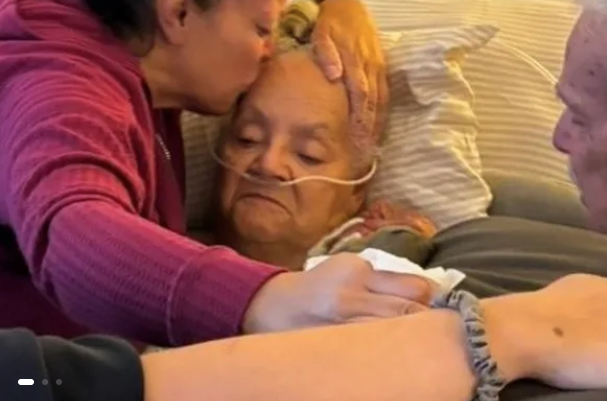
I’m sharing this fundraiser for Tracey Rivera, a sister of Delta Phi Epsilon (D Phi E) from Hunter College, part of the City University of New York system.
Tracey is raising funds on behalf of her family for their beloved Aunt Miriam, who is terminally ill and in her final days. I hope you’ll join me in keeping Tracey and her family in your thoughts and, if you’re able, offering support. A donation or a simple share can mean a lot during such a difficult time.
You can find the fundraiser here: https://gofund.me/4bdb58234
Three Emails, Three Red Flags: Free Medical Kits, $40,000 Loans and a $300K Job?
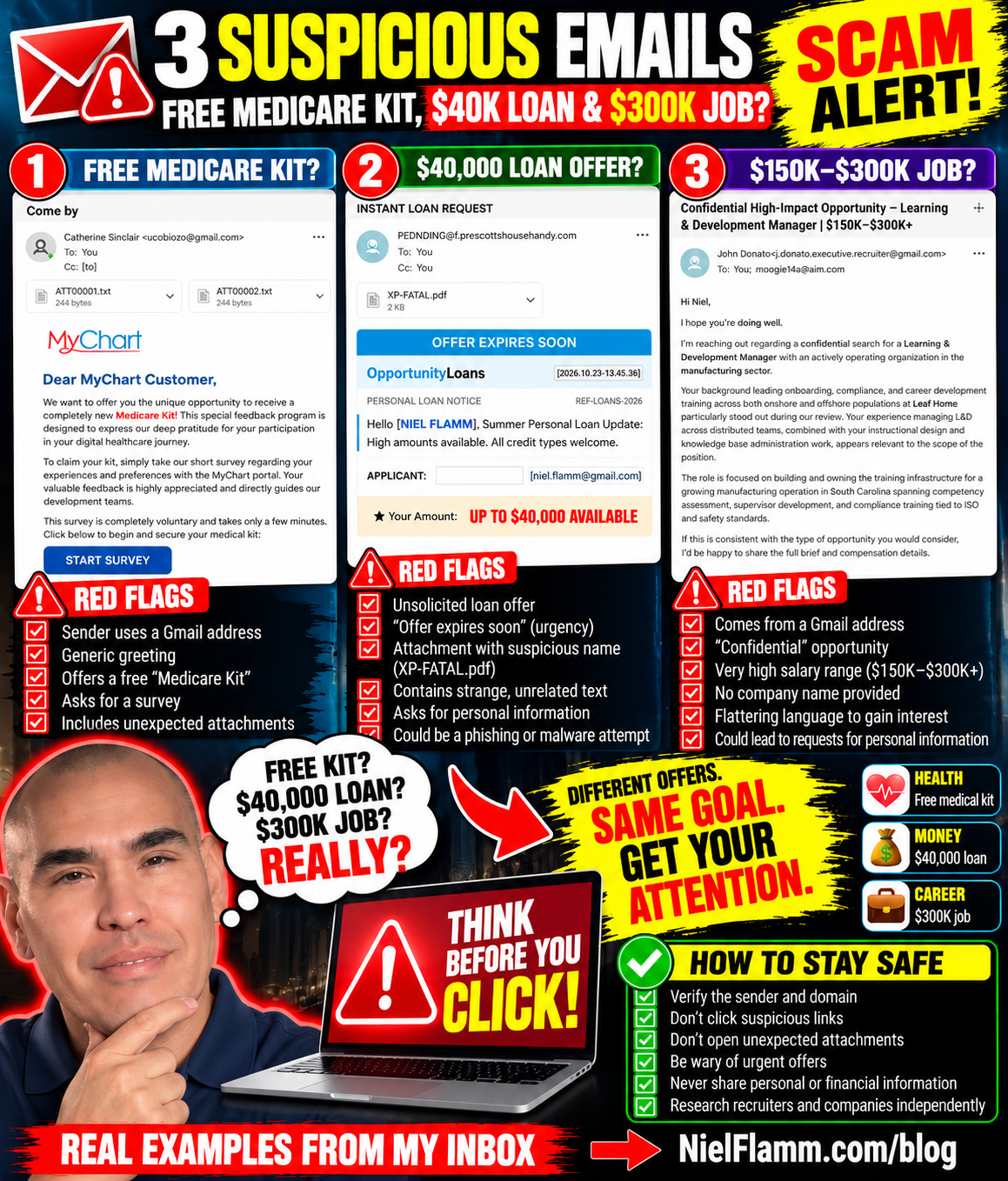
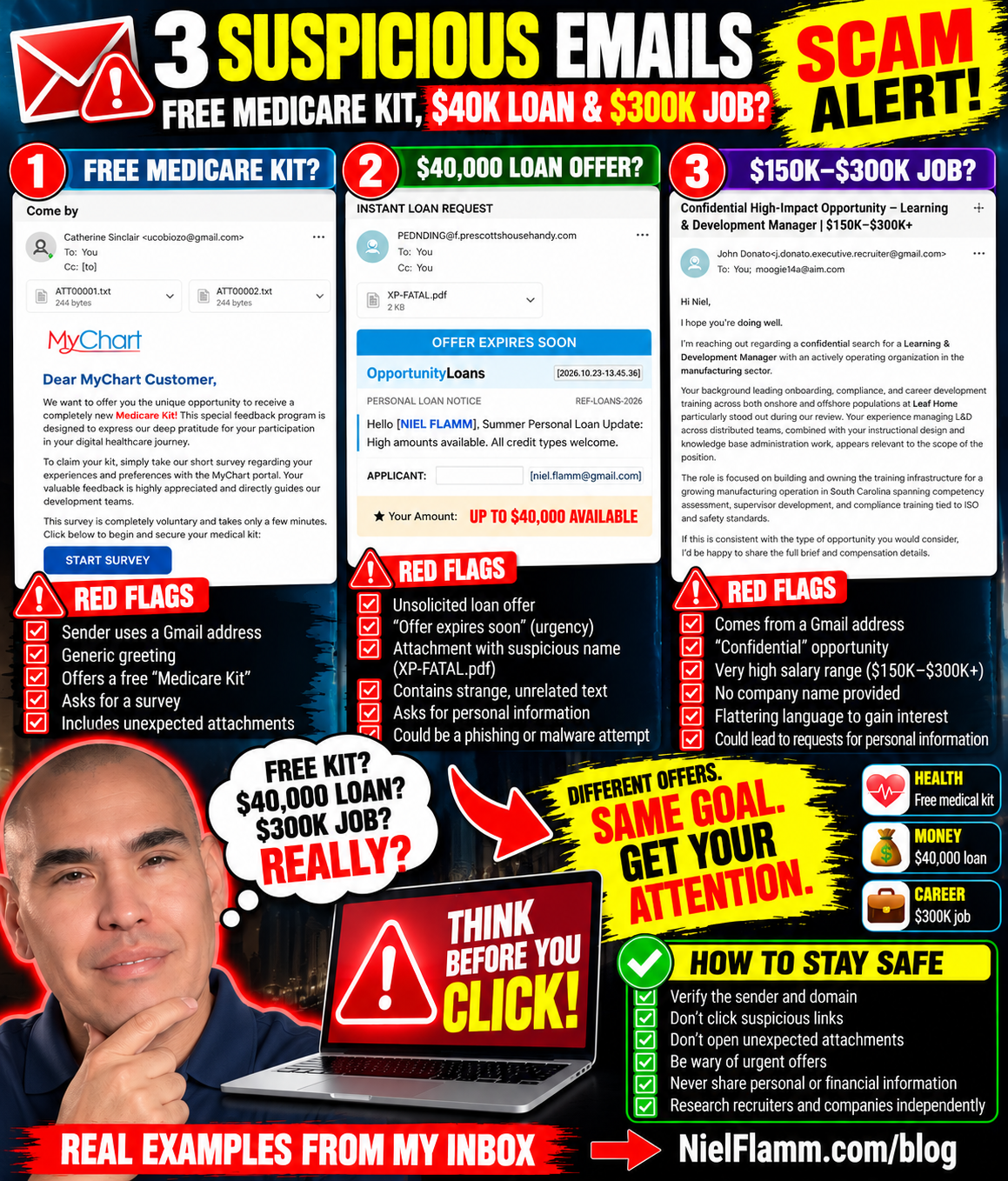
My inbox has been busy again. Apparently, the internet thinks I'm either entitled to a free medical kit, desperately need a $40,000 personal loan, or am the perfect candidate for a $300,000 Learning & Development job.
It's nice to be so popular.
One problem: these emails raise some serious questions.
Let's take a look at three messages that landed in my inbox on October 22 and 23, 2026.
1. A Free Medicare Kit From “MyChart”?
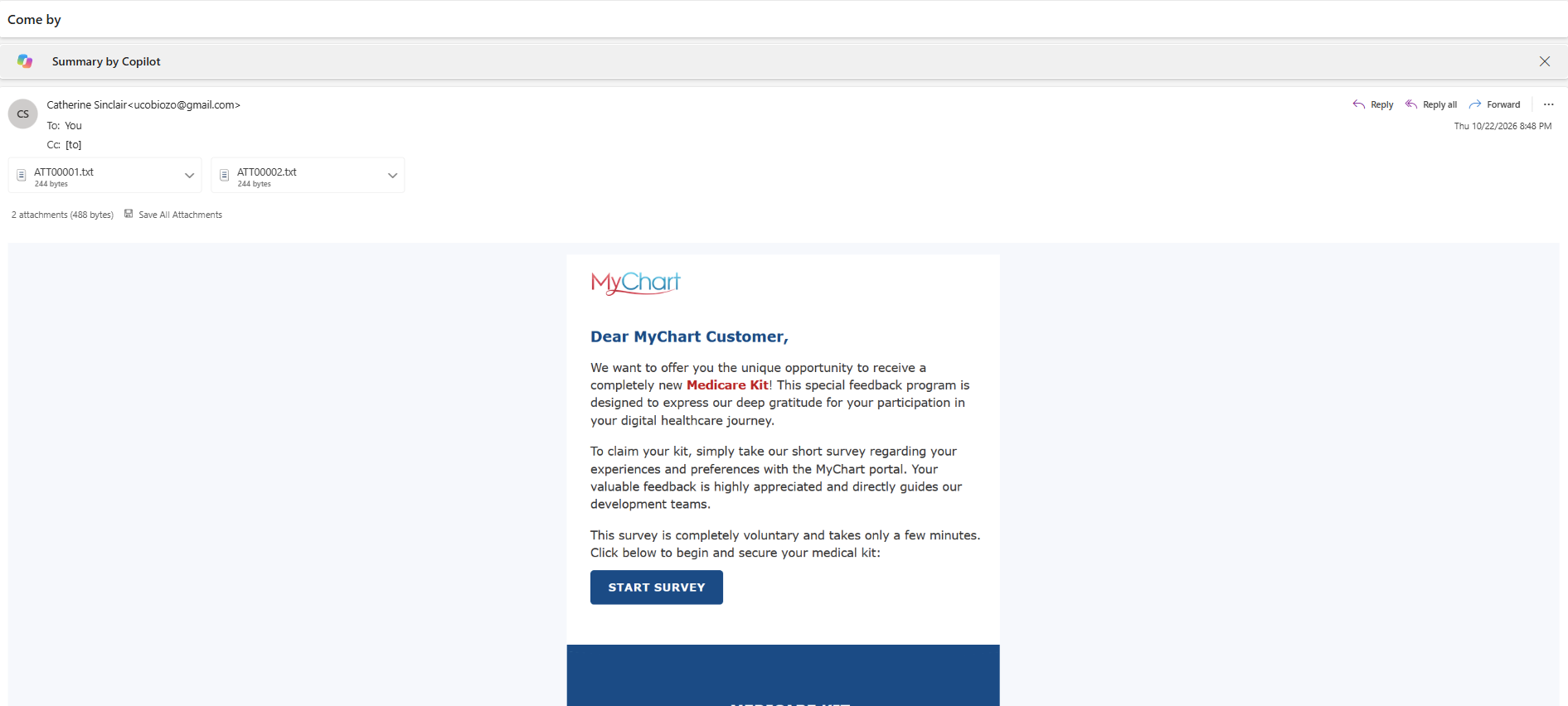
Email subject: “Come by”
The first email came from an address listed as Catherine Sinclair and used a Gmail address. It included two tiny text attachments and an image styled to look like a MyChart message.
The message addressed me as a “MyChart Customer” and offered a supposedly new “Medicare Kit” in exchange for completing a short survey about my MyChart portal experience.
How generous!
A free medical kit just for answering a few questions? What could go wrong?
Well, a few things caught my attention:
The sender's Gmail address doesn't establish any connection to MyChart or a healthcare provider.
The email uses a generic greeting rather than identifying a specific healthcare organization.
The offer combines a medical-related brand with a gift and a survey link.
The email includes unexpected attachments.
I can't establish from this screenshot alone who sent the message or what the attachments contain. But I certainly wouldn't click the survey button or open unexpected files to find out.
If a healthcare portal genuinely offers a survey or patient benefit, I'll check the official portal or contact my healthcare provider using contact details I already trust.
My medical information is not a prize to be claimed through a mystery email.
2. An “Instant Loan” Offering Up to $40,000
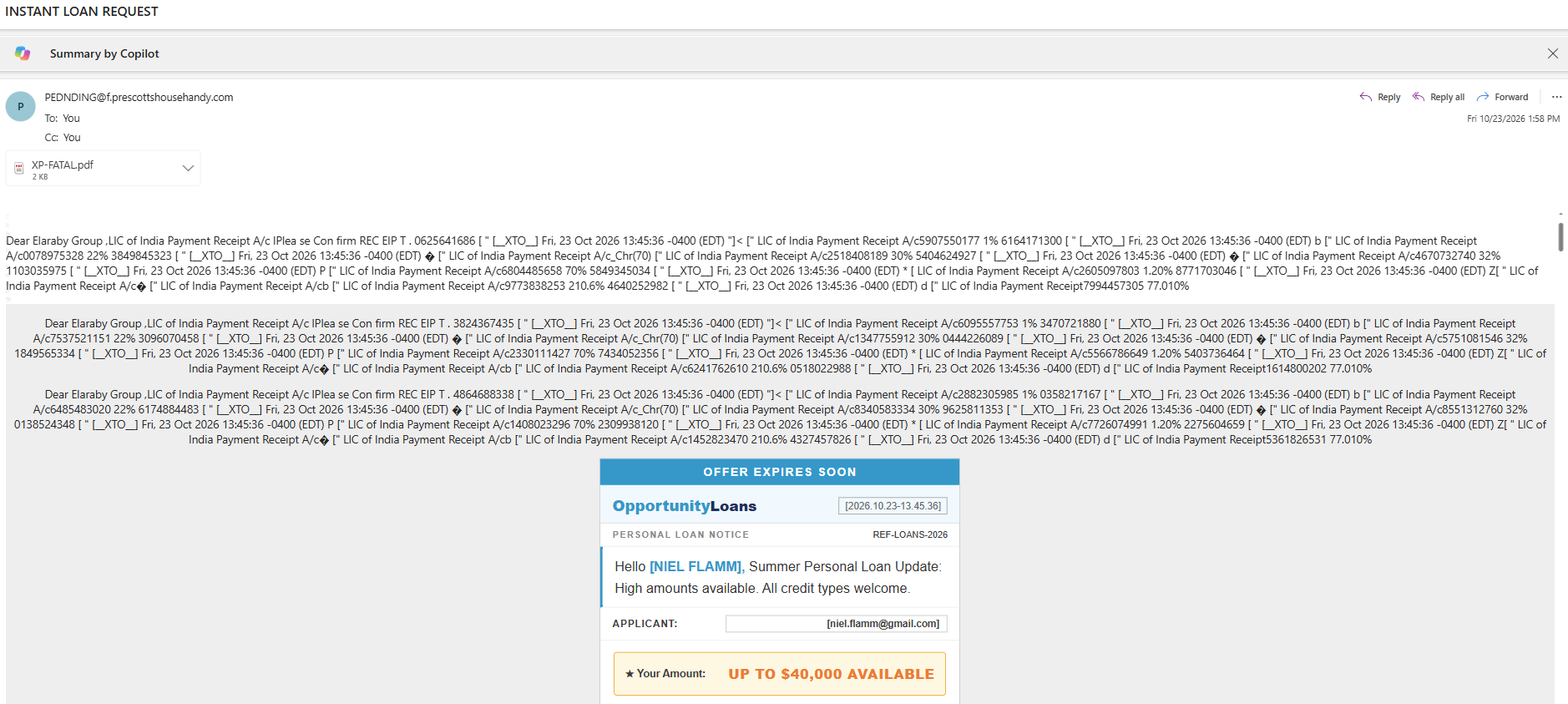
Email subject: “INSTANT LOAN REQUEST”
The second email takes a different approach. This one appears to be about money—specifically, money someone supposedly wants to lend me.
The message contains a banner that says “OFFER EXPIRES SOON” and promotes something called OpportunityLoans. It addresses me by name and advertises personal loans of up to $40,000.
The email also includes a PDF attachment named XP-FATAL.pdf.
Wait a minute. Someone I don't recognize wants to offer me up to $40,000, and there's a PDF attachment with a filename that looks like it wandered out of a computer-security nightmare?
I think I'll pass.
Here are the red flags I noticed:
Urgency: “Offer expires soon” encourages a quick decision.
Unsolicited credit offer: I didn't request this loan information.
Unusual formatting: The message contains a jumble of apparent payment-receipt text that has little to do with the loan offer.
Unexpected attachment: There's no reason for me to open a suspicious PDF just because an email tells me money is available.
Personal information: The email displays identifying information, which can make a message feel more convincing without proving it's legitimate.
I can't determine from the screenshot alone whether this is an outright scam, an unsolicited marketing message, or something else. But I wouldn't use the email's links or contact details to investigate it.
If I ever need a personal loan, I'll research lenders independently, check their credentials, and carefully review the terms. I won’t let a countdown banner drive my financial decisions.
A loan offer isn't free money. And “up to $40,000” doesn't mean I'm approved for $40,000.
3. A $150K–$300K Learning & Development Job?
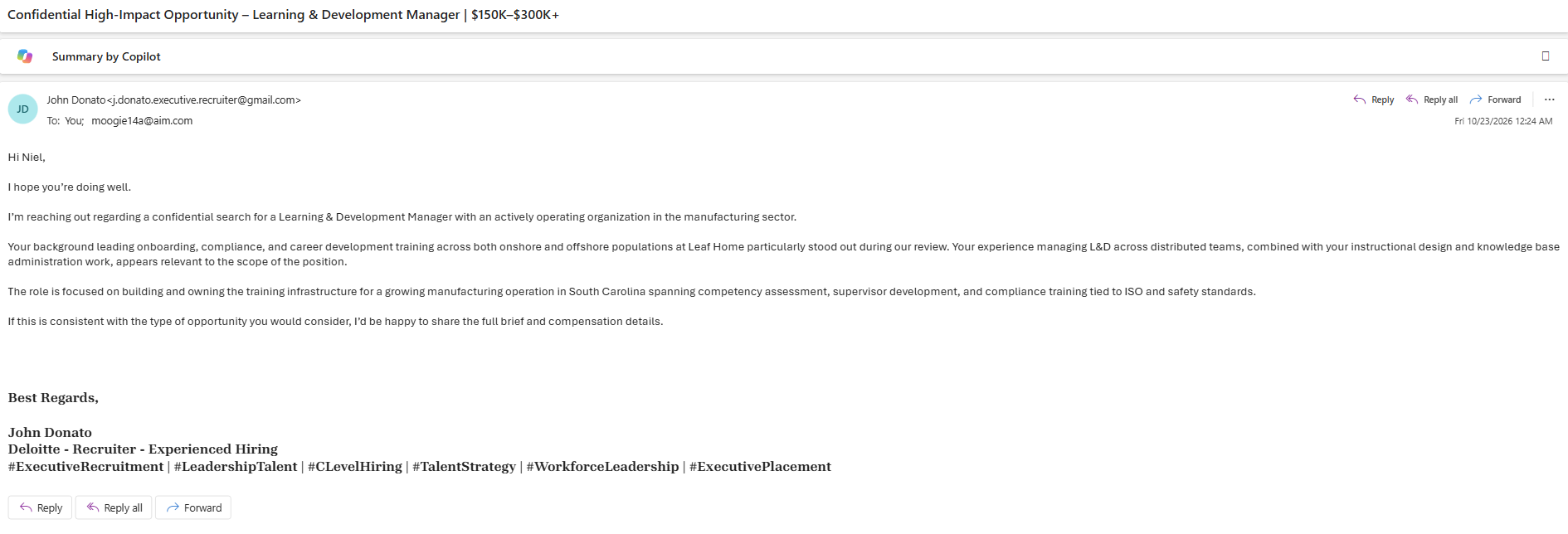
Email subject: “Confidential High-Impact Opportunity – Learning & Development Manager | $150K–$300K+”
Now this one caught my professional eye.
The email came from someone named John Donato, using a Gmail address that includes the words “executive recruiter.”
The sender claims to be contacting me about a confidential search for a Learning & Development Manager at a manufacturing organization in South Carolina.
The message references my professional background, including onboarding, compliance, career development training, instructional design, and knowledge base work. Those are relevant to my career experience.
And then comes the compensation range:
$150,000–$300,000+.
Well, hello there!
After all, who wouldn't want to hear about a potential six-figure opportunity?
The sender says my experience stood out during a review and offers to share the full brief and compensation details if I’d consider the opportunity.
Unlike the other two emails, this one doesn't immediately ask me to pay a fee or open an attachment. The message itself is reasonably polished and references aspects of my professional background.
But that doesn't prove the recruiter, job, or opportunity is legitimate.
Here's what I'd want to verify:
The recruiter's identity: Does this person have a verifiable professional presence and a credible recruiting history?
The company: Which manufacturing organization is hiring? Why isn't it named?
The job: Is there a genuine position matching the description?
The compensation: Is the advertised range supported by a real employer and a defined role?
The next step: Will the recruiter ask for personal information, identification documents, banking details, or money before providing verifiable information?
Using a Gmail address isn't proof of fraud. Independent recruiters sometimes use noncorporate email accounts. But a high salary, flattering language, and references to my experience don’t prove legitimacy either.
The broader issue is that fake recruiting approaches can collect personal information, direct candidates to malicious links, or eventually introduce fraudulent payments and fees.
So I'll treat this as unverified until I can establish who is contacting me and which organization is hiring.
If the opportunity is real, reasonable verification shouldn't ruin it.

Three Emails, Three Different Hooks
What's interesting about these messages is how differently they try to attract attention.
The healthcare hook
A supposedly free Medicare Kit in exchange for survey participation.
The temptation: a free benefit tied to a familiar healthcare name.
The money hook
A supposedly available personal loan of up to $40,000, with an offer that expires soon.
The temptation: easy access to money and FOMO.
The career hook
A confidential Learning & Development role with a potential salary of $150,000–$300,000+.
The temptation: professional recognition and a potentially life-changing opportunity.
These messages target different motivations: health, financial need, and career ambition.
That's why I don't judge an email solely by how professional it looks. A polished message can still be misleading, and a legitimate-looking logo doesn't prove that the sender represents the organization.
What I'm Doing Instead
I don't click suspicious links, open unexpected attachments, or provide sensitive information just because an email promises something appealing.
My approach is straightforward:
Verify independently. Visit the official website or app yourself instead of using a link in the message.
Check the sender. Look beyond the display name and examine the actual email address and domain.
Be wary of urgency. “Offer expires soon” is a reason to slow down, not speed up.
Protect personal information. Don't provide Social Security numbers, banking details, passwords, or identity documents to an unverified sender.
Research recruiters and employers. Confirm the person, company, and job opening independently before sharing sensitive information.
Don't open suspicious attachments. An attachment doesn't become safe just because the email has a convincing explanation.
If you've already clicked something or shared information, don't panic. The appropriate next steps depend on what happened, but they may include changing compromised passwords, contacting your financial institution, or reporting the message.
My Inbox Is Apparently a Career Fair, a Bank and a Healthcare Portal
I started with three emails and ended up with three very different offers.
A free medical kit.
A loan of up to $40,000.
A job that might pay $300,000.
I appreciate the variety. My inbox apparently believes in diversification.
But I don't need to claim that every suspicious message is definitely a scam to recognize that each one deserves scrutiny.
The healthcare offer needs verification. The loan offer needs verification. The recruiter needs verification.
And none of them gets a free pass just because the offer sounds good.
Have you received an email offering a gift, a too-good-to-be-true loan, or an unbelievable job opportunity? I'd like to hear about it.
Send your screenshots and experiences to niel@nielflamm.com. Please remove sensitive personal, financial, and account information before sending them.
I'll keep documenting what comes into my inbox, because the more we recognize these tactics, the less likely we are to get caught off guard.
Remember: Verify first. Click later—if at all.