
Godspeed, Brooke Eby: A Spirit ALS Couldn’t Take
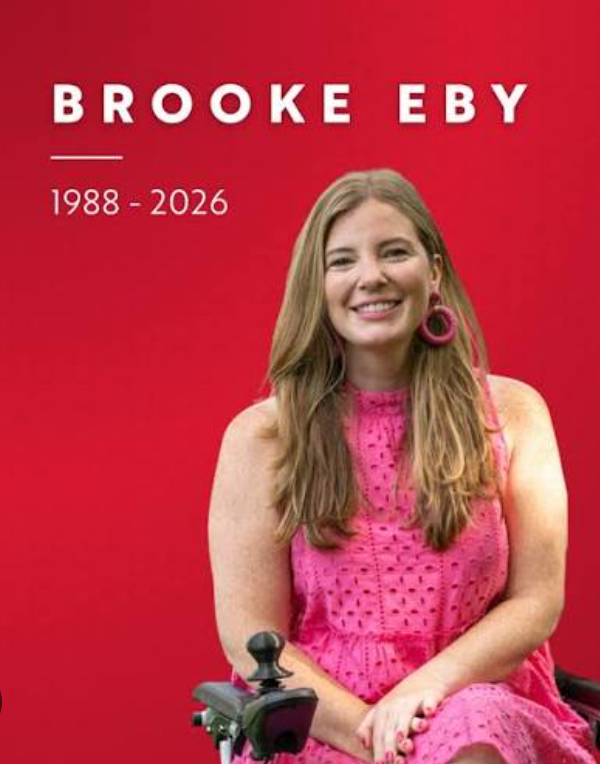
Today I learned that Brooke Eby died after her long journey with ALS, amyotrophic lateral sclerosis, commonly known as Lou Gehrig’s disease. She was only 37 years old. Brooke was diagnosed in 2022 after experiencing symptoms for years, and she eventually became an extraordinary advocate for people living with ALS. People.com
I didn't know Brooke personally.
But I felt like I knew a small piece of her because she was willing to let people like me into her life.
I came across Brooke through her social media posts under the name @LimpBroozkit. By the time I started following her, she was already using a wheelchair. I started watching her short videos, then went back, catching up on the journey that brought her there.
And I kept watching.
What ALS Takes Away
ALS is a progressive neurodegenerative disease that attacks the motor neurons in the brain and spinal cord—the nerve cells that control voluntary muscles.
As those motor neurons deteriorate and die, the brain gradually loses its ability to communicate with the muscles.
The muscles weaken. They atrophy. Movement becomes increasingly difficult.
Over time, ALS can take away a person's ability to walk, use their arms and hands, speak, swallow, eat, and eventually breathe independently. There is currently no cure that stops its progression. ALS Association
One of the things that makes ALS particularly cruel is that the beginning may not look like what most of us imagine a devastating neurological disease would look like. Early symptoms can include tripping, difficulty walking, dropping things, muscle cramps or twitching, weakness in an arm or leg, or changes in speech. ALS Association
Brooke's story made that real to me.
She talked openly about the symptoms that eventually led to her diagnosis—things that, had they happened to me, I don't know that I would immediately have connected with something as serious as ALS.
Then I watched what happened afterward.
The Wedding Story I Never Forgot
One of Brooke's stories especially resonated with me.
She talked about going to a wedding while struggling with everything that was happening to her body. She had to wear sneakers. She felt self-conscious. She wanted to leave the reception early.
A friend followed her.
Instead of letting Brooke disappear from the celebration, her friend encouraged her to stay.
Eventually, Brooke's walker became part of the party. People incorporated it into a makeshift limbo line.
Something that could have represented everything she was losing became, at least for that moment, part of the fun.
I understood that story in a way I wish I didn't.
After my amputation, I became incredibly self-conscious. There was depression. There was grief. There was sadness. I realized the body I had lived in for decades had permanently changed.
And I had to figure out how I was going to live in that changed body.
That's one reason Brooke's approach stayed with me.
She wasn't pretending ALS wasn't horrible.
She wasn't pretending she wasn't losing things.
She found a way to talk about those losses with humor, vulnerability, and transparency.
Then I Watched ALS Take More
During the last month or so, I noticed the changes becoming much more apparent.
Brooke needed a lift to transfer in and out of her wheelchair.
She was beginning to set up an eye-gaze communication system.
When she told stories, the animated movements of her arms and hands that had once accompanied her words were no longer there.
ALS kept taking.
Mobility.
Independence.
Movement.
Eventually, even speaking and swallowing became increasingly difficult. TMZ
But there was something ALS never seemed able to take.
Brooke.
Her personality was still there.
Her humor was still there.
Her willingness to tell the truth was still there.
Her desire to educate people was still there.
She didn't allow ALS to define her spirit.
A Quarter as Hard
I live with my own health challenges.
They aren't ALS, and I won't pretend they're comparable.
But watching Brooke changed how I think about living inside a body that doesn't always cooperate with the plans I have for it.
I've written openly about dialysis, kidney disease, losing my leg, prosthetics, surgeries, recovery, and all the strange little indignities that come along for the ride.
Sometimes I make jokes about them.
Sometimes I'm angry.
Sometimes I'm scared.
Sometimes I'm simply tired of dealing with it all.
And that's why Brooke's example meant something to me.
She showed that humor doesn't mean something isn't serious.
Being vulnerable doesn't mean being weak.
And acknowledging what a disease has taken doesn't require surrendering everything it hasn't.
I hope that whatever comes next in my own journey, I continue to fight even a quarter as hard to keep my spirit up as Brooke did throughout hers.
She deserved more time.
She deserved a different ending.
But in the time she had, Brooke made people laugh. She educated hundreds of thousands of people about a disease many of us knew little about. She created a community for people living with ALS and helped others feel less alone. The MoCo Show
And she made people like me stop scrolling long enough to think differently about our own lives.
I never met Brooke Eby.
I'm grateful she chose to share herself with the rest of us.
Godspeed, Brooke.
ALS took your body piece by piece. It never took your spirit.
