
The Pharmacy Run: Adding Five More Players to My Medication Team
Today, I picked up my medications, and let me tell you, my pharmacy list is starting to look like a baseball roster.
I've got Flonase, a higher dose of amlodipine, doxycycline, benzonatate, and generic Allegra.
And that's on top of everything I was already taking!
Between diabetes, dialysis, and the usual collection of medical adventures, keeping track of my medications is becoming a part-time job. At this rate, I may need a spreadsheet, a project manager, and a weekly status meeting just to keep everything straight. 😂
The goal is simple: get rid of this stubborn cough, get the allergies under control, and hopefully get back to feeling like myself.
After dealing with this dry cough for nearly two months, I'm ready for it to pack its bags and move out. No forwarding address necessary!
I'm hoping the new medications do the trick. Of course, with kidney failure and dialysis in the picture, I also need to make sure my medication regimen is appropriate for my condition and that my doctors and pharmacist know everything I'm taking.
Now, if you'll excuse me, I have a date with my medication organizer.
Here's hoping the next update is about feeling better instead of adding another prescription to the collection!
The Cough That Wouldn't Quit: Time to See the Doctor
For the last couple of months, an annoying little visitor has refused to leave.
No, it's not another Nextdoor controversy. It's a cough.
A dry cough.
The kind that shows up uninvited, hangs around for a while, disappears just long enough to make you think everything is fine, and then comes back as if it forgot something.
This has been going on for about two months, on and off. I actually had a doctor's appointment scheduled earlier, but I started feeling better, so I canceled it.
Because, naturally, when you start feeling better, you assume the problem has decided to move out.
Apparently, my cough didn't get the memo.
Enough Is Enough
Yesterday, I'd finally had enough. It was time to stop playing the waiting game and get this thing checked out.
Today, I went to my primary care doctor.
First up was the temperature check. My temperature was 99.7°F. That's not a particularly high fever, but it was enough to get my attention, especially considering everything else going on.
The doctor listened to my lungs, and I mentioned that my chest felt tight.
After the examination, I walked away with a prescription for antibiotics, a prescription for Flonase, and instructions to pick up Claritin.
Apparently, my nose and respiratory system have formed a committee, and now we're treating multiple potential troublemakers.
Claritin, but Not the D!
There's one important detail about the medication instructions.
I was told to get regular Claritin, not Claritin-D, and to avoid products containing pseudoephedrine because they can raise blood pressure.
With diabetes and kidney failure requiring dialysis already on my medical résumé, the last thing I need is to add an unnecessary blood pressure problem to the list.
My medication cabinet is complicated enough without introducing new characters.
I'll pick everything up tomorrow and follow the doctor's instructions.
But Wait, What About COVID and the Flu?
Here's the question that's been on my mind since the appointment.
Why wasn't I tested for COVID or the flu?
We've all heard about COVID continuing to circulate, and flu season is another consideration. With this cough hanging around for weeks, a temperature of 99.7°F, and chest tightness, I started wondering whether you considered either infection.
I realize a doctor can't test for every possible illness during every appointment. There may be reasons for the treatment plan, and I don't know what factors went into the decision.
Still, I would have liked to understand whether testing made sense.
Was the examination enough to suggest another cause? Were my symptoms inconsistent with flu or COVID? Would a test have changed the treatment plan?
Those are reasonable questions, and I intend to ask them.
After all, antibiotics treat certain bacterial infections, not viruses such as influenza or COVID-19. And while I'm hoping the prescribed treatment gets me feeling better, I'd rather understand what we're treating than simply wait and see.

Living With a Complicated Medical Résumé
When you're dealing with multiple health issues, you learn that symptoms you might once have brushed off deserve a little more attention.
Between diabetes, dialysis, and the other medical adventures I've experienced, I can't always assume that something will resolve itself just because it did last time.
I'm not trying to diagnose myself online, and I'm certainly not suggesting my doctor did anything wrong. I went to the appointment because I needed medical advice, and that's exactly where I should be.
But I also believe it's reasonable to ask questions and understand the plan.
Two months is a long time to have a cough that keeps coming back. I'm ready for this one to pack its bags and leave.
Preferably without leaving a forwarding address.
For now, I'll pick up my medications tomorrow, follow the treatment plan, and contact my doctor's office to ask whether COVID or flu testing—or any further evaluation—is appropriate.
Have you ever had a cough that lingered for weeks? Did you eventually find out what was causing it?
I'd love to hear about your experience.
If you're dealing with a persistent cough yourself, especially with fever, chest tightness, or underlying health conditions, don't assume it'll disappear. Get medical advice.
Because sometimes the best health decision isn't another internet search. It's making the appointment you canceled the first time.
Trust me. I learned that one the hard way.
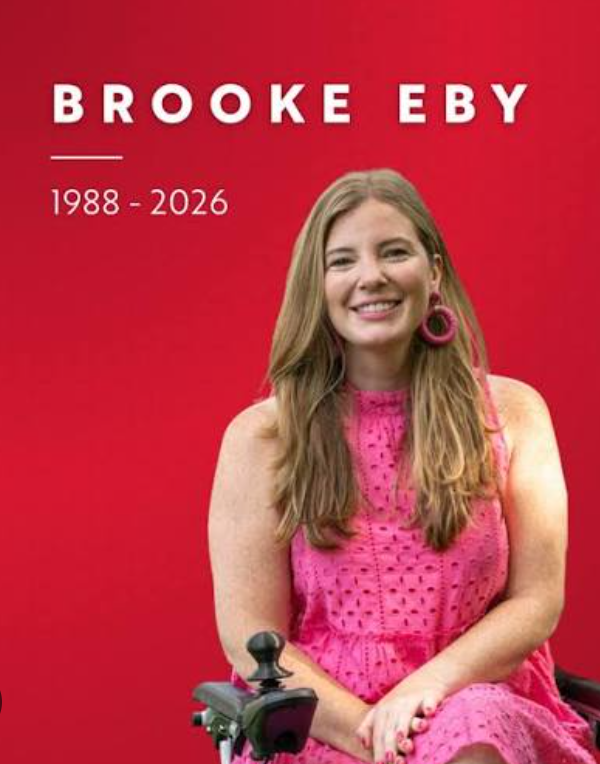
Godspeed, Brooke Eby: A Spirit ALS Couldn’t Take
Today I learned that Brooke Eby died after her long journey with ALS, amyotrophic lateral sclerosis, commonly known as Lou Gehrig’s disease. She was only 37 years old. Brooke was diagnosed in 2022 after experiencing symptoms for years, and she eventually became an extraordinary advocate for people living with ALS. People.com
I didn't know Brooke personally.
But I felt like I knew a small piece of her because she was willing to let people like me into her life.
I came across Brooke through her social media posts under the name @LimpBroozkit. By the time I started following her, she was already using a wheelchair. I started watching her short videos, then went back, catching up on the journey that brought her there.
And I kept watching.
What ALS Takes Away
ALS is a progressive neurodegenerative disease that attacks the motor neurons in the brain and spinal cord—the nerve cells that control voluntary muscles.
As those motor neurons deteriorate and die, the brain gradually loses its ability to communicate with the muscles.
The muscles weaken. They atrophy. Movement becomes increasingly difficult.
Over time, ALS can take away a person's ability to walk, use their arms and hands, speak, swallow, eat, and eventually breathe independently. There is currently no cure that stops its progression. ALS Association
One of the things that makes ALS particularly cruel is that the beginning may not look like what most of us imagine a devastating neurological disease would look like. Early symptoms can include tripping, difficulty walking, dropping things, muscle cramps or twitching, weakness in an arm or leg, or changes in speech. ALS Association
Brooke's story made that real to me.
She talked openly about the symptoms that eventually led to her diagnosis—things that, had they happened to me, I don't know that I would immediately have connected with something as serious as ALS.
Then I watched what happened afterward.
The Wedding Story I Never Forgot
One of Brooke's stories especially resonated with me.
She talked about going to a wedding while struggling with everything that was happening to her body. She had to wear sneakers. She felt self-conscious. She wanted to leave the reception early.
A friend followed her.
Instead of letting Brooke disappear from the celebration, her friend encouraged her to stay.
Eventually, Brooke's walker became part of the party. People incorporated it into a makeshift limbo line.
Something that could have represented everything she was losing became, at least for that moment, part of the fun.
I understood that story in a way I wish I didn't.
After my amputation, I became incredibly self-conscious. There was depression. There was grief. There was sadness. I realized the body I had lived in for decades had permanently changed.
And I had to figure out how I was going to live in that changed body.
That's one reason Brooke's approach stayed with me.
She wasn't pretending ALS wasn't horrible.
She wasn't pretending she wasn't losing things.
She found a way to talk about those losses with humor, vulnerability, and transparency.
Then I Watched ALS Take More
During the last month or so, I noticed the changes becoming much more apparent.
Brooke needed a lift to transfer in and out of her wheelchair.
She was beginning to set up an eye-gaze communication system.
When she told stories, the animated movements of her arms and hands that had once accompanied her words were no longer there.
ALS kept taking.
Mobility.
Independence.
Movement.
Eventually, even speaking and swallowing became increasingly difficult. TMZ
But there was something ALS never seemed able to take.
Brooke.
Her personality was still there.
Her humor was still there.
Her willingness to tell the truth was still there.
Her desire to educate people was still there.
She didn't allow ALS to define her spirit.
A Quarter as Hard
I live with my own health challenges.
They aren't ALS, and I won't pretend they're comparable.
But watching Brooke changed how I think about living inside a body that doesn't always cooperate with the plans I have for it.
I've written openly about dialysis, kidney disease, losing my leg, prosthetics, surgeries, recovery, and all the strange little indignities that come along for the ride.
Sometimes I make jokes about them.
Sometimes I'm angry.
Sometimes I'm scared.
Sometimes I'm simply tired of dealing with it all.
And that's why Brooke's example meant something to me.
She showed that humor doesn't mean something isn't serious.
Being vulnerable doesn't mean being weak.
And acknowledging what a disease has taken doesn't require surrendering everything it hasn't.
I hope that whatever comes next in my own journey, I continue to fight even a quarter as hard to keep my spirit up as Brooke did throughout hers.
She deserved more time.
She deserved a different ending.
But in the time she had, Brooke made people laugh. She educated hundreds of thousands of people about a disease many of us knew little about. She created a community for people living with ALS and helped others feel less alone. The MoCo Show
And she made people like me stop scrolling long enough to think differently about our own lives.
I never met Brooke Eby.
I'm grateful she chose to share herself with the rest of us.
Godspeed, Brooke.
ALS took your body piece by piece. It never took your spirit.
The Ankle Report: My Low-Tech Fluid Monitoring System
Lately, I’ve found myself spending more time looking at my ankle.
I mean, why wouldn’t I?
It’s a great-looking ankle.
More importantly, it’s the only one I have left, so it gets 100% of the ankle-related attention around here.
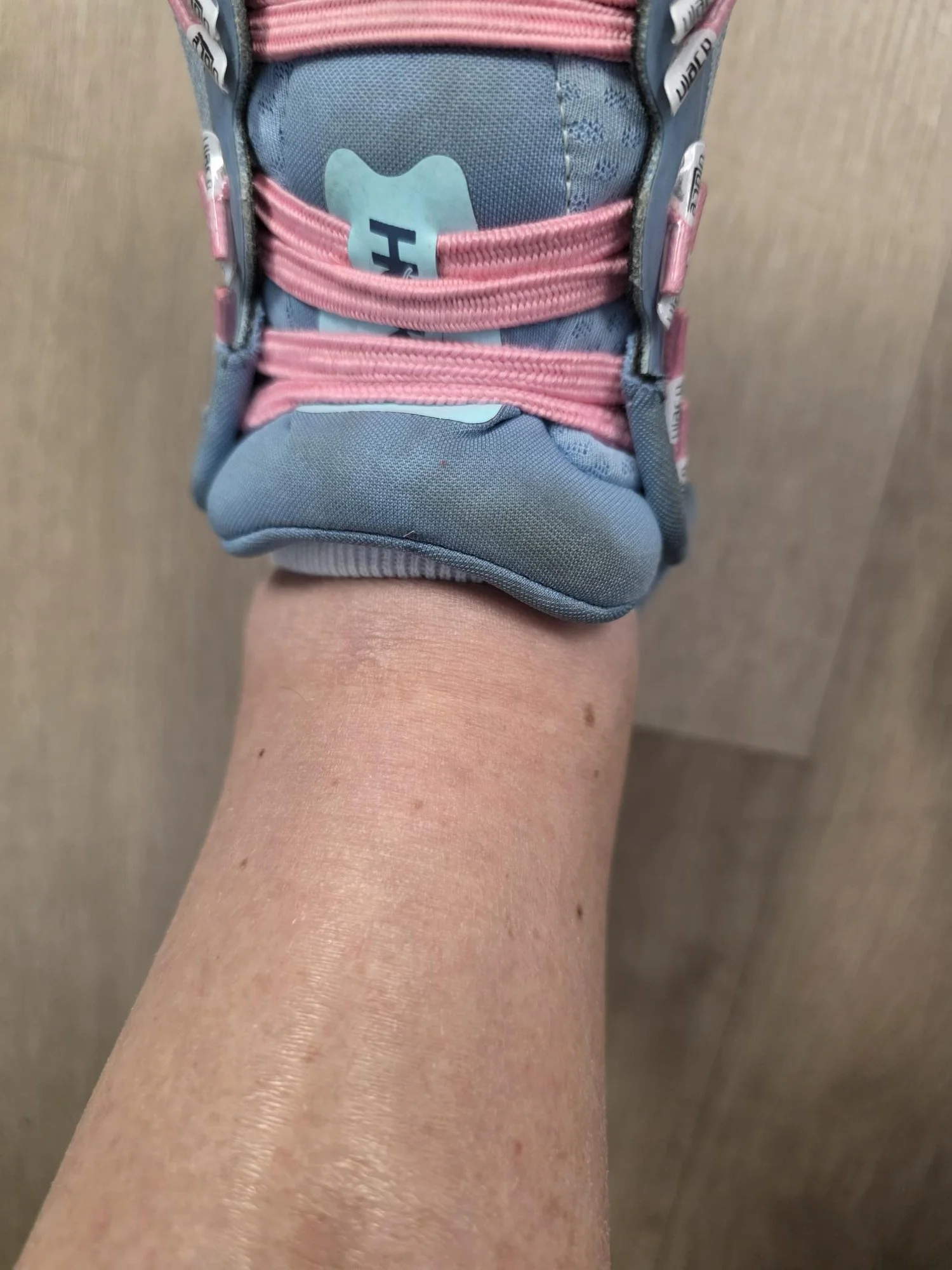
But lately, I’m not admiring it purely for its aesthetic qualities. I’m checking it for edema and fluid retention.
My Built-In Fluid Gauge
As someone living with End-Stage Renal Disease (ESRD) and receiving dialysis, fluid is something I have to pay attention to.
My kidneys still have some function. I still urinate normally, so I don’t retain fluid in exactly the same way as someone whose kidneys have stopped producing urine altogether.
Still, I can retain more fluid than I should.
And one of the easiest places for me to notice it?
My ankle.
Gravity is very dependable. Fluid can settle into the lower part of the body, so I can look at my ankle and get a visual clue that perhaps I've been a little too enthusiastic with the beverages.
Apparently, my ankle has become a medical instrument.
No batteries.
No Bluetooth.
No subscription.
Just look down.
The Other Fluid Gauge: My Residual Limb
My ankle isn't the only place where fluid retention becomes noticeable.
I can also retain fluid in my residual limb, which creates an entirely different problem.
My prosthetic socket doesn't suddenly become more accommodating because I'm retaining extra fluid. If my residual limb changes volume, getting into the prosthetic can become more challenging.
The prosthetic basically says:
“Sorry, we're at capacity.”
So fluid management isn't just something I think about during dialysis. It can affect something as basic as putting on my leg and getting on with my day.
Then Winter Joins the Party
Winter brings another issue.
When the air gets dry, my skin tends to get drier too. Add fluid-related swelling and stretching into the equation, and I've noticed my skin can start cracking more.
So apparently my body has seasonal programming.
Summer: Watch the swelling.
Winter: Watch the swelling AND the cracking.
Excellent.
Learning to Pay Attention
Living with ESRD has taught me that sometimes the useful signs aren't dramatic.
Sometimes it's simply noticing that my ankle looks a little puffier than usual.
Or that my residual limb isn't fitting into my prosthetic quite as easily.
Or that my skin is behaving differently.
None of those observations replaces what my dialysis team measures or tells me. They're simply ways I've learned to pay attention to my own body between treatments.
And since I only have one ankle left, I might as well put it to work.
For now, I'll continue monitoring it.
Part ankle. Part fluid gauge. Still pretty good-looking.
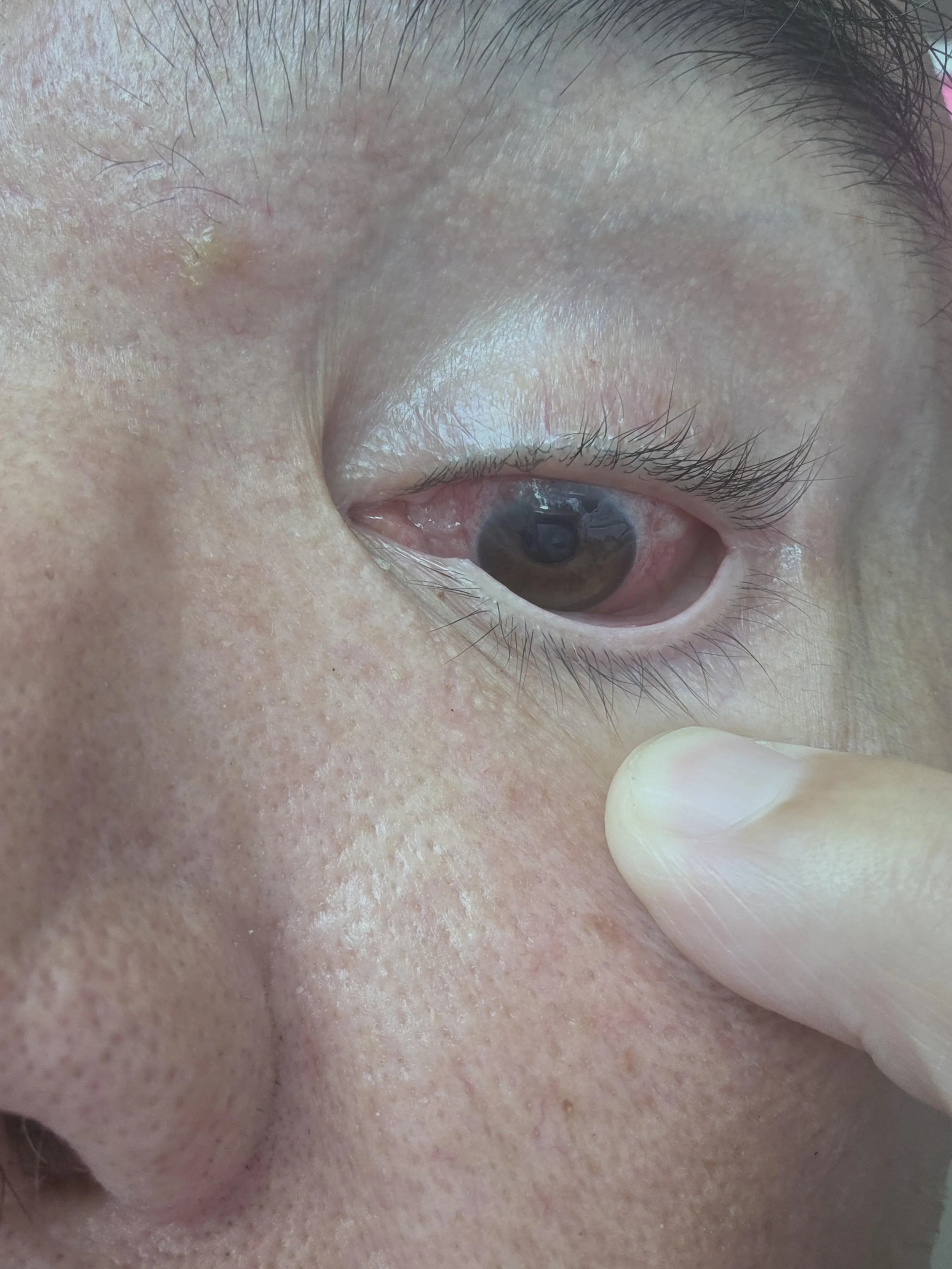
Great News From the Retina Doctor: It’s Attached!
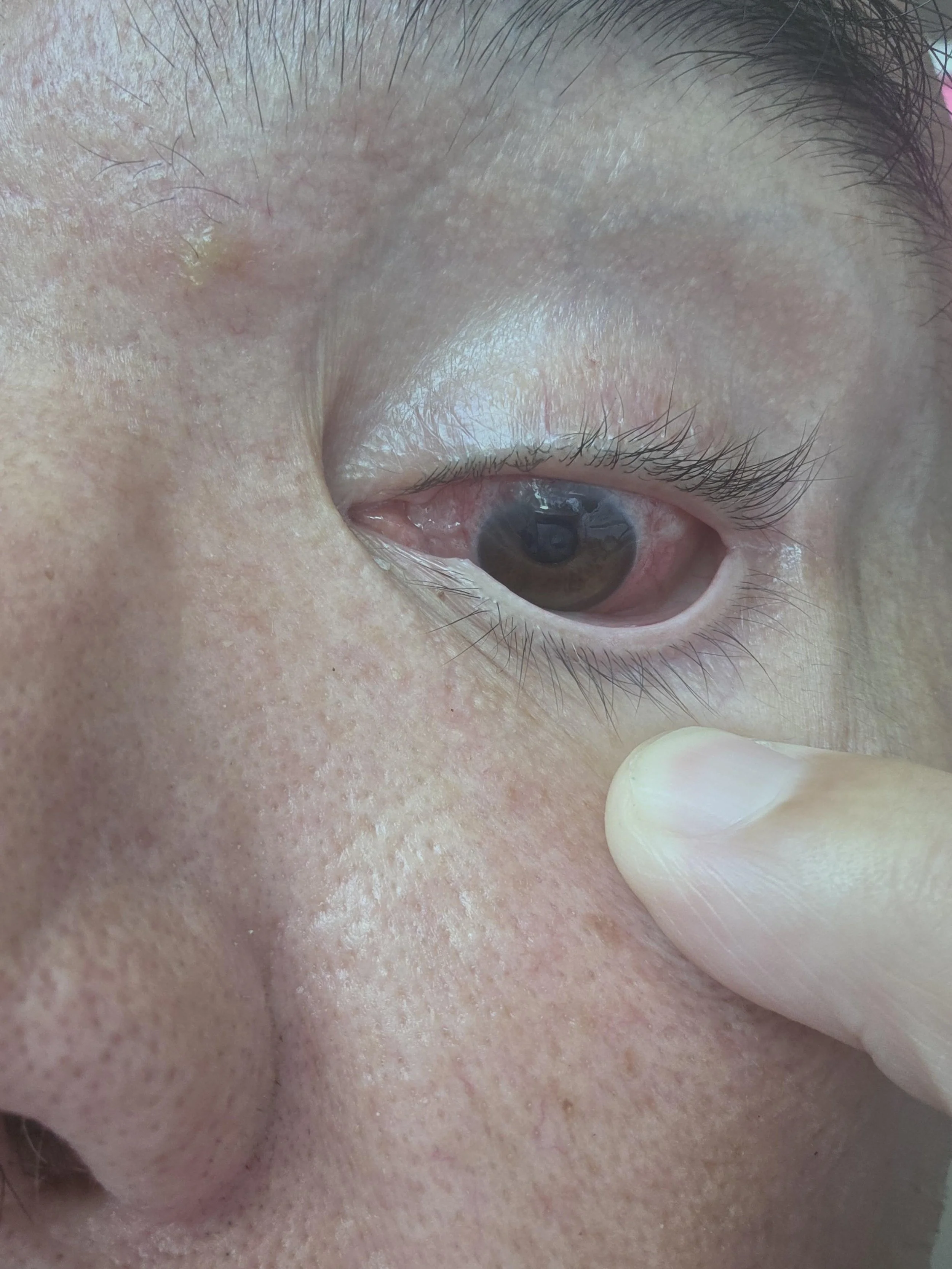
After everything my left eye has put me through over the past several months, today I finally got to hear two words I’ve been waiting for:
RETINA ATTACHED.
I went back to Retina Consultants of South Carolina earlier today for another follow-up, and that was the big news.
After the retinal detachment, surgery, silicone oil, silicone oil removal, the mysterious horizon, the bubble, the dot, the eclipse, and all the other visual special effects my eye decided to produce, my retina is attached.
I’ll take boring, attached, and functioning any day.
👁️ Not Completely Drama-Free
That doesn’t mean the eye has decided to behave perfectly.
I still have a little eye pain occasionally, and I’m seeing a few floaters. Considering what I’ve experienced recently, though, a couple of floaters feel considerably less exciting than having what looked like a solar eclipse floating around inside my eyeball.
And for once, less exciting is exactly what I want.
💉 And Then There Was the Question of a Shot...
Another issue being evaluated today: macular degeneration.
Given everything else that has happened with this eye, I wasn’t exactly looking to add another procedure to my medical résumé.
The good news?
I DON’T NEED A SHOT.
At least...
Currently.
That last word is doing some heavy lifting.
For now, there’s no injection. Instead, they’ll keep watching things, and I’ll be evaluated again in three weeks.
So I’m not declaring victory and running through the streets waving a flag just yet.
But today was unquestionably a good appointment.
Three Weeks Until the Next Chapter
Today’s eye scorecard:
Retina: ATTACHED! 🎉
Eye pain: Occasional.
Floaters: A few.
Macular degeneration: Being monitored.
Shot: Not needed currently. 💉🚫
Next evaluation: Three weeks.
After months of updates that included phrases like detached retina, silicone oil, surgery, bubble, horizon, eclipse and possible injections, I'll happily write an update where the biggest headline is:
MY RETINA IS ATTACHED.
Three weeks from now, we check again.
Until then, I’m going to enjoy some genuinely good news.
Sometimes progress isn’t dramatic. Sometimes progress is simply hearing your doctor say that something is exactly where it’s supposed to be.
And today, that’s more than enough.