
I Brought the Coffee. They Brought the Conversation.
As I’ve shared, my mother has had two strokes in three months. She’s now in a skilled nursing facility, with the goal of getting to assisted living and eventually becoming mobile enough to get to Thailand.
One step at a time. Literally.
Before heading to an afternoon recovery meeting, I stopped by and found her eating lunch in the day and activity room with several other residents.
I brought her Dunkin’ coffee because the world runs on it, and medical facility coffee usually makes me question whether running is still an option.
While I was there, I found myself thinking about my old call center training days.
In a previous life, I would role-play phone calls with my classes. I played the aggressive caller, the caller with an accent, the soft-spoken caller, and the caller who was older than me.
For that last role, I would talk. And talk. And talk. And talk.
I could turn a simple account question into a scenic tour with absolutely no estimated arrival time.
But I did it for a reason. I wanted my classes to understand that a phone call might be about more than whatever appeared on their computer screen. For someone who didn’t get many visitors or have many people to talk to, that call could be a welcome chance to connect.
I wanted them to hear the person, even when the conversation took the long way around.
Today, I was reminded of that lesson.
I met a woman who told me she had lived in Pensacola, Florida. I learned that her favorite burger was from McDonald’s and that the best sweet tea came from Bojangles. And that was just part of the conversation.
I arrived with coffee and left with restaurant recommendations. A productive visit by any reasonable standard.
I don’t know how often she gets visitors. I don’t know whether she had already shared those stories that morning or had been waiting for someone to tell.
I just know she wanted to talk, and I had the chance to listen.
It made me think about how often I can get caught up in the purpose of a visit—the updates, the next steps, the things that need to get done—and forget to leave room for an ordinary conversation.
My mother’s recovery has plenty of goals attached to it right now. Skilled nursing. Assisted living. Mobility. Thailand.
But there’s also today. Lunch in the activity room. A decent cup of coffee. A conversation about burgers and sweet tea.
I’m sharing this as a reminder to myself as much as anyone else: if I have time to scroll through my phone, I probably have time to use it to call someone.
And if there’s someone older in your life, I hope you’ll make that call or stop by for a visit, too.
I don’t need a perfect thing to say. I can bring some coffee, pull up a chair, and listen.
Apparently, I can also plan my next meal.
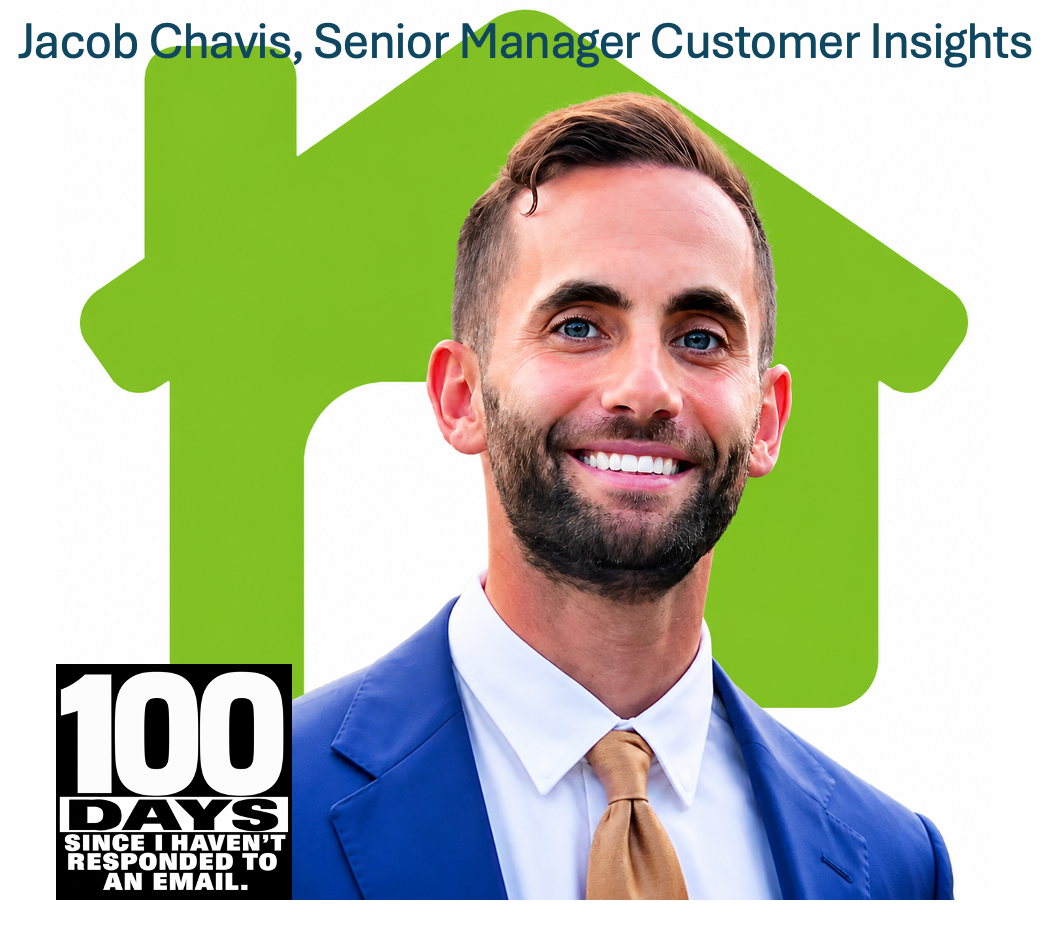
Day 100: Triple Digits. And Still Waiting.
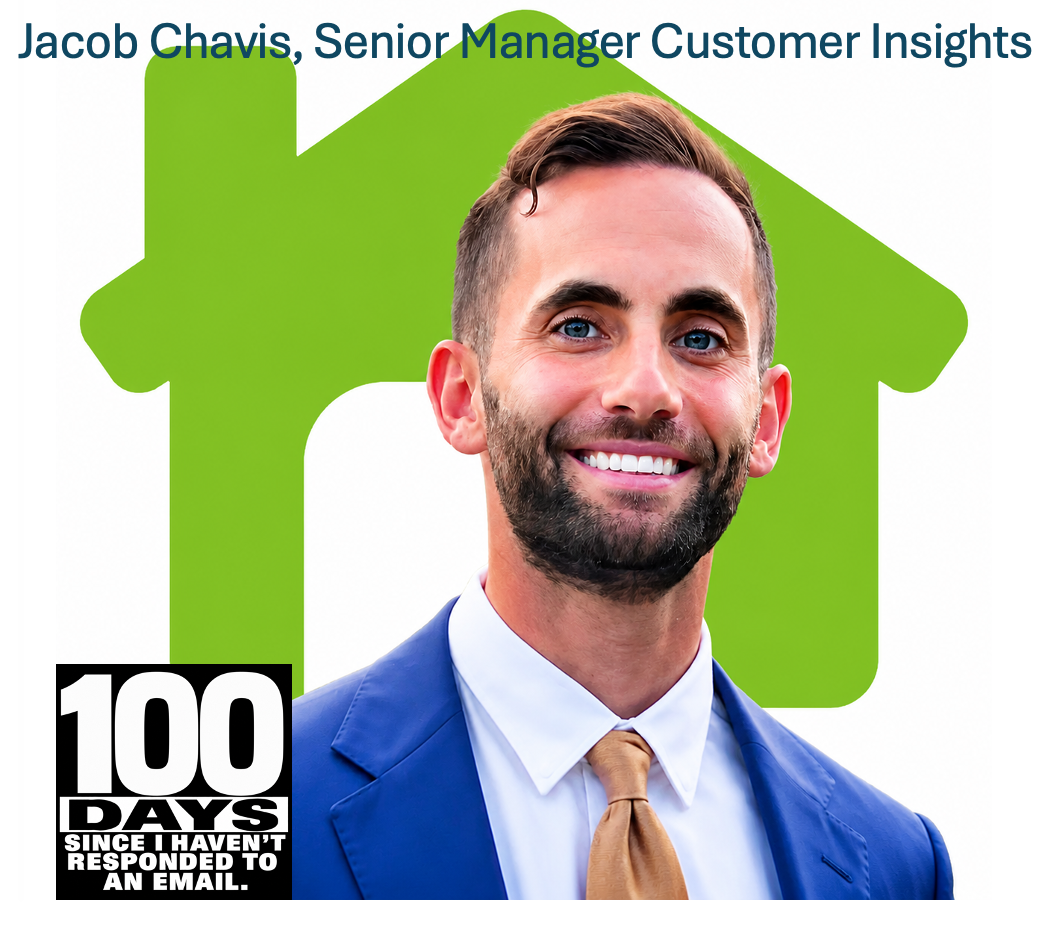
Day 100.
I almost can't believe I'm typing that.
For 100 days, I've been asking Nextdoor for the detailed Insights data its own published material said readers could request.
I'm a shareholder. I asked for something the company advertised as available.
One hundred days later, I'm still waiting.
Meanwhile, NXDR Has Been Moving
Yesterday, NXDR traded as high as $2.64, very close to its 2026 closing high of $2.68 on August 10 and $2.66 close on August 11. As I write this, I'm seeing approximately $2.54. ChartExchange
Yesterday I wrote about something else I've been thinking about: a stock isn't evaluated solely on revenue, EBITDA and what's sitting on the balance sheet.
Leadership confidence and corporate reputation can matter too.
But I want to be careful here.
I have no evidence that today's movement has anything to do with my post, Nirav Tolia, my 100-day campaign—or anything else I've written.
Maybe short-term traders took profits. Maybe investors reacted to something entirely unrelated. That's the market.
What interests me is the longer-term question.
What Does Day 100 Cost?
Not in dollars.
In credibility.
A company can publish mission statements, announce AI initiatives, appear on podcasts and talk about connecting communities.
But sometimes reputation is built in much smaller moments:
Someone asks a question. Does anyone answer it?
Someone requests something you publicly said was available. Does anyone provide it—or simply explain why they can't?
That's what makes Day 100 remarkable to me.
The original request was tiny.
The case study it created is now enormous.
I'm still a shareholder. I still want NXDR to succeed.
And I'm still asking the same remarkably simple question I asked 100 days ago:
Can someone at Nextdoor provide the detailed Insights studies—or tell me why they can't?
Welcome to triple digits.
I really didn't think we'd get here.
👉 Follow the continuing case study at NielFlamm.com/blog
When Guilt Feels Real: Recovery, Delusion, and Making Amends
The Down a Hole podcast is back.
In this episode, Fish and I explore a complicated question: If someone feels guilt over events experienced during psychosis—even when those events never actually happened—does making amends still have a place in recovery?
We discuss sobriety, mental health, accountability, vulnerability, and the importance of seeking guidance instead of facing difficult thoughts alone.
Watch the full podcast at NielFlamm.com/blog.
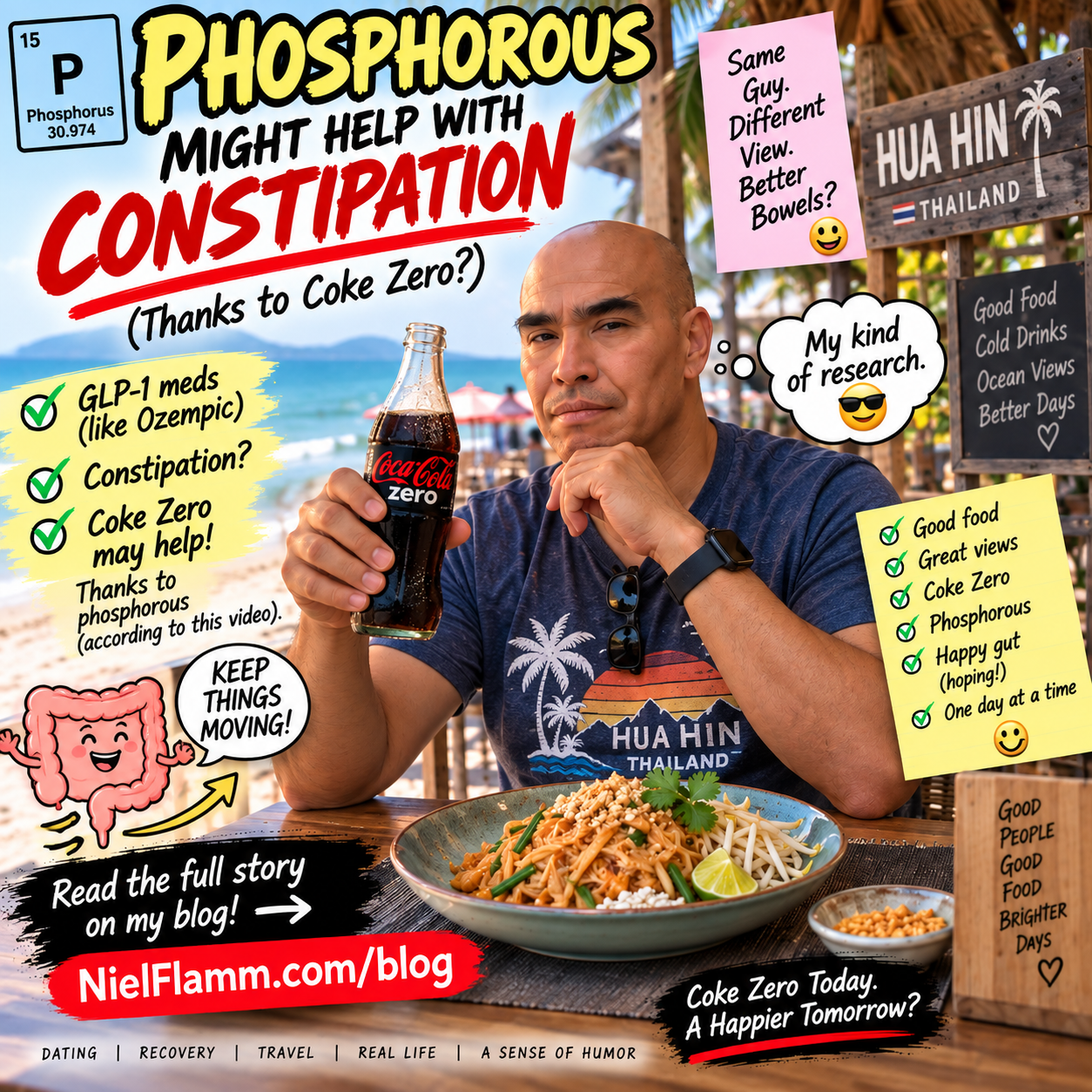
Wait… Coke Zero Is Health Food Now?
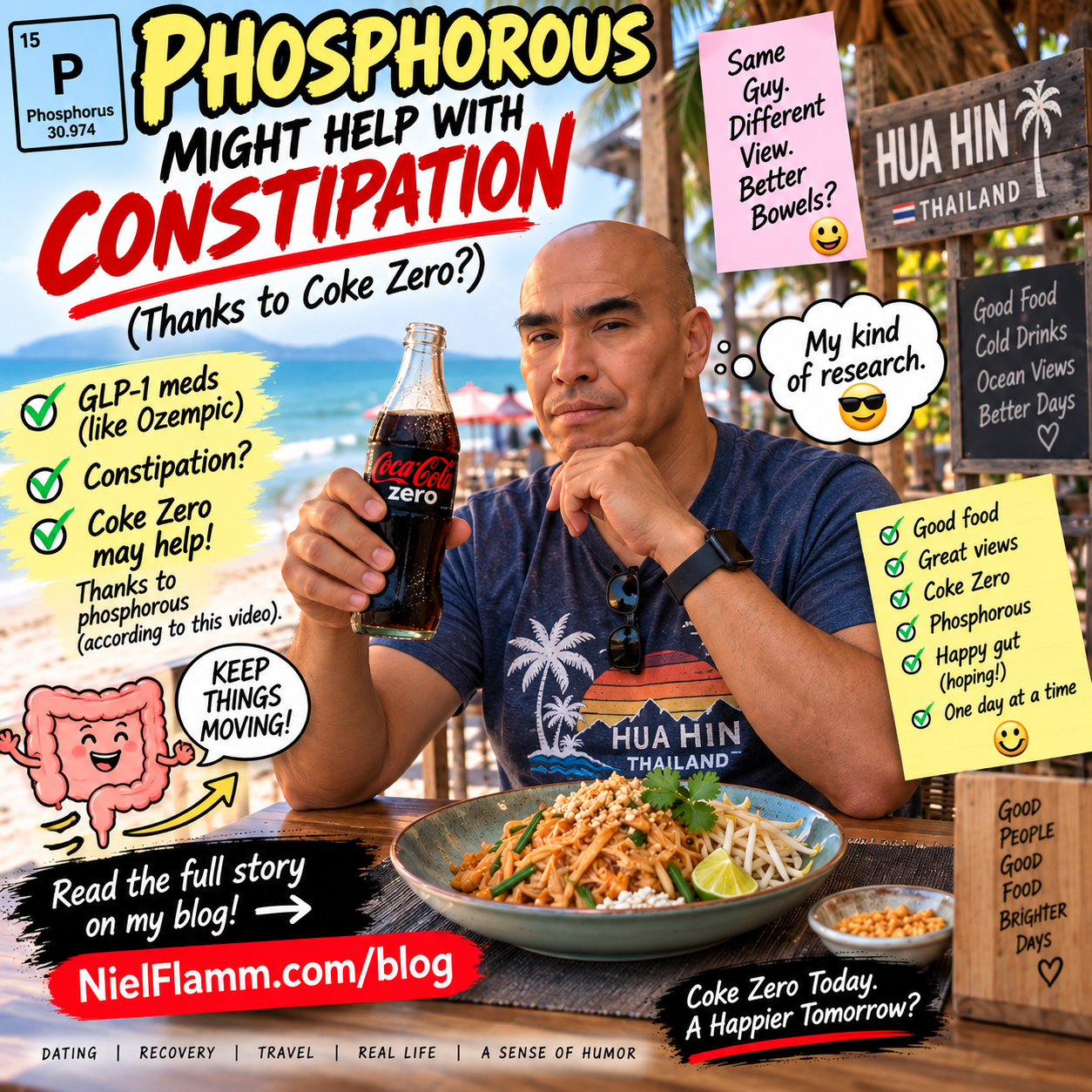
I recently came across a Facebook video with what might be the best medical advice I’ve ever heard.
The video says one way to help with constipation from GLP-1 medications is to drink Coke Zero, and the nutritionist attributes the effect to phosphorus.
My immediate reaction:
FANTASTIC!
Finally, something I’ve been training for my entire life.
Coke Zero is already one of my staple foods. I take Ozempic, and constipation can be one of the side effects.
So when somebody tells me my Coke Zero habit might actually have a purpose, naturally I'm thinking:
Doctor, should I increase my prescription from Large to Extra Large?
And somewhere at Coca-Cola headquarters, an executive just felt a disturbance in the Force.
There Is One Tiny Problem…
I couldn't independently verify the video's claim that the phosphorus in Coke Zero is an established treatment for GLP-1 constipation.
So, sadly, I'm not declaring Coke Zero a medication.
I'm merely saying that if future scientific research concludes that it is...
I was an early adopter.
And yes, before anyone reminds me about phosphorus and kidney disease—thank you for the reminder.
With my kidney situation, I already have to pay attention to phosphorus. I use a phosphate binder to hopefully help keep my phosphorus levels in line.
So this is definitely not me recommending that anyone start pounding Coke Zero as a medical treatment.
This is me discovering a video that seemingly gave my existing Coke Zero habit a scientific-sounding excuse and thinking:
FINALLY. MY MOMENT HAS ARRIVED.
Until then, I'll continue enjoying Coke Zero for the same reason I always have:
I just really like Coke Zero.
And if my consumption happens to help The Coca-Cola Company stock along the way?
You're welcome, shareholders.
I'm doing my part. One bottle at a time. 😂🥤
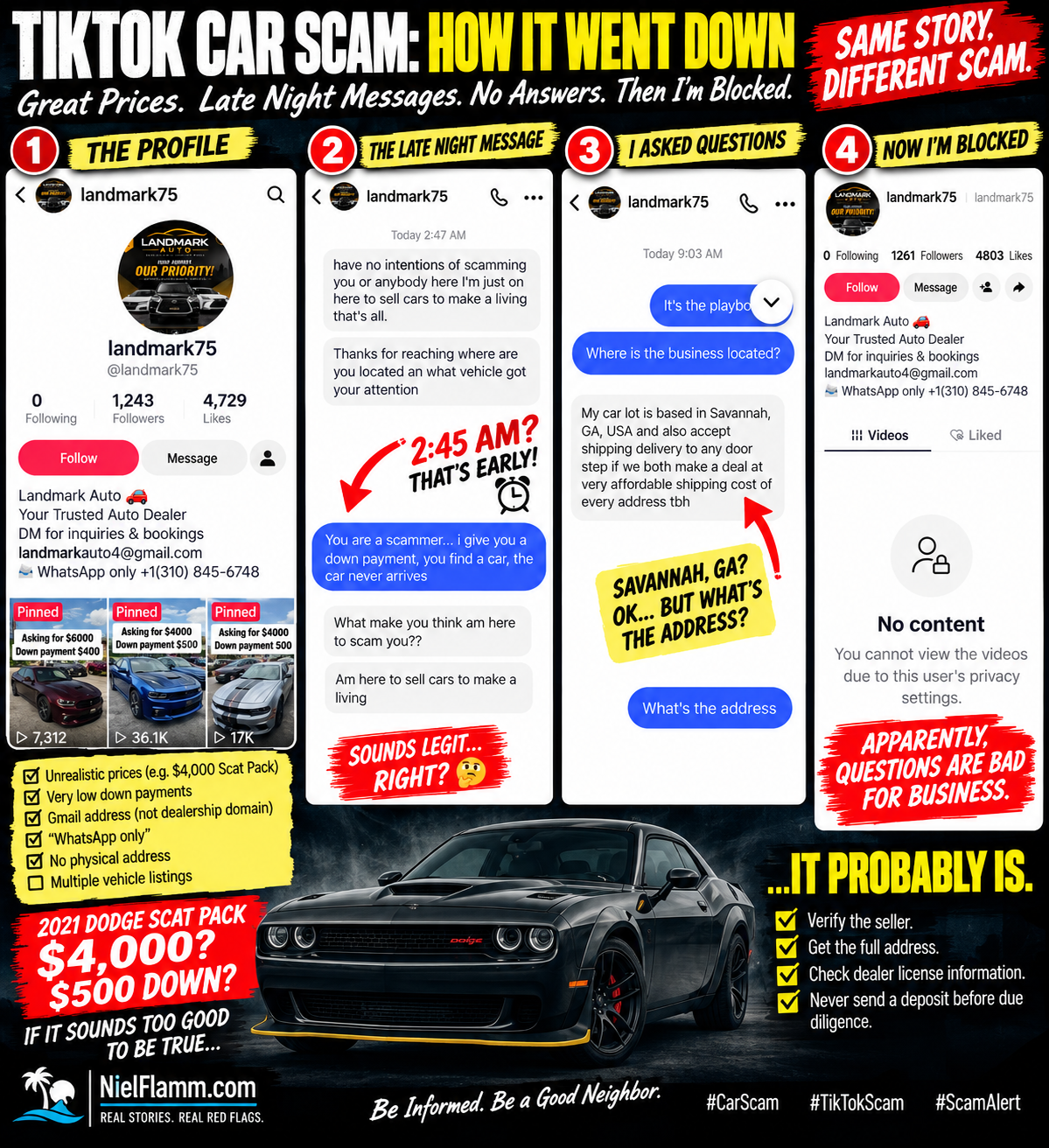
Update: The “Totally Legitimate” TikTok Car Seller Blocked Me
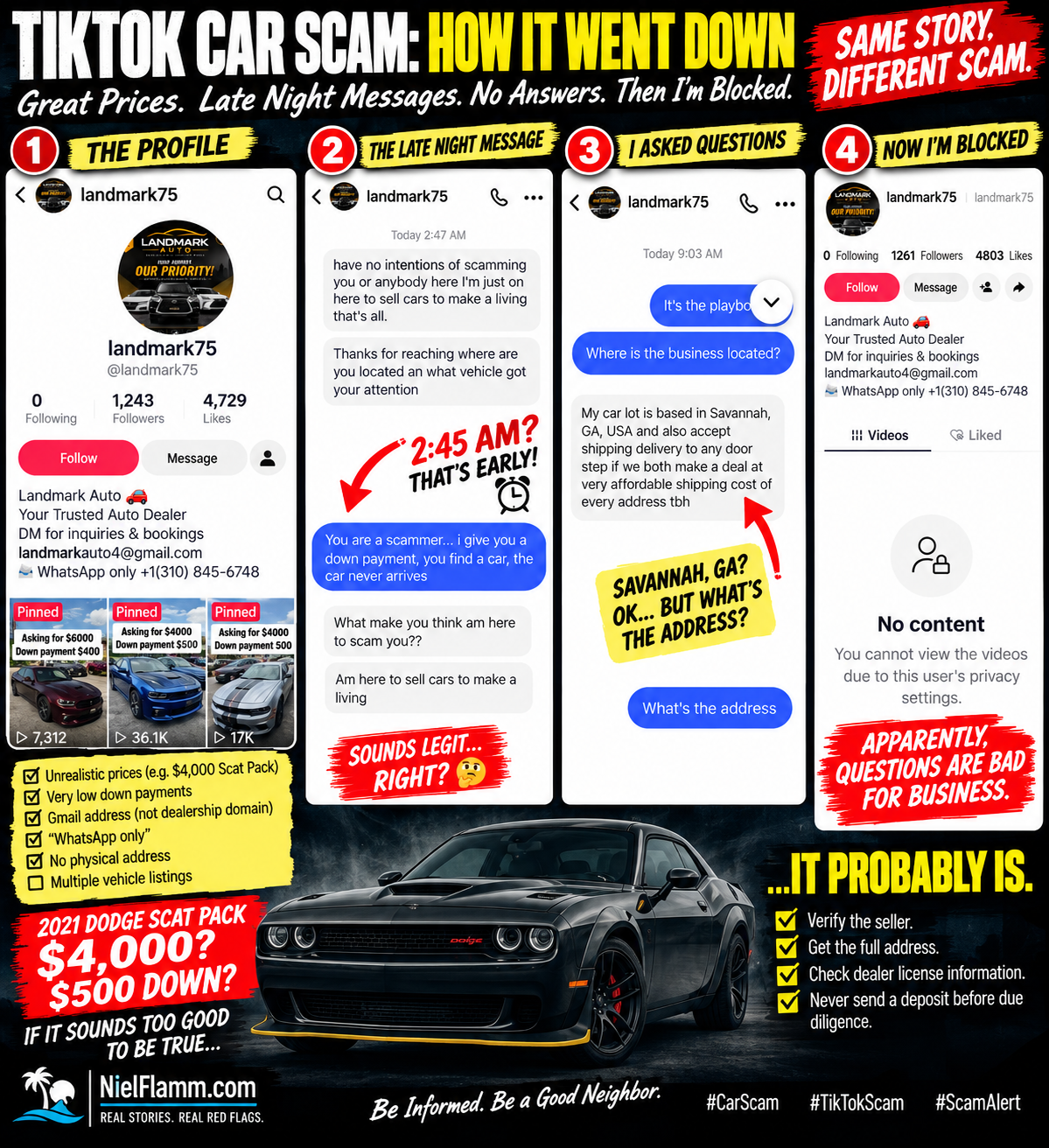
Well, that escalated quickly.
I've been documenting the TikTok account landmark75, which describes itself as “Landmark Auto” and has been advertising vehicles at prices that raised plenty of questions—including a supposed 2021 Dodge Scat Pack with 45,000 miles for $4,000 with $500 down.
Then they contacted me.
At 2:45 in the morning.
They assured me:
“have no intentions of scamming you or anybody here I'm just on here to sell cars to make a living that's all.”
Great.
So I started asking questions.
Apparently, that was the problem.
🚗 I Asked Where the Dealership Was Located
This shouldn't have been difficult.
They told me:
Savannah, Georgia.
Okay.
I asked:
What's the address?
Not exactly an interrogation worthy of the FBI.
If you're operating a car lot and offering to sell and ship vehicles to customers, asking where the car lot is located seems like a fairly reasonable question.
I wanted information I could independently verify.
Then something interesting happened.
😂 Apparently I Asked One Question Too Many
Today I went back to the TikTok account.
The profile is still there.
At the time of my latest screenshot, it showed:
1,261 followers
4,803 likes
The bio still says:
“Landmark Auto 🚗”
“Your Trusted Auto Dealer”
It still lists a Gmail address.
It still says:
“WhatsApp only”
But now the videos are gone—from my view.
TikTok tells me:
“No content”
and:
“You cannot view the videos due to this user's privacy settings.”
Well, that's convenient.
The account that contacted me in the middle of the night and wanted to discuss selling me a vehicle apparently no longer wants me looking at its vehicle listings.
🚩 Let's Review the Timeline
This is what makes the progression interesting.
I saw vehicles advertised at unusually low prices and down payments.
I started documenting them.
The account contacted me.
I openly questioned whether the operation was legitimate.
They told me they had no intention of scamming anybody and were simply trying to make a living selling cars.
I asked where the business was located.
They gave me a city and state:
Savannah, GA.
I asked for the actual street address.
And now I can no longer view their TikTok content.
That's what I can document from my screenshots.
Whether TikTok's restriction reflects a block or another privacy setting, I can't determine that independently from this screen alone. But the result for me is the same:
I can't see their videos anymore.
🤔 That's an Interesting Way to Build Customer Confidence
Remember, their profile calls them:
“Your Trusted Auto Dealer”
Trust generally works better when customers can verify things.
If I were considering sending hundreds of dollars to an online vehicle seller, I'd want some pretty basic information:
Where is your dealership?
What's the street address?
What's your legal business name?
What's your dealer license number?
What's the VIN?
Can I inspect the vehicle?
Can someone I choose inspect it?
Can I call the dealership using a number I find independently?
Can you provide the complete purchase and financing terms?
Those aren't hostile questions.
Those are car-buying questions.
🚩 Blocking Questions Doesn't Answer Questions
Here's the important part.
Not being able to view the account's videos doesn't, by itself, prove that every listing was fraudulent.
But it also doesn't resolve a single concern I raised.
The $4,000 Scat Pack doesn't suddenly make more sense.
The $500 down payments don't become independently verified.
“WhatsApp only” doesn't establish a dealership.
“Savannah, GA” still isn't a street address.
And preventing a skeptical viewer from seeing the listings doesn't provide any of the documentation that could establish the seller's legitimacy.
It simply prevents that viewer from continuing to examine the content.
😂 Apparently Due Diligence Is Bad for Business
Maybe my mistake was asking too many questions.
Perhaps I should have said:
“$500 down? Fantastic! Where do I send it?”
Instead, I committed the unforgivable sin of online car shopping.
I asked:
“What's the address?”
Oops.
🏡 This Is Exactly Why I Say: Be a Good Neighbor
Someone else might see a beautiful car and an affordable down payment and think they've finally found a solution.
Maybe their credit isn't great.
Maybe their current vehicle just died.
Maybe they desperately need transportation to keep their job.
That person doesn't need ridicule.
They need someone willing to say:
“Before you send that money, let's verify this.”
Check the dealership.
Check the address.
Check the VIN.
Check the dealer license.
Check the title.
Check the vehicle's market value.
Call a phone number obtained independently.
And never let someone rush you into sending a deposit before you've verified who you're dealing with.
I'll Keep Asking Questions
I said I'd continue engaging with this account for as long as I was able.
Apparently, “as long as I was able” didn't last very long.
😂
But there's a useful lesson here.
When you're considering sending money to someone online, don't judge legitimacy by how confidently they tell you they're legitimate.
Judge it by how easily you can independently verify their claims.
And if asking ordinary questions suddenly ends the conversation?
Don't stop asking questions.
Just stop sending money.
Follow the continuing scam series at NielFlamm.com/blog.