
Mom Is Making Progress—and Apparently I’m Her Husband Now
This morning after dialysis, I went to visit Mom at the skilled nursing facility.
When I got to her room, she wasn't there.
That's actually a good thing.
She was doing rehab.
I was told that Mom is making progress, which was great to hear. She still needs someone blocking her left leg because it continues to buckle, but progress is progress.
After everything that's happened, I'll take it.
Eventually, Mom made her way back to the room.
And that's when today's visit took a turn I wasn't prepared for.
There's a New Roommate
Mom got a new roommate on Saturday.
Her previous roommate, Jenny, left last Monday. I don't know the name of the new roommate yet, but I do know that she broke her hip, had surgery, and is now there recovering.
The new roommate came into the room while I was there.
There was some banter.
I'm not particularly good at banter, but I participated.
She mentioned that she's also hard of hearing, so apparently Mom and her new roommate already have something in common.
Everything was going fine.
Normal conversation.
Normal skilled nursing facility visit.
And then she looked at us and asked a question:
“Is that your husband?”
Excuse me?
I'm sorry.
What?
GROSS!!!!
I believe there are moments in life when the human brain protects itself by temporarily refusing to process information.
This was one of those moments.
Of all the possible relationships she could have guessed...
Son?
Nephew?
Relative?
Friend?
Random bald guy who wandered into the wrong room after dialysis?
Nope.
Husband.

I guess...Good for Mom?
Once I recovered from the initial trauma, I had another thought.
I guess that's a compliment to Mom?
Maybe?
Apparently, she looks young enough to be my husband.
Good for her.
Unfortunately, that means the other half of the equation is that I apparently look old enough to be married to my mother.
Not good for me.
I'm choosing to focus on Mom's rehab progress instead.
She's working.
She's improving.
Her left leg still needs support, but she's moving in the right direction.
She has a new roommate.
And apparently, sometime between dialysis and walking into the skilled nursing facility, I aged several decades.
Anyway, I'll be back.
I need a few minutes to clean the vomit out of my mouth.
Then maybe I'll introduce myself properly to the new roommate.
“Hi. I'm Niel. Her SON.”
Let's make sure we've got that established early.
After Dialysis, Assisted Living Tours and Complaints: I Need the Ocean and Bacon
Today was one of those days when my internal battery was already flashing red before I walked through the door.
After dialysis, I toured The Palms, an assisted living facility I'm considering for Mom.
Today's dialysis was a little more difficult than Monday's. By the time everything was finished, I didn't even make it to my recovery meeting.
Instead, I had another mission:
Deliver Mom's dinner.
Ham, grits, and peas.
Gross.
I'm sure someone loves that combination. That someone is not me.
So, after dialysis and touring The Palms, I headed over to the skilled nursing facility with Mom's meal.
And then the complaining began.
Apparently, Everything Is Terrible
It was nonstop.
The food.
Physical therapy.
Nursing.
This.
That.
Something else.
At times, Mom was saying things that, from my perspective, didn't line up with what had actually happened. I've experienced that before with both of my parents, and today I didn't have much energy left to sort through what was accurate, what was frustration, and what might have been something else entirely.
I could feel myself reaching my limit.
That's when H.A.L.T. popped into my head.
Hungry.
Angry.
Lonely.
Tired.
I was feeling three out of the four.
I'll let everyone guess which three.
Actually, don't think about it too hard.
The important part was recognizing what was happening before I allowed myself to get dragged into an argument that wasn't going to accomplish anything.
See You Tomorrow
I finally told Mom I was going to leave and that I'd see her tomorrow.
Tomorrow, I'm touring another assisted living facility.
Her response?
“Don't come.”
My response?
“See you tomorrow.”
At this point, it felt less like a discussion and more like defiance.
Ugh.
Yesterday, I wrote about needing to establish boundaries. Today was another opportunity, actually, to practice one.
I didn't argue.
I didn't address every complaint.
I didn't stay there until I was completely exhausted and angry.
I left.
Sometimes that's the healthiest option available.
I'm Still Doing the Work
The frustrating part is that behind all these conversations, I'm still trying to do what Mom has said she wants.
She wants assisted living.
So I'm touring assisted living facilities.
I'm looking at rooms.
I'm learning about services.
I'm figuring out costs.
I'm asking questions.
I'm trying to imagine what her life might look like in each place.
Then I walk into the skilled nursing facility and hear complaint after complaint about the place she's currently living.
I understand that she's frustrated. She's been through a lot.
But I've been through a few things myself.
Today alone started with dialysis, moved into an assisted living tour, and ended with me delivering ham, grits, and peas while listening to a review of practically every department in the building.
Eventually, the tank is empty.
Mine was empty.
So I went home.
Tomorrow, I'll get up and do it again.
Another facility.
Another tour.
Another visit with Mom, regardless of today's “don't come.”
And hopefully another reminder to myself that I don't have to solve everything in one day.
I Need the Ocean and Bacon
Fortunately, I have something waiting for me at the end of October.
I'm going on a cruise.
And after the last few weeks, I think I've identified exactly what I need:
The ocean and bacon.
Lots of ocean.
An unreasonable amount of bacon.
Maybe I'll sit somewhere, looking out over the water, holding a plate stacked with bacon and doing absolutely nothing for anyone.
No assisted living tours.
No skilled nursing complaints.
No ham, grits, and peas.
No problem-solving.
Just me, the ocean, and enough breakfast meat to concern a cardiologist.
But first, tomorrow.
Another assisted living facility.
Another visit with Mom.
Because even when she says, “Don't come,” sometimes I know what she really needs is for me to keep showing up.
So...
See you tomorrow, Mom.
The Ankle Report: My Low-Tech Fluid Monitoring System
Lately, I’ve found myself spending more time looking at my ankle.
I mean, why wouldn’t I?
It’s a great-looking ankle.
More importantly, it’s the only one I have left, so it gets 100% of the ankle-related attention around here.
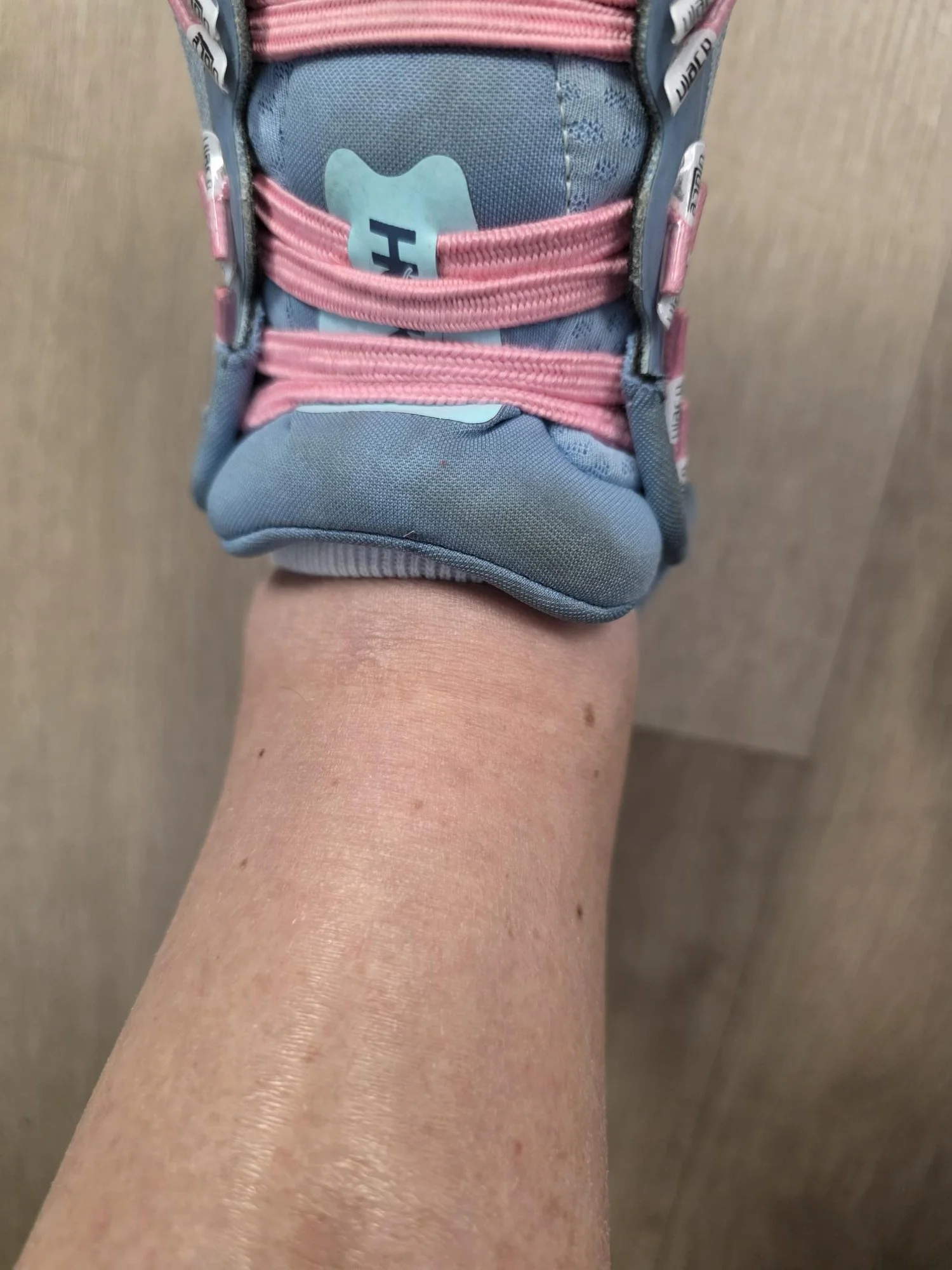
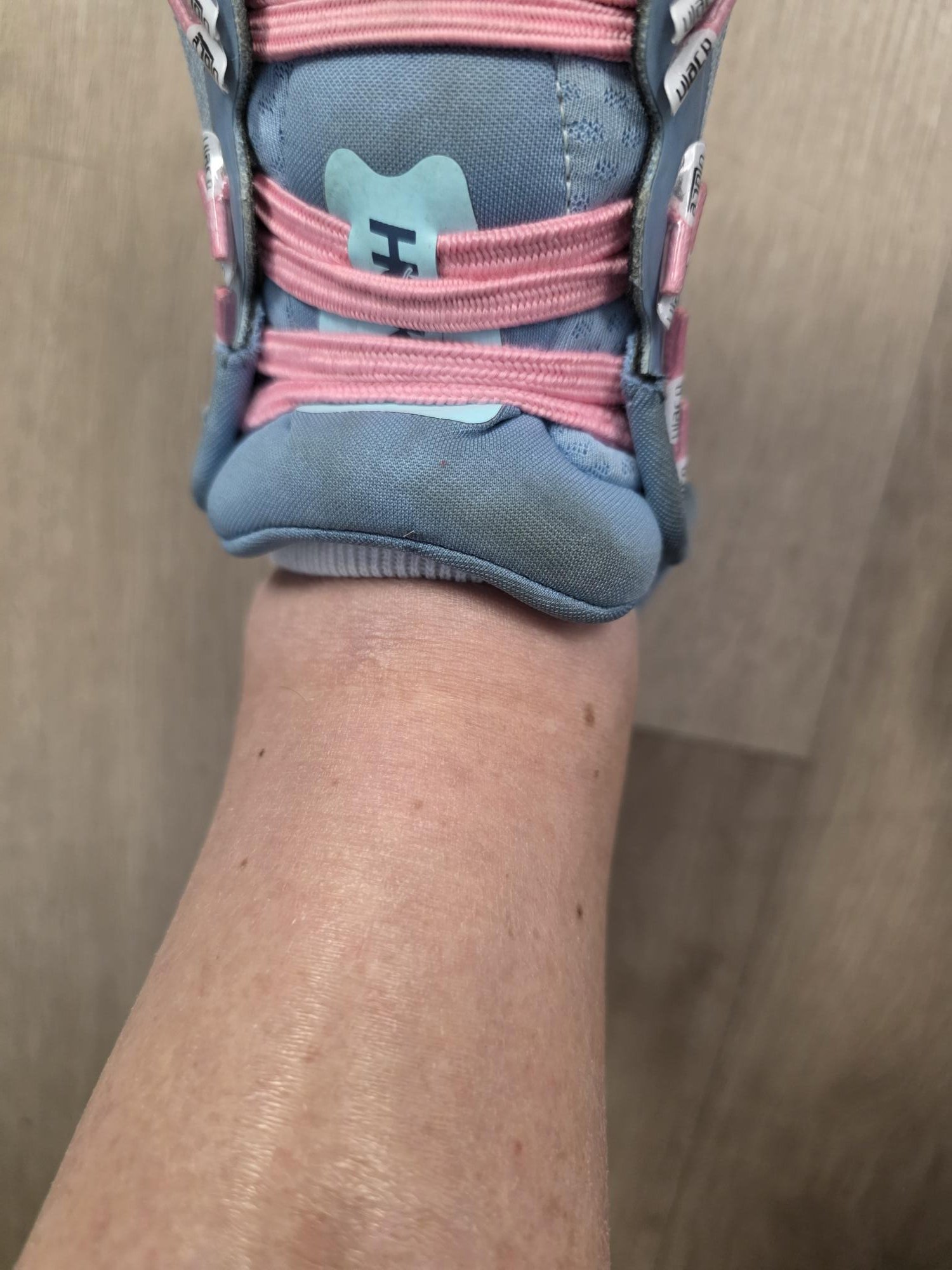
But lately, I’m not admiring it purely for its aesthetic qualities. I’m checking it for edema and fluid retention.
My Built-In Fluid Gauge
As someone living with End-Stage Renal Disease (ESRD) and receiving dialysis, fluid is something I have to pay attention to.
My kidneys still have some function. I still urinate normally, so I don’t retain fluid in exactly the same way as someone whose kidneys have stopped producing urine altogether.
Still, I can retain more fluid than I should.
And one of the easiest places for me to notice it?
My ankle.
Gravity is very dependable. Fluid can settle into the lower part of the body, so I can look at my ankle and get a visual clue that perhaps I've been a little too enthusiastic with the beverages.
Apparently, my ankle has become a medical instrument.
No batteries.
No Bluetooth.
No subscription.
Just look down.
The Other Fluid Gauge: My Residual Limb
My ankle isn't the only place where fluid retention becomes noticeable.
I can also retain fluid in my residual limb, which creates an entirely different problem.
My prosthetic socket doesn't suddenly become more accommodating because I'm retaining extra fluid. If my residual limb changes volume, getting into the prosthetic can become more challenging.
The prosthetic basically says:
“Sorry, we're at capacity.”
So fluid management isn't just something I think about during dialysis. It can affect something as basic as putting on my leg and getting on with my day.
Then Winter Joins the Party
Winter brings another issue.
When the air gets dry, my skin tends to get drier too. Add fluid-related swelling and stretching into the equation, and I've noticed my skin can start cracking more.
So apparently my body has seasonal programming.
Summer: Watch the swelling.
Winter: Watch the swelling AND the cracking.
Excellent.
Learning to Pay Attention
Living with ESRD has taught me that sometimes the useful signs aren't dramatic.
Sometimes it's simply noticing that my ankle looks a little puffier than usual.
Or that my residual limb isn't fitting into my prosthetic quite as easily.
Or that my skin is behaving differently.
None of those observations replaces what my dialysis team measures or tells me. They're simply ways I've learned to pay attention to my own body between treatments.
And since I only have one ankle left, I might as well put it to work.
For now, I'll continue monitoring it.
Part ankle. Part fluid gauge. Still pretty good-looking.
Wait… Coke Zero Is Health Food Now?
I recently came across a Facebook video with what might be the best medical advice I’ve ever heard.
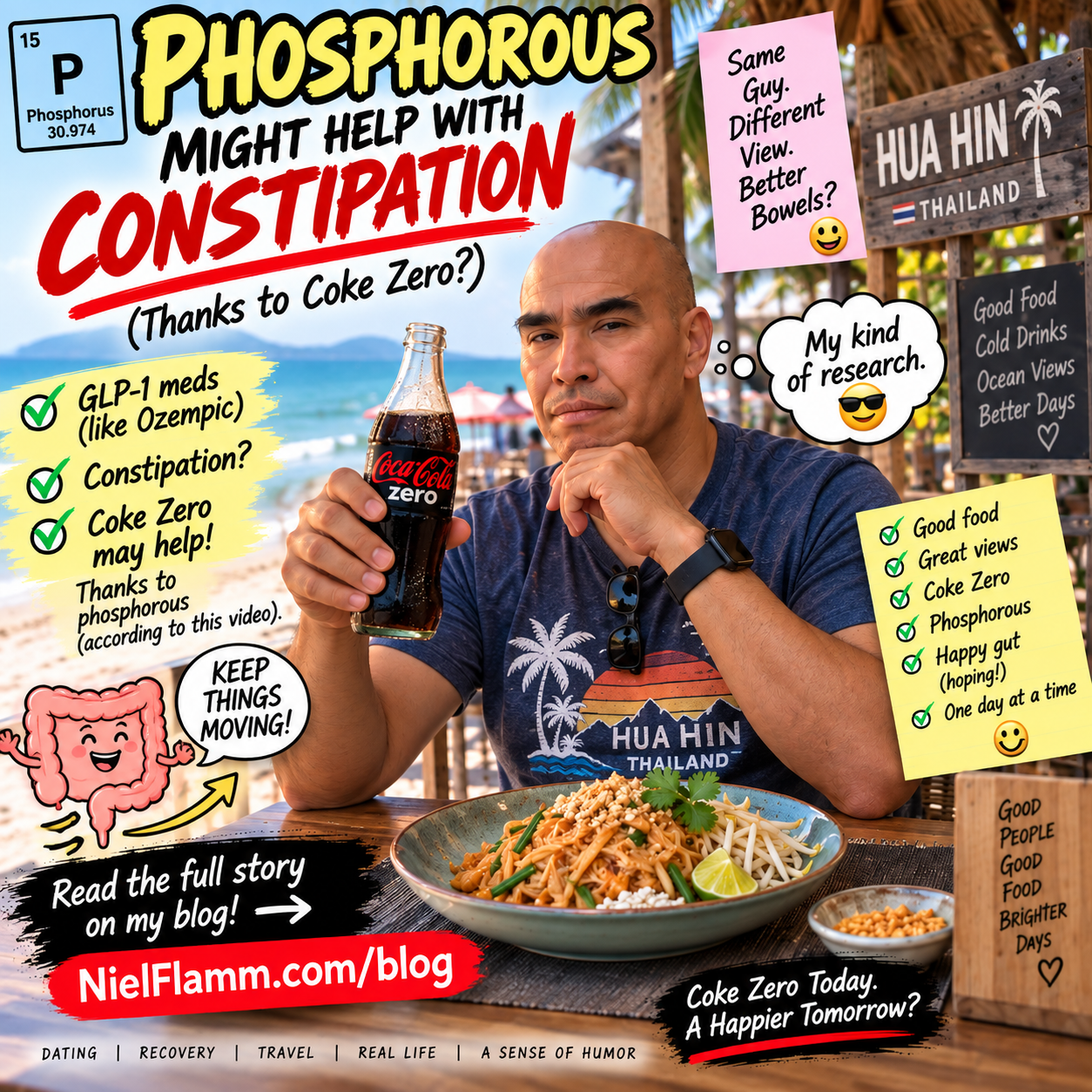
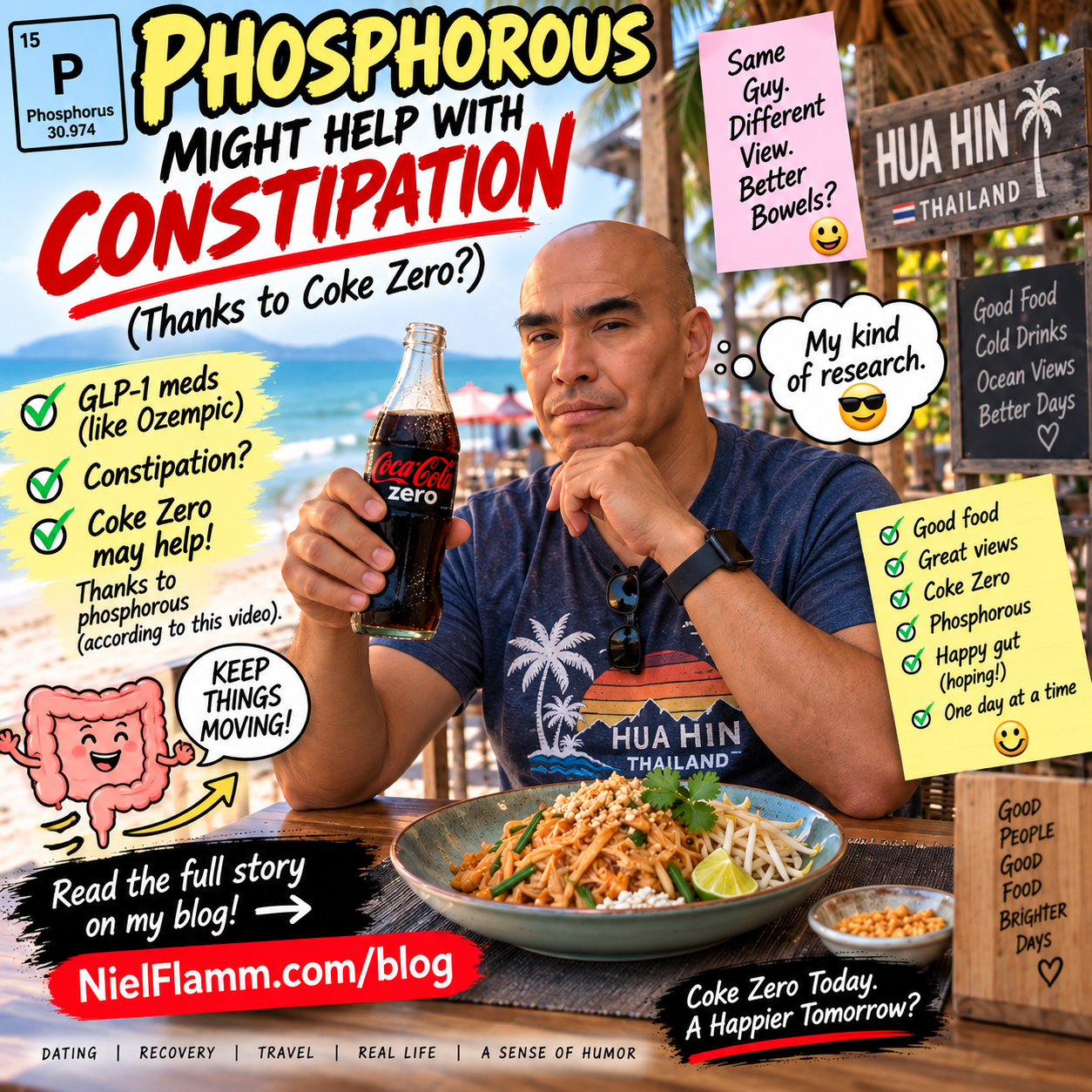
The video says one way to help with constipation from GLP-1 medications is to drink Coke Zero, and the nutritionist attributes the effect to phosphorus.
My immediate reaction:
FANTASTIC!
Finally, something I’ve been training for my entire life.
Coke Zero is already one of my staple foods. I take Ozempic, and constipation can be one of the side effects.
So when somebody tells me my Coke Zero habit might actually have a purpose, naturally I'm thinking:
Doctor, should I increase my prescription from Large to Extra Large?
And somewhere at Coca-Cola headquarters, an executive just felt a disturbance in the Force.
There Is One Tiny Problem…
I couldn't independently verify the video's claim that the phosphorus in Coke Zero is an established treatment for GLP-1 constipation.
So, sadly, I'm not declaring Coke Zero a medication.
I'm merely saying that if future scientific research concludes that it is...
I was an early adopter.
And yes, before anyone reminds me about phosphorus and kidney disease—thank you for the reminder.
With my kidney situation, I already have to pay attention to phosphorus. I use a phosphate binder to hopefully help keep my phosphorus levels in line.
So this is definitely not me recommending that anyone start pounding Coke Zero as a medical treatment.
This is me discovering a video that seemingly gave my existing Coke Zero habit a scientific-sounding excuse and thinking:
FINALLY. MY MOMENT HAS ARRIVED.
Until then, I'll continue enjoying Coke Zero for the same reason I always have:
I just really like Coke Zero.
And if my consumption happens to help The Coca-Cola Company stock along the way?
You're welcome, shareholders.
I'm doing my part. One bottle at a time. 😂🥤
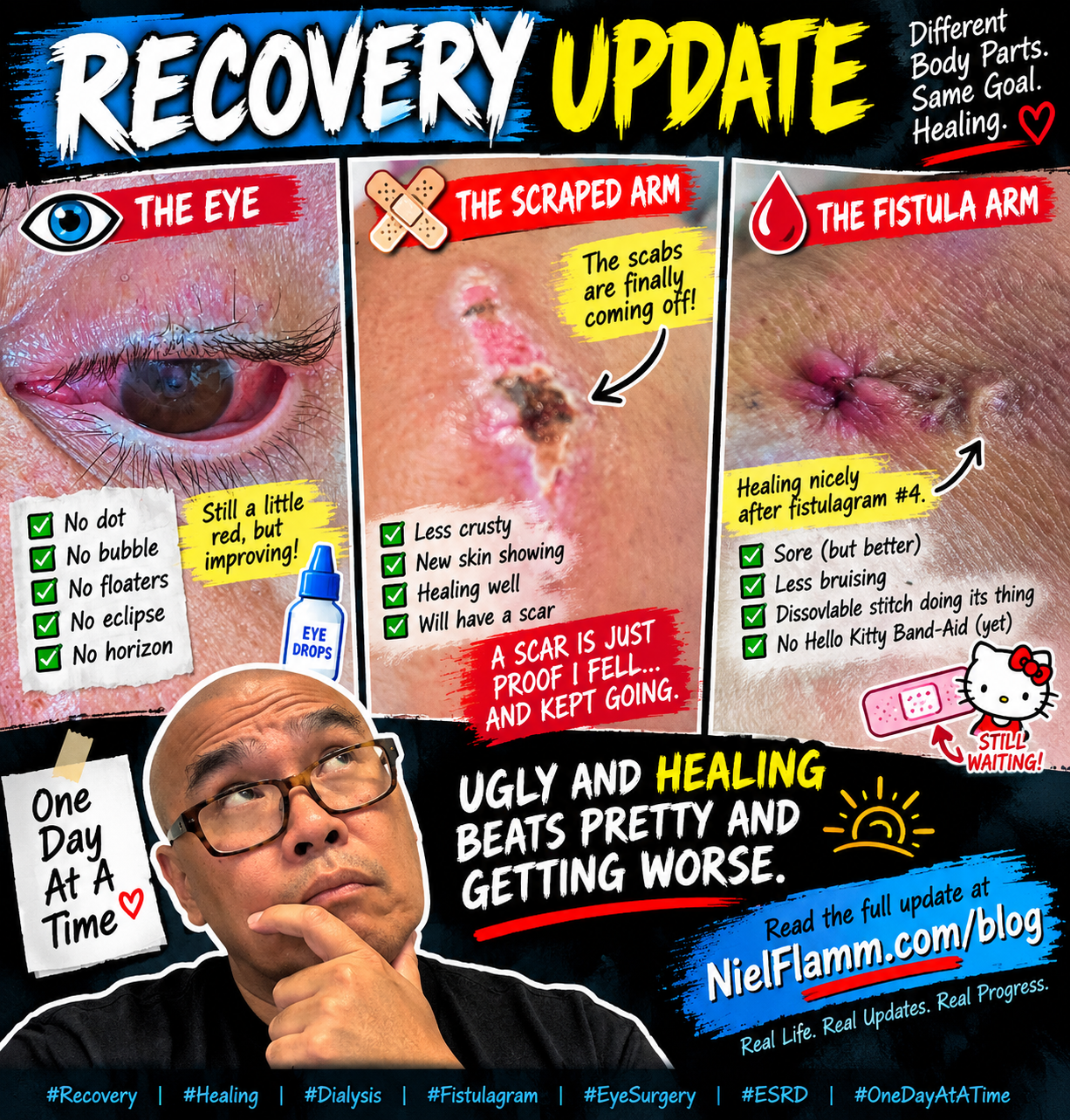
Recovery Update: The Scabs Are Leaving, the Scar Is Staying
Healing apparently has stages.
First, everything looks terrible.
Then it somehow looks even worse.
Then one day I look at it and realize, “Wait… that actually looks a lot better.”
That’s where I seem to be today.
👁️ The Eye: Boring Is Still Beautiful
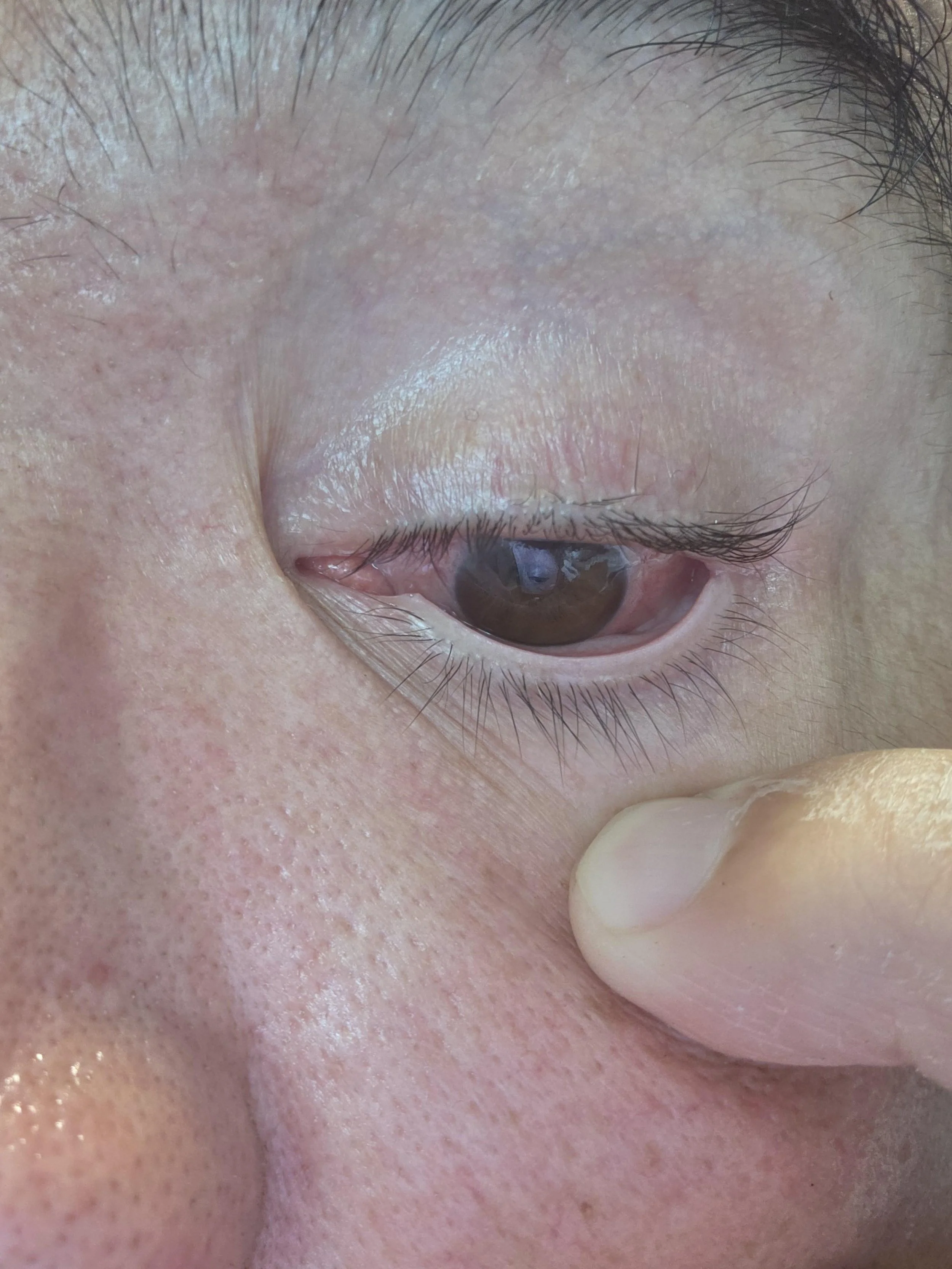
My eye continues to look better. There’s still some redness, but compared with where this adventure started after the silicone oil removal, I'll take it.
More importantly, the visual effects are still gone.
No dot. No bubble. No floaters. No horizon. No eclipse.
I never thought I’d be this excited about seeing absolutely nothing unusual.
I'm continuing the drops and watching the eye, but boredom remains my favorite development.
💪 The Scraped Arm: Crust City Is Being Demolished
Now for the arm.
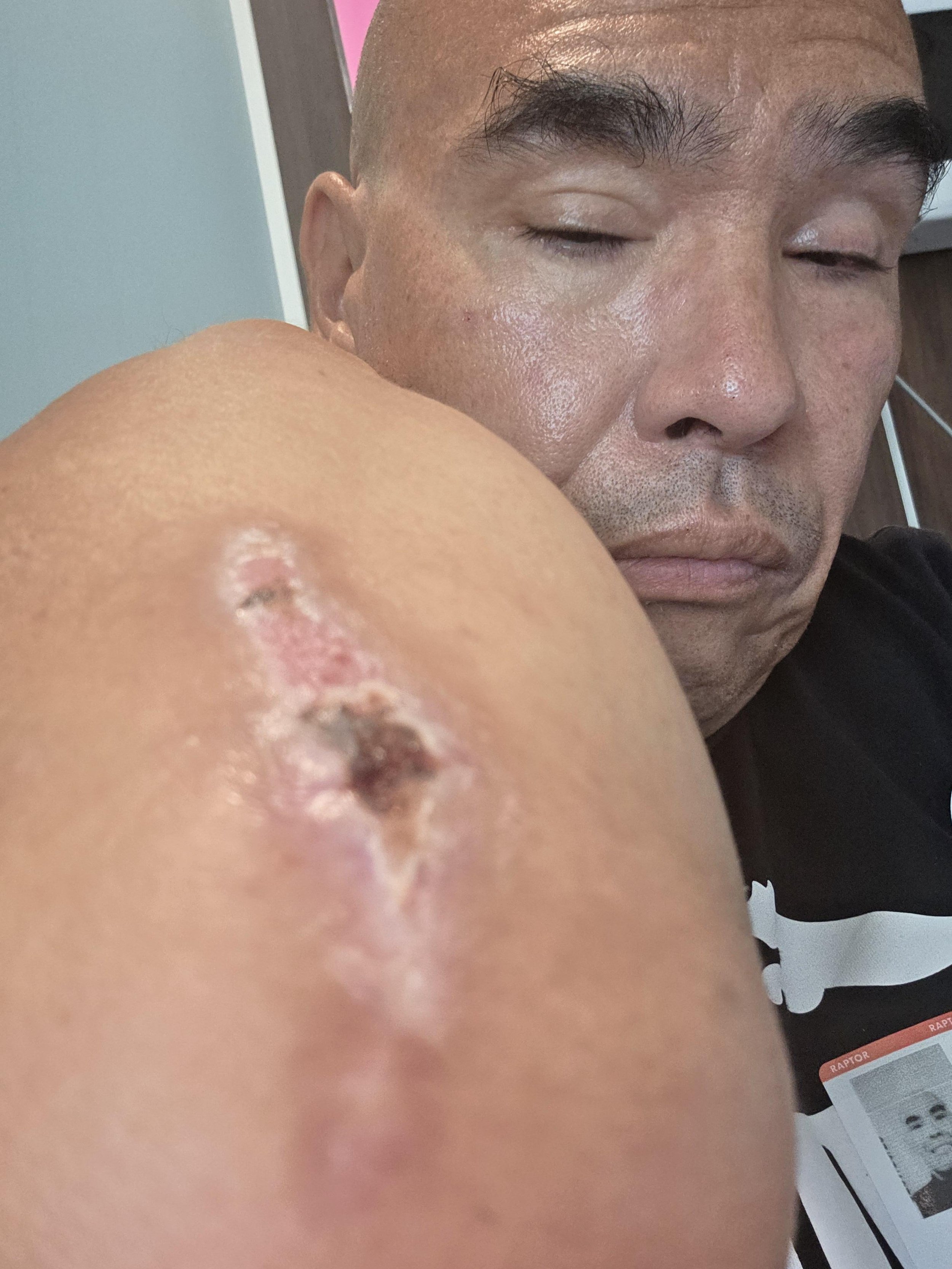
Look at the difference.
Most of that giant, nasty scab that has been starring in these updates is finally gone. What’s underneath is pink, fresh-looking skin with one stubborn darker area hanging around.
And I think we can officially call this one:
I'm going to have a scar.
Considering what this thing looked like immediately after the fall—and then during its glorious Crust City phase—a scar seems like a pretty reasonable souvenir.
I suppose I could make up an impressive story about how I got it.
Shark attack?
Bar fight in Singapore?
Saving a family from a burning building?
Nope.
I fell.
Sometimes reality just doesn't cooperate with the legend.
🩸 The Fistula Arm: Where Did the Stitch Go?
Meanwhile, the fistulagram site keeps healing, too.
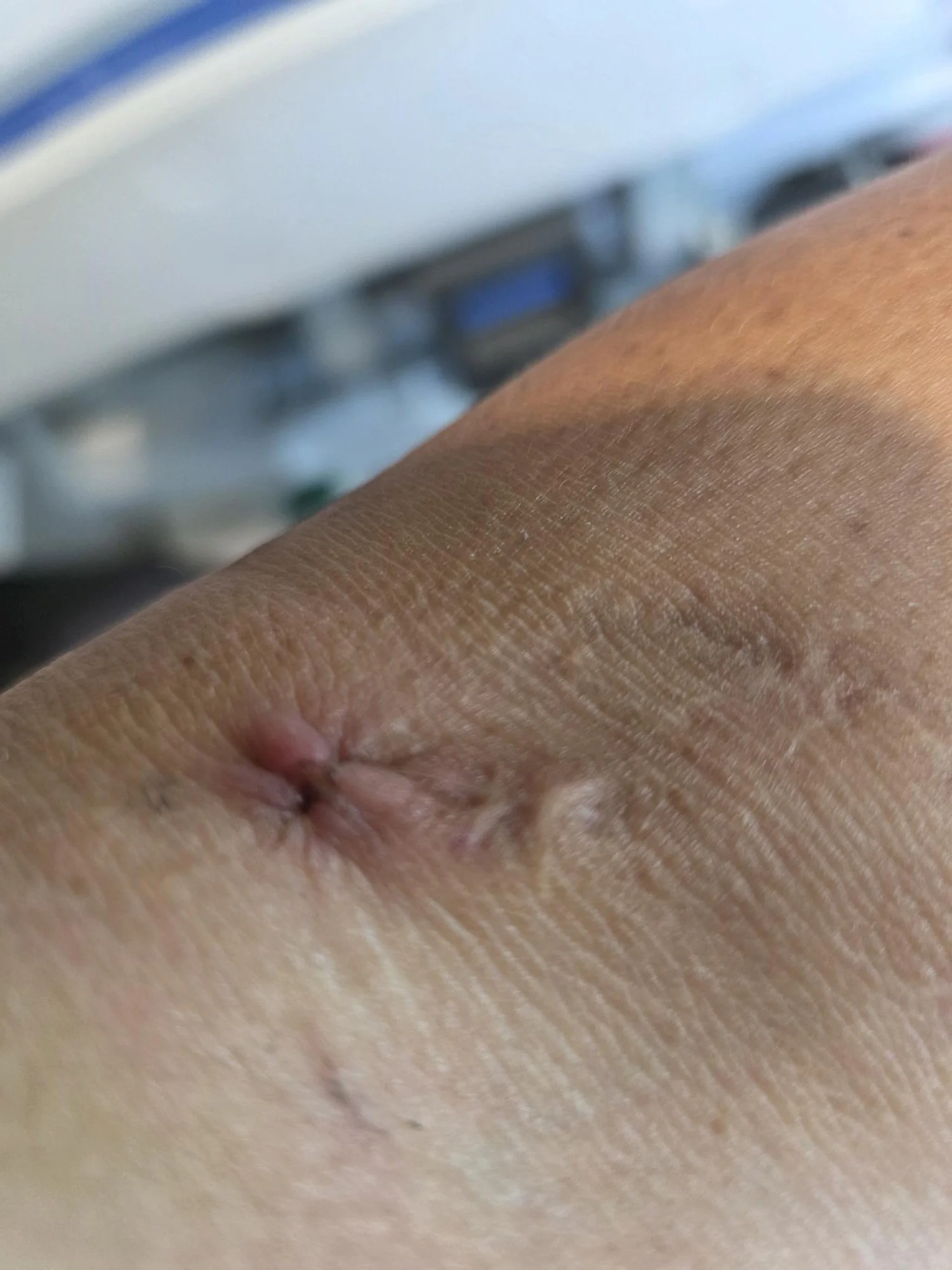
The dissolvable stitch appears to be doing exactly what the name advertised. The area is still visible and there’s some discoloration, but it looks considerably less dramatic.
Still waiting on that Hello Kitty Band-Aid upgrade. 🎀
I haven't forgotten.
Three Different Parts. Same Direction.
So today's recovery report is considerably less disgusting than some of the previous editions:
Eye: less red, no dots or floaters.
Scraped arm: most of the scab is gone, new skin is showing—and yes, there will be a scar.
Fistula arm: healing nicely after fistulagram #4.
The scar on my arm will probably stick around long after I've stopped writing these daily updates.
That's okay.
Scars are just receipts proving my body paid the bill and kept going.
And this particular receipt comes with a very simple description:
Fell down. Got back up.