
Last night, while preparing material for my blog, I came across a Facebook Reel that really made me stop and think.
Here's the Reel:
https://www.facebook.com/share/v/1WUmeynfoW/
I found it inspiring.
The woman featured in the Reel reportedly smoked cigarettes and drank red wine. Now, before anyone gets the wrong idea, those aren't the inspiring parts! What caught my attention was the suggestion that she lived a long life in part because she learned to reduce stress and cortisol in her body.
The Reel also featured other examples with women. That part wasn't particularly shocking. What stuck with me was the bigger message: How much of our lives do we spend worrying about things we cannot control?
I don't know the medical history of the women featured, and a social media Reel isn't scientific evidence that reducing cortisol caused someone to live longer. But the message about managing stress certainly got my attention.
And it reminded me of how I try to live my life today.
"If I can't control it, why worry?"
That's a phrase I try to live by.
I thought about it for a moment. How much time do I spend worrying about things completely outside my control?
What someone else thought of me.
What someone else says or does.
The decisions made by a company, a government, or another person.
Traffic. Weather. Delayed flights. Customer service representatives who seem to have forgotten what customer service means.
I could go on.
I spent so much energy trying to control situations, people, outcomes, and circumstances that we have absolutely no control over.
And what do I get in return?
Stress. Frustration. Sleepless nights. Anxiety. And sometimes a whole lot of unnecessary aggravation.
I've learned that I can control very little when I get down to the nitty-gritty.
I can control how I respond. I can control my attitude, my decisions, and how I choose to spend my time. I can decide whether I allow someone else's behavior to ruin my day.
But I cannot control the universe.
And here's another revelation: The universe doesn't revolve around me.
I'm a very small part of something much bigger.
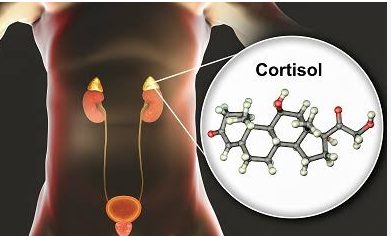
So, what exactly is cortisol?
I asked The Google, and here's the explanation:
Cortisol is the body's primary steroid stress hormone, produced by the adrenal glands on top of the kidneys.
It plays an important role in regulating several essential body functions.
Cortisol isn't inherently bad. In fact, we need it.
According to the information I found, cortisol helps with several important functions:
Stress response: It helps activate the body's fight-or-flight response, temporarily increasing alertness, heart rate, and available energy.
Blood sugar and metabolism: It helps regulate blood sugar and makes stored energy available when needed.
Blood pressure: It supports normal cardiovascular function and helps maintain blood pressure.
Sleep-wake cycle: Cortisol levels naturally rise in the morning to help us wake up and generally decline toward nighttime.
Inflammation: It helps regulate immune activity and control inflammation.
In other words, cortisol is necessary. Our bodies rely on it to function.
The issue is when cortisol levels remain excessively high for extended periods.

When stress becomes a problem
The Google's explanation also noted that prolonged high cortisol levels can be linked to health problems.
For example, Cushing syndrome can result from prolonged exposure to excessive cortisol. It can be caused by certain medical conditions, including tumors, or by extended use of corticosteroid medications.
Symptoms can include weight gain, particularly around the face and abdomen, high blood pressure, and fragile skin.
Chronic stress can also affect sleep, energy levels, and overall well-being.
One important distinction: everyday stress doesn't automatically mean someone has dangerously high cortisol. Cortisol levels are influenced by many factors, and persistent symptoms or concerns are best discussed with a medical professional.
But the general lesson is worth considering: our bodies weren't designed to remain in a constant state of emergency.
I used to be the person trying to control EVERYTHING
And I mean everything.
I used to carry around an enormous amount of stress. I wanted to control situations, outcomes, decisions, and sometimes even things that had absolutely nothing to do with me.
I'd spend time thinking about what might happen, what someone might do, what could go wrong, and how I could prevent it.
I wanted to have a solution before a problem even existed.
Sound familiar?
At some point, I started realizing how much energy I was wasting.
I cannot control what other people do. I cannot control every outcome. I cannot control what happens tomorrow, next week, or next year.
I can make plans. I can prepare. I can take responsibility for my decisions.
But beyond that, I have to learn to let go.
And that has made a difference in how I approach life.
Life has a way of reminding you what's important
I've had my share of experiences that put things into perspective.
Life doesn't always follow the plan we create. Sometimes circumstances change, things happen unexpectedly, and we have to adjust.
I've learned that I don't need to carry every burden, solve every problem, or have an opinion about every situation.
Sometimes the best thing I can do is step back.
Sometimes I need to walk away.
Sometimes I need to accept that something is beyond my control and move on.
And sometimes I just need a nap. You know how much I love naps!
The point is, I don't want to spend the time I have worrying about things I cannot change.
The universe doesn't revolve around me
That's probably the biggest lesson.
I'm one person in a world of billions. I have my own responsibilities, challenges, relationships, and experiences. But I'm not the center of the universe.
Neither are you.
And there's something liberating about recognizing that.
I don't have to fix everything. I don't have to respond to every comment. I don't have to win every disagreement. I don't have to make everyone understand my point of view.
I can choose what deserves my energy.
I can choose peace over unnecessary conflict.
I can choose to focus on what I can influence rather than obsess over what I cannot.
And I can remind myself:
If I can't control it, why worry?
I'm not suggesting that we can eliminate stress or that simply changing my attitude will prevent medical problems. Life is complicated, and sometimes I need professional help.
But I do believe there's value in learning to let go of the things that consume our energy without giving anything meaningful in return.
Maybe that's the real takeaway from the Reel.
Not the cigarettes. Not the red wine. Not a promise of a longer life.
It's a reminder to pay attention to the life I have.
I'm a small part of this universe. I don't control it, and it doesn't revolve around me.
And that's perfectly fine.
Now, if you'll excuse me, I think it's time for a nap.
