
This T-Mobile Email Almost Got Me — And That’s What Makes It Good
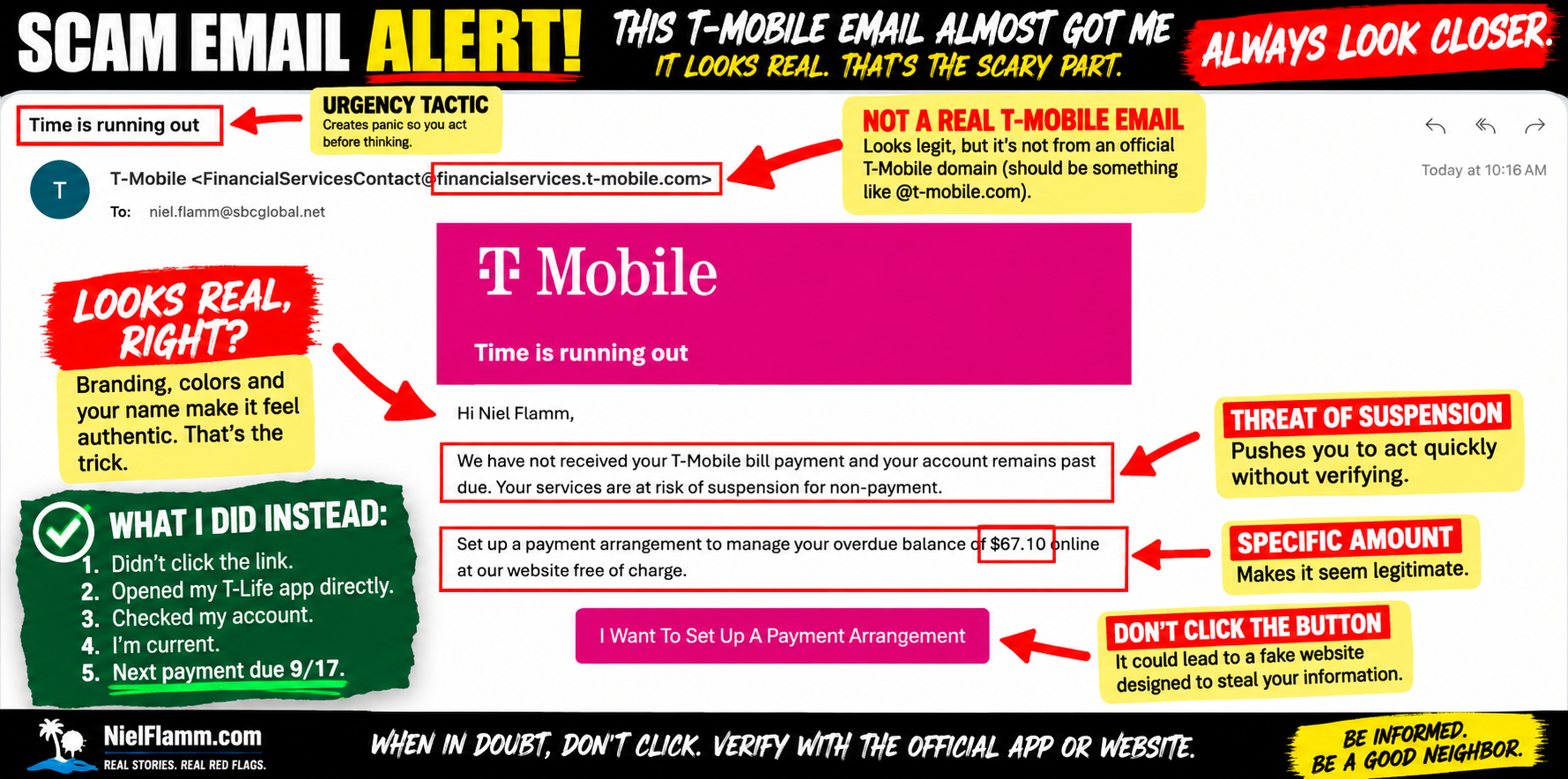
I get enough scam emails that most of them don't survive more than a few seconds before getting mentally tossed into the garbage.
Bad grammar.
Random Gmail address.
Mystery attachment.
A $700 charge for something I never bought.
Somebody telling me I won a prize I never entered to win.
Easy.
This one was different.
This one almost got me.
And that is exactly why I'm writing about it.
📱 It Looked Like T-Mobile
The subject line was:
“Time is running out”
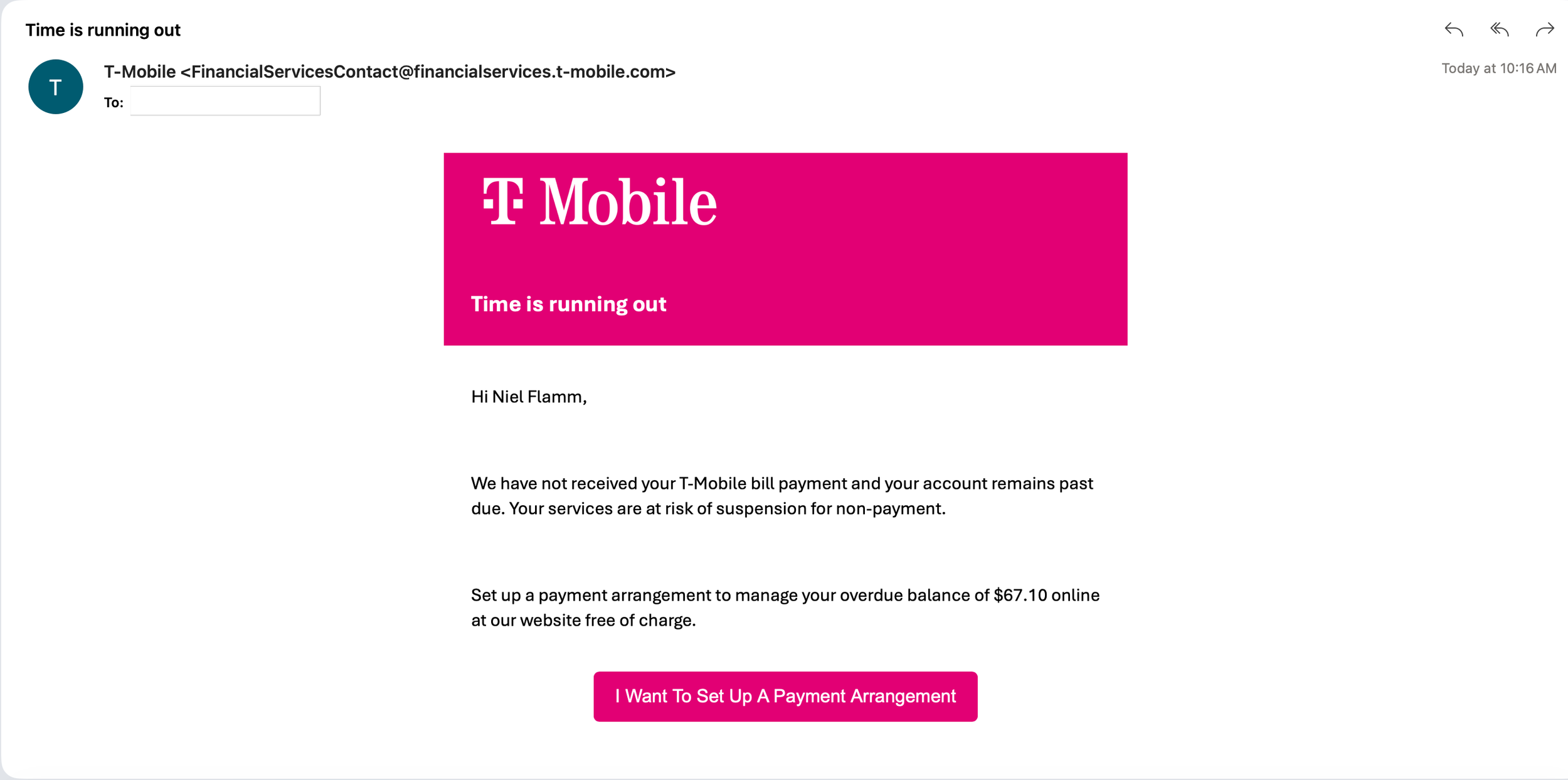
The email had the familiar magenta T-Mobile branding, addressed me by name, and told me:
“We have not received your T-Mobile bill payment and your account remains past due.”
It even gave me a specific overdue balance:
$67.10
Then came the threat:
My service was at risk of suspension for non-payment.
And conveniently, right underneath was a big magenta button:
“I Want To Set Up A Payment Arrangement”
That's a pretty effective combination.
Recognizable company.
My name.
Specific dollar amount.
Urgency.
Threat of losing service.
And an immediate solution.
For a moment I thought:
Wait... did I miss my T-Mobile payment?
🚩 Then I Looked Closer
The email looked fairly legitimate.
Fairly.
Then I looked at the sender:
FinancialServicesContact@financialservices.t-mobile.com
At first glance, that's pretty convincing.
There's “T-Mobile” right there in the address.
But an email address that looks legitimate isn't enough for me anymore.
And more importantly, I realized I was about to make the mistake these emails are designed to encourage:
I was using the email to determine whether the email was legitimate.
So I stopped.
I didn't use the button.
I didn't follow its instructions.
I went somewhere I already trusted.
📲 I Opened the T-Life App
This was the easiest test of all.
Instead of clicking the payment-arrangement button, I opened my T-Life app independently and checked my actual account.
Guess what?
I'm current.
My account isn't showing the overdue situation described in the email.
My next payment isn't due until September 17.
Well, that's awkward.
Apparently, my T-Mobile account forgot to tell T-Mobile that my T-Mobile account is fine.
😂
🚨 This Is the Kind of Message That Concerns Me
The ridiculous scams aren't necessarily the ones I'm most worried about.
It's these.
The ones that are close enough.
The branding looks right.
The formatting looks professional.
The amount is believable.
The situation is plausible.
And the sender information looks convincing enough that you might not examine it carefully.
Then they add urgency:
TIME IS RUNNING OUT
Your service might be suspended.
You owe money.
Fix it now.
And here's a convenient button.
That urgency matters because it pushes you to act before you independently verify the claim.
🔍 The Best Scam Detector Wasn't the Email
Here's the lesson I'll take from this one.
I didn't need to determine whether every graphic was authentic.
I didn't need to inspect HTML.
I didn't need to click the button to see where it went.
And I didn't need to contact whoever sent the message.
I went straight to the account the email was supposedly about.
My actual T-Mobile account told the story.
That's an incredibly simple habit:
If your bank emails you about a problem, open your banking app yourself.
If Amazon says there's an order, open Amazon yourself.
If PayPal says somebody charged you, open PayPal yourself.
If your wireless carrier says you're past due, open your carrier's app yourself.
Don't use the suspicious message to get there.
🧠 And Yes, This One Almost Worked
I think that's worth admitting.
People sometimes talk about scams as though only gullible or technologically inexperienced people fall for them.
That's dangerous thinking.
I spend a ridiculous amount of time looking at these things.
I've written about scam emails.
Recruiting scams.
Mystery attachments.
Fake subscription charges.
Questionable car advertisements.
And this email still made me stop and think:
“Wait... am I past due?”
That's what good social engineering does.
It doesn't necessarily make you believe something ridiculous.
It gives you something believable enough that you react before you think.
Fortunately, this time I thought.
Then I checked.
🏡 Be a Good Neighbor
If you have a parent, friend, coworker, or neighbor who might receive something like this, show them this simple trick:
Don't click the button.
Open the company's app or type the company's known website yourself.
Check the account independently.
A 30-second verification could prevent a much bigger headache.
And if you're ever tempted to think:
“I'd never fall for something like that.”
Neither did I.
But this one got close.
Very close.
That's why I'm sharing it.
Follow along at NielFlamm.com/blog for more scam investigations, suspicious emails and the occasional message that makes even me look twice.
