

Day 140 of my Nextdoor case study.
Nextdoor posted two times on LinkedIn today, apparently making up for last week's lack of activity. One discussed winter travel, which I'll save for tomorrow. Today's post caught my attention because it focused on public agencies and Nextdoor's partnerships with them.
The post discusses how to write a better public safety alert, using guidance from the Behavioral Comms Lab.
Here's the LinkedIn post:
I'm sure the tool and guidance can be helpful. When public agencies communicate with residents during emergencies, the wording, timing, and clarity of an alert can make a real difference.
But, as usual, I noticed a couple of things that made me stop and ask questions.
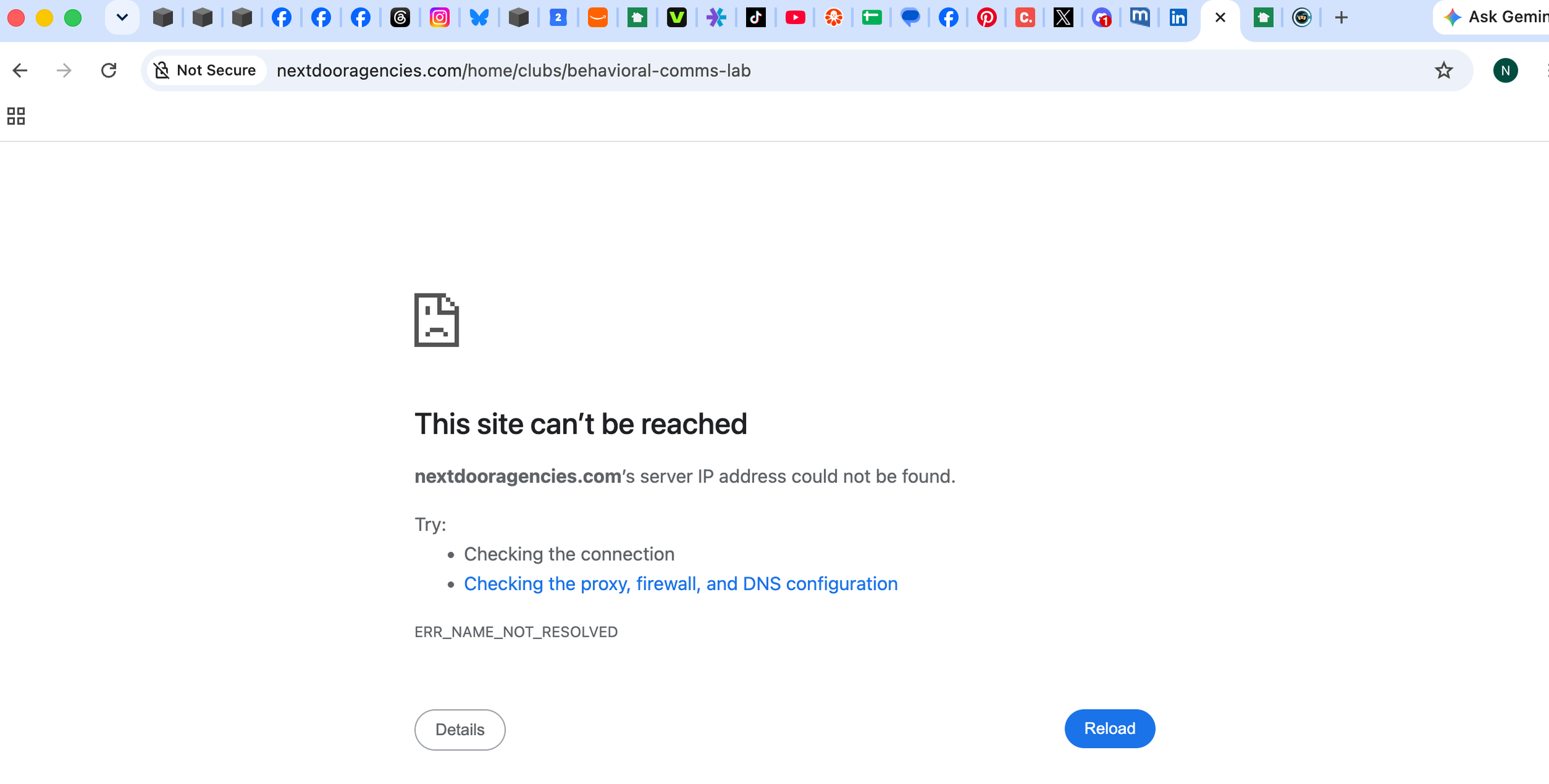
First problem: The link doesn't work
Nextdoor provided a link for readers who wanted to learn more about the Behavioral Comms Lab:
https://nextdooragencies.com/home/clubs/behavioral-comms-lab
I tried accessing it while sitting at Tampa International Airport, connected to public Wi-Fi. I initially had my VPN enabled. I turned it off and tried again.
I still couldn't access the resource.
So, let me get this straight. Nextdoor is promoting a tool intended to help public agencies communicate more effectively, but the link provided to learn more doesn't work for me.
Am I supposed to wait until I get home and use my private internet connection before I can access a guide on writing a better public safety alert?
Perhaps I've left danger behind and am now in a safer place because I'm using public airport Wi-Fi. Maybe that's the secret!
Of course, I'm being sarcastic. The point is that a link promoted publicly should work across ordinary internet connections. If access is restricted, the page should explain why. If the link is broken, someone should fix it.
Someone at Nextdoor should have tested this before publishing.
A simple quality-assurance check could have caught the problem.
Second problem: Where does the important alert appear?
This is where I have a bigger concern.
One of the ongoing complaints about Nextdoor is the amount of advertising appearing throughout the platform.
I understand advertising. It's a business, and advertising revenue helps keep the lights on. Nextdoor needs to generate revenue, attract advertisers, and build a sustainable business.
I'm not suggesting that advertising should disappear.
But let's talk about priorities.
If a public agency uses Nextdoor to publish an important alert about severe weather, a road closure, an evacuation, a public safety threat, or another urgent community issue, where does that alert appear in the neighbor's feed?
Will it be prominently displayed?
Or will a neighbor have to scroll past five, ten, or more ads before finding information that could matter to their safety?
That's not a trivial user-experience question.
An emergency alert should not have to compete with an advertisement for a product, service, or business.
The algorithm needs to understand the difference
Nextdoor should have a clear way to prioritize verified public agency alerts.
If the platform already has a system that prioritizes these messages, lead with that information. Explain how it works.
For example:
Are alerts from verified public agencies automatically prioritized?
Do they appear differently from ordinary neighborhood posts?
Are they protected from being buried by sponsored content?
Does the platform adjust their visibility based on urgency and geographic relevance?
Can an agency determine whether residents actually saw the alert?
These questions matter because publishing an alert and successfully communicating it are two very different things.
A public agency may do everything right: write a clear message, provide useful instructions, and publish it through an established partnership.
But if the platform doesn't deliver that message prominently to the people who need it, what has actually been accomplished?
The quality of the alert matters. So does the quality of the distribution.
Public agency partnerships come with responsibility
Nextdoor has an opportunity to be genuinely useful to communities through its relationships with public agencies.
That opportunity also comes with responsibility.
When residents rely on a neighborhood platform for local information, they need to know that important messages won't be treated like just another piece of content competing for attention.
I would like to see Nextdoor explain how it prioritizes public agency alerts, how it measures reach, and what safeguards prevent important information from being buried beneath advertising.
And while we're at it, please test the links included in your own promotional posts.
That's not asking for anything extraordinary. It's basic quality assurance.
Day 140: Nirav Tolia and the Nextdoor team, you're welcome.
Here we are at Day 140 of my case study. Another day of identifying things that deserve a closer look.
I keep providing feedback because I believe Nextdoor has tremendous potential. Public agency partnerships could be one of the platform's most valuable services.
But potential doesn't automatically translate into a good user experience.
Fix the broken links. Explain how public safety alerts are prioritized. Make sure critical community information gets visibility ahead of ordinary advertising.
Nirav Tolia and the Nextdoor team, you're welcome for the feedback. I'm trying to help you improve what I believe is severely broken.
And tomorrow, I'll turn my attention to that other LinkedIn post about winter travel.
One day, one Nextdoor post at a time.
