
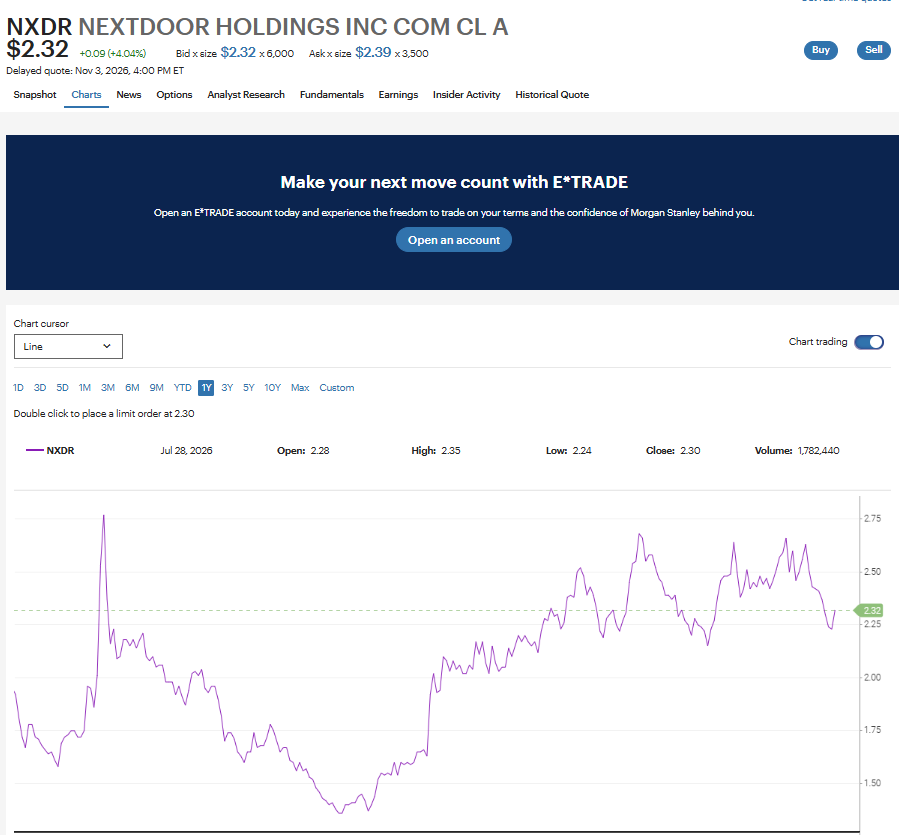
Well, look who's moving!
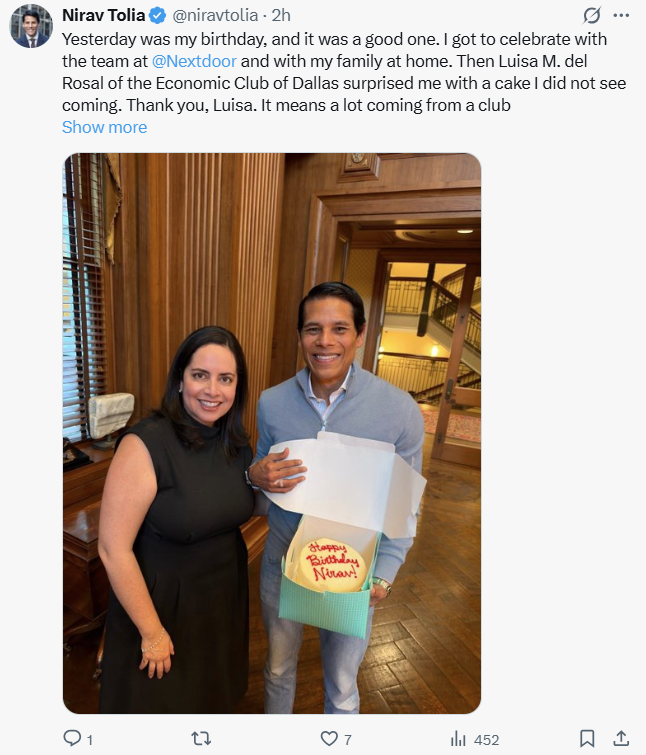
NXDR is up to $2.32. It's not a massive jump, but it's a jump. Maybe it's a belated birthday present for Nirav Tolia. His birthday was yesterday, so happy birthday, Nirav! 🎂
Now, back to business.

Another email, another round of silence
Last week, I emailed Nextdoor leadership again. I didn't receive a reply. At this point, that's becoming the norm.
Nextdoor, Nirav, and company seem perfectly comfortable doing what they've been doing: digging their feet into the sand and refusing to budge.
Yet somehow, I seem to get under Nirav's skin enough to be blocked on LinkedIn and twice on X.
Someone, please help me understand something.
Why would a millionaire, someone at the top of a multimillion-dollar company (at least on paper), spend the time blocking someone who is providing feedback about the company's platform?
I'm not asking for special treatment. I'm asking questions, raising concerns, and offering opportunities for discussion.
If the feedback is off base, address it. If there's a misunderstanding, clarify it. If there's a problem, explain what the company is doing to fix it.
Blocking someone doesn't make the questions disappear.
The media stories Nextdoor doesn't seem to want to discuss
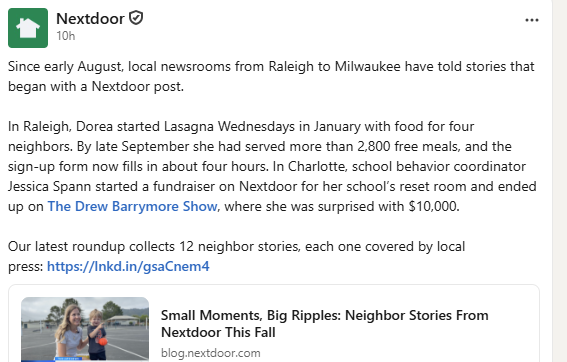
Nextdoor regularly promotes stories about how its platform helps people and strengthens communities. Those stories may be real, and people have undoubtedly benefited from connections made through the platform.
But there's another side of the story that deserves attention.
1. Connecticut Examiner: Permanently suspended
The Connecticut Examiner (CT Examiner) has reported that its Nextdoor account was permanently suspended.
The issue, as described in the publication's reporting, involved feedback and concerns about Nextdoor's moderator system.
Think about that for a moment.
A local news organization raises concerns about how the platform handles moderation, and its account ends up permanently suspended.
What happened? What policy was violated? Was there a meaningful appeal? Did anyone at Nextdoor review the circumstances?
If Nextdoor wants to be a platform for neighborhood communication, local journalism, and community engagement, it should be able to explain how it handles situations like this.
Suspension without meaningful transparency doesn't build confidence.
2. Daybreak Upper Valley: Local news links restricted
Another example involves Daybreak Upper Valley.
The publication has described restrictions affecting links it shares in local news updates and community notifications. Nextdoor's automated spam-filtering system is blamed.
This raises another, equally important concern.
Local news organizations provide information that matters to their communities. Local updates, public notices, and community information shouldn't automatically be treated as unwanted commercial content simply because an automated system flags a link.
Automation can be useful, but it isn't infallible.
If a publication is incorrectly restricted, what is the process for correcting that? Can someone reach a human reviewer? How quickly can the restriction be resolved?
And how many neighbors miss important information while the issue remains unresolved?
Source: https://share.google/aimode/rFHda7r9xjSR2nBQU
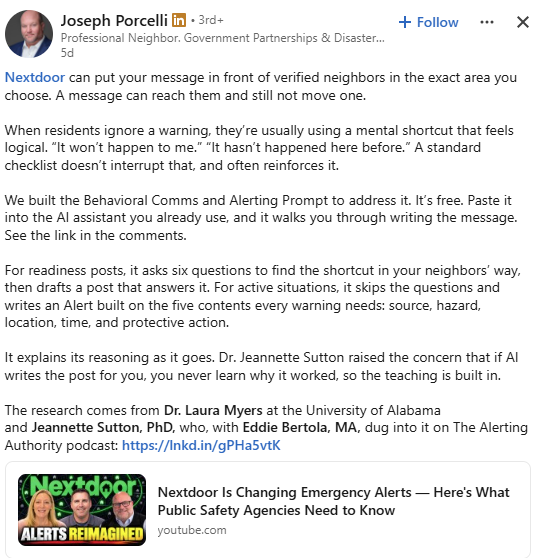
3. Joseph Porcelli: AI helps write alerts, but who controls them?
Now let's look at a post from Joseph Porcelli discussing Nextdoor's AI assistant and how it can help people write alerts
.
On the surface, that sounds useful. Helping someone write a clearer, more informative community alert could benefit everyone.
But here's the contradiction I want Nextdoor to explain.
How can the company promote AI tools that help neighbors create alerts while also relying on automated systems to restrict, filter, or control what neighbors and local organizations can post?
It wants to help people communicate, but how much control does it retain over that communication?
Who decides which alerts are acceptable? How does the system distinguish a legitimate community update from spam? What happens when the AI or automated moderation system gets it wrong?
And most importantly, what recourse does the person posting have?
There's a difference between helping people communicate responsibly and controlling the conversation.
A healthy community platform needs both useful safeguards and a transparent, fair process for addressing mistakes. It can't simply promote the benefits of AI while leaving users guessing about how automated decisions affect their ability to communicate.
So, which Nextdoor are we getting?
The company promotes itself as a place where neighbors connect, local organizations share information, and communities become stronger.
It promotes positive stories about people helping people.
It promotes tools that make communication easier.
But what about the publishers who say their accounts have been suspended? What about local news links that are restricted? What about neighbors who find their posts filtered or removed without a clear explanation?
Those experiences deserve attention, too.
Nextdoor can't have it both ways. It can't celebrate community communication when it makes the company look good and then avoid difficult questions when people raise concerns about moderation and access.
Transparency isn't just something a company puts in a press release. It's demonstrated by how it responds when things go wrong.
Nirav, I have another suggestion: Try again. Try engaging with the feedback. Try explaining the decisions. Show people the company is willing to listen.
You don't have to agree with every person who raises a concern. But shutting down the conversation isn't the same as resolving the problem.
Day 142. NXDR is up to $2.32. The stock moved. Now, how about the company moving on transparency and accountability?
Try again, Nirav. Try again.
