
The Suspensions Nextdoor Doesn’t Study
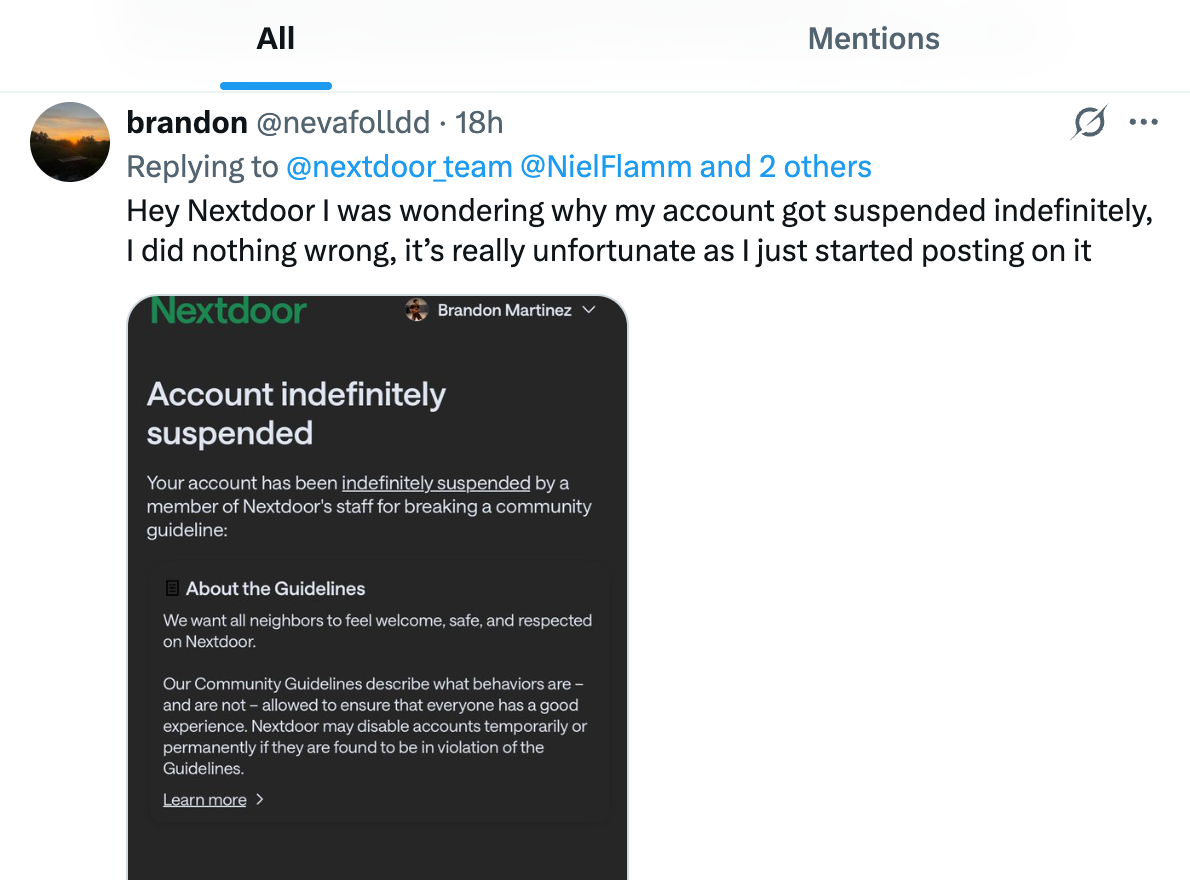
Late Saturday, Brandon shared that his Nextdoor account had been indefinitely suspended shortly after he started posting.
This is the part of Nextdoor that doesn’t show up in the surveys, research reports, or LinkedIn articles.
It’s also the part that raises questions about transparency.
When users are suspended, what exactly is the appeal process? How are decisions reviewed? What standards are being applied? Why are the Community Guidelines often written broadly enough that interpretation seems to favor the platform?
I’ve asked these questions before and have yet to receive meaningful answers.
What makes this even more interesting is that suspended users don’t necessarily disappear from the ecosystem immediately. Their accounts, data, and history remain part of the platform. Yet discussions about transparency surrounding suspensions, appeals, and user rights rarely seem to receive the same attention as discussions about Weekly Active Users, advertising opportunities, or engagement metrics.
For many users, it can feel as though simply asking difficult questions, disagreeing with the prevailing narrative, or refusing to become “another brick in the wall” creates risk.
Whether that’s perception or reality, it is a perception that leadership should take seriously.
This isn’t a study about FIFA.
This isn’t a study about home insurance.
This isn’t a study about pharmaceutical advertising.
This is about real users who believe they’ve been silenced and want to understand why.
And that’s a study I’d be interested in reading.
