
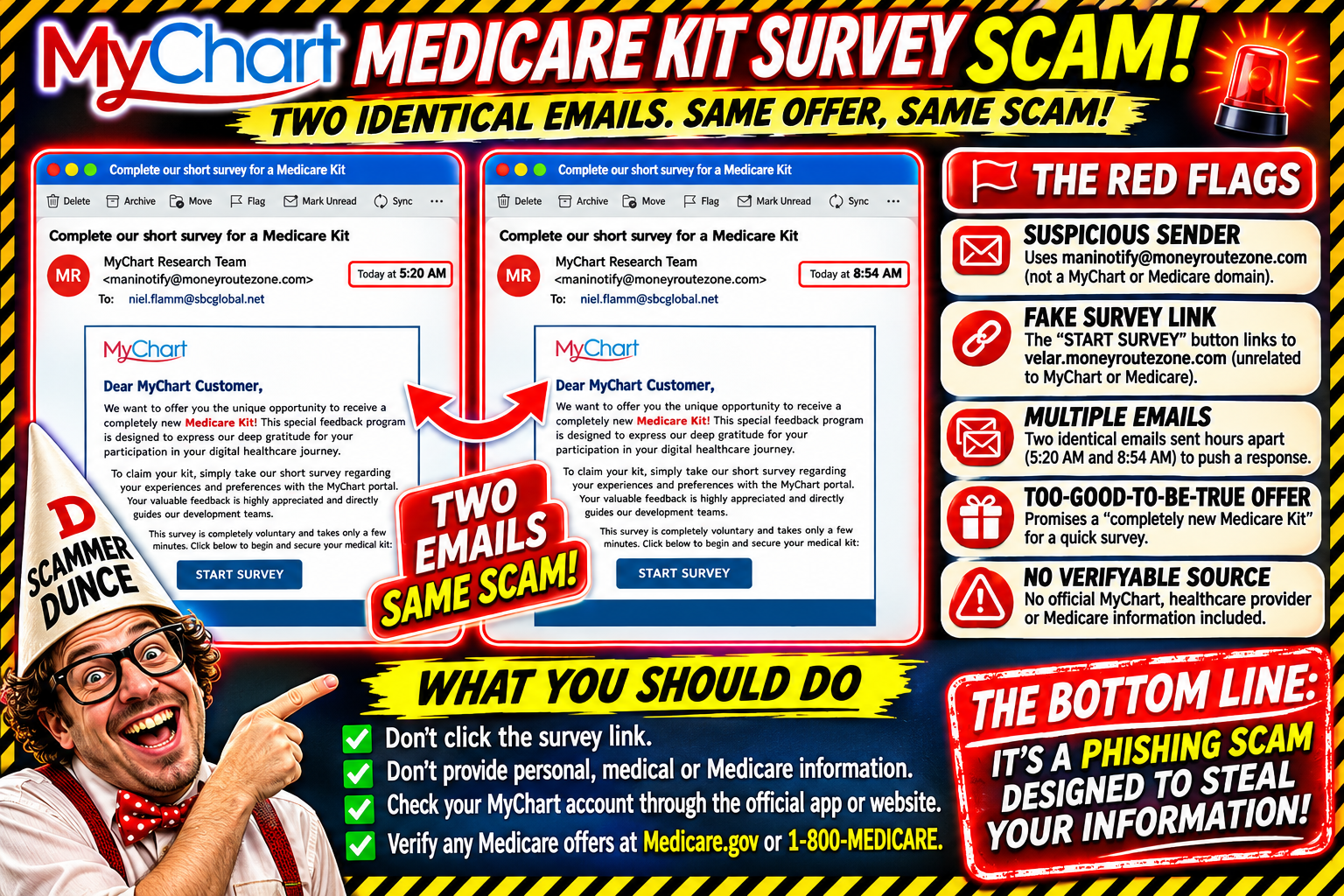
I received not one, but two emails today offering me a completely new Medicare Kit. Apparently, all I have to do is complete a short survey about my experience with the MyChart portal.
Well, isn't that generous?
The first email arrived at 5:20 a.m. The second showed up at 8:54 a.m. Same sender, same subject, same message, same offer. I guess the first invitation wasn't getting enough attention, so they decided to send me a reminder.
The emails came from someone calling themselves “MyChart Research Team”, using the address maninotify@moneyroutezone.com.
Let's pause there.
MyChart is a familiar name in healthcare. But the sender's email domain is not a MyChart domain. That's the first red flag, and it's a pretty big one.
The offer sounds wonderful. That's the problem.
The message tells me:
I can receive a completely new Medicare Kit.
All I need to do is complete a short survey.
My feedback will supposedly help guide their development teams.
The survey takes only a few minutes.
There's a convenient button labeled “START SURVEY.”
What could possibly go wrong?
Well, the first screenshot gives us another clue. When hovering over the survey button, the destination displayed a URL at velar.moneyroutezone.com, which has absolutely no apparent connection to MyChart or Medicare.
That's not where I would expect a legitimate healthcare organization to send me.
And here's the bigger issue: why is a supposed MyChart research team using a completely unrelated email domain and directing people to an unrelated website?
The scammer's marketing department needs a meeting
If you're going to impersonate a healthcare organization, at least understand the organization you're pretending to represent.
MyChart is a patient portal. Medicare is a federal health insurance program. A generic promise of a free Medicare Kit in exchange for a survey doesn't establish any legitimate connection between the two.
Scammers hope familiar names will make people lower their guard.
They're also counting on people being curious about a free offer. Who doesn't like getting something for free?
But there's a difference between a legitimate benefit and an unsolicited email trying to get you to click an unfamiliar link.
Here's what I would do
Don't click the survey button.
Don't provide personal, medical, Medicare, or financial information.
Don't assume an email is legitimate because it uses a familiar company logo.
Check your MyChart account by navigating to its official website or app independently.
If the message claims to be connected to Medicare, verify it through Medicare's official website or phone number.
And please, don't use the contact information or links provided in a suspicious email to verify that same email.
Two emails, one bad idea
I received two nearly identical messages in less than four hours. Maybe the sender thought persistence would pay off.
It might. Unfortunately, someone who isn't paying attention could click that button and hand over information they never intended to share.
My advice? A free Medicare Kit from an unfamiliar sender isn't worth risking your personal information.
To whoever is behind this: the MyChart logo doesn't magically make your email legitimate. Maybe take a little more time with your next attempt.
And to everyone else: Stop. Think. Verify.
Have you received something similar? Send me the screenshot or tell me about it at niel@nielflamm.com. Remove any personal information before sending.
I'll keep sharing these examples because the more people recognize the warning signs, the harder it becomes for these messages to work.
