
Loyalty, Accountability, and the Difference Between the Two
On June 22, 2026, Nirav Tolia posted about his longtime professional relationship with Sarah Leary, noting that they’ve worked together for 27 years and that she’s someone he trusts completely. The comments were pulled from his appearance on Ollie Forsyth’s New Economies podcast.
Let me be clear:
I have nothing against Sarah Leary.
I don’t have anything personal against Nirav Tolia, either.
What I am doing is holding a public company CEO accountable for decisions that impact employees, users, advertisers, and shareholders.
There’s a difference.
While podcasts focus on connection, trust, and vision, investors have to evaluate outcomes.
Some questions I continue to ask:
Why should shareholders be excited about a stock trading around $2.16 per share, down on the day?
When will investors see meaningful value creation?
Why spend capital on a Dallas office when much of the work could be performed remotely, potentially reducing costs?
Why promote neighborhood connection while many users continue to report division, moderation concerns, and inconsistent experiences?
Why reference surveys publicly while requests for supporting studies go unanswered?
Speaking of unanswered questions, I’m still waiting for a response regarding a survey request sent to Jacob Chavis.
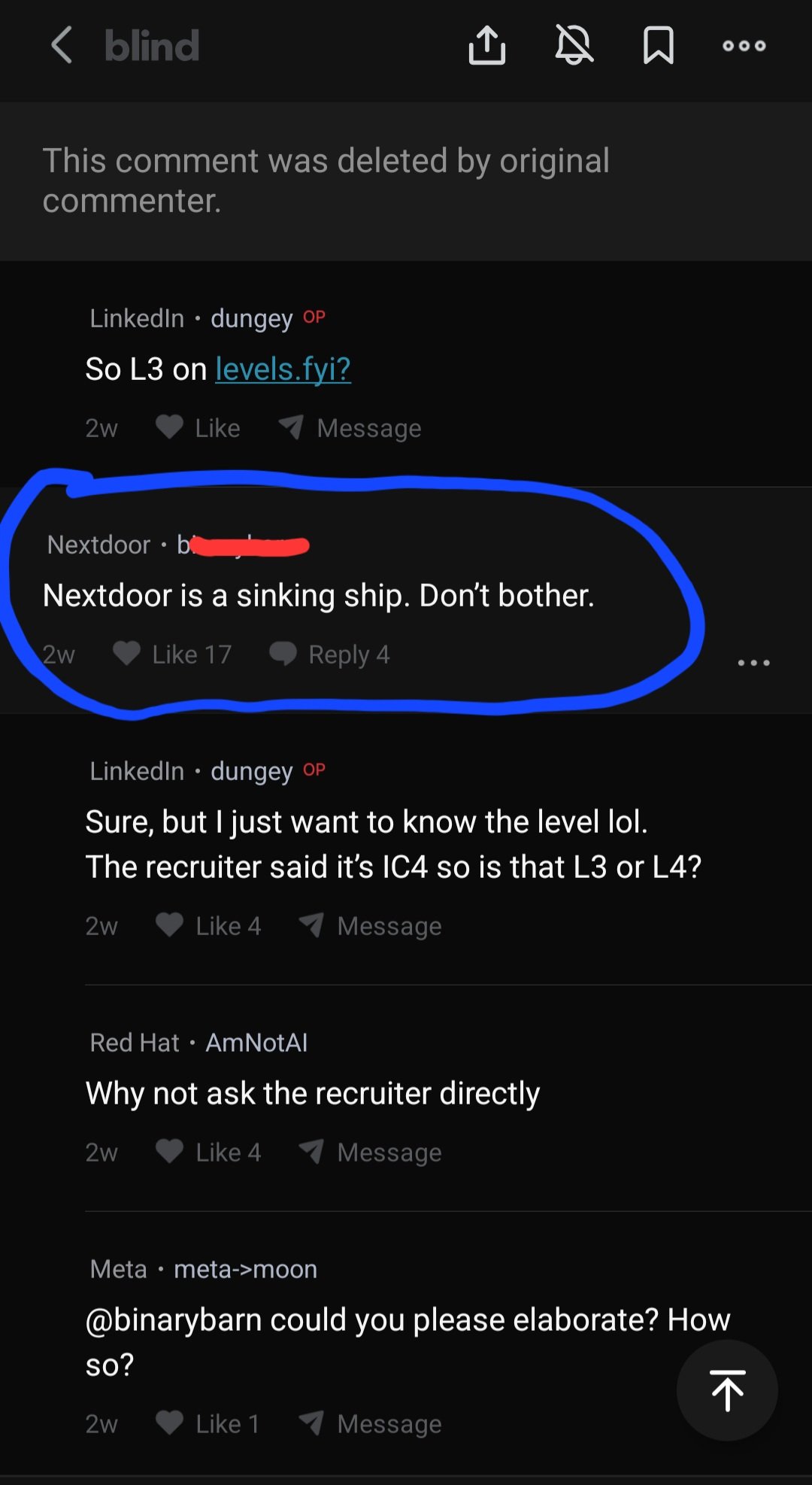
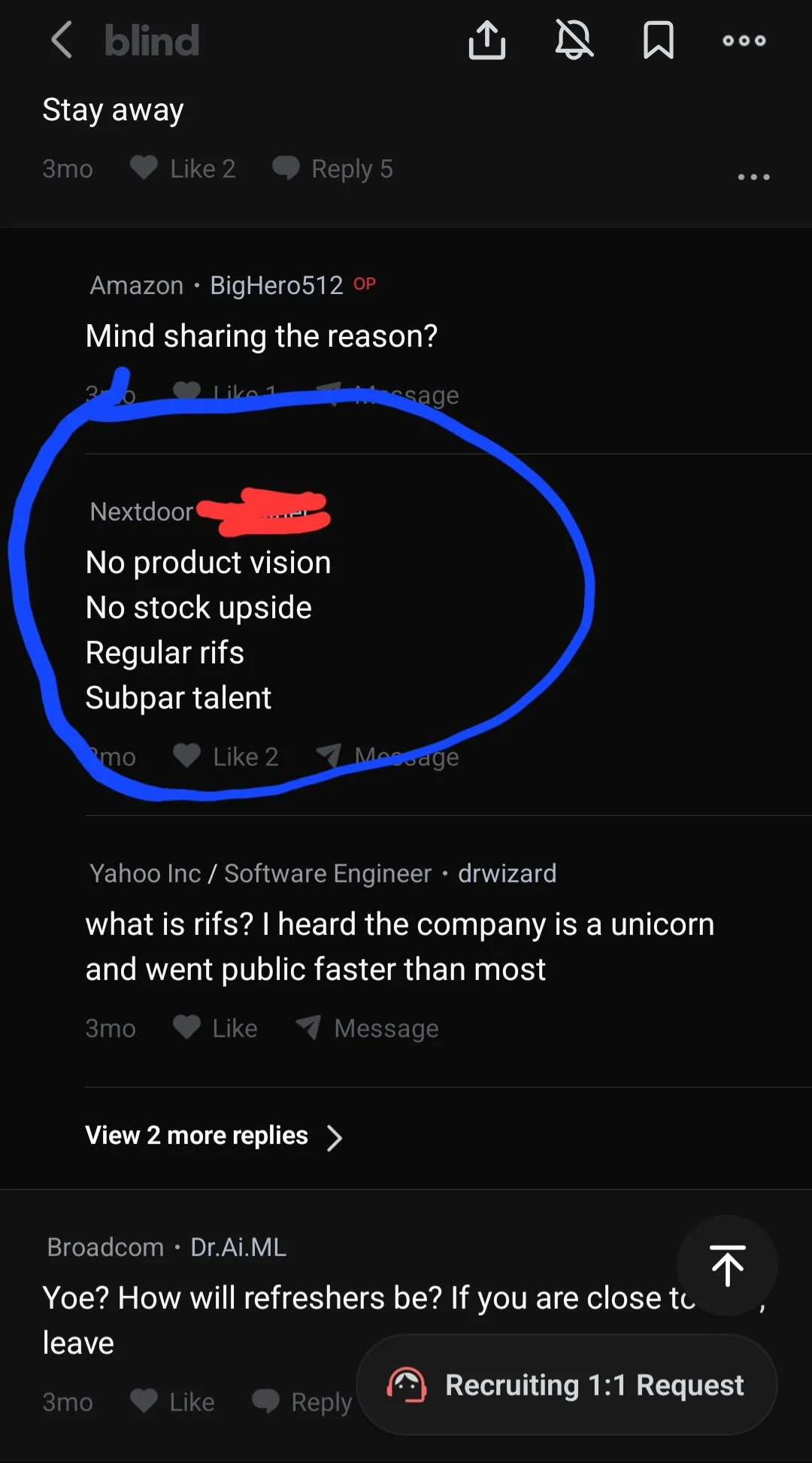
That experience made me think about Blind, the anonymous workplace app where employees discuss company culture, leadership, compensation, and strategy without attaching their real names. Like any anonymous platform, comments should be evaluated carefully, but it often provides insight that differs from the polished narratives presented in earnings calls, podcasts, and press releases.
What interests me is the gap between internal sentiment and external messaging.
Sometimes Nextdoor reminds me of The Stepford Wives—a place where conformity appears more valued than disagreement. If you fit the narrative, everything is fine. If you challenge it, you may find yourself ignored, blocked, or dismissed.
That’s why feedback matters.
Strong companies don’t improve because everyone agrees.
They improve because leaders are willing to hear perspectives they may not like.
Loyalty is important.
Accountability is more important.
